
Japan welcomed a record 36.9 million international visitors in 2024, then kept going. By 2025 the number was climbing toward its 60 million target for 2030, and the strain on Tokyo, Kyoto, and Osaka had already become a policy problem. Kyoto’s Gion neighborhood put up signs warning foreign visitors against entering or face a 10,000 yen fine. Mount Fuji implemented a daily visitor cap of 4,000 people and doubled its climbing fee to 4,000 yen for the 2025 season. Train stations overflowed, hotel capacity tightened, and local governments began openly discussing restrictions as residents pushed back against crowding and rising costs. The issue was no longer whether Japan could attract visitors. It was whether it could manage where they went once they arrived.
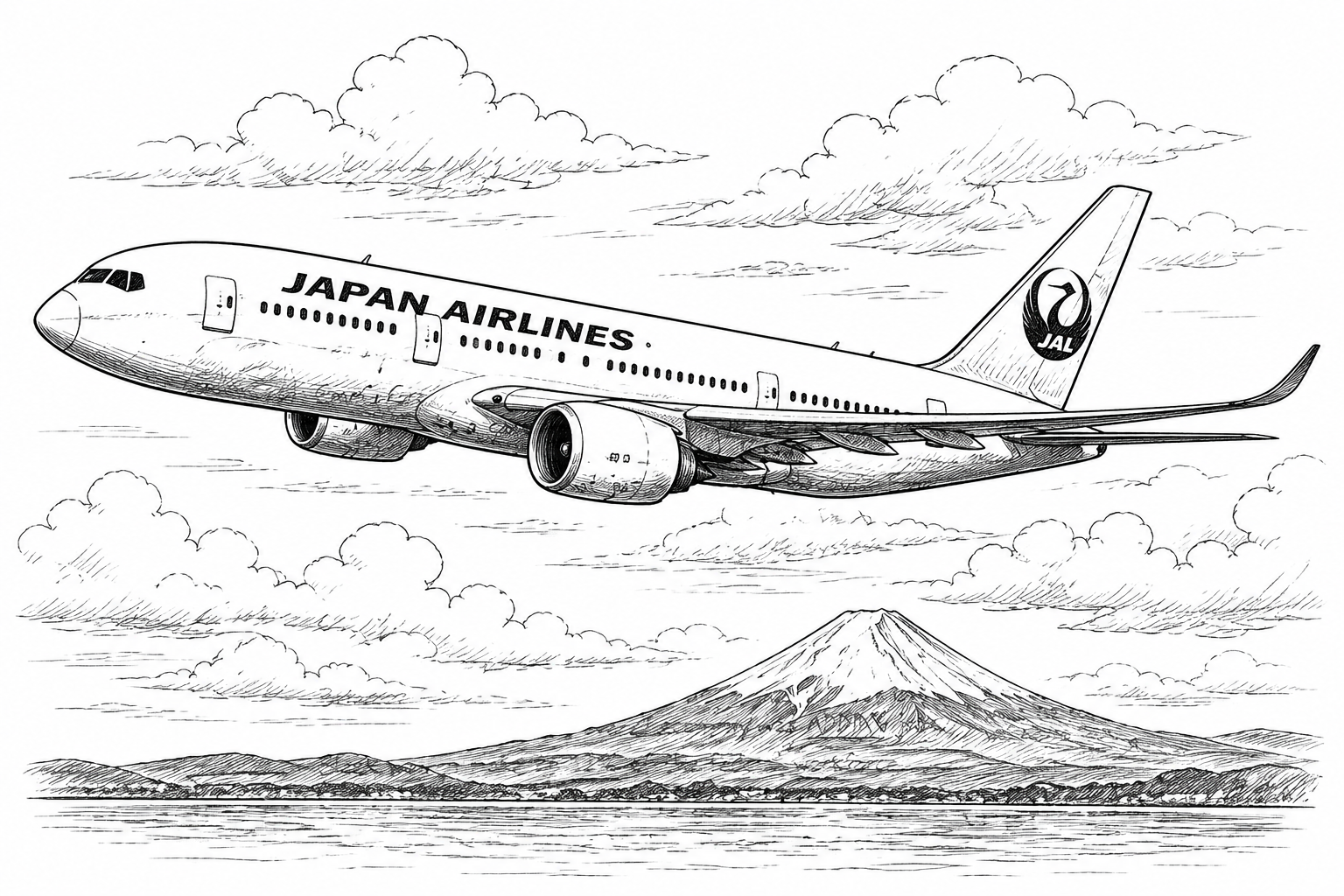
The response is not a cap or a tax. Starting July 2025, Japan Airlines began offering free domestic flights for international tourists booking both international and domestic segments together, providing access to 64 airports across Japan. The program pairs the free domestic leg with a $100 stopover surcharge for travelers from the U.S., Canada, Mexico, and China who remain in their first Japanese airport for more than 24 hours — a structural nudge that makes leaving the major hub cheaper than staying in it. The program is not a marketing gimmick. It is an attempt to engineer tourist behavior at scale.
The logic behind it is worth understanding precisely. More than 90% of travelers who visit Japan say they want to visit regional areas. Fewer than 10% actually do. That gap between intention and behavior is what the free flight program is designed to close — not by appealing to curiosity, but by removing the cost barrier that keeps most visitors on the well-worn path between Tokyo and Kyoto. When domestic airfare runs between ¥29,000 and ¥42,000 for standard routes, eliminating that cost changes the math of the itinerary. Japan is not assuming tourists will choose differently. It is making it financially irrational not to.
This reframes how tourism is being managed. The traditional model measures success through volume — more arrivals, more revenue, more growth. That model assumes that concentration is a feature rather than a problem. Japan’s current strategy treats tourism as a flow problem. The question is no longer how many people arrive. It is how they move once they do, and whether that movement distributes economic benefit or simply intensifies it in the places that are already overwhelmed.
The economic case for redistribution is specific. Tourism revenue is not evenly distributed even within a single country. Concentrated demand drives up local prices, strains public infrastructure, and reshapes neighborhoods to serve short-term visitors at the expense of long-term residents. Japan’s regional economies have been struggling with declining rural populations and limited growth conditions that tourism could address, but only if visitors actually reach those areas. By integrating domestic travel into the international experience at zero cost, Japan is linking global demand to local economies that have historically remained disconnected from it. The free flight is the mechanism. Regional revitalization is the actual goal.
The contrast with other destinations is instructive. Barcelona, Venice, and Amsterdam have all introduced caps, taxes, and entry restrictions to manage overtourism. Those approaches limit access. Japan’s approach reshapes incentives without reducing overall demand — a meaningfully different strategy that assumes travelers will follow value if the conditions are right. The Japan Tourism Agency has framed the initiative explicitly as supporting regional revitalization, not just congestion management. The distinction matters because it sets a different standard for what success looks like. The program is not trying to reduce the number of people coming. It is trying to change where the money lands when they do.
The use of airfare as a policy tool is not unique to Japan. In the United States, budget carriers are simultaneously approaching Washington for federal support, arguing that their survival is essential to keeping ticket prices competitive for working-class travelers. In both cases the argument is the same: flight pricing is not just a market outcome. It is a public infrastructure question. Who can afford to fly, where flights go, and what incentives surround them are decisions being made by governments and carriers together — not by the market alone.
There is one tension the program has not fully resolved. Environmental critics note that short domestic hops add carbon output compared to rail travel — and Japan’s rail network is one of the most efficient in the world. Flying a tourist from Tokyo to Hokkaido produces more emissions than the Shinkansen would. That tradeoff is real, and it sits uncomfortably inside a tourism strategy that is otherwise being framed as sustainable. Japan has not answered it yet.
What this moment reveals is that tourism management has entered a new phase. Destinations are no longer just competing to attract visitors. They are engineering where those visitors go, what they spend, and who benefits. The free flight is a policy instrument disguised as a travel perk. Japan is betting that behavior follows incentives — and that if movement is made easy enough and cheap enough, visitors will distribute themselves in ways that the market alone never would. Whether other countries follow the model depends on whether it works. The data on that is still coming in.