
Meta is ending support for end-to-end encrypted messaging on Instagram beginning May 8. The announcement has triggered viral backlash, with posts circulating online claiming Instagram will now be able to “view all conversations and photos” — framing the change as a sudden collapse of privacy protections. Many of those posts exaggerate the mechanics. The core development is real: Instagram will no longer support the encryption layer that previously prevented Meta from accessing message contents at all.
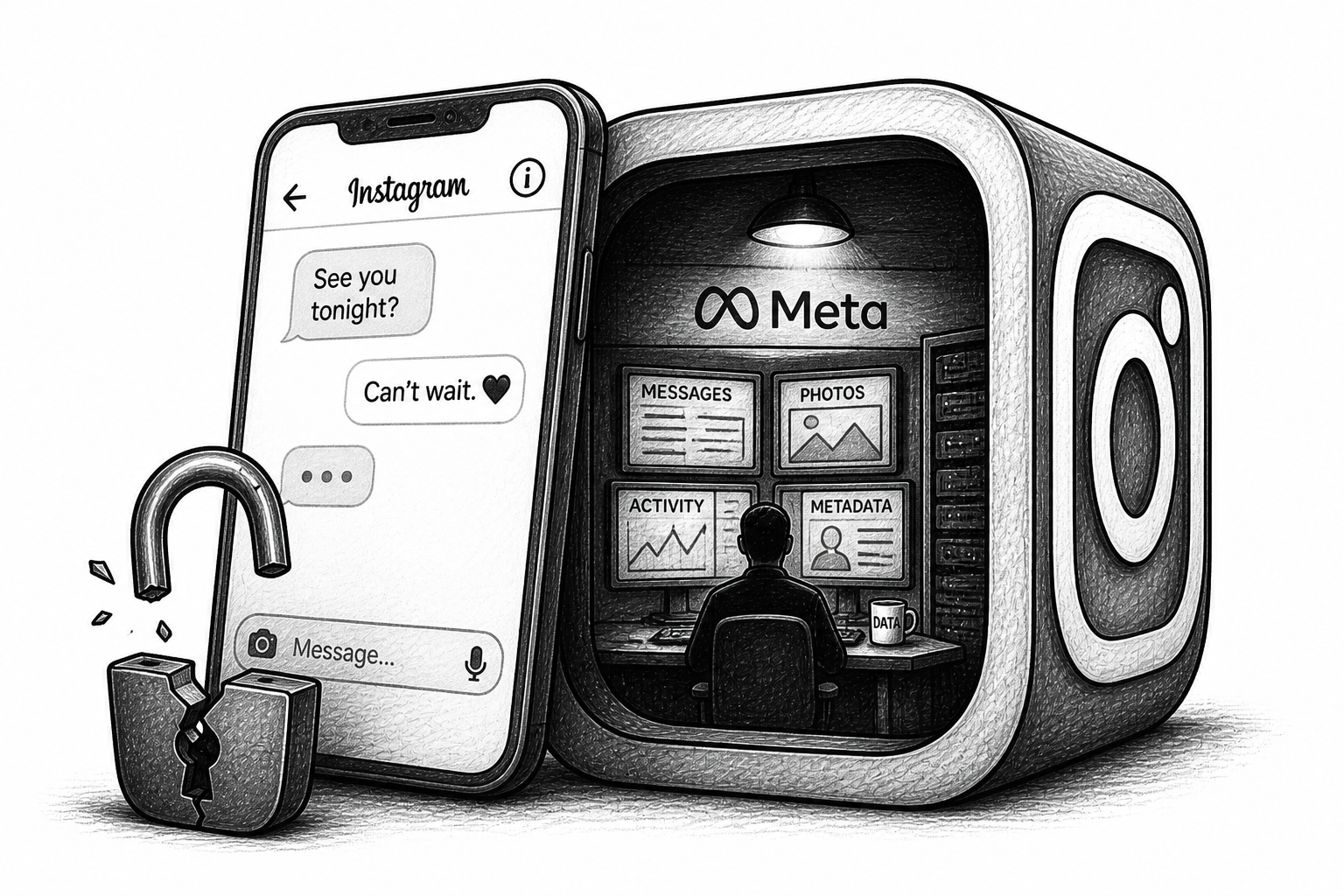
That distinction matters more than the viral discourse suggests. End-to-end encryption means no one except the sender and recipient can read what’s in a message — not even the platform hosting the conversation. By removing that layer from Instagram DMs, Meta regains direct visibility into communications that were previously shielded. The company has framed similar moves in the past around product simplification, moderation infrastructure, and safety — though the shift also aligns with the growing commercial value of user data, AI training systems, and behavioral content analysis. Those interests are not mutually exclusive. They are also not incidental.
This is not the first time SSC has tracked the gap between what Meta says a product decision is about and what it is structurally doing. When the Mirror Becomes the Algorithm established that platform design choices — algorithmic recommendation, persistent notification systems, infinite scroll — are not neutral infrastructure. They are decisions with measurable consequences, a point a Los Angeles jury affirmed when it found Meta and Google liable in a landmark social media addiction case earlier this year. The encryption rollback operates on the same logic from a different direction: a design choice that expands Meta’s access to user behavior under the cover of product simplification. And as Instagram’s testing of the Instants app revealed, Meta is simultaneously building tools designed to signal authenticity and privacy to users even as it reduces the technical substance of those protections.
What the backlash reveals is how differently users understand digital privacy than platforms do. Many people treat Instagram DMs as semi-private space for relationships, business conversations, organizing, and community building. Platforms operate under a different set of pressures simultaneously: governments demanding moderation visibility, advertisers requiring safer environments, AI systems requiring larger pools of analyzable content, and regulators scrutinizing harmful activity in encrypted channels. Encryption limits all of those capabilities at once. Removing it resolves multiple institutional pressures in a single product decision.
The trust problem underneath this moment is larger than the encryption change itself. Meta already had access to significant amounts of user metadata before this shift — engagement patterns, account relationships, device information, interaction histories. But encryption carried symbolic weight. It marked a boundary between what felt socially private and what was technically visible to the company. Removing that boundary changes the relationship between user and platform not just technically but perceptually — and perception is where trust lives or dies.
The practical implications are less dramatic than many viral posts suggest but still consequential. Existing encrypted chats are not being retroactively opened. Future Instagram conversations will no longer carry the same encryption protections some users previously relied on. For people prioritizing secure communication, the shift will likely accelerate migration toward platforms like Signal or WhatsApp, where end-to-end encryption is central to the product rather than optional infrastructure layered onto a social platform. The irony is not subtle: WhatsApp, which Meta also owns, has built its identity around encryption as a feature. Instagram is now moving in the opposite direction. Meta is making a different bet on each platform about what its users will accept — and what they won’t notice.