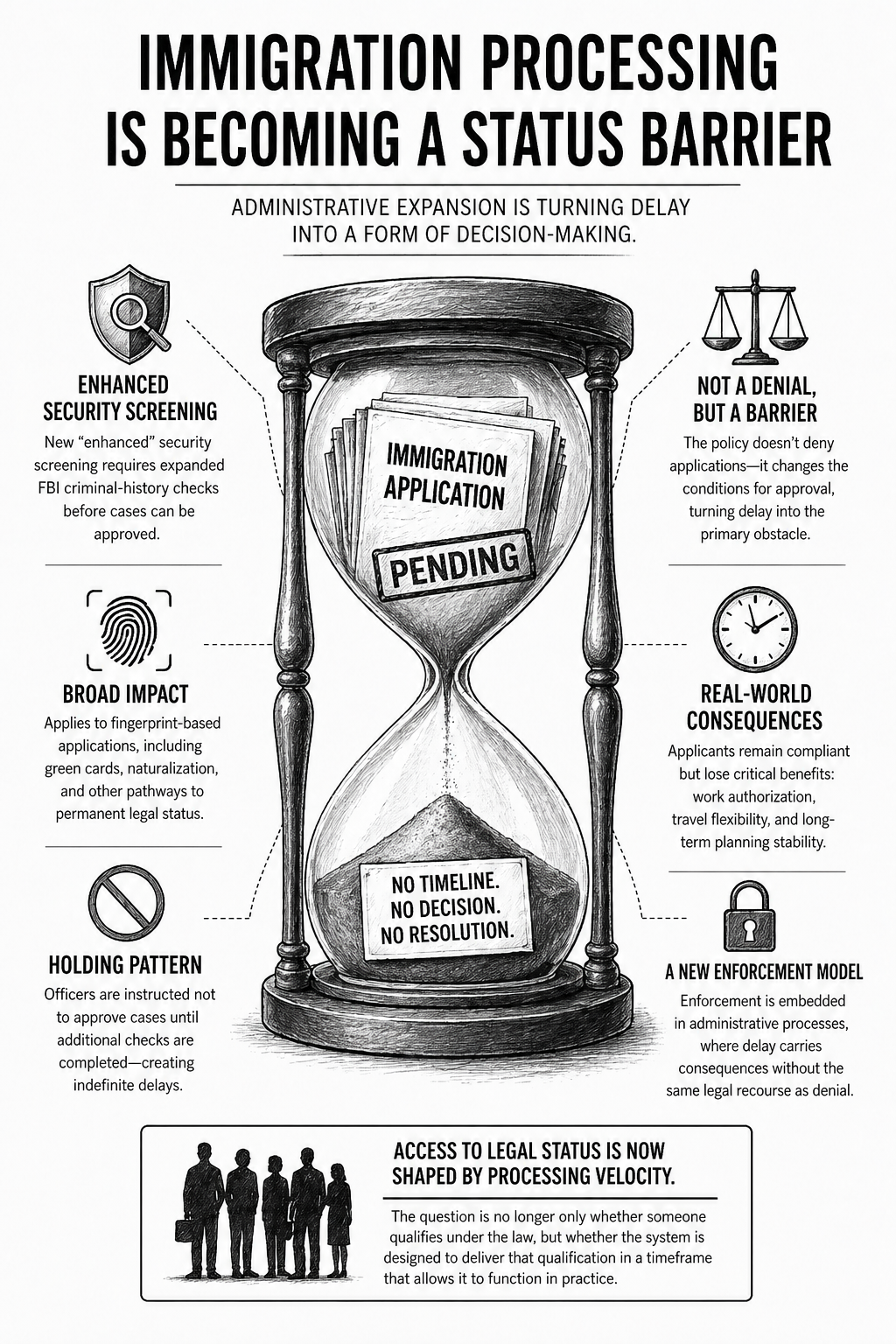
The Trump administration has implemented new “enhanced” security screening requirements across immigration applications, requiring expanded FBI criminal-history checks before cases can be approved. According to Reuters, the directive took effect immediately and applies broadly to fingerprint-based applications, including green cards, naturalization, and other pathways to permanent legal status. Immigration officers have been instructed not to approve cases that have not completed these additional checks, effectively placing thousands of applications into a holding pattern without a defined timeline for resolution.
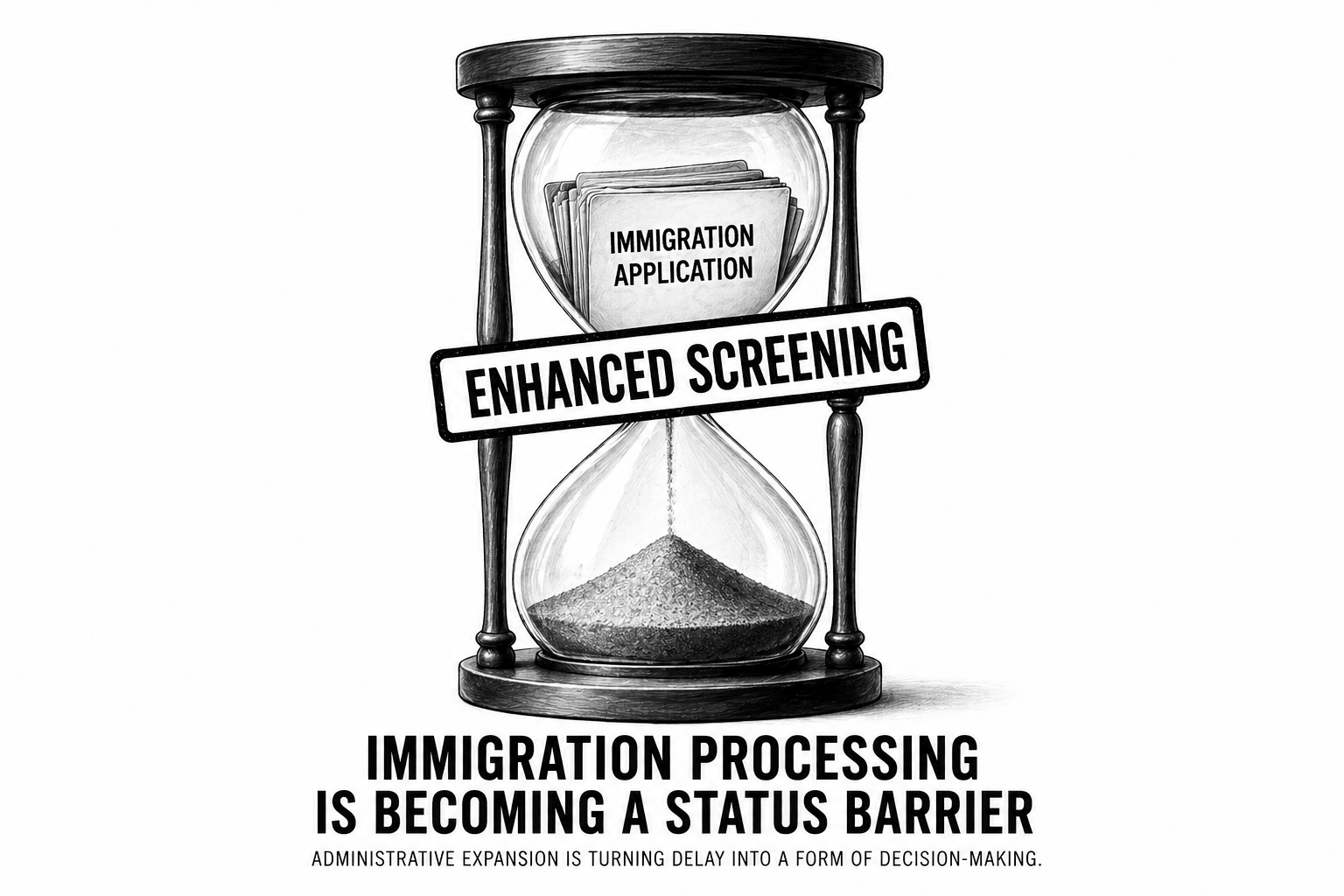
The policy does not formally deny applications, but it changes the conditions under which approval becomes possible. By introducing additional procedural requirements without expanding processing capacity or timelines, the system begins to function as a filter through delay rather than adjudication. Applicants remain technically compliant while simultaneously losing the practical benefits of that compliance, including work authorization continuity, travel flexibility, and long-term planning stability.
This shift reflects a broader pattern in how immigration policy is being executed. Enforcement is no longer limited to border entry or explicit denial. It is increasingly embedded within administrative processes that determine whether applications move forward at all. The distinction matters because delay carries consequences without triggering the same legal recourse that denial would provide.
What emerges is a system where access to legal status is shaped as much by processing velocity as by eligibility criteria. The question is no longer only whether someone qualifies under the law, but whether the system is designed to deliver that qualification within a timeframe that allows it to function in practice.