
When Ghana launched the Year of Return in 2019, it was simultaneously a cultural invitation and an economic strategy. The initiative, marking 400 years since the first enslaved Africans arrived in America, brought tens of thousands of African Americans to Ghana — for the festivals, for the citizenship ceremonies, for the emotional weight of standing on soil their ancestors were taken from. The images traveled. The moment was real. Ghana offered citizenship and residency to diaspora members, positioned itself as the natural home for Black American belonging, and generated the kind of global attention that no tourism budget could have bought. What the branding could not fully contain was the question of what the homecoming was building, and for whom, and on what terms.
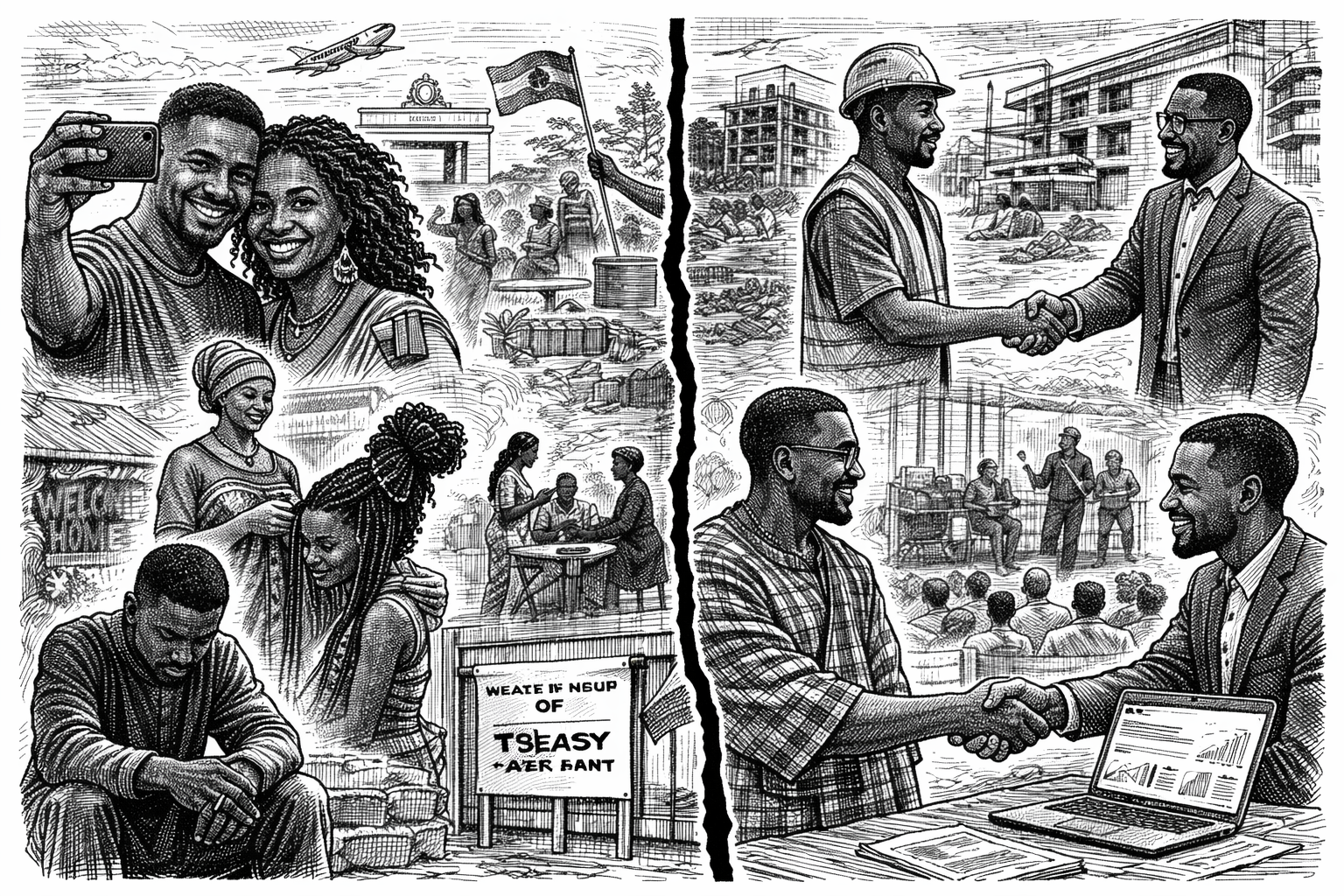
The economic activity generated by the Year of Return and its successor initiatives has been genuine. Diaspora Ghanaians and African Americans have invested in real estate, in hospitality, in creative and media ventures, and in the agricultural and eco-tourism sectors that the government positioned as priority areas for diaspora engagement. The Accra real estate market saw significant activity from diaspora buyers in the years following 2019. Returnee communities — African Americans who relocated permanently or semi-permanently — established themselves in Accra and around the country, creating social infrastructure around shared cultural identity and economic ambition. Ghana positioned itself explicitly in competition with Nigeria for diaspora attention and investment, and the comparison was generally favorable: more political stability, stronger diaspora programming, and a welcoming institutional posture that Nigeria has historically struggled to replicate.
What has been more difficult to assess is whether the diaspora investment has distributed meaningfully into Ghanaian communities, or whether it has created an enclave economy — well-resourced, culturally affirming, and largely self-contained — that operates alongside Ghanaian economic life without deeply integrating with it. Returnee communities in Accra have sometimes generated tension with local residents, raising questions about land access, rental price inflation in sought-after neighborhoods, and the degree to which diaspora economic activity is creating opportunity for Ghanaians or primarily for the diaspora itself. These are not arguments against diaspora return or investment. They are structural questions that any honest accounting of the movement must engage. The difference between diasporic investment that builds community and diasporic investment that replicates extraction — taking value from a place while insulating the investor from the conditions of that place — is a distinction that requires active, intentional effort to maintain.
Five years in, Ghana’s Year of Return has demonstrated that the emotional and cultural case for diaspora return is powerful and real. It has generated economic activity, political goodwill, and a model that other African nations have watched and attempted to replicate. What it has not yet fully demonstrated is a durable infrastructure for diaspora investment that is accountable to Ghanaian communities, structured around shared benefit rather than individual return, and capable of surviving the branding moment that created it. The question for the next five years is not whether Black Americans will continue to come to Ghana. They will. The question is whether what gets built there will look like community or like a market.