
LinkedIn found that only 38 percent of Gen Z workers plan to build new AI skills in the next six months, compared with 63 percent of Gen X. Other research suggests the gap is not about technological ability. Younger workers are increasingly questioning what happens when AI replaces the work they still need to learn how to do.
The generation that grew up with smartphones, algorithms and constant technological change is becoming the workplace generation most cautious about artificial intelligence.
LinkedIn’s latest AI Confidence Index found that 53 percent of U.S. workers now say AI makes them more efficient, while nearly six in 10 plan to proactively learn new AI skills during the next six months. Gen Z moves in the opposite direction. Only 38 percent of Gen Z workers told LinkedIn they plan to build AI skills, compared with 63 percent of Gen X workers.
That gap would be easier to explain if younger workers simply were not using the technology. They are. Deloitte’s 2026 Gen Z and Millennial Survey found that 74 percent of respondents use AI in their day-to-day work, up sharply from the previous year. Among Gen Z respondents, 72 percent have used AI for career advice and 79 percent have used it to identify learning and development opportunities.
Gen Z is not sitting out the AI transition. It is entering it with reservations.
The Skepticism Is Getting Stronger
Gallup found a sharp change in how employed Gen Z workers view AI. In 2025, 37 percent said the risks of AI in the workforce outweighed its potential benefits. By 2026, that figure had climbed to 48 percent, while the share saying the benefits outweighed the risks fell from 20 percent to 15 percent.
Trust is even harder to find. Sixty-nine percent of employed Gen Z workers told Gallup they trusted work completed without AI more than alternatives involving the technology. Only 28 percent preferred work completed by a person using AI, while 3 percent placed greater trust in work produced entirely by AI.
Pew Research Center found a similar shift among Americans under 30. Seventy-three percent now believe AI will lead to fewer U.S. jobs over the next 20 years, up from 61 percent in 2024. Concern about AI has continued rising among younger adults even as attitudes among some older groups have stabilized.
That gives LinkedIn’s 38 percent number more context. Younger workers are being asked to become more proficient with a technology many increasingly believe could eliminate jobs like theirs.
Employers Are Moving in the Other Direction
The labor market is giving them little room to ignore it.
More than one-third of entry-level jobs now require AI skills, according to employers surveyed by the National Association of Colleges and Employers. NACE described a widening disconnect between what companies expect from new graduates and the hesitation among students about AI’s place in their work.
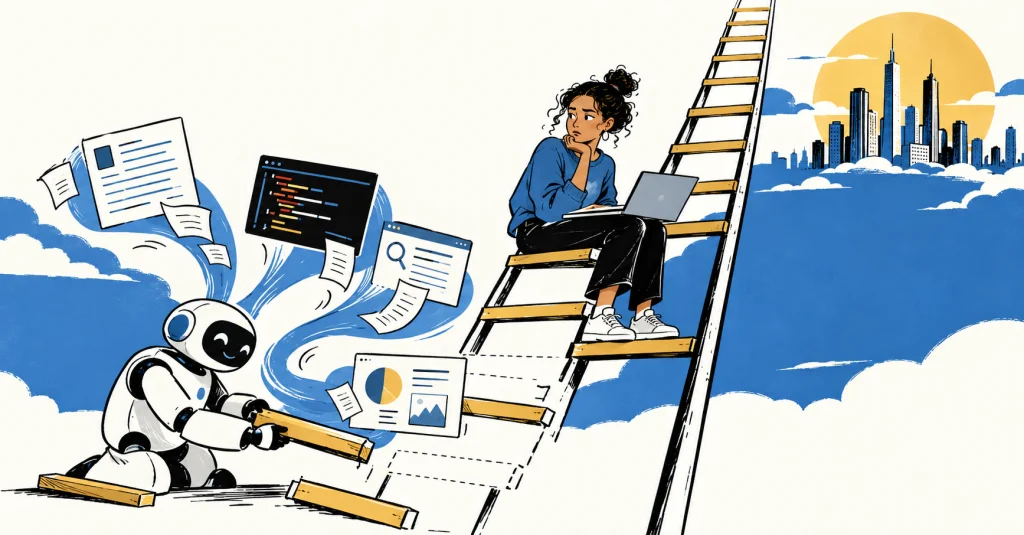
That puts early-career workers in an unusual position. They need AI proficiency to compete for jobs while also needing the kinds of assignments AI can automate to develop professional judgment in the first place.
KPMG found that tension directly among its 2026 interns, 99 percent of whom identified as Gen Z. Seventy-six percent said career success will require both human skills and knowing how to direct AI effectively, but their biggest concern was not that AI would immediately eliminate their jobs. Forty-three percent said they were most concerned that excessive reliance on AI could weaken critical thinking.
The same interns overwhelmingly preferred learning from people. Fifty-seven percent identified direct coaching as the most valuable way they learned during their internships. Their concern was not simply whether AI could perform a task but whether handing the task over too early could prevent them from developing the expertise they will eventually be expected to have.
The Entry-Level Bargain Is Changing
Entry-level work has always included tasks that experienced workers eventually stop doing: drafting routine documents, conducting basic research, assembling presentations, writing initial code or working through early analyses. Those assignments were not always glamorous, but they created repetition, judgment and institutional knowledge.
AI can now absorb portions of that work. Computer science graduates are already encountering a labor market where traditional junior coding opportunities have contracted while employers place greater value on AI-related capabilities and experience overseeing automated systems.
Gen Z’s hesitation therefore looks less like resistance to technology than a dispute over what learning a profession will look like when the beginner work starts disappearing.
The contradiction is becoming part of the modern workplace. Younger workers are using AI, asking it for career advice and incorporating it into their jobs while simultaneously trusting human work more and worrying that overuse could weaken the abilities they need to advance.
Employers may eventually find that teaching workers how to use AI is the easier part. The harder problem will be making sure a generation can still learn how to do the work before it is asked to supervise a machine doing it.