
Frontier Airlines launched its 2026 GoWild Summer Pass on April 22 at $199 — its lowest introductory price ever — offering more than five months of unlimited flights across its domestic network through September 30. The pitch is direct: pay once, fly as much as you want. In a travel environment where a single domestic round trip routinely costs more than that, the number lands immediately. It promises flexibility, spontaneity, and a kind of mobility that most people feel priced out of. On the surface, it reads like a disruption.
But airline pricing rarely works on the surface.
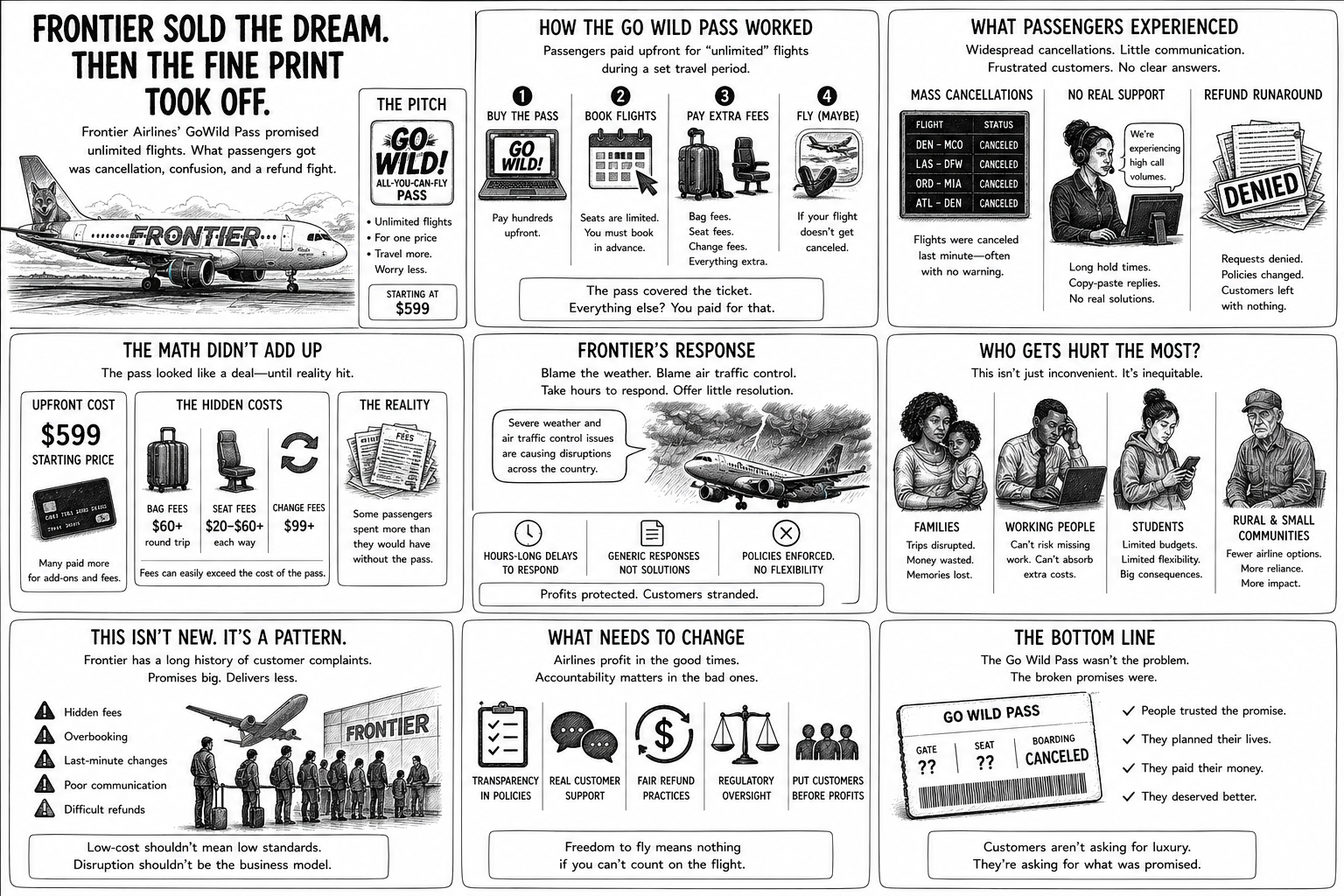
The GoWild Pass is a real product — and it has real constraints built into its architecture that the headline number does not convey. For each flight segment, passholders pay $0.01 in airfare plus applicable taxes, fees, and charges. Bags and seat assignments are sold separately. Seats are subject to availability — last seat availability is not guaranteed. Domestic flights can only be confirmed the day before departure. International flights must be booked at least ten days in advance. Early booking fees apply for select dates, ranging from $0 on most dates to $49 on weekends and up to $99 on peak travel days. The pass auto-renews unless you cancel. It is non-transferable — only the purchaser can fly on it. And there is a long list of blackout dates across every major holiday window in 2026 and 2027, including Thanksgiving, Christmas, the Fourth of July weekend, and Memorial Day.
The limited-time promotion running through May 8 softens some of those constraints — no blackout dates and dedicated seats on all domestic Frontier flights through September 8 for bookings made before the deadline. After May 8, the pass reverts to its more restrictive booking model, with fewer guarantees on availability and pricing. The promotional window is doing real work here — it makes the product more legible and more usable, which drives the purchase. Whether the pass delivers comparable value after May 8 is a different question, and one the marketing does not linger on.
What Frontier has built is not unlimited travel in the way people intuitively understand it. It is access to a system with constraints calibrated around a specific kind of traveler. The pass is best suited to flexible travelers who can book at short notice, travel light, live near a Frontier hub, avoid peak dates, and treat travel as opportunistic rather than planned. If that describes you — if you have schedule flexibility, no checked bag dependency, proximity to a Frontier-served airport, and the ability to absorb last-minute uncertainty — the GoWild Pass can deliver genuine value. If your life requires predictability, the limitations start to outweigh the promise fast.
That sorting mechanism is not accidental. It is the point.
Frontier does not need more demand at peak times. It needs to fill empty seats at the margins — the Tuesday afternoon flights, the off-season routes, the inventory that would otherwise go unsold. The GoWild Pass converts that unused capacity into revenue without disrupting core pricing. It monetizes flexibility by turning travelers into the variable that absorbs the airline’s inefficiency. The airline wins regardless of whether you fly a lot or a little: heavy users fill otherwise empty seats, light users pay the upfront fee and generate low-margin revenue without consuming inventory. The model is designed to extract value from every behavior.
The psychological layer compounds this. Frontier’s chief commercial officer said the pass is designed to put “unlimited travel within reach for more people than ever.” That framing — democratization, access, reach — is doing specific marketing work. Once someone pays upfront for unlimited access, there is a behavioral incentive to maximize usage in order to feel like the purchase was justified. That is not a bug in the product design. It is a feature. Engagement benefits the airline whether or not any individual trip would have happened without the pass.
The broader pattern here extends well beyond airlines. Across industries, companies are moving away from simple transactions toward structured flexibility — subscriptions, passes, membership tiers — that give the impression of expanded access while quietly redefining the terms under which that access is granted. The subscription model does not lower prices for everyone. It creates a parallel pricing track that rewards people who can trade predictability for cost and penalizes those who cannot. Time, flexibility, and schedule control become currencies alongside money. And the people with the most of those currencies — remote workers, people without children, people with flexible employment — are the ones who extract the most value from the model. The people with the least are the ones paying full fare for the certainty the pass cannot provide.
The GoWild Pass is a compelling product for the traveler it was designed for. That traveler is more specific than the marketing suggests. The question worth asking before purchasing is not whether the price is low — it is. The question is whether your actual life fits the system Frontier built around that price. For a lot of people, the honest answer is that it does not — and the $199 will teach them that sometime around their third failed last-minute booking on a Saturday in July.