
What This Week Revealed About How the System Actually Works
Happy Friday.
Ted Turner, who built CNN into the world’s first 24-hour news network, died Wednesday at 87. The same week, outlets across the ideological spectrum are announcing cuts — The Daily Wire, Disney, NPR — a reminder that the media model Turner helped prove was possible is contracting everywhere simultaneously, regardless of who funds it or what it believes. The infrastructure isn’t failing because of bad ideas. It’s failing because the economic architecture underneath it was never as stable as it looked. NPR’s $113 Million Rescue Signals That Public Media Is Entering a New Survival Era is the piece that puts the sharpest point on what that means — and what gets lost when journalism depends on whether wealthy donors decide it’s worth saving.
And then there is the story that nobody wants to be the next big thing but might be anyway. Health officials in at least a dozen countries, including the U.S., are monitoring passengers who dispersed across the world after a hantavirus outbreak aboard a cruise ship killed three people. As of Thursday, former passengers had been tracked to five U.S. states: Arizona, California, Georgia, Texas, and Virginia. Twenty-nine passengers disembarked on the remote Atlantic island of St. Helena on April 24 — nearly two weeks after the first death — without undergoing contact tracing. The WHO says the public health risk remains low. That may be true. But the speed at which passengers scattered across a dozen countries before anyone knew what they were carrying is the part worth watching.
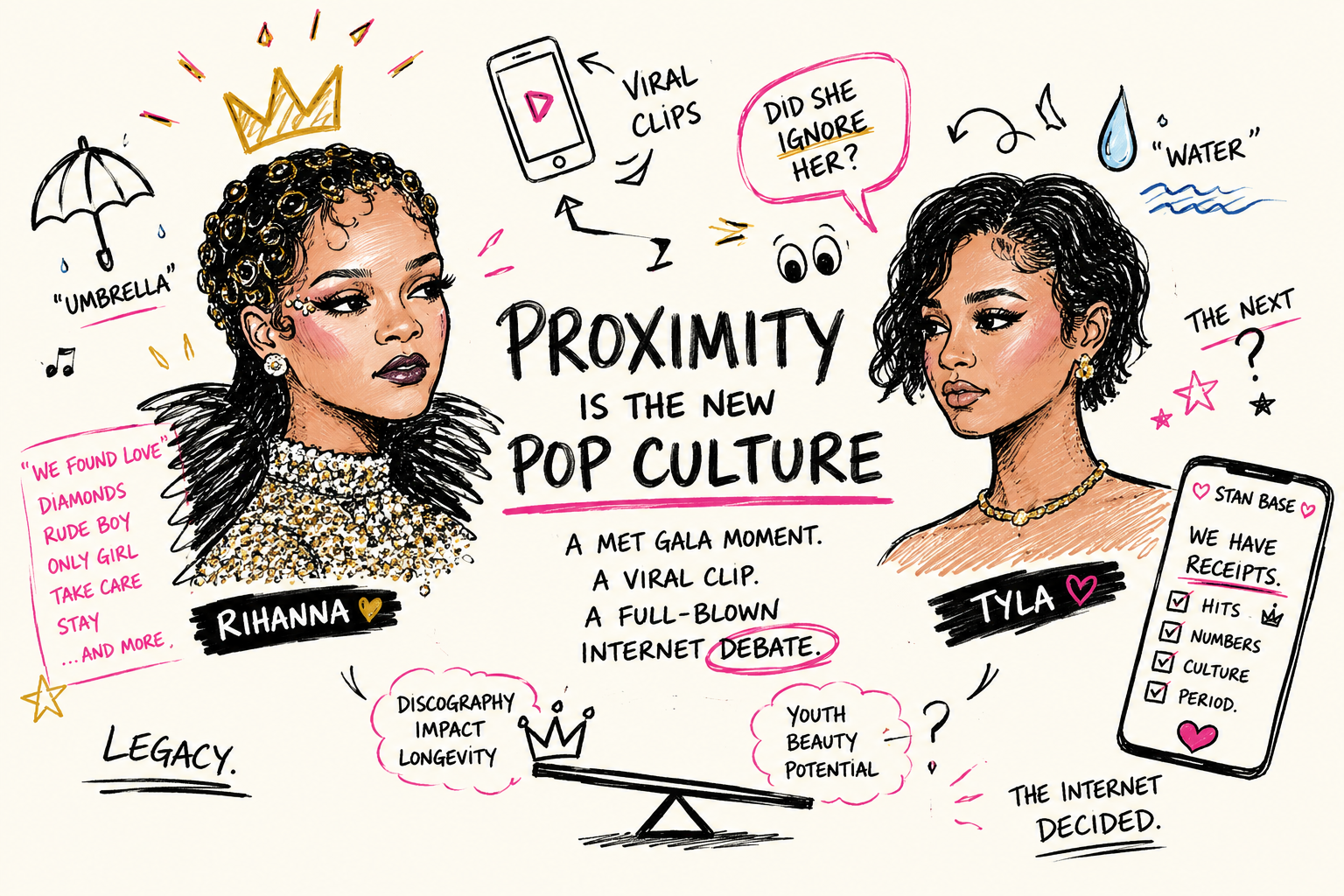
But the news cycle this week wasn’t only about institutions contracting and viruses spreading. The internet had its own agenda — and it started, as it often does, at the Met Gala. A viral clip showed Tyla approaching Rihanna, Rihanna saying “my baby’s dad is calling me” and walking away, and the internet spent three days turning a thirty-second moment into a succession narrative. But the conversation didn’t stop there. Beyoncé’s presence — who she acknowledged, who got proximity and who didn’t — ran parallel to the Tyla moment as its own hierarchy reading. Taken together, the internet wasn’t processing celebrity interactions. It was processing a power map in real time, collectively, and with receipts. The Internet Turned a Met Gala Interaction Into a Succession Battle is worth reading not because of what happened between artists — but because of what it reveals about how we’ve learned to read power. And The Beyoncé Effect Is Not Influence. It’s Infrastructure. takes that argument further: when Beyoncé moves, markets move with her. That’s not celebrity. That’s a different kind of power entirely.
And today — not tomorrow, today — Chris Brown’s Brown drops. The cover alone is making an argument before a single bar plays. The Pose Says Classic Before the Music Does is the piece that reads what Brown is actually doing with this rollout: positioning himself in the canon on his own terms, controversy and all, daring the culture to decide where he lands. Whether you’re ready to have that conversation or not, the album is here. And the internet will not be quiet about it.
That’s the thread this week. Power. Who has it, who’s performing it, who’s losing access to it, and who’s building something new because the existing systems stopped working for them.
Housing Is a Financing Problem Disguised as a Supply Problem
Twenty-two million affordable homes already exist in the United States. The financing system needed to access them has broken down. This is not a construction problem — and the sooner the policy conversation catches up to that reality the better. It is a credit access, appraisal bias, and lending infrastructure problem. And those mechanisms are not race-neutral. The homes are there. The pathways to reach them were never built for everyone.
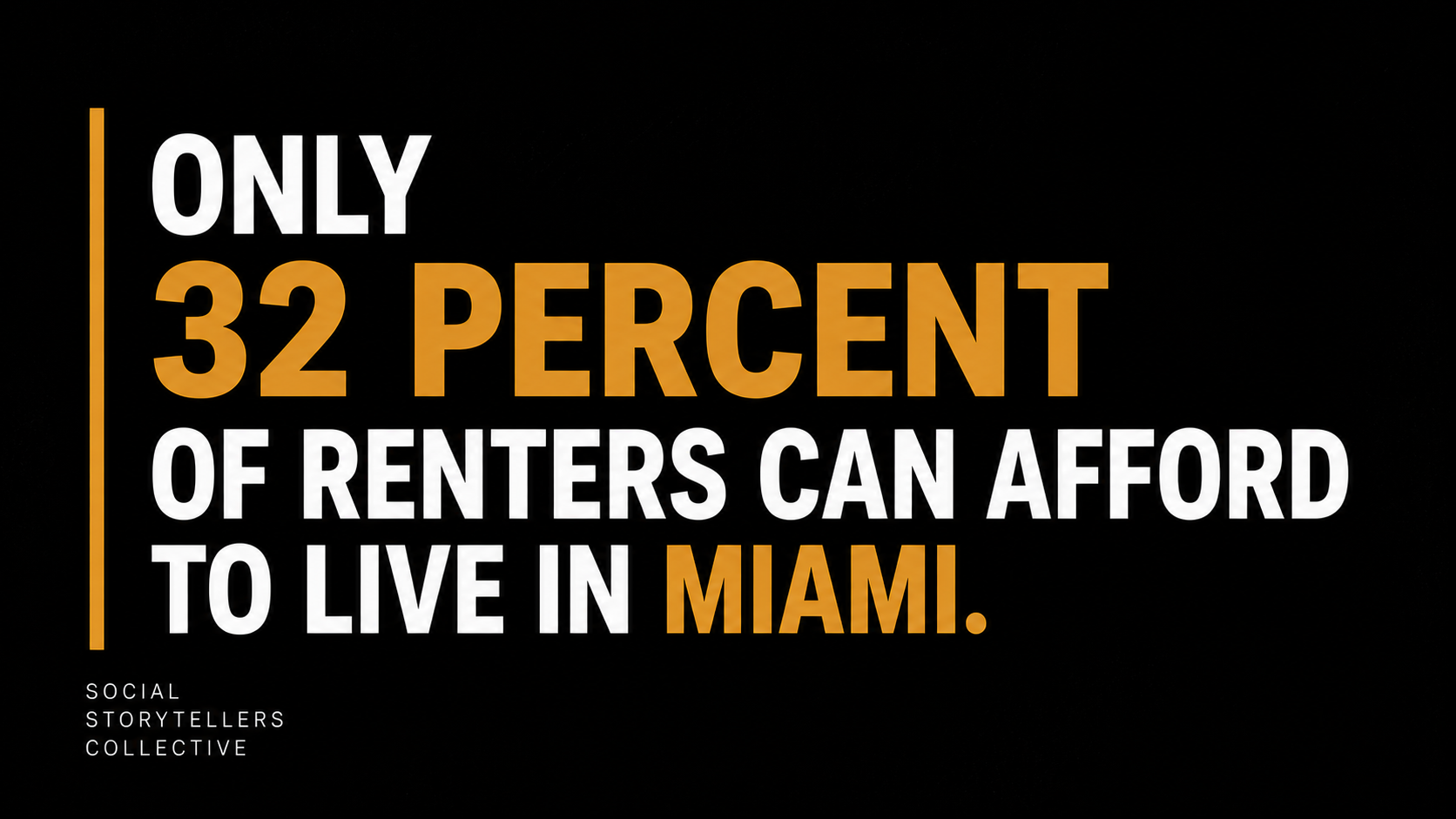
Fleeing the City Is Not a Lifestyle Choice Anymore shows where that pressure lands. Whether you are in Miami — where only 32% of renters can actually afford to live there — or Boston, where the economy keeps growing while the people who built it get priced further from its center, or Los Angeles, where that affordability figure drops to 33.6%, the pattern is the same. The city is winning on paper. The people inside it are absorbing the cost. Growth metrics and livability metrics are moving in opposite directions across every major American metro — and the distance between them is where working families are disappearing.
The Money Conversation Nobody Is Having Honestly
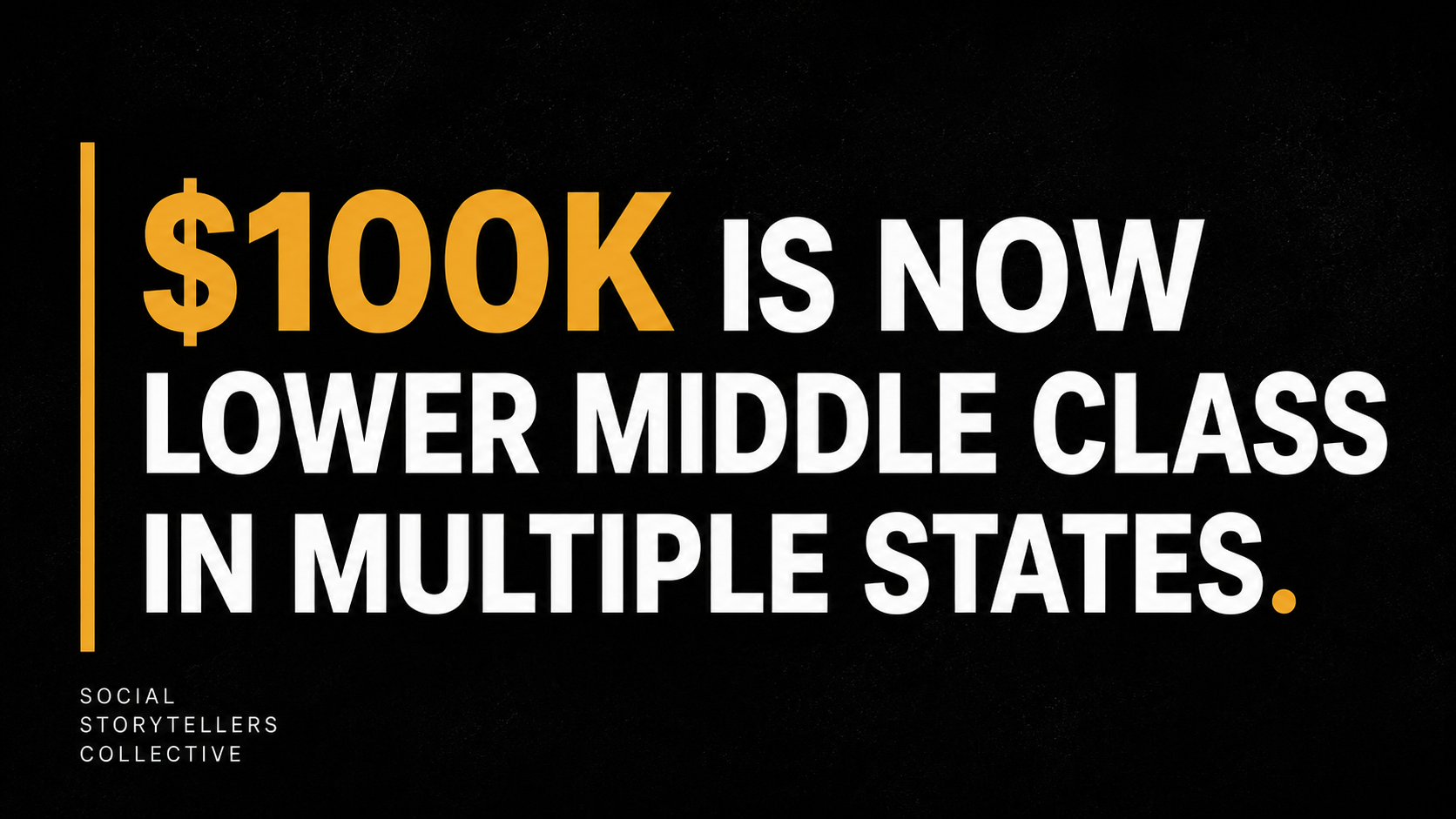
Here’s a number worth sitting with: a $100,000 salary now qualifies as lower middle class in multiple states. Not comfortable. Not thriving. Lower middle class. Six Figures No Longer Signals Stability puts a name on something a lot of people have been feeling but couldn’t quite articulate — the salary that was supposed to mean you made it is no longer clearing the bar.
And before you point to the wage growth numbers — yes, wages are technically outpacing home price increases right now. By 1.2 percentage points. Sounds like progress. Wages Are Beating Home Prices. That’s Not the Same Thing as Affordability. does the math on what it would actually take to restore pre-pandemic purchasing power: a 20% income increase. The home price-to-income ratio still sits at 4.9. A smaller gap is not the same thing as a closed one. It is a smaller gap being framed as recovery.
The Labor Market Is Lying To You In Multiple Languages
The AI layoff numbers dropped this week and they are not subtle. U.S. employers announced 83,387 job cuts in April — a 38% jump from March — and for the second consecutive month, artificial intelligence was the leading stated reason. Companies are not being coy about it anymore. The AI Layoff Machine Is Running — And It’s Just Getting Started breaks down what that shift actually means: the money that used to pay for human roles is being redirected toward AI infrastructure. The jobs aren’t coming back. The budget moved.
At the same time New Jersey just called the gig economy’s bluff. New worker classification rules taking effect October 1will likely reclassify thousands of platform workers as employees. When “Flexibility” Was Always the Product names what the gig model was actually built on — legal ambiguity and the assumption that workers would absorb the cost of that ambiguity indefinitely. New Jersey just made that assumption expensive.
The Black unemployment rate hit 7.6% in Q1 2026. White unemployment sits at 3.8%. The Black Recession Isn’t a Statistic. It’s a System. documents exactly how that gap was produced — not by a weak economy, but by three simultaneous policy decisions that hit Black workers’ pathways specifically. Federal workforce reductions. DEI rollbacks. Certification changes. The outcome is arithmetic, not accident.
Workplace Stress Is Boiling Over Across the U.S. adds the emotional layer: workers aren’t just losing jobs. They’re being asked to perform adaptability and resilience while the ground shifts underneath them. That ask has a ceiling. We’re getting close to it.
Housing Is a Financing Problem Disguised as a Supply Problem
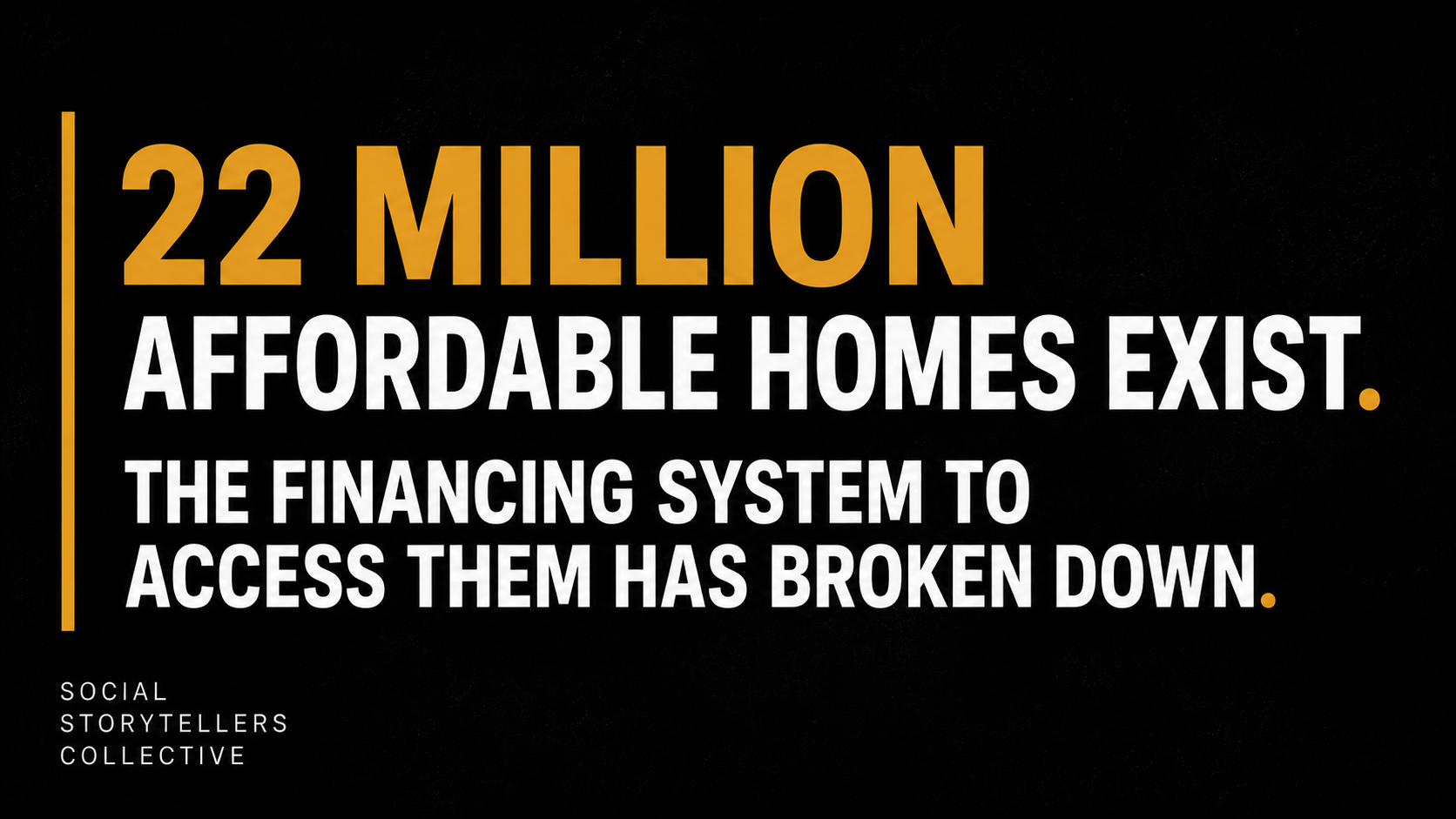
Twenty-two million affordable homes already exist in the United States. The financing system needed to access them has broken down. This is not a construction problem — and the sooner the policy conversation catches up to that reality the better. It is a credit access, appraisal bias, and lending infrastructure problem. And those mechanisms are not race-neutral. The homes are there. The pathways to reach them were never built for everyone.
Whether you are in Miami — where the majority of renters can no longer afford to live in the city they call home — or Boston, where the economy keeps growing while the people who built it get priced further from its center, or Los Angeles, where only 33.6% of renters can afford fair market rent, the pattern is the same. The city is winning on paper. The people inside it are absorbing the cost. Growth metrics and livability metrics are moving in opposite directions across every major American metro — and the distance between them is where working families are disappearing.
Culture Moved This Week. Pay Attention.

Isaiah Rashad said something in an interview that hip-hop has spent decades refusing to make space for: “They don’t make a manual for being a bisexual Black dude.” They Don’t Make a Manual for This is not a celebrity profile. It is a piece about what it means to name a structural absence in a genre built on performed certainty — and what happens to the culture when someone refuses to perform it.
The 8% Is No Longer Quiet tracked something quieter but just as significant — Black men posting degrees, graduation regalia, and academic milestones online in a coordinated, decentralized wave. It bypassed institutional framing entirely and turned achievement into undeniable public presence. Statistics have existed for years. What changed is visibility.
And then there’s Reebok x ICECREAM dropping the Board Flip in Pink Lemonade and Watermelon. The Return of Play: Reebok x ICECREAM Reintroduces Color Without Apology is the fashion story that is also a cultural weather report. After years of quiet luxury and muted everything, loud color is back — and it didn’t ask permission. Fashion responds to emotional environments before most industries do. When compression gets heavy enough, culture moves toward visibility and expression. That move is already underway.
Representation Doesn’t Disappear All at Once. It Phases Out Through Structure. looked at how Black Republican representation in Congress is disappearing — not through a single dramatic moment, but through redistricting, retirement incentives, and accumulated structural conditions. Each decision looks procedural in isolation. The result is the same.
Essence Fest Is Being Pulled Into the Economics of Political Power is the culture and money story that cuts deepest this week. When a celebration of Black culture becomes a negotiating chip in a political and economic power struggle, the event stops being just an event. It becomes a proxy for a much larger argument about who controls the spaces where Black joy, Black commerce, and Black visibility converge.
Celebrity Visibility Is Increasingly Colliding With Political Accountability connects the dots between fame, platform, and responsibility. The rules for what public figures owe the public are being rewritten in real time — and the people with the largest audiences are being forced to decide whether visibility is a shield or a spotlight.
Mexico City Is Starting to Push Back Against Remote Worker Privilege landed differently than most housing stories this week. A nightclub charging Americans $300 to enter while offering locals dramatically lower prices became the most honest thing anyone said about what remote work migration actually costs the communities absorbing it. The pricing is political language. And it is being widely understood that way inside Mexico.
The Institutions Are Restructuring In Real Time
Congress eliminated all federal funding for public broadcasting. Two charitable gifts totaling $113 million just arrived to help NPR stabilize — and even with that, leadership hasn’t ruled out layoffs. NPR’s $113 Million Rescue Signals That Public Media Is Entering a New Survival Era is the story underneath the donation headline: when journalism infrastructure depends on whether wealthy donors decide it’s worth preserving, the communities that need it most have the least say in the outcome.

Bowie State University — Maryland’s oldest HBCU — announced it will eliminate 79 positions to close an $18 million budget deficit. The same forces hitting public media are hitting public HBCUs. The infrastructure built to serve communities the mainstream system excluded is now being asked to survive without the public investment that made it possible.
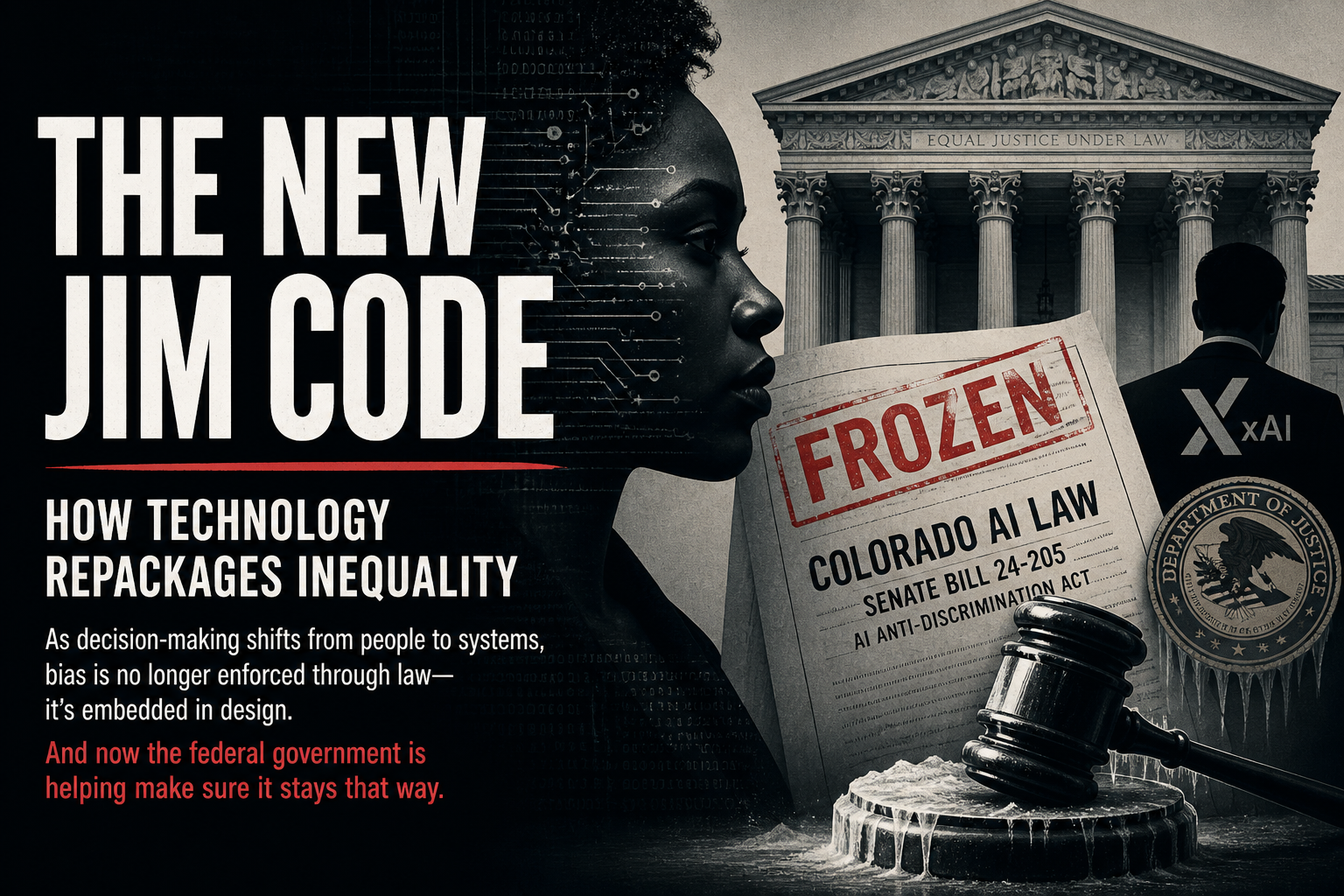
The New Jim Code: How Technology Repackages Inequality is the technology story that ties everything else together. A federal judge paused Colorado’s algorithmic discrimination law before it could take effect. The gap it exposes isn’t primarily legal. It’s structural. The technology is already making consequential decisions about people’s lives. The governance meant to hold it accountable is still trying to find its footing.
The Show Is the Strategy and Spotify Is Now Verifying Humans point in the same direction: attention is becoming infrastructure, and once it does, its authenticity has to be certified. AI Adoption Is Becoming a Workplace Compliance Metric and One Person Is Becoming a Company complete the picture — knowing how to use AI is no longer a competitive advantage. It’s becoming the baseline requirement for staying employable. And Bumble Is Betting That AI Can Fix Dating App Fatigue shows how that same AI bet is playing out in the most human space imaginable — connection itself. Whether the algorithm can manufacture what organic interaction couldn’t sustain is the question the whole industry is now asking.
Health Is Moving Faster Than the Evidence
GLP-1 drugs like Ozempic are already reshaping food, retail, and consumer behavior. Now researchers are exploring whether they may have implications for Alzheimer’s disease. Ozempic and Alzheimer’s: A Promising Signal, an Incomplete Science, and a System Moving Faster Than Both is worth reading slowly. The science is genuinely interesting. The speed at which market enthusiasm is outrunning clinical evidence is the actual story.
The ACA Expanded Coverage. It Never Closed the Gap. reframes a decade of progress: uninsured rates dropped across all groups, but American Indian, Alaska Native, and Hispanic populations still face rates approaching 19%— more than double the rate for white individuals. The gains were policy-dependent, not structural. KFF projects current cuts could add 14 million more uninsured by 2034. Communities of color absorb the largest share.
The Altitude Is the Same. The Access Isn’t.
Air India is scaling back select long-haul routes between May and July — affecting flights to Europe, North America, Australia, and Singapore. The framing is operational adjustment. The mechanism is structural. Jet fuel costs are up as much as 14 percent year-over-year, and Iran-related airspace restrictions are forcing reroutes that add flight time and fuel burn to routes already operating on compressed margins. When those two pressures converge on a single long-haul route, a profitable connection becomes marginal. A marginal one gets cut. LATAM Airlines lowered its 2026 earnings forecast for the same reason — and what’s being reported as a company-specific financial story is actually a system-level signal. The Middle East conflict is threatening to add as much as $24 billion in additional industry-wide fuel expenses. Airlines can absorb portions of that increase in the short term. The rest gets redistributed through higher fares, reduced route flexibility, baggage fee increases, and cuts to less profitable destinations. Travelers feel it gradually. But the pressure accumulates.
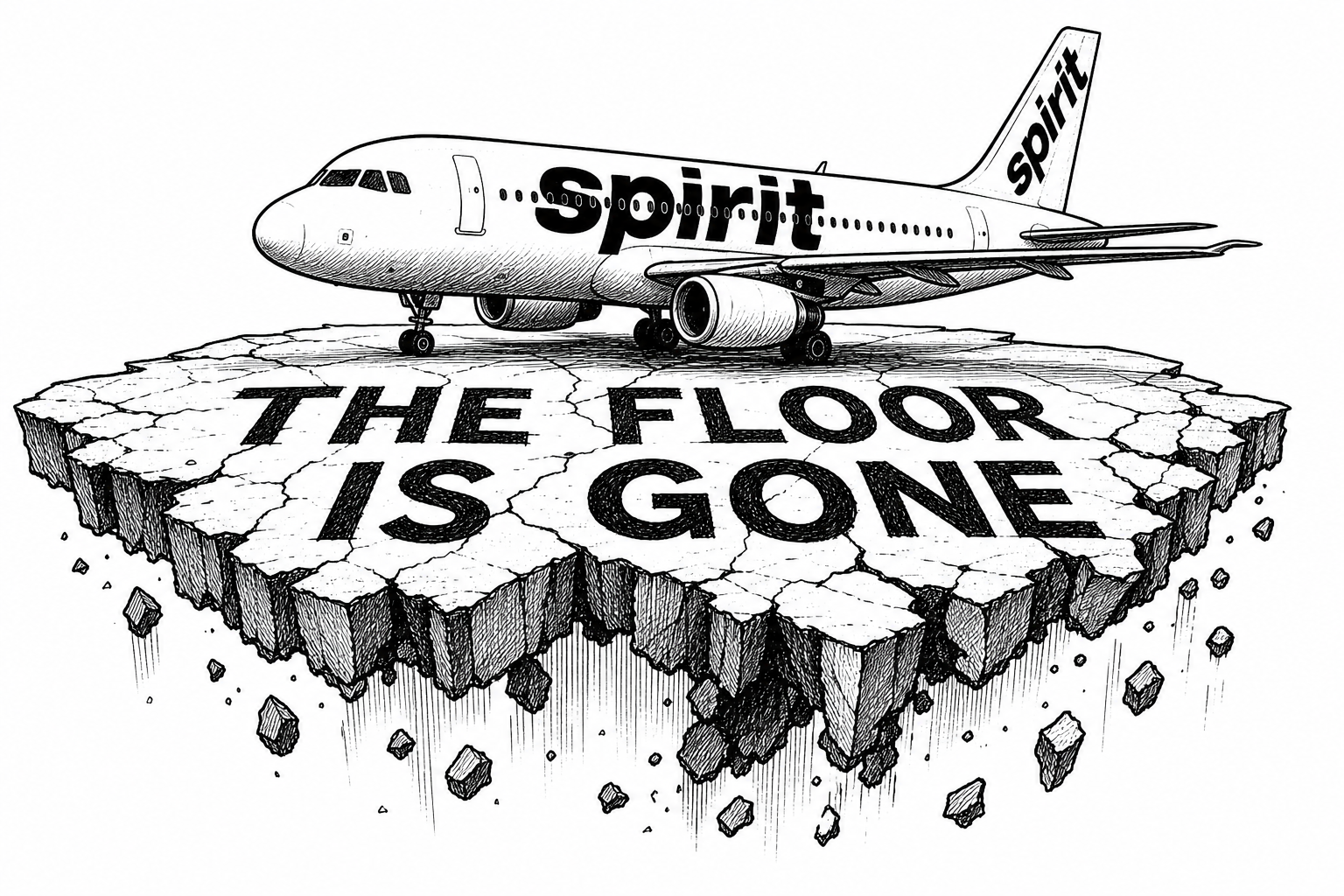
Spirit Airlines is done. So is the price point it protected. The closing of Spirit marked the end of a 34-year model that defined the lower boundary of what air travel could cost. That version of mobility — imperfect, uncomfortable, but accessible — the market will not replace on its own terms. And the carriers that remain are already adjusting to the new landscape. Delta is quietly moving to eliminate snack and beverage service on flights of an hour or less — not by raising the price of the ticket, but by redefining what the ticket actually includes. The headline fare looks stable. The experience attached to it is being steadily narrowed. Delta doesn’t need to win on generosity anymore. It can win on control. Global travel is not shutting down. It is becoming more expensive to sustain — and the people who depended on accessible air travel most had the fewest alternatives then. They have fewer now.
The Friday Closer
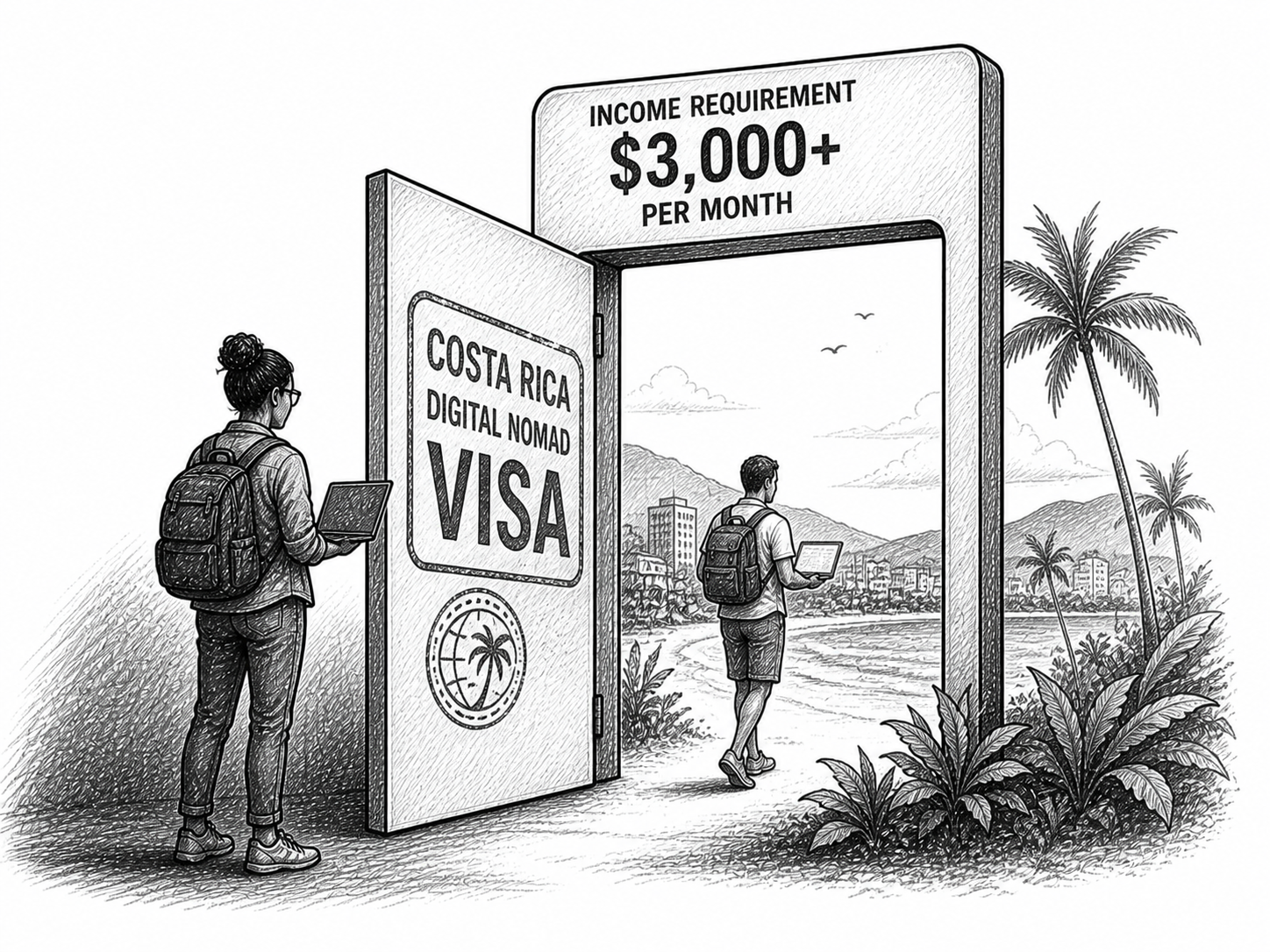
Costa Rica will let you live there for up to two years without paying local income tax — if your income comes from somewhere else. Costa Rica Will Let You Live There Tax-Free. The Income Filter Tells the Real Story. looks like a lifestyle story and lands like a structural one. The policy isn’t designed for everyone. It’s designed for people whose money travels better than most people do. Sit with that going into the weekend.
If this helped sharpen your perspective, share it with someone who should be paying attention. Join us on your laptop or desktop for the full experience — where the archive lives, where the analysis connects, and where each story builds on the last.
And subscribe to the daily SSC End of Day Closing Note for the deeper read on what these shifts mean once the day settles.
More next week.
The Social Storytellers Collective Team
Friday Forward is published weekly by Social Storytellers Collective. All stories are available at socialstorytellers.substack.com