
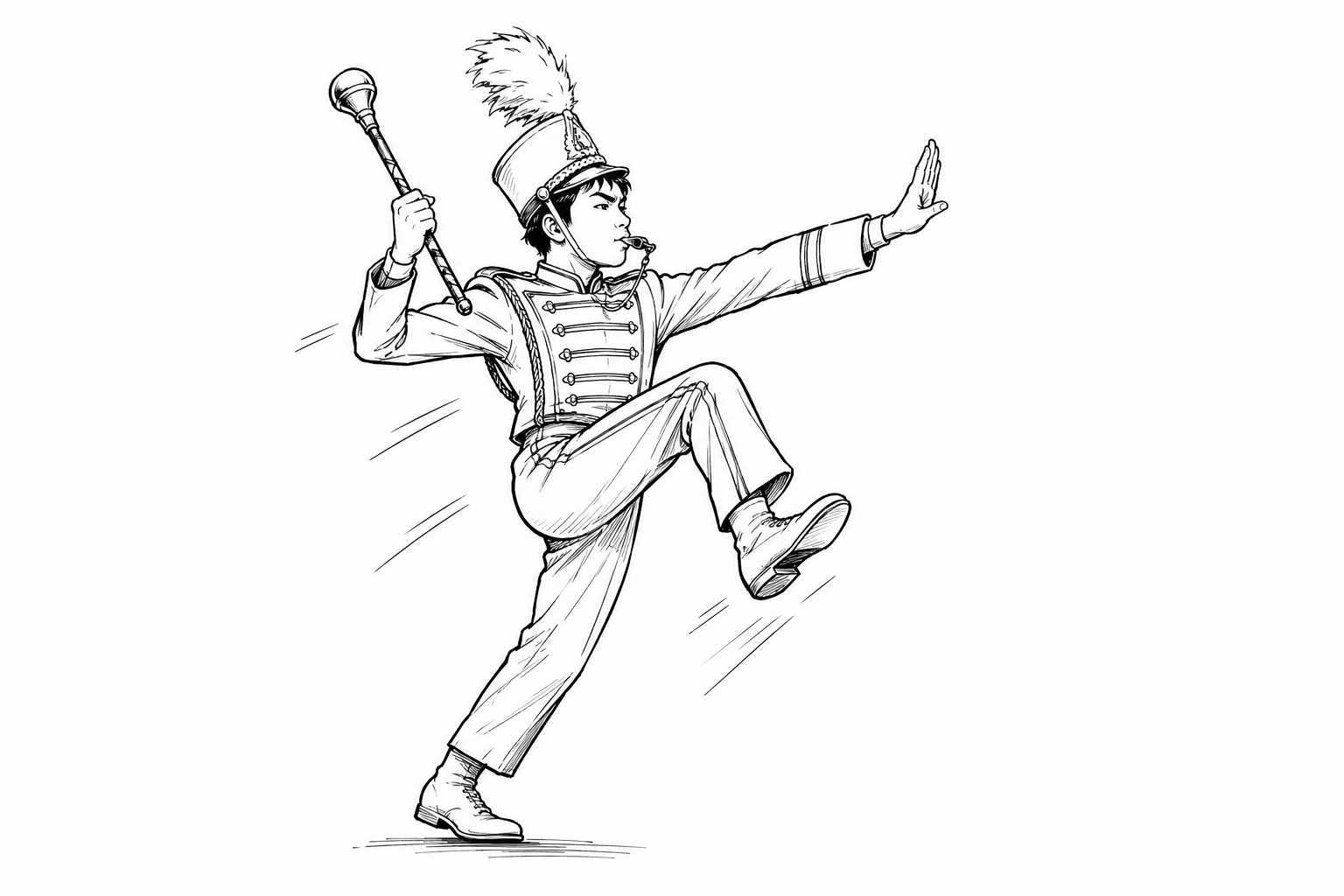
A parade performance by the Eastern Samar National Comprehensive High School Marching Band in the Philippines spread rapidly across X this week after viewers noticed choreography, formations, and performance aesthetics that many immediately associated with the HBCU marching band tradition in the United States. The video required no caption to make the connection land. Millions of people recognized what they were watching before anyone labeled it.
That recognition is the structural story — not the performance itself.
HBCU marching bands developed a distinct visual language over decades: high-energy dance routines, precision drills, synchronized auxiliary lines, call-and-response crowd engagement, and performance as spectacle rather than halftime accompaniment. That aesthetic became so fully realized, so technically sophisticated, and so widely distributed through social media that students on the other side of the world absorbed it, built on it, and performed their own version of it. The fact that millions of viewers immediately named the source confirms something important: this tradition has become a global reference point, one recognizable enough to travel across languages, borders, and performance contexts without losing its identity.
Online reactions reflected three distinct interpretations that are worth separating. The first celebrated the video as evidence of cultural reach — an American performance tradition influencing young musicians in places most Americans will never visit. The second raised questions about acknowledgment: whether performing in a style carries an obligation to name where it came from, particularly when the originating tradition has a documented history and living practitioners. The third pushed back on the comparison entirely, arguing that marching traditions evolve organically through shared global media rather than direct copying, and that attribution frameworks don’t translate cleanly across performance cultures. All three positions are doing something real, and none of them fully resolves the question.
When a style becomes a global reference point, it generates value — attention, prestige, cultural capital, and in some cases, revenue — every time it gets performed, adapted, or cited. The question of who captures that value, and whether any of it flows back to the originating institutions and practitioners, is a structural one. HBCU programs are funded institutions with operating budgets, scholarship programs, and recruiting pipelines. A marching style that has become globally recognized is, in that sense, an asset. How that asset performs financially relative to its cultural reach is a meaningful question — and one that applies broadly to any performance tradition that has crossed into global circulation.
The algorithm accelerates this dynamic without resolving it. A generation ago, regional performance styles remained largely regional. TikTok, YouTube, Instagram, and X now allow choreography to circulate internationally within hours. Young performers absorb the same content, learn the same techniques, and adapt them into local traditions — often without access to the history behind what they are working with. The style spreads faster than the context does. That gap between the circulation of a form and the circulation of its story is not unique to this case. It is the structural condition of cultural production in the algorithm era.
What the video confirmed is that a specific American performance tradition has achieved a level of global recognition most cultural exports never reach. The debate around it is a symptom of that success. The more durable question — how the institutions and practitioners who developed that tradition participate in the value it generates as it travels — will not be settled by a viral clip, but it is worth asking every time the clip appears.
SSC News Desk | Social Storytellers Collective
Get SSC analysis delivered to your inbox every day. Subscribe: https://246481934.hs-sites-na2.com/newsletter