
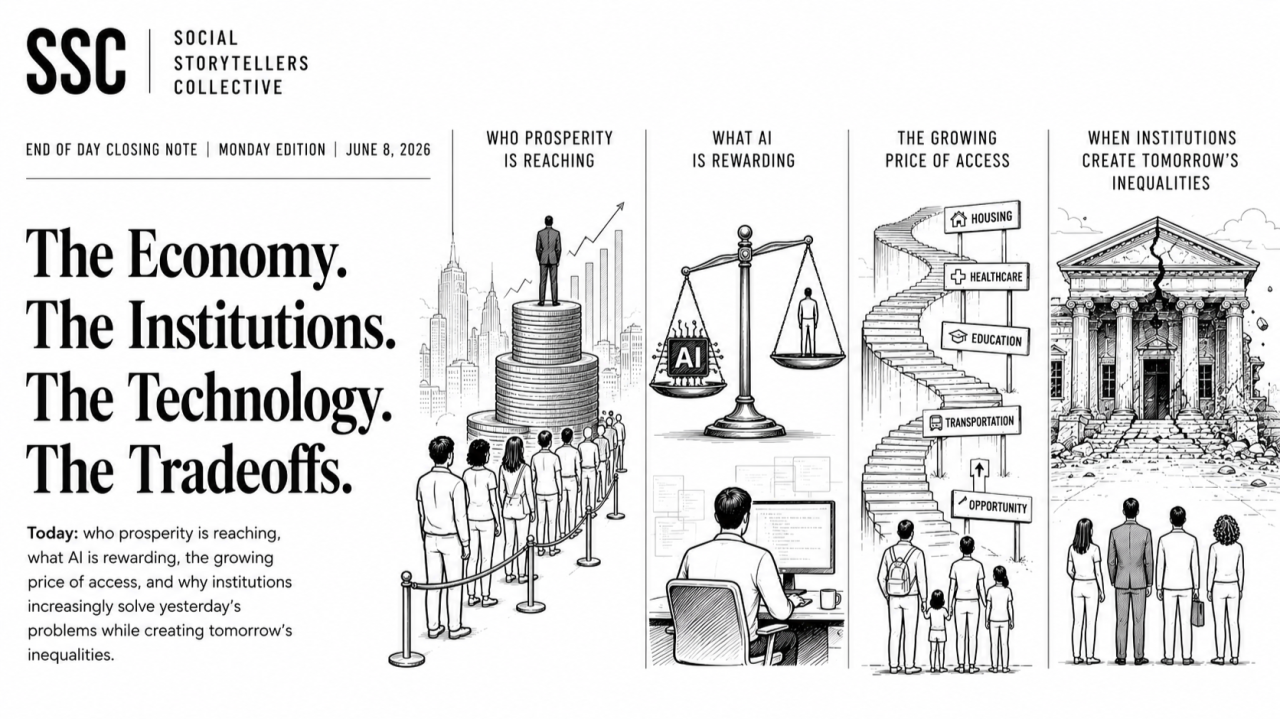
End of Day Closing Note | Monday, June 8, 2026 Social Storytellers Collective
June 8, 2026
Today: who the labor market is built for, the cities being priced out of their own futures, what AI governance reveals about who controls the infrastructure, and what happens when the world’s biggest sporting event meets a border that doesn’t open the same way for everyone.
We covered significant international ground in today’s cycle — from West Africa to Western Europe to East Asia — and the thread connecting it is consistent: the same mechanisms producing inequality domestically are operating across borders, often faster and with less accountability.

One in four. That is the share of white-collar workers in the United States who have gone at least five years without a promotion or meaningful pay increase, according to a new study tracking 1.3 million career histories conducted by the Burning Glass Institute and NYU’s School of Professional Studies, reported by The Wall Street Journal this week. As SSC reported today in One in Four White-Collar Workers Hit a Mid-Career Plateau. The Real Problem Starts Much Earlier., the aggregate figure obscures the distributional argument underneath it. Public administration — the sector stalling at the highest rate, approximately 30 percent — is disproportionately staffed by Black and Latino workers at the municipal and state level.
Career mobility compounds the same way wealth does. Early promotions generate stronger networks, better assignments, and more visible opportunities. The absence of those early advantages compounds just as reliably. For the average stalled software developer, the wage penalty reaches more than $43,000 over 15 years. The labor market looks healthy in the aggregate. That is not the experience of the workers inside it.
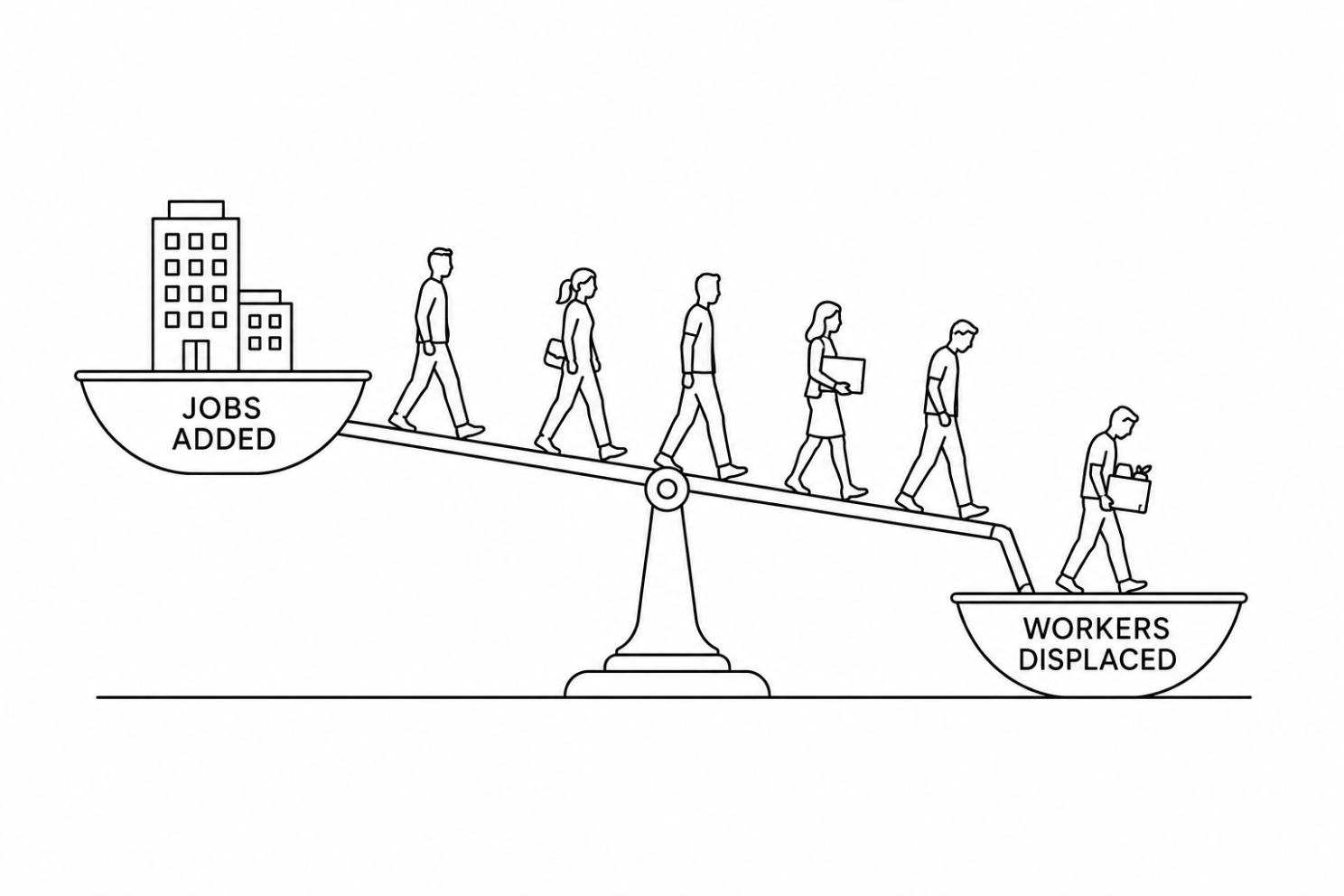
The same labor market is producing a second number that the headline figures keep missing. Reuters reporter Lucia Mutikani reported that initial unemployment applications rose by 13,000 to 225,000 — the highest level in four months — arriving the same week as strong payroll reports and low unemployment numbers. As Brandon Crenshaw reported in Jobless Claims Are Rising Beneath the Recovery Narrative, these are not competing data points. They are measurements of the same labor market from different angles.
The defining feature of today’s economy is churn: employers are adding workers and eliminating positions simultaneously. Challenger, Gray & Christmas documented that AI was the leading stated cause of job cuts for the third consecutive month. Every new claim marks an interruption of income, retirement contributions, and employer-sponsored healthcare at precisely the moment households are most financially vulnerable. The economy is not broken by conventional measures. The workers cycling through it know something the statistics don’t capture.

The generation cycling through an unstable labor market is also navigating a social one. Wall Street Journalreporter Anvee Bhutani reported in May 2026 that St. Joseph’s Church in Greenwich Village has grown to roughly four times its usual Sunday evening congregation — driven in part by a simple ritual organized by Kate DePetro and Anthony Gross, two people in their twenties: pizza at The Pizza Box on Bleecker Street before walking to Mass together.
What began with 100 participants reached 200 within three weeks. Some travel from Long Island. Others take the train from Boston. As Leena Alridge reported today in Pizza Is Bringing Young Adults Back to Church. Community May Be the Real Product., the data behind the scene is documented: Barna Group found Gen Z Christians attended services nearly two weekends per month in 2025 — roughly double the frequency recorded in 2020. A Gallup poll released in April found 42 percent of young men described religion as very important in 2025, up from 28 percent in 2023. The institution is not the draw. The belonging that precedes it is.

The archival economy is reshaping fashion on the same timeline. Nike and the Virgil Abloh Archive are releasing the V.A.A. x Nike Cryoshot Zoom M9 “Team USA” through SNKRS and select retailers this week — a $210 lifestyle shoe built on a 1999 cleat Mia Hamm wore to win the Women’s World Cup, carrying the design language of a designer who died in November 2021.
As we reported today in Streetwear Didn’t Die. It Became an Archive., the release is not a new collaboration — it is a licensed memory of the original one, priced accordingly. Music catalogs are investment assets. Vintage sports merchandise appreciates like collectibles. Fashion archives generate revenue on a release schedule. The communities that built streetwear’s original cultural value created the disruption. The institutions managing its legacy are collecting the return.
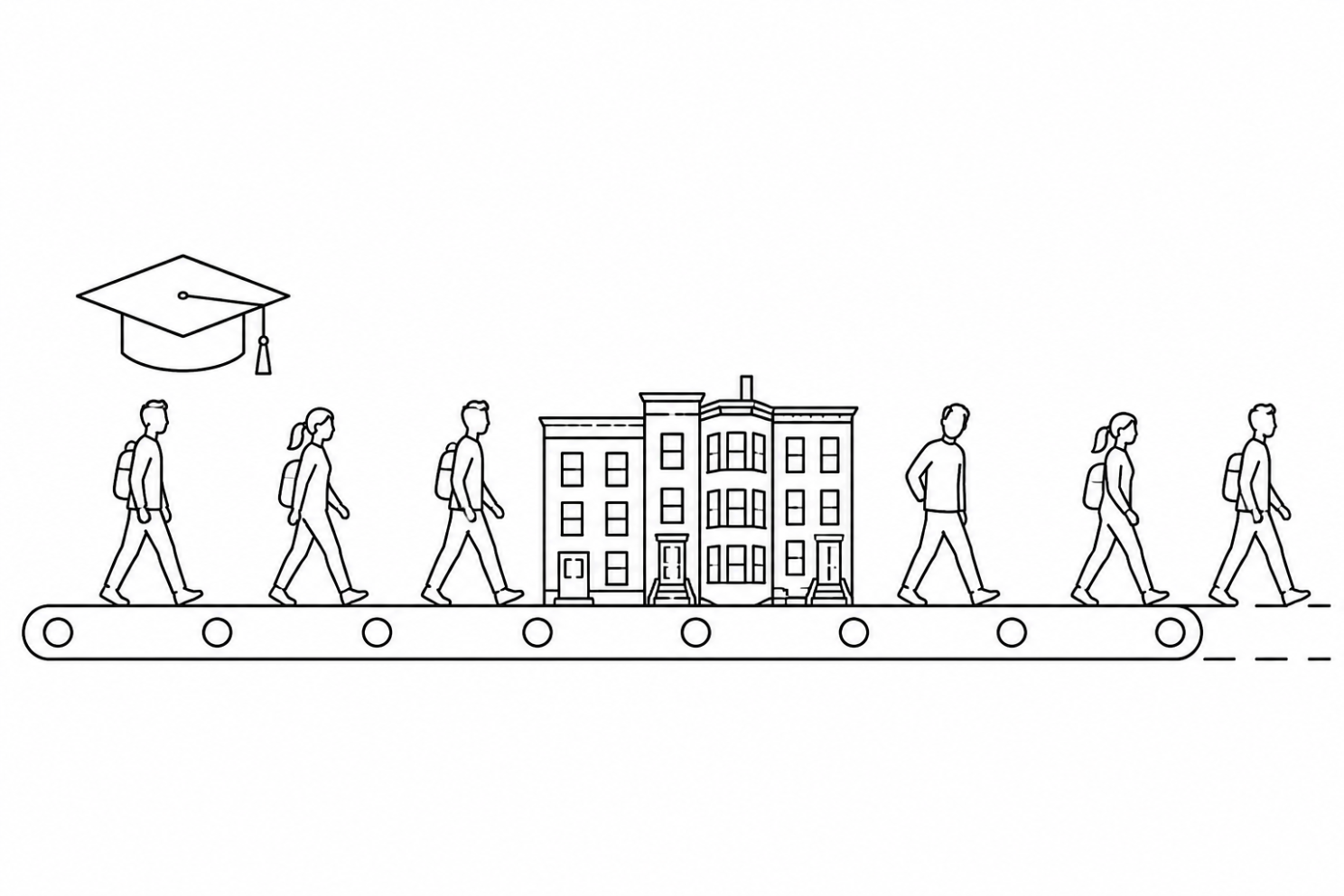
The housing thread running beneath the labor story is producing its own form of demographic attrition. The Greater Boston Chamber of Commerce Foundation’s 2026 Young Residents Survey found that 26 percent of Boston-area residents between 20 and 30 expect to leave the region within five years. Among those considering departure, 78 percentcited rent costs and 72 percent cited the inability to purchase a home.
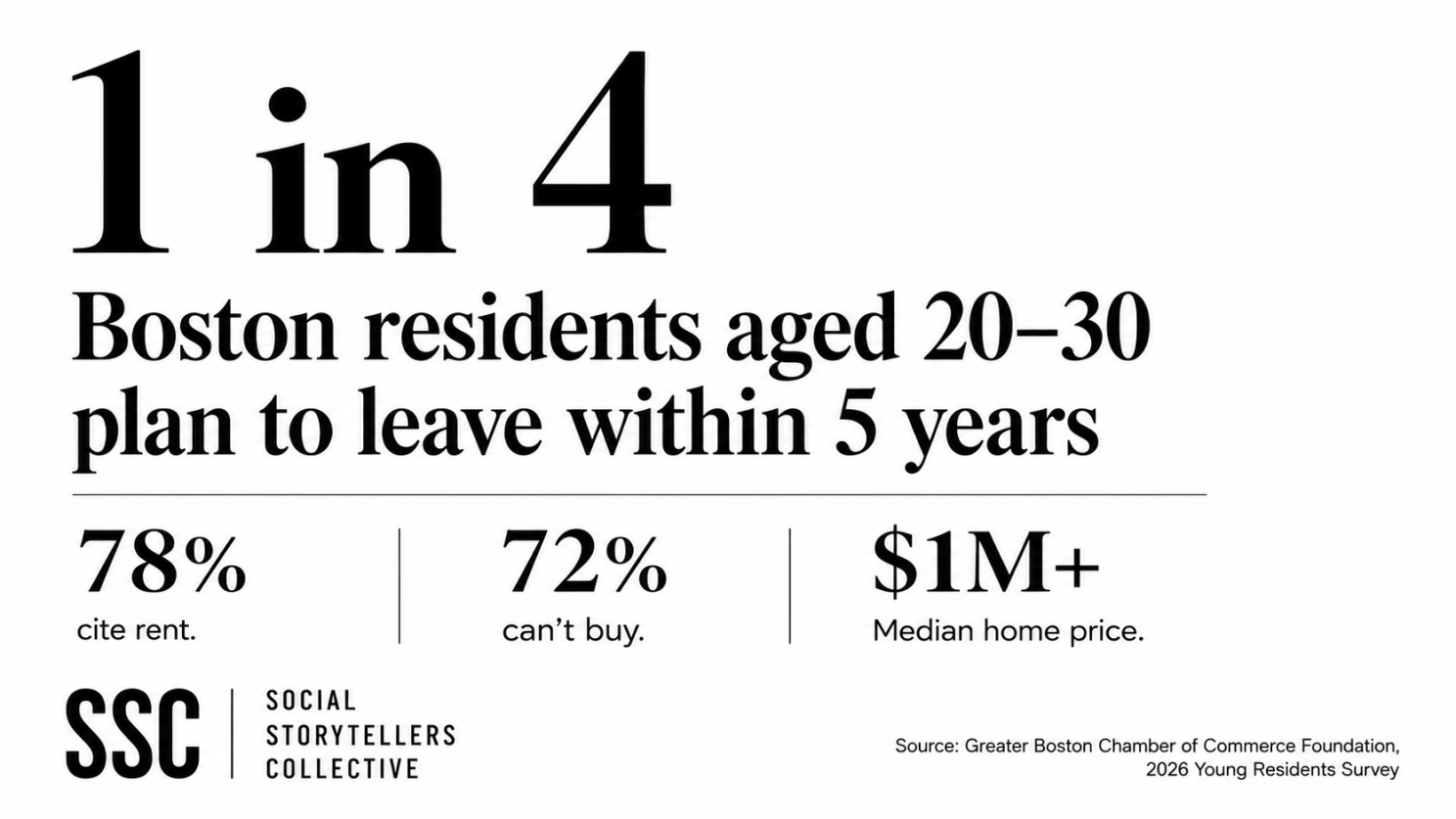
Boston’s median home list price has surpassed $1 million. Massachusetts received an F grade on Realtor.com‘s State-by-State Housing Report Card. As SSC reported today in Boston Is Losing Its Young Workers. The City Built the Crisis Itself., the shortage did not emerge from the market. It was built through governance — restrictive zoning, permitting delays, and years of underbuilding — before it ever appeared in the data. A city can attract talent for a first job and price that talent out of adulthood. The next labor shortage may already be taking shape in today’s housing data.
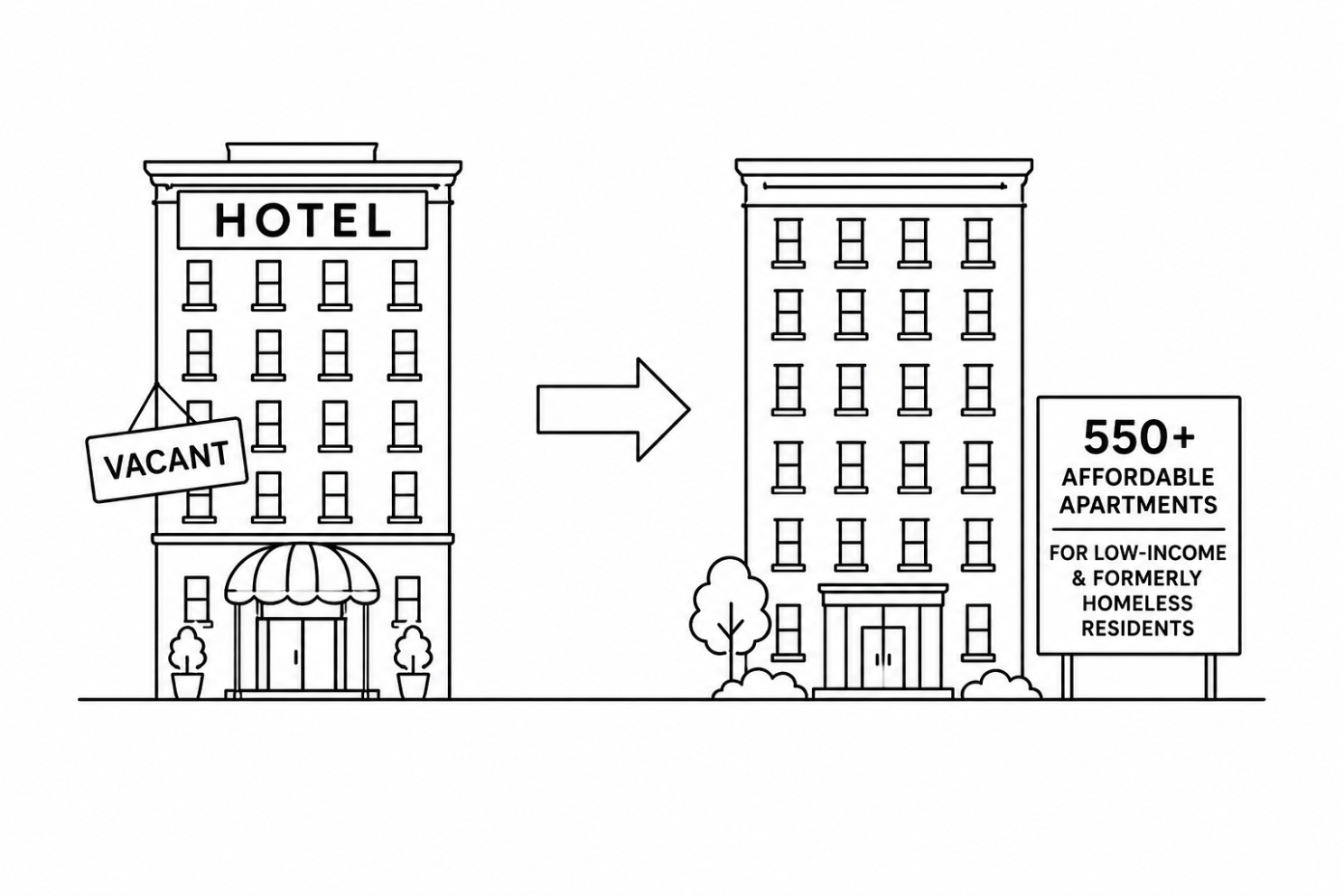
Two hundred miles south, New York is attempting to buy its way out of the same crisis one distressed building at a time. Slate Property Group and Breaking Ground (NYC Permanent Supportive Housing) , New York’s largest nonprofit supportive housing developer, acquired the Stewart Hotel at 371 Seventh Avenue in Midtown Manhattan for $255 million, with plans to convert its 611 rooms into 579 permanently affordable apartments for low-income and formerly homeless residents at a total development cost of $500 million.
As Social Storytellers Collective reported today in New York Is Converting Hotels Because the Housing System Cannot Build Fast Enough, a city does not purchase a hotel and convert it into affordable housing because that is the traditional model for meeting demand. It does so because conventional production has not generated sufficient supply. Hotel conversions complete in 21 months versus the 36-month standard for ground-up construction. Speed is now the scarce resource — and New York is buying it one building at a time.
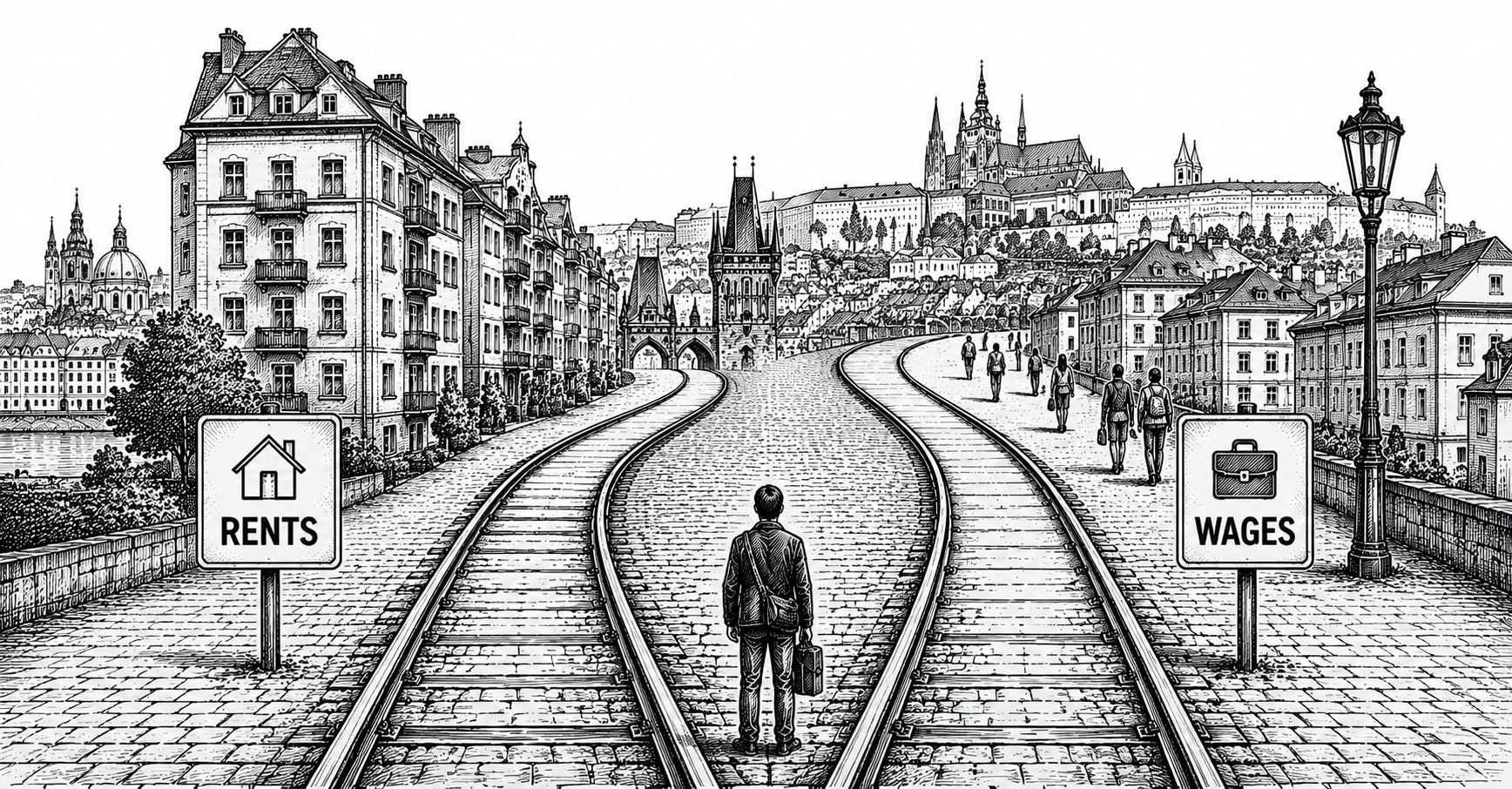
The mechanism producing Boston’s exodus and New York’s improvisation is not local. Prague rents hit new highs across all apartment sizes in the first quarter of 2026, according to data published by Expats.cz. Czech wages remain the seventh lowest in the European Union despite years of steady growth. International buyers and investment funds have driven Prague’s housing costs toward the same trajectory that made Western European cities inaccessible a generation earlier.
As reported today in The City That Was Affordable Isn’t Anymore. That’s the Global Story., the housing affordability collapse is not a story about individual cities making individual policy errors. It is a story about a global mechanism — capital concentrating in urban markets faster than wages rise — producing the same outcome across geographies, from Austin to London to Prague. The places that were supposed to be different are running out of time to stay that way.
The AI policy debate is producing its own distributional divide. Technology Secretary Liz Kendall told Guardian Economics Editor Heather Stewart that the Labor government will ensure 40 percent of the one million children targeted by its $237 million (£187 million) TechFirst AI training program come from disadvantaged schools.
We reported today that Britain Is Reframing AI as a Worker Policy Problem, the U.S. policy direction moved the opposite way simultaneously — removing EEOC guidance on discriminatory AI hiring tools, eliminating the federal enforcement mechanism for algorithmic bias at the moment AI screening is becoming standard practice. Two major economies. Two policy directions. The workers absorbing the consequences are the same population both governments claim to be protecting.
Japan is offering a third answer to the same question — and it is the most structurally revealing of the three. Reuters reporter Kantaro Komiya reported that Japan’s digital minister warned the country could become an “AI colony” if it falls behind in the global race to develop artificial intelligence, as lawmakers consider allowing AI systems to train on sensitive personal data — including medical histories and criminal justice records — without individual consent.
Reported today in Japan’s AI Sovereignty Warning Shows the Rise of Data Nationalism, invoking colonial vulnerability to justify removing consent requirements shifts the benefit toward the technology companies that need data access, not the citizens whose records would be used. Data sovereignty and data rights do not point in the same direction. Governments have not yet answered honestly which one they are actually prioritizing.
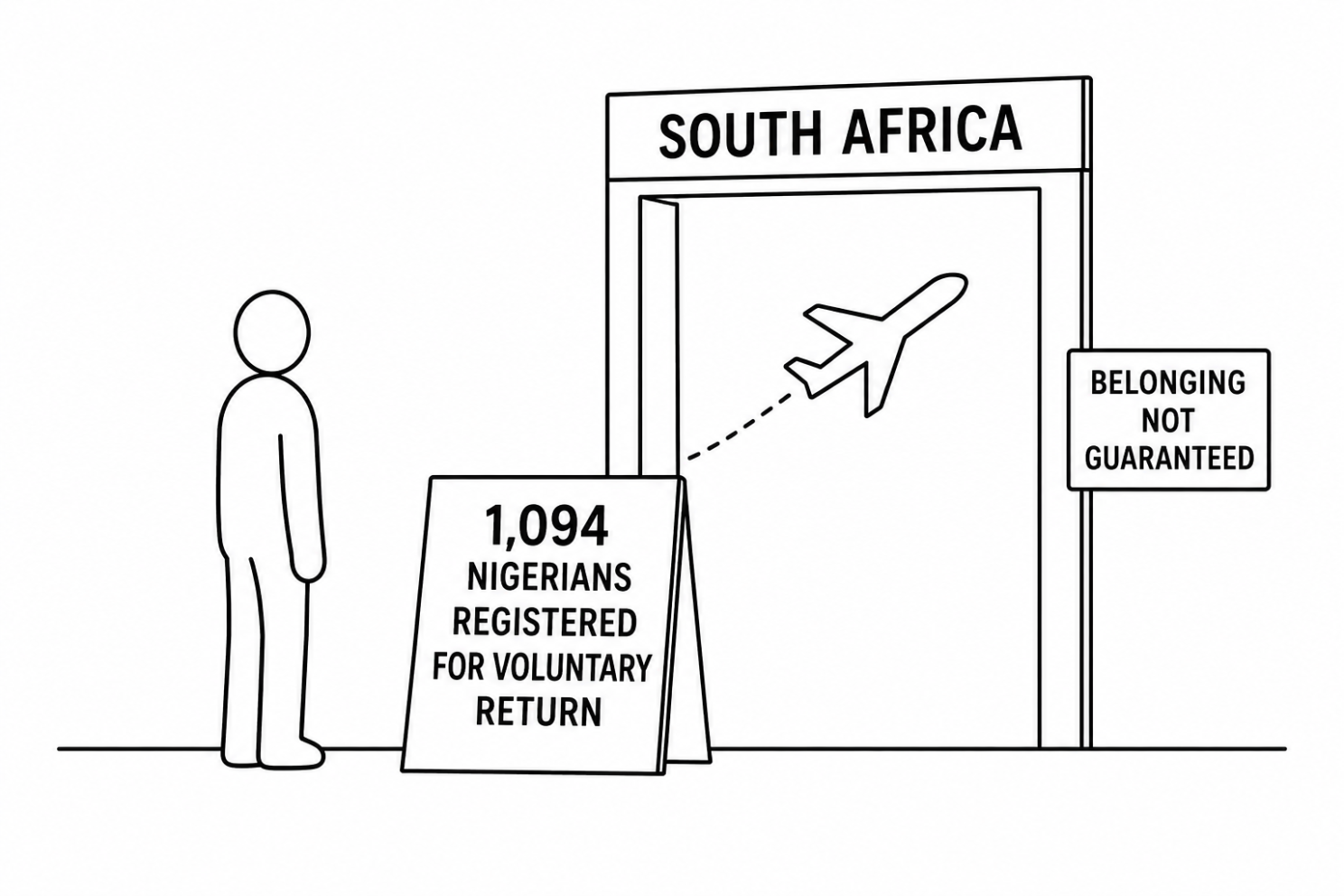
The migration story arriving from West Africa this week runs on the same logic. At least 1,094 Nigerians have registered for voluntary repatriation from South Africa following a series of xenophobic attacks — up from 130 seeking return just weeks earlier — with Nigerian foreign ministry spokesperson Kimiebi Ebienfa telling Reuters reporter Camillus Ebohthat a joint screening process is currently underway.
As reported today in Nigerians Are Leaving South Africa After Xenophobic Attacks, the violence is not new and it is not spontaneous. The 2008 attacks killed more than 60 people. The 2019 wave prompted multiple African countries to recall ambassadors. Operation Dudula, the organized anti-immigrant movement that gained prominence in 2022, represents the infrastructure behind what is repeatedly framed as spontaneous public frustration. Legal access can create mobility. It cannot guarantee belonging.
In Senegal, a government that chose transparency is paying the price for a previous administration’s concealment. Reuters reporters Portia Crowe and Ayen Deng Bior reported that negotiations between Senegal and the IMF to restore a suspended $1.8 billion lending facility are expected to resume this month.
The previous administration under Macky Sall had borrowed nearly $7 billion that never appeared in official accounts, pushing the country’s debt burden to 119 percent of GDP. President Bassirou Diomaye Faye’s government disclosed the gap rather than concealing it further — and is now absorbing the consequences. Growth projections were cut from 6.7 percent in 2025 to an estimated 2.2 percent in 2026. The borrowing happened under one administration. The consequences arrived under another. The citizens depending on public investment are absorbing the cost of both.
Featured Story | The World Cup Promised a Global Celebration. The Visa System Is Narrowing the Guest List.
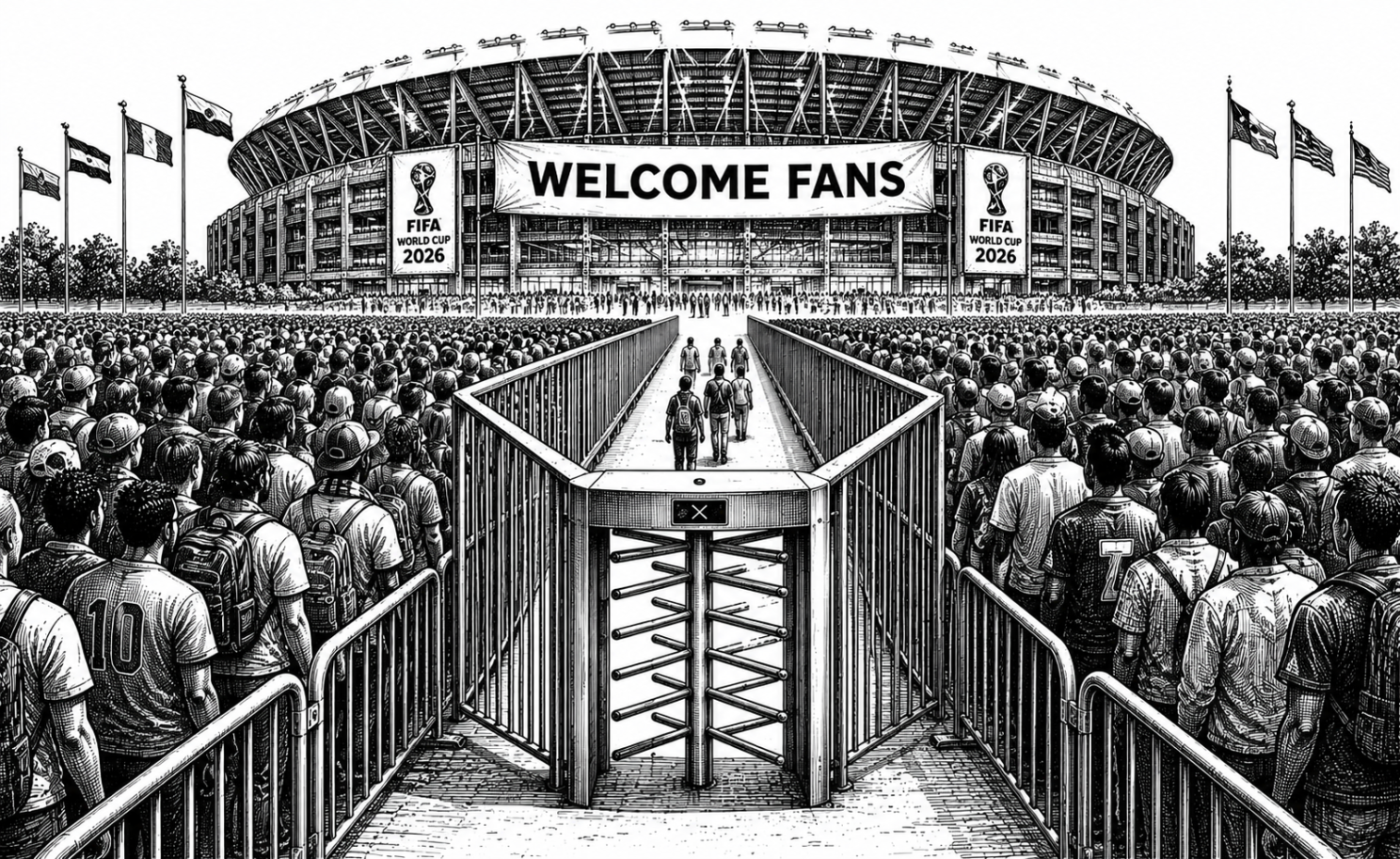
The 2026 FIFA World Cup is the largest sporting event in history by participating nations — 48 teams across the United States, Canada, and Mexico, with the majority of matches played on U.S. soil. Houston is a host city. Miami, Atlanta, Philadelphia, Boston, and Seattle are host cities. The tournament’s expanded format was designed in part to broaden global participation and extend the economic reach of the event across more host communities.
Early hotel bookings across those cities are coming in below expectations despite historic ticket demand and global enthusiasm for the tournament, according to industry analysis reported by Travel and Tour World in June 2026. Industry analysts identify three primary drivers: delayed travel planning, high accommodation costs, and international visa uncertainties. The third factor is receiving the least coverage and doing the most damage. As SSC reported today in The World Cup Promised a Global Celebration. The Visa System Is Narrowing the Guest List., the booking shortfall is not a logistics problem. It is an access problem wearing the mask of one.
The populations most likely to travel internationally for a World Cup are the ones most exposed to the signal the current U.S. immigration enforcement environment has sent — unwelcome, regardless of legal status. Consular appointment backlogs, unpredictable processing times, and an enforcement posture that has made border crossing feel risky for travelers from Latin America, Africa, and South Asia are producing the same outcome as an explicit travel restriction — without requiring one.
A Brazilian family that has followed the sport for generations, a Nigerian supporter group that saved for two years to attend a match, a South Asian fan traveling to see their national team compete on the world stage — all of them are calculating a risk that fans from Western Europe are not being asked to calculate in the same way. That asymmetry is not incidental to the booking shortfall. It is the booking shortfall.
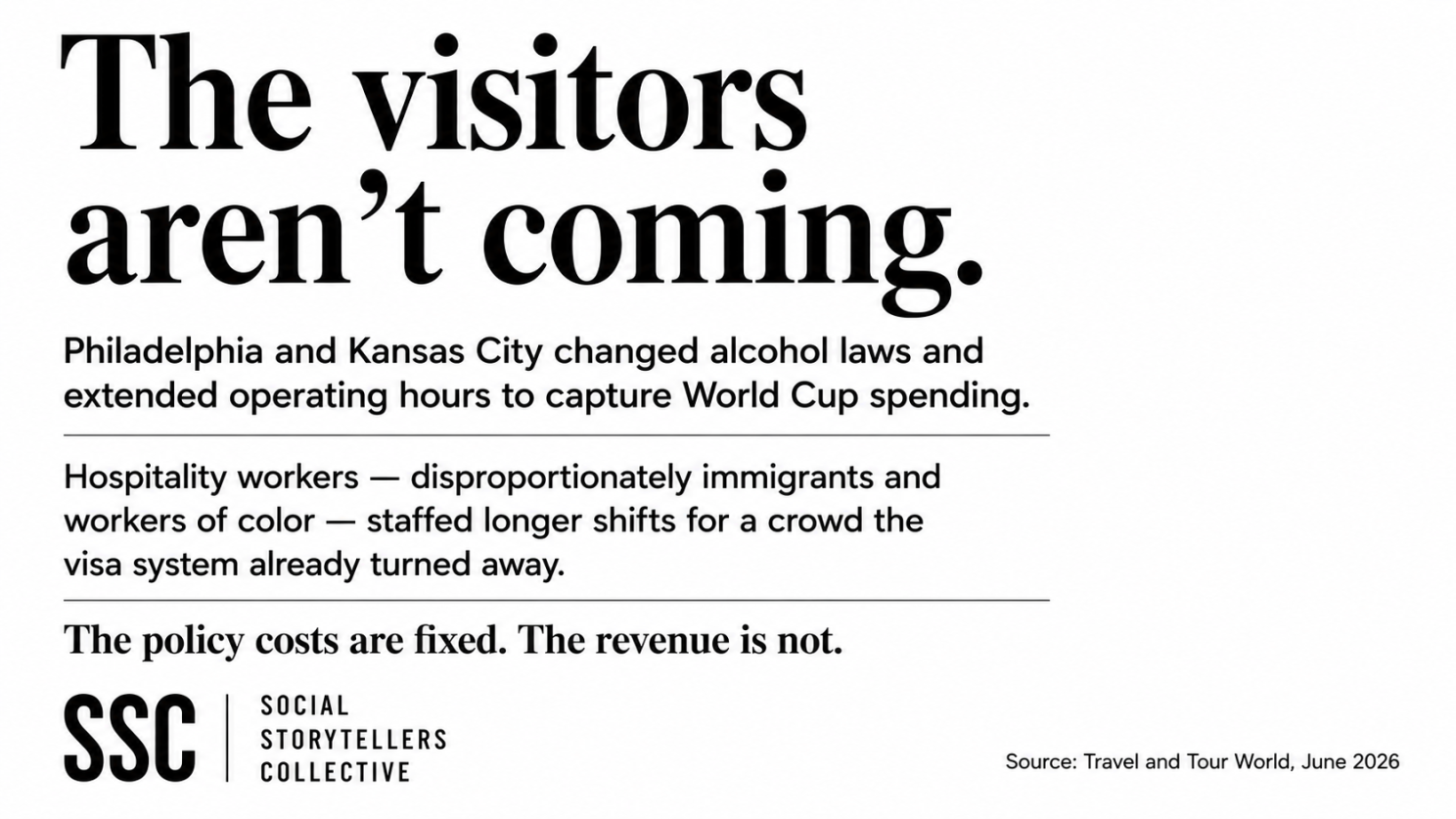
The economic consequence is landing directly on the workers and businesses that built their operations around projected World Cup volume. Cities including Philadelphia and Kansas City changed alcohol sale laws and extended operating hours specifically to capture World Cup spending. Those policy changes required workers to staff longer shifts and absorb significant operational pressure — under the assumption that the revenue would justify the cost. Hospitality workers in host cities — disproportionately immigrants and workers of color — extended their availability to serve visitors who are not arriving at the projected volume. The policy costs are fixed. The revenue is not. The visa friction underneath the booking slump is the access story the economic coverage keeps missing. The cities, workers, and local economies absorbing the shortfall had no role in designing that system.
Daily Visual Signal
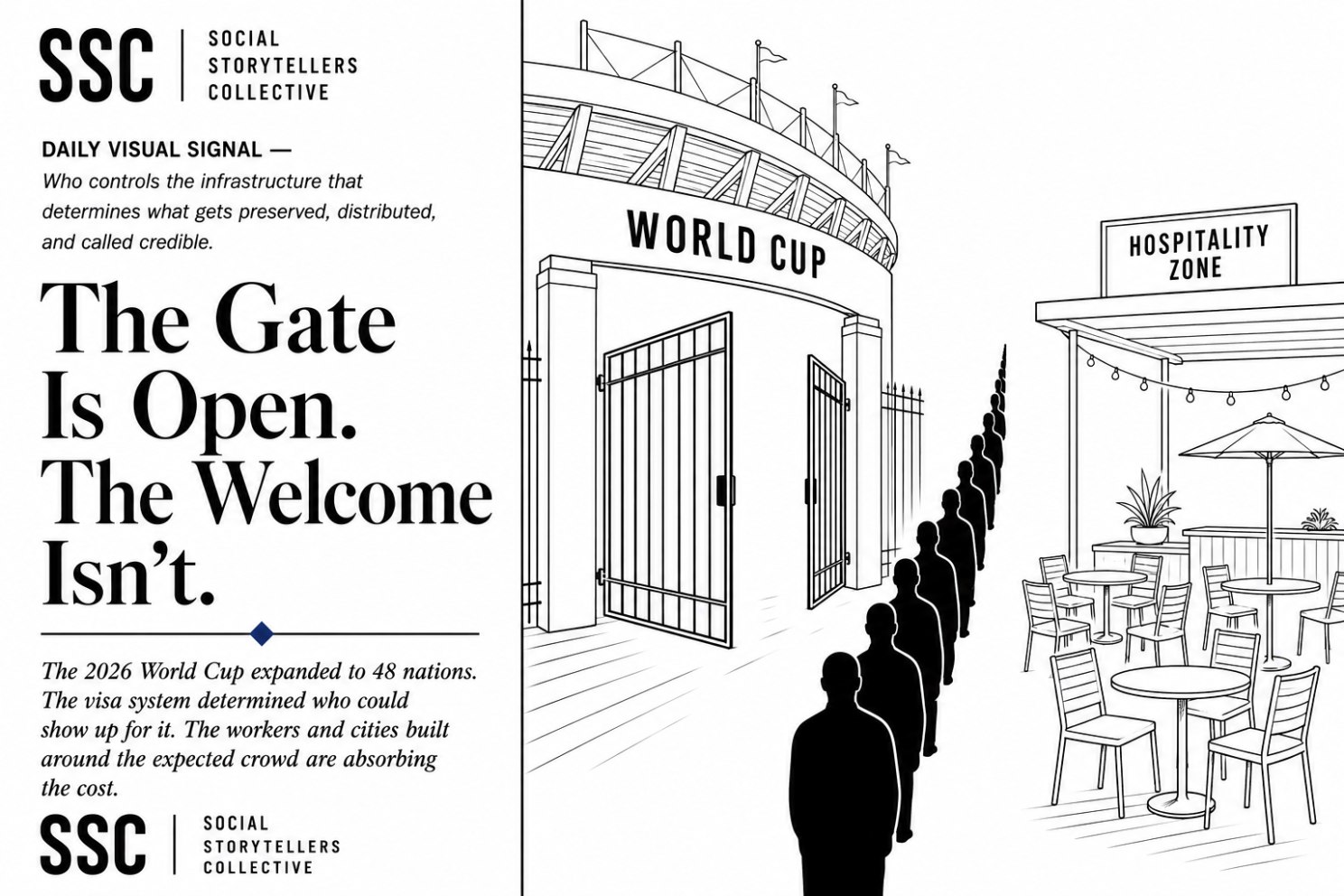
The 2026 World Cup is the largest sporting event in history. The visa system is determining who gets to show up for it. The workers and businesses in host cities who restructured around expected volume are absorbing the cost of a system they did not design.
One in four white-collar workers is stalled. Boston is exporting its workforce. New York is buying time one hotel at a time. Prague confirms affordability is a global mechanism, not a local failure. Britain invests in AI access while the United States removes AI accountability. Japan is debating whether sovereignty justifies removing consent. And in Houston, Miami, Atlanta, and Philadelphia, hospitality workers are staffing shifts for visitors who are not coming. The institutions shaping each of these outcomes are measuring something. Whether they are protecting the same thing they claim to be measuring is the answer none of them have given yet. The distance between those two lists keeps growing.
Start Tomorrow Smarter

Before the headlines become tomorrow’s news cycle, our editors identify the five stories that actually matter—and explain why.
SSC Five Things That Matter
Every weekday at 6:00 AM
Five stories.
Five minutes.
What actually matters.
Subscribe →
Subscribe →
https://socialstorytellerscollective.beehiiv.com
We will be back Tuesday. — SSC