
Austin officials scaled back portions of the city’s proposed One ATS restructuring initiative this week after significant pushback from municipal IT workers concerned about centralized authority and reorganized labor across departments. The original proposal would have moved more than 400 technology employees into a single consolidated structure under Austin Technology Services, framed publicly as operational modernization and cost management. Internally, many workers read it differently: not as a workflow improvement, but as a redefinition of control inside city government.
The conflict arrives during a period when public institutions across the country are aggressively restructuring technology operations in response to cybersecurity demands, AI integration pressure, staffing shortages, and budget constraints. Governments increasingly want centralized oversight because fragmented digital systems create security vulnerabilities and inconsistent procurement standards. Austin’s population recently surpassed one million residents, intensifying pressure on municipal systems already strained by rapid growth. Larger cities now operate like complex digital platforms, making technology departments central to governance itself rather than administrative support.
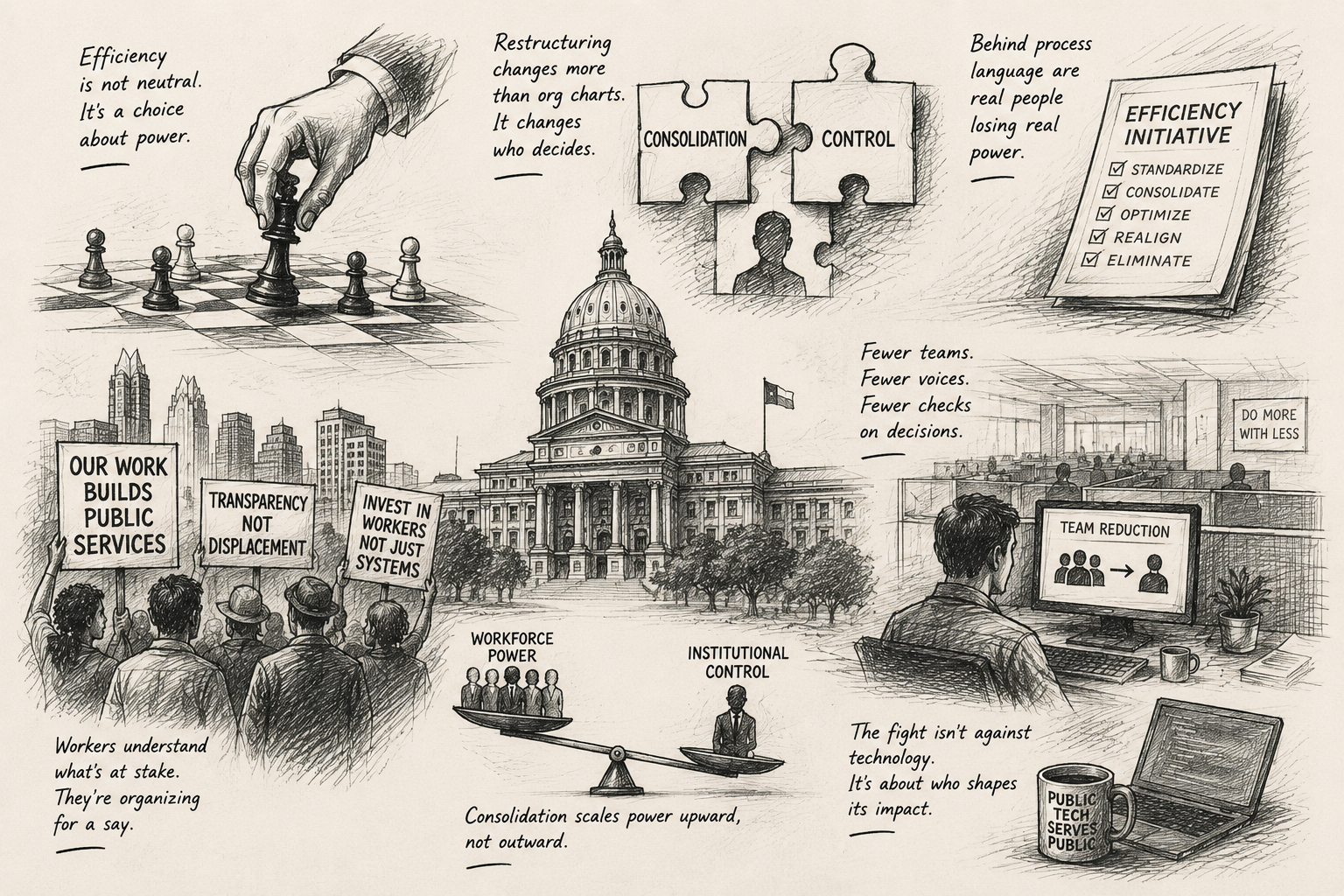
But consolidation changes labor relationships as much as it changes software systems. Employees lose departmental autonomy. Reporting structures shift upward. Institutional knowledge becomes easier to standardize and, eventually, to outsource. That trajectory explains why resistance emerged quickly. Across both public and private sectors, “efficiency” increasingly functions as a transitional word — spoken before restructuring, automation, or workforce reduction arrives. Workers understand that operational streamlining rarely stops at process improvement. It eventually reshapes who controls expertise inside the institution.
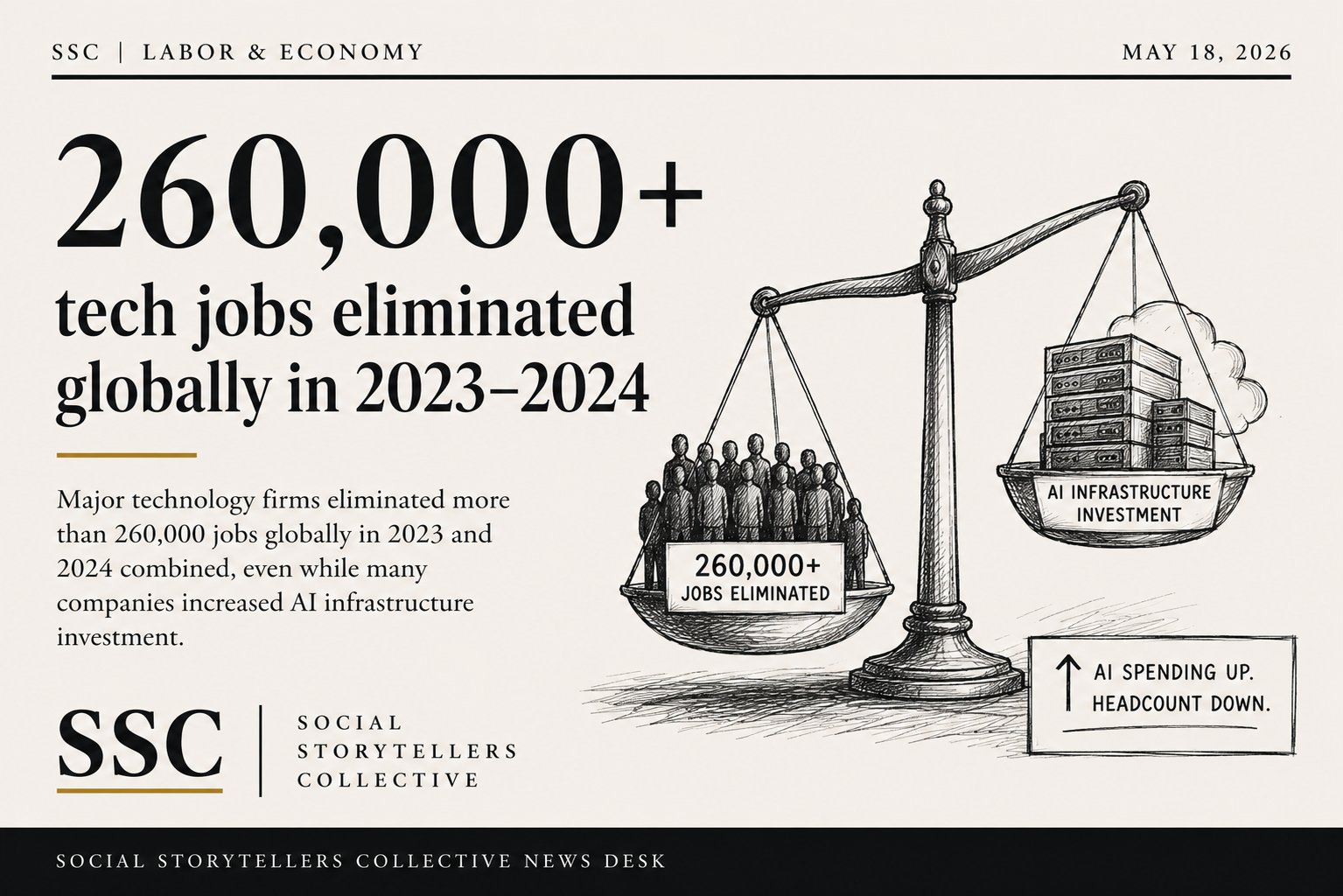
The broader labor market reinforces those fears. Major technology firms eliminated more than 260,000 jobs globally in 2023 and 2024 combined, even while many companies increased AI infrastructure investment. Municipal workers operate outside Silicon Valley, but they are reading the same signals. When institutions simultaneously emphasize interoperability, automation, centralization, and scalable systems, employees recognize the language of labor compression even when layoffs are not immediately announced.
Austin’s dispute also reflects a contradiction at the center of modern governance. Cities increasingly depend on digital infrastructure to manage transportation, permitting, emergency response, utilities, budgeting, and public records — yet public-sector technology workers often lack the bargaining leverage associated with private-sector tech labor. Municipal governments want Silicon Valley-level operational sophistication without Silicon Valley compensation or workforce flexibility. That gap creates ongoing tension between modernization goals and institutional capacity, and it is a tension that rarely resolves in the worker’s favor.
The pattern is not unique to Austin. Universities, hospital systems, nonprofits, media companies, and corporations are all consolidating operational functions into centralized digital units. The same dynamic is replicating across HR, communications, finance, and customer service platforms. Institutions are reorganizing around data visibility and managerial oversight because fragmented systems slow decisions and weaken executive control. The workplace consequence is that employees increasingly find themselves managed by infrastructure decisions they had no role in designing.
The mainstream framing treats restructuring disputes as internal workplace conflicts. The larger reality is that organizational architecture has become one of the defining labor questions of the decade. Institutions are redesigning themselves to operate faster, leaner, and more measurable under economic and technological pressure. Workers are not simply reacting to policy memos. They are reacting to the recognition that efficiency is no longer just a management objective. It has become the governing logic of modern professional life — and it is being applied to them.
SSC | Labor & Economy — May 18, 2026 — Social Storytellers Collective News Desk