
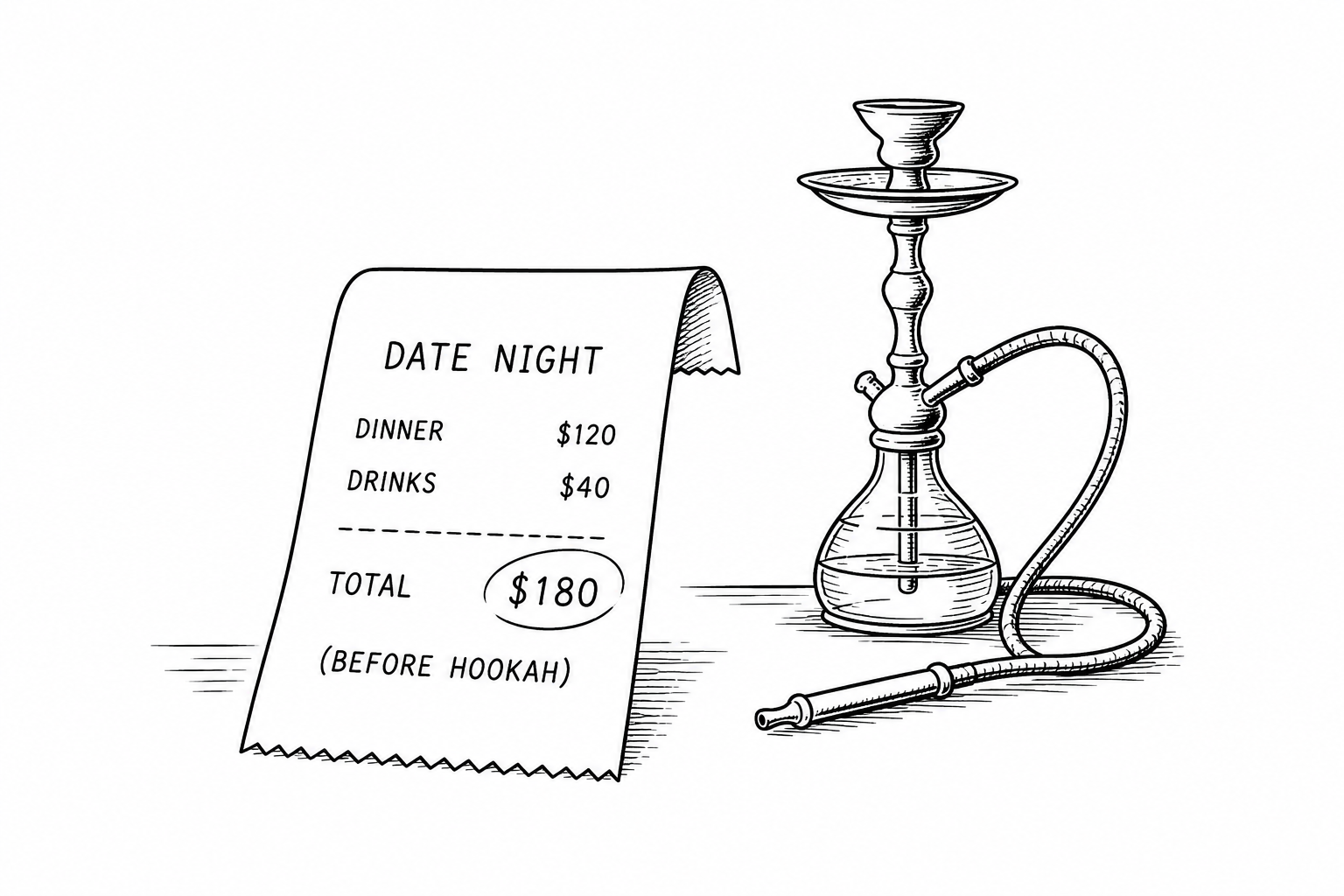
Dating is so expensive, I just spent $180 and now she wants hookah.
That post on X became a crowdsourced financial confession. Within hours, thousands of people were comparing receipts rather than relationship advice. One person said a four-day date cost roughly $750. Another admitted spending $400 to $500 on first dates. Others joked that 2026 was the year they would simply let someone else pay. The comment section was not about dating. It was about the cost of trying.
Americans have spent years documenting the rising cost of housing, groceries, insurance, and childcare. The rising cost of participation itself has received less attention. Going outside, meeting people, building friendships, and pursuing romance increasingly require disposable income that many households no longer have. Inflation did not simply make life more expensive. It made connection more expensive.
Dating once relied on neighborhoods, churches, parks, community events, and other low-cost gathering spaces. Those spaces have not simply declined — they have been replaced. Their replacement is a marketplace of restaurants, cocktail bars, concerts, rooftop lounges, travel, and curated experiences. The modern date often begins with consumption before compatibility. The infrastructure of connection has been privatized, and the entry fee has been quietly raised.
Social media amplifies the pressure. The date is no longer just an interaction between two people. It is potentially content. The restaurant matters. The aesthetic matters. The cocktails matter. The photos matter. The experience is evaluated before the relationship is. Algorithms reward spectacle — and in doing so, quietly raise the price of what feels like an acceptable evening together.
The jokes in the thread reveal how people adapt behavior to financial reality without naming the adaptation directly. Some openly said they would rather be treated than spend hundreds of dollars themselves. Others questioned whether anyone should invest that much money before exclusivity even exists. Humor is the language people use to discuss economic stress without admitting economic stress. The replies were not about dating preferences. They were about financial calculations that now sit underneath every romantic decision.
More activities that once belonged to ordinary middle-class life now require upper-middle-class budgets. Dating joins the list — not as an isolated trend but as another site where economic stratification becomes personal. The issue is not whether someone can afford one expensive night out. It is whether building relationships now depends on sustained purchasing power that a growing share of the population does not have.
The viral post resonated because readers recognized themselves in it. The real story is not that one person spent $180 on dinner and hookah. It is that the economy increasingly prices people out of the everyday rituals that create community and connection. When belonging becomes a purchasing decision, loneliness stops being only a social problem. It becomes an economic one — and the receipts in the comment section are the evidence.
Get SSC analysis delivered to your inbox every day. Subscribe free on Beehiiv: socialstorytellerscollective.beehiiv.com