
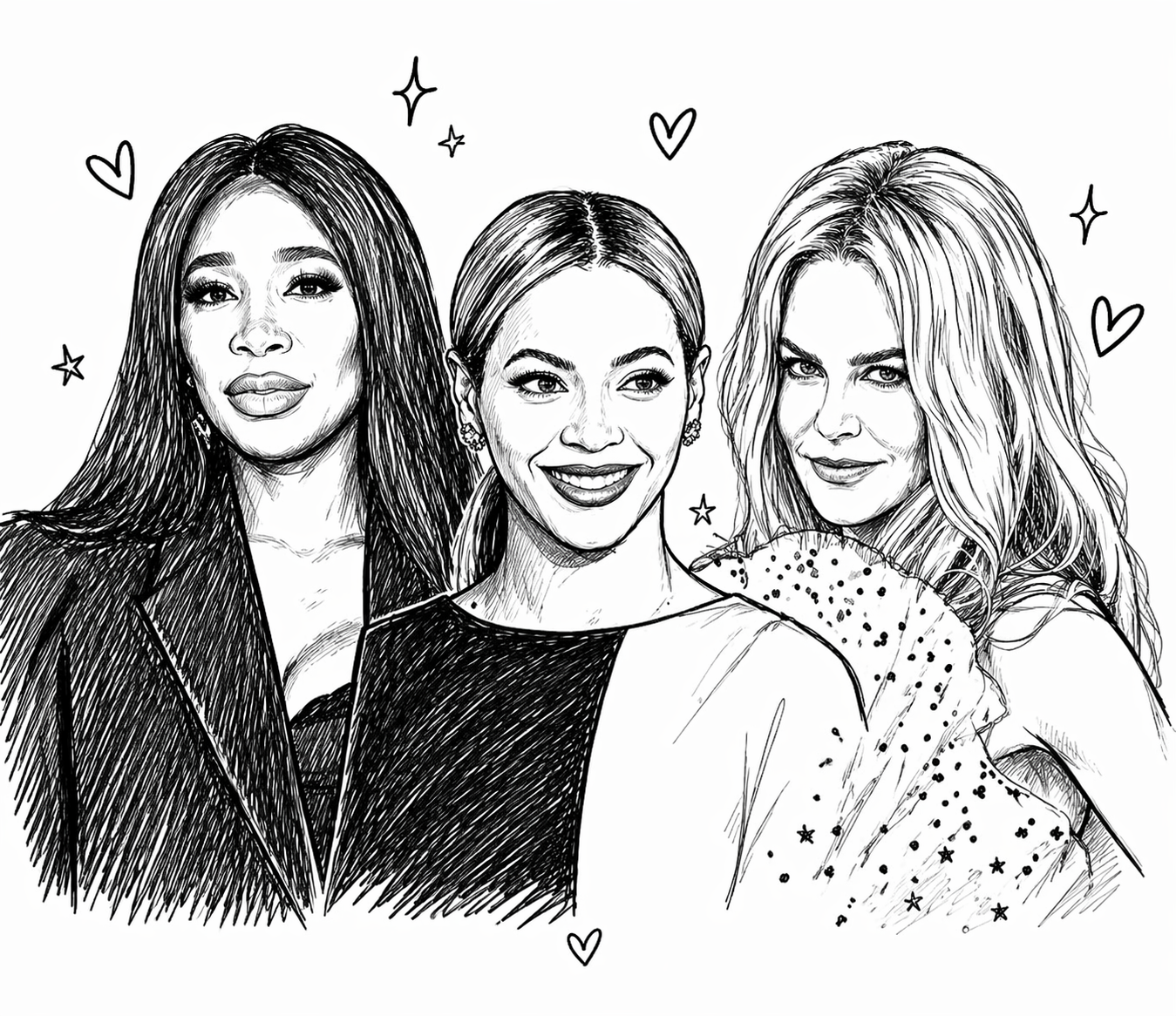
The 2026 Met Gala takes place May 4 at the Metropolitan Museum of Art, co-chaired by Beyoncé, Nicole Kidman, and Venus Williams, with a dress code of “Fashion is Art” tied to the spring Costume Institute exhibition. None of that is what makes this year structurally significant. What makes it significant is how the event is being distributed — and what that distribution reveals about how cultural moments are now built.
Vogue will host the official livestream across its digital platforms, YouTube, and TikTok, with the red carpet beginning at 6 p.m. ET. Ashley Graham, La La Anthony, and Cara Delevingne will host the stream. Emma Chamberlain returns as red carpet correspondent. The livestream is produced in collaboration with Full Day Productions, Feed the Animals, and Dream Machine, directed by Micah Bickham. The production infrastructure around the coverage now rivals the production infrastructure around the event itself. That is not incidental. It is the point.
The Met Gala’s historical power came from restriction. A fixed guest list. Controlled image release. Coverage filtered through editors and photographers with institutional standing. The delay between the event and its public circulation was not a limitation — it was a mechanism. It manufactured desire, allowed curation, and preserved the event’s authority as something that happened at a remove from the audience consuming it. That distance was the product.
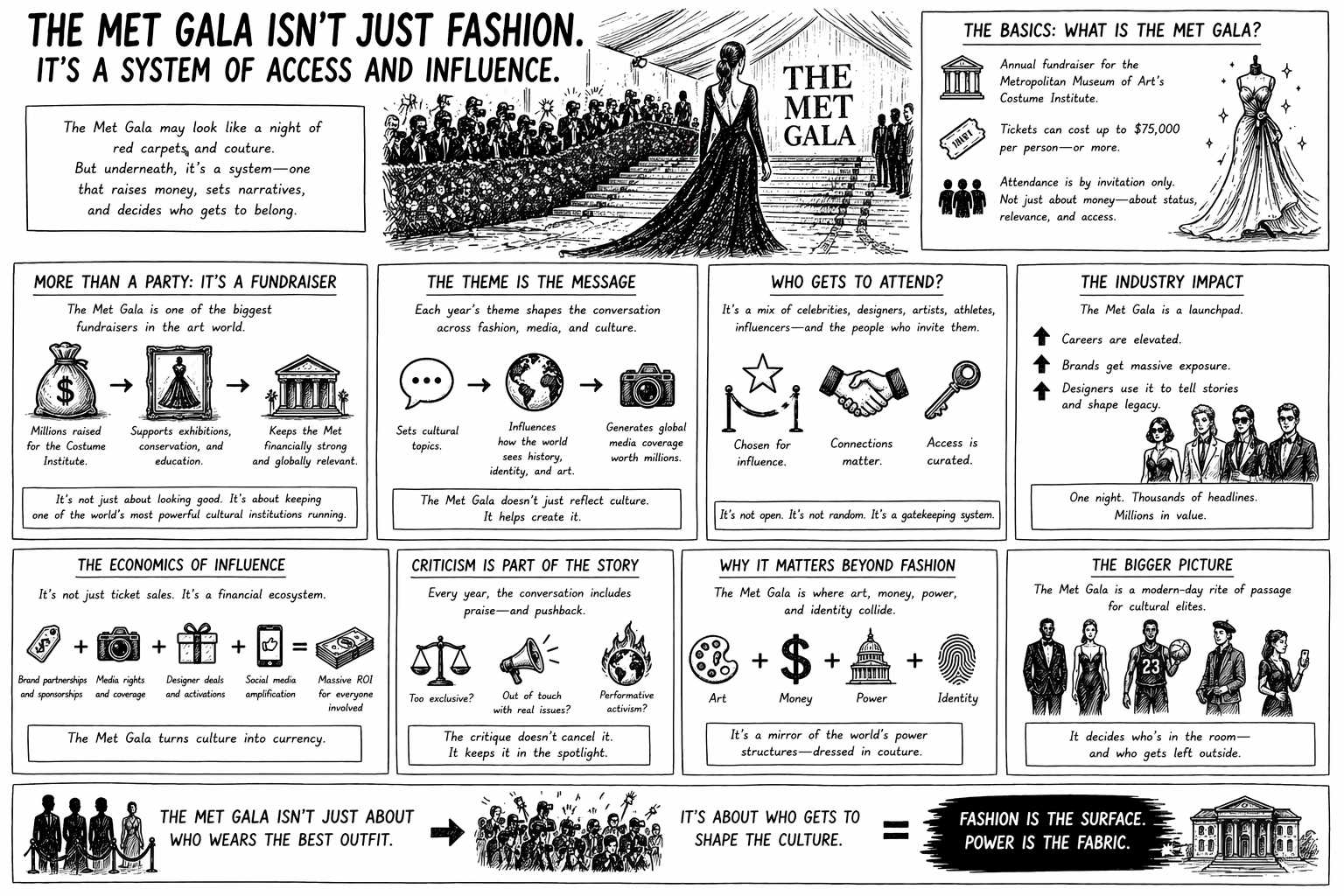
That model is being deliberately dismantled. The sixth consecutive livestream, an expanded host committee that now includes figures whose cultural authority is rooted in digital reach rather than institutional fashion credentials, and a production team whose director most recently handled Sabrina Carpenter’s Coachella sets — these are not cosmetic additions to a traditional event. They are structural decisions about what the event is actually for.
What the Met Gala is now designed to produce is not an exclusive gathering. It is a content system. The physical event — the arrivals, the looks, the room — is the raw material. The primary output is the photos, videos, reactions, commentary, and discourse that travel across platforms in the hours and days following. The exhibition itself opens to the public May 10, extending the event’s cultural footprint another week beyond the gala itself. The experience is engineered to have multiple peaks: the livestream, the best-dressed discourse, the exhibition opening, the retrospective takes. Each one is a distribution event in its own right.
This is also why the choice of co-chairs matters beyond the names themselves. Beyoncé, Nicole Kidman, and Venus Williams are not simply famous people. They are figures whose presence generates layered audiences — music fans, cinema audiences, sports communities — each with their own platforms, engagement patterns, and cultural contexts. A single event activates all of them simultaneously. The reach is not additive. It is multiplicative.
The structural tension this creates is real. The Met Gala’s value has historically been tied to its inaccessibility — the sense that something important was happening in a room you could not enter. Expanding visibility risks eroding the scarcity that made it culturally powerful. That tension is visible in this year’s event itself: Amazon founder Jeff Bezos and Lauren Sánchez Bezos serve as honorary chairs as lead sponsors of both the gala and exhibition, a pairing that has generated its own controversy, with a small activist collective distributing materials critiquing Amazon’s labor practices and reported cloud-services ties to immigration enforcement, and New York Mayor Zohran Mamdani publicly signaling he would skip the event. The controversy is itself platform content — another layer of the distribution system, extending the event’s reach into political discourse it would not have touched in a more controlled media environment.
That is the clearest illustration of how the logic has shifted. In the old model, controversy around a sponsor would be managed, contained, and resolved before it reached the public. In the current model, it becomes part of the narrative the event generates — another signal boosting reach, another reason for audiences who would not otherwise engage with fashion to have an opinion about what happens inside the Met. The event does not lose from the controversy. It expands through it.
This mirrors what SSC tracked in the Drake ICEMAN rollout — a cultural event engineered so that participation in the surrounding discourse becomes the primary experience, with the central artifact arriving as resolution rather than origin. The Met Gala is not a fashion event that produces content. It is a content event that uses fashion as its organizing logic. The distinction matters because it changes what success looks like: not who attended, not even what they wore, but how far the moment traveled and how many distinct audiences it activated on its way there.
The question the institution has not fully answered is what the physical exclusivity is still doing inside this system. If reach is the metric, the room is almost beside the point. If the room matters, then the platform strategy is in tension with the thing it is supposed to serve. The 2026 Met Gala has not resolved that tension. It has simply made it more visible — which, in a platform-driven environment, is exactly what the model requires.