
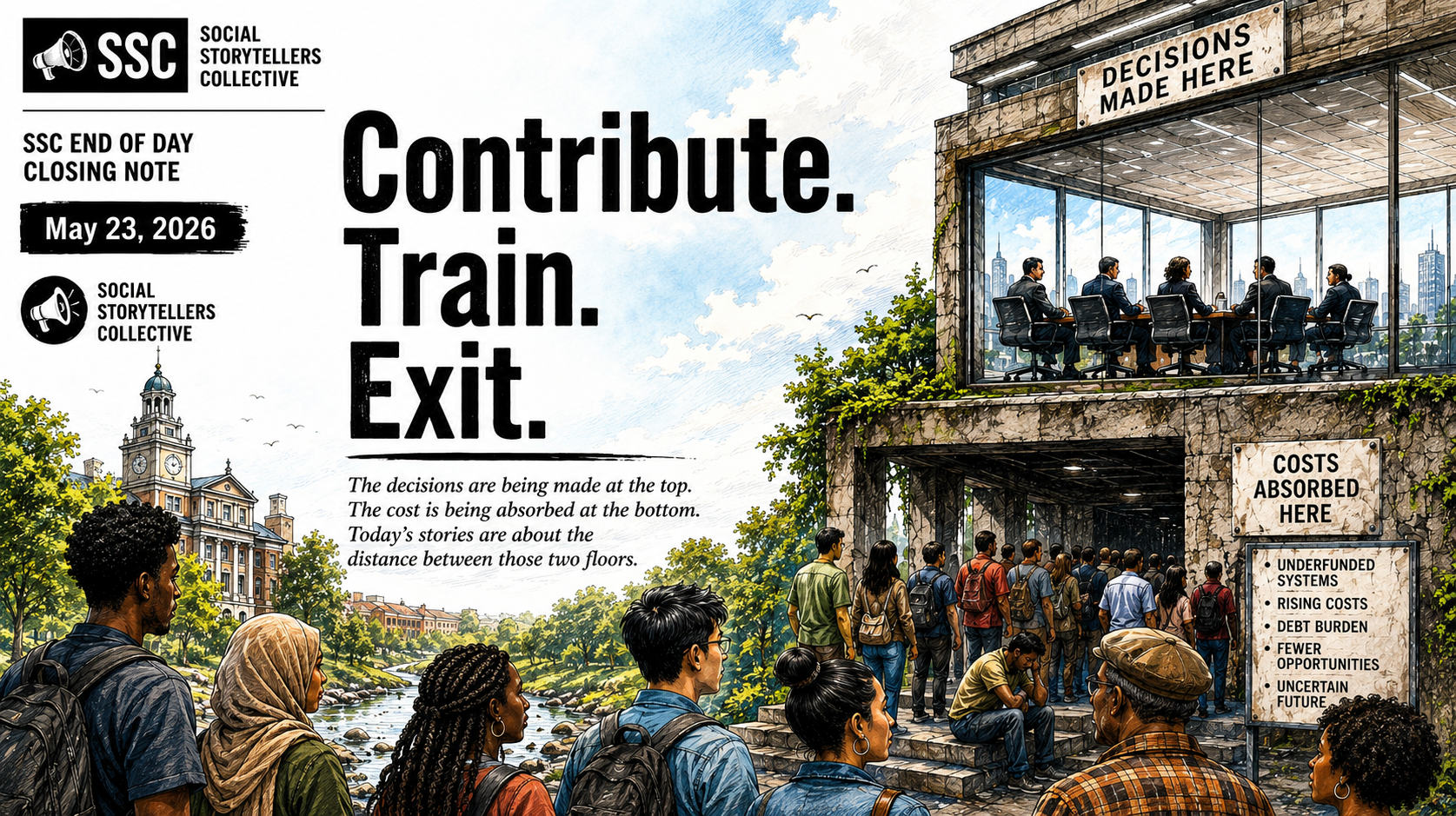
Today’s stories are about the distance between those two floors.
Memorial Day exists because of people who gave everything so others could have ordinary days — the kind filled with family, rest, and the freedom to be unremarkable. We honor them today. We hope today is one of those days for you. When you’re ready, here is what we’ve been watching.
There is a word circulating across boardrooms this week. It appears in earnings calls, internal memos, and the kind of press coverage that quotes CEOs describing their organizations as newly serious about standards. The word is performance. It is doing a specific kind of work — and most of the people it will affect most directly are not the ones writing the memos.
Bloomberg ‘s senior management reporter Matthew Boyle named it plainly this week: CEOs across every major sector — Nestlé, Novo Nordisk , 3M , HSBC , Unilever , and Popular among them — have decided their workplaces need to be faster, leaner, and bolder. No more rewarding mediocrity. B-players get managed out. The culture shifts into performance mode. SSC examines what is actually happening underneath that framing in When CEOs Call It Performance Culture, Follow the Layoff Notice. “Performance culture” is the phrase corporations reach for when they want to restructure accountability downward — toward individual employees — while restructuring protection upward, toward leadership and shareholders. What has made that openness possible right now is not courage. It is conditions. The looming threat of AI in an already sluggish white-collar job market has given employers leverage they did not have three years ago. The savings rate is 3.6%. Credit card balances have crossed $1.2 trillion. The The Institute for Corporate Productivity (i4cp) found that 85% of attempts to transform organizational culture are not deemed successful — by the organizations themselves. That is not a performance culture. That is a pressure culture wearing performance culture’s clothes.
The credentialing economy has been restructuring in real time all year. Social Storytellers Collective ‘s The Degree Economy series spent four parts documenting exactly how: the MBA fire sale and what it signals when a degree goes on sale, the AI disruption eliminating the jobs the credential was supposed to unlock, the workers who cannot use the discount because a 40% cut on something unaffordable is still unaffordable, and the institutions absorbing the most pressure while better-resourced schools get stronger. The fire sale benefits the schools that can absorb the loss. Everyone else gets squeezed harder.
But here is what the fire sale narrative keeps missing. The institutions absorbing the most pressure are growing anyway. Enrollment records. Graduation rate gains. A new research consortium. The schools the system is trying to squeeze out of the market are expanding inside the same environment that is contracting everyone else. That demands a different set of questions — and that is exactly where SSC goes next.
For the first time ever, HBCU enrollment has surpassed 250,000 students. HBCU enrollment rose 7% between 2020 and 2023 — a sharp contrast to the overall decline in higher education, which saw 900,000 fewer students over the same period.
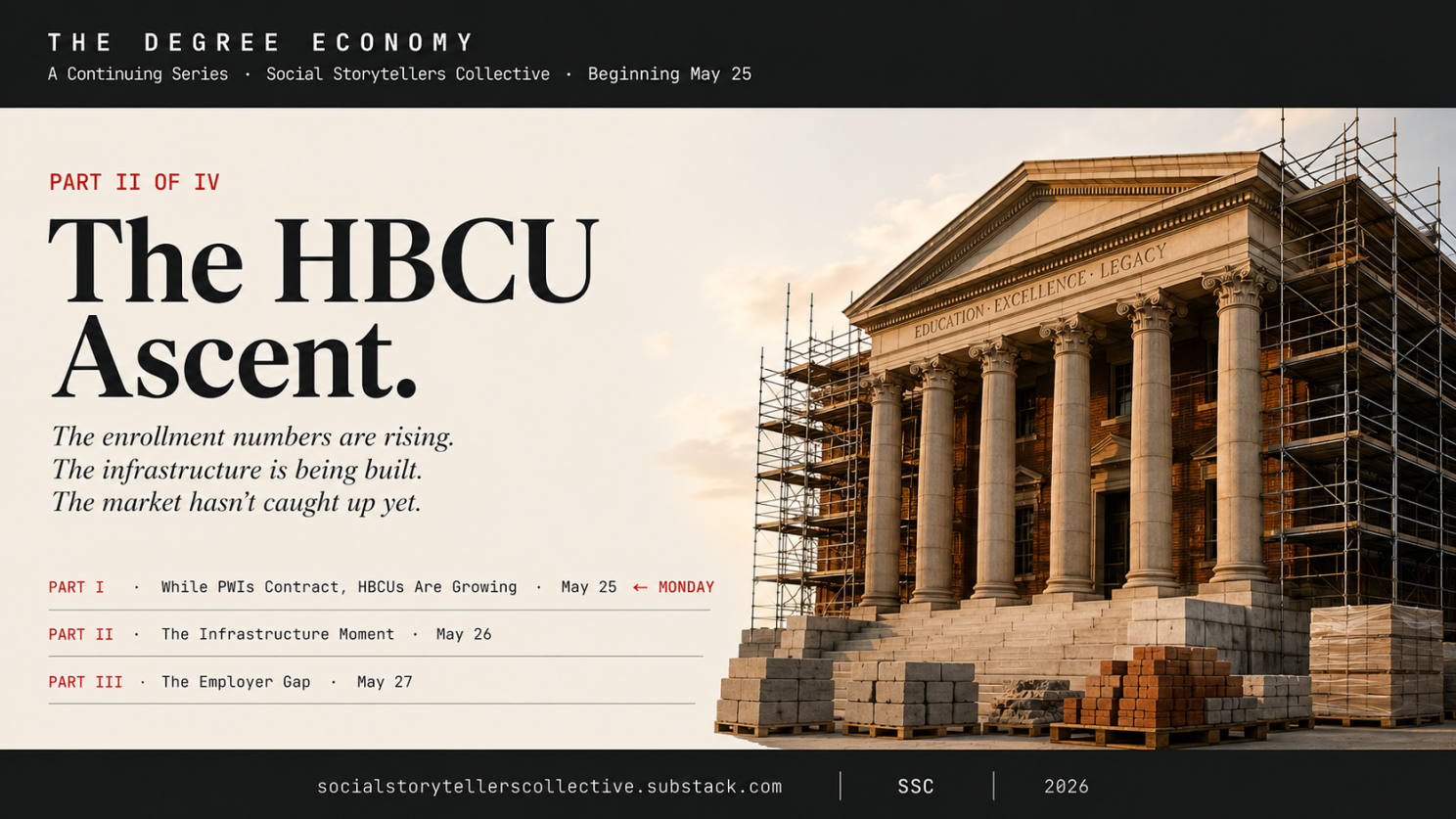
Today we are kicking off The HBCU Ascent — a new series inside The Degree Economy — with Part I: While PWIs Contract, HBCUs Are Growing. Three parts. Three arguments. One through line: the window to turn momentum into permanence is open right now — and that window has a close date.
This morning, Pope Leo XIV did something no pope before him has done. In Magnifica Humanitas, he named the Vatican’s direct institutional role in authorizing slavery — not individual Christians behaving badly, but the Holy See itself granting European colonial powers explicit religious authority to subjugate and enslave non-Christians through a 1452 directive that became the theological foundation of the Doctrine of Discovery.

Previous popes apologized for believers’ participation. Leo named the architecture. And Leo — the first U.S.-born pope in history, whose own bloodline includes both enslaved people and slave owners — made the connection that deserves direct attention: the logic of extraction did not end with slavery. It migrated. Will Davison Jr. examines what that acknowledgment means — and why it took this long — in The Vatican Finally Named the Institution, Not Just the Sin.
The week’s most clarifying data point came not from a headline but from a survey. 80% of companies piloting AI reported workforce reductions. Zero correlation to higher ROI. That finding, buried inside a Gartner study and now examined fully in The AI Layoffs Aren’t Working, reframes nearly every workforce announcement this week — including the political response to them. Office of California Governor Gavin Newsom signed an executive order on May 21 directing state agencies to study AI-driven job displacement. The No Robo Bosses Act — which would prevent companies from using AI as the sole reason to terminate someone — sits on his desk after he vetoed a nearly identical bill last fall. He now has the Gartner data, the AFL-CIO’s ultimatum, and the bill. The companies cutting people in the name of AI are not the companies generating the returns. Helen Poitevin, VP Analyst at Gartner, put it plainly: “Chasing value only through headcount reduction is likely to lead most organizations down a path of limited returns.” The workers already let go don’t get a do-over when the ROI doesn’t arrive. Whether Newsom signs the bill will tell us whether the executive order was a policy statement or a political calculation.
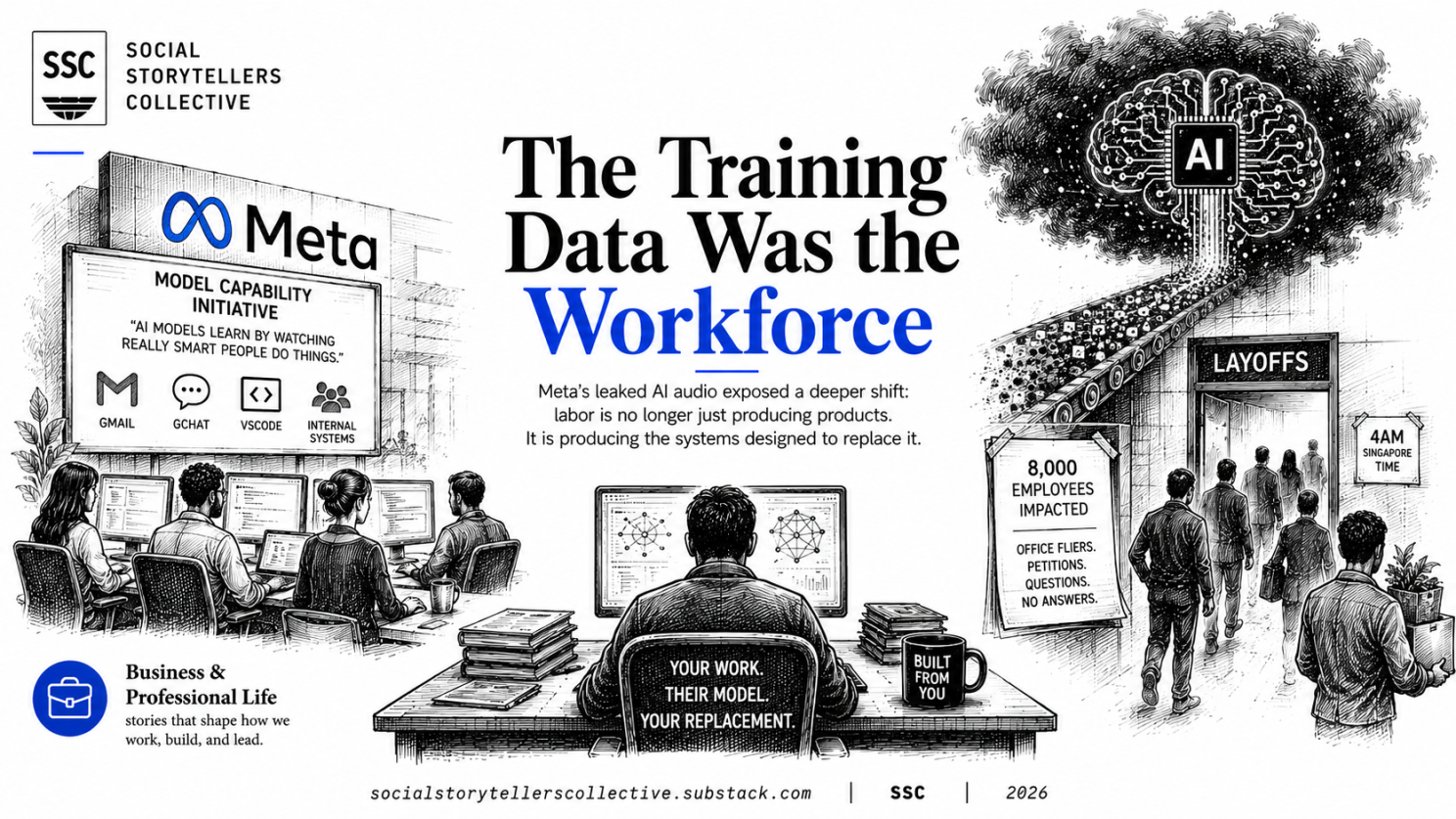
The Meta story this week was not really about layoffs. It was about sequence. In The Training Data Was the Workforce, Social Storytellers Collective examines what the leaked April 30 all-hands audio actually exposed: Mark Zuckerberg describing the company’s “Model Capability Initiative” — AI systems learning from employee activity across Gmail, GChat, VSCode, and internal collaboration tools — while the same workforce was being prepared for reduction. The sequence is the story. The models were trained on watching “really smart people do things.” The really smart people received termination emails the next morning. Meta generated more than $164 billion in revenue in 2025 and reported net income above $62 billion. This is not a story about a company that could not afford its workforce. It is a story about a company that decided its workforce had already taught the system what it needed to know.
That logic is not unique to Meta. It is becoming an org chart philosophy. The Team Didn’t Get Smaller. The Worker Did. traces how Coinbase — as it cut 14% of its workforce — simultaneously announced it would reorganize around “AI-native pods,” with CEO Brian Armstrong describing teams of three doing the work that once required ten to fifteen people. Rob Witoff, Head of Platform at Coinbase, was direct about the math. One pod, a fraction of the headcount, the same institutional output. What the language rarely names is what the worker experiences on the other side of it — broader responsibilities, fewer colleagues, less institutional redundancy, and a role that now requires orchestrating AI systems at high speed across functions that once belonged to an entire department. The team did not get smaller. The worker absorbed it.
The housing story this week is the same story wearing a different suit. The share of first-time homebuyers ages 25 to 34with older co-borrowers has quadrupled since 2000, according to Freddie Mac. 38% of buyers under 30 used a cash gift or family inheritance for a down payment, per Redfin. Daryl Fairweather, Chief Economist at Redfin, put it plainly: “You need parental help more than ever.” With mortgage rates at a nine-month high and home prices still elevated, the starter home has become a generational asset transfer mechanism. For the households without a family benefactor — the workers also navigating AI pods, credential deflation, and performance culture pressure — the property ladder isn’t on sale. It has been moved to a different floor entirely.
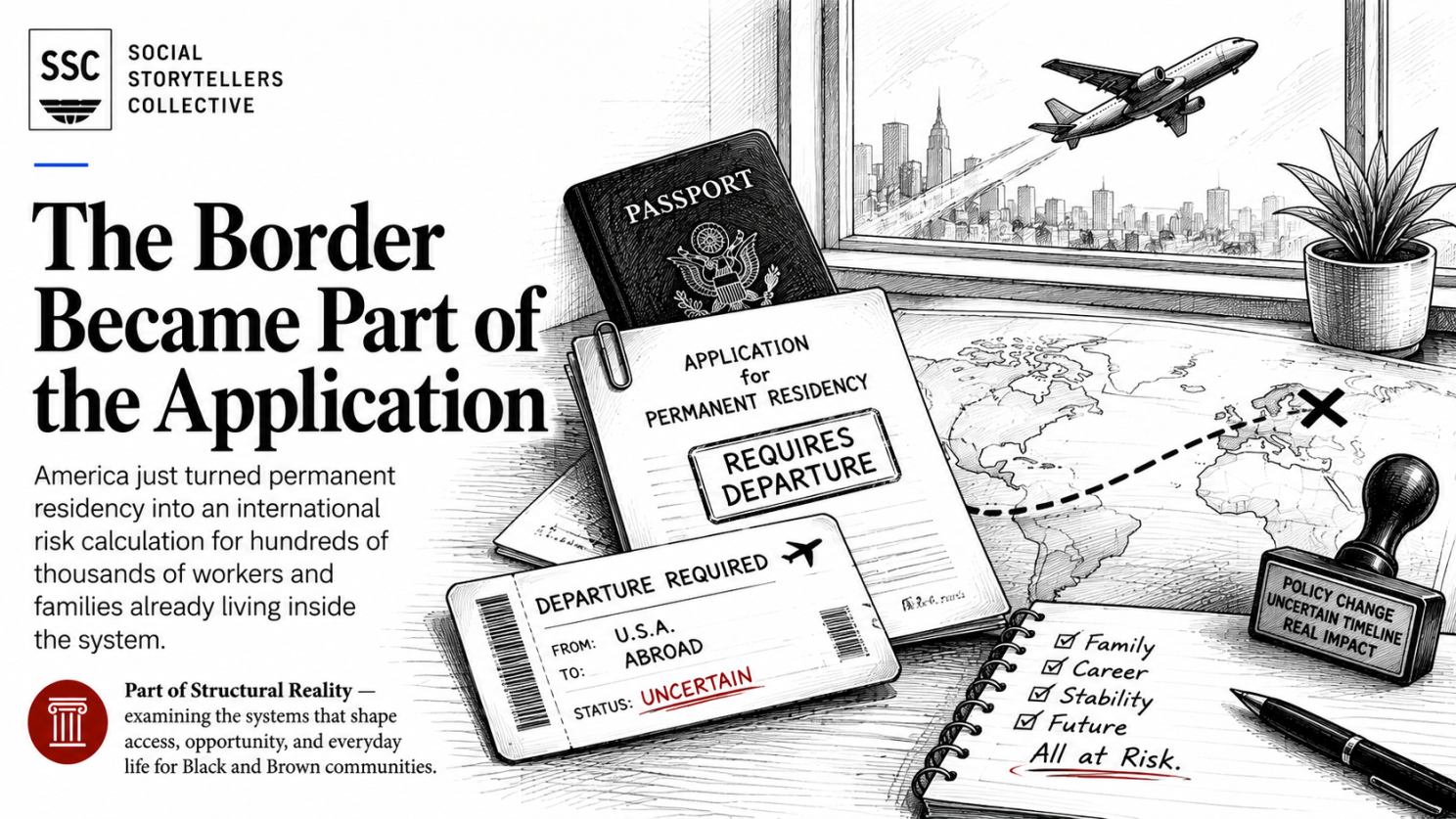
The policy story sitting underneath all of this is what happens when systems that were supposed to provide stability become volatility engines instead. The Border Became Part of the Application examines this week’s reversal of a fifty-year immigration practice — roughly 600,000 people who apply for permanent residency inside the United States each year through “adjustment of status” are now required to leave the country and complete processing abroad. No implementation timeline. No procedural guidance. No clarity on how long applicants must remain outside during adjudication. For H-1B workers who have lived, worked, purchased homes, and raised children in the United States for years, the message is precise even when the policy is not: the country will accept your participation while withholding your permanence. The micro story is paperwork. The macro story is how modern economies normalize conditional belonging — and what happens to the workforce architecture underneath the industries that depend on it when the conditions get harder to meet.
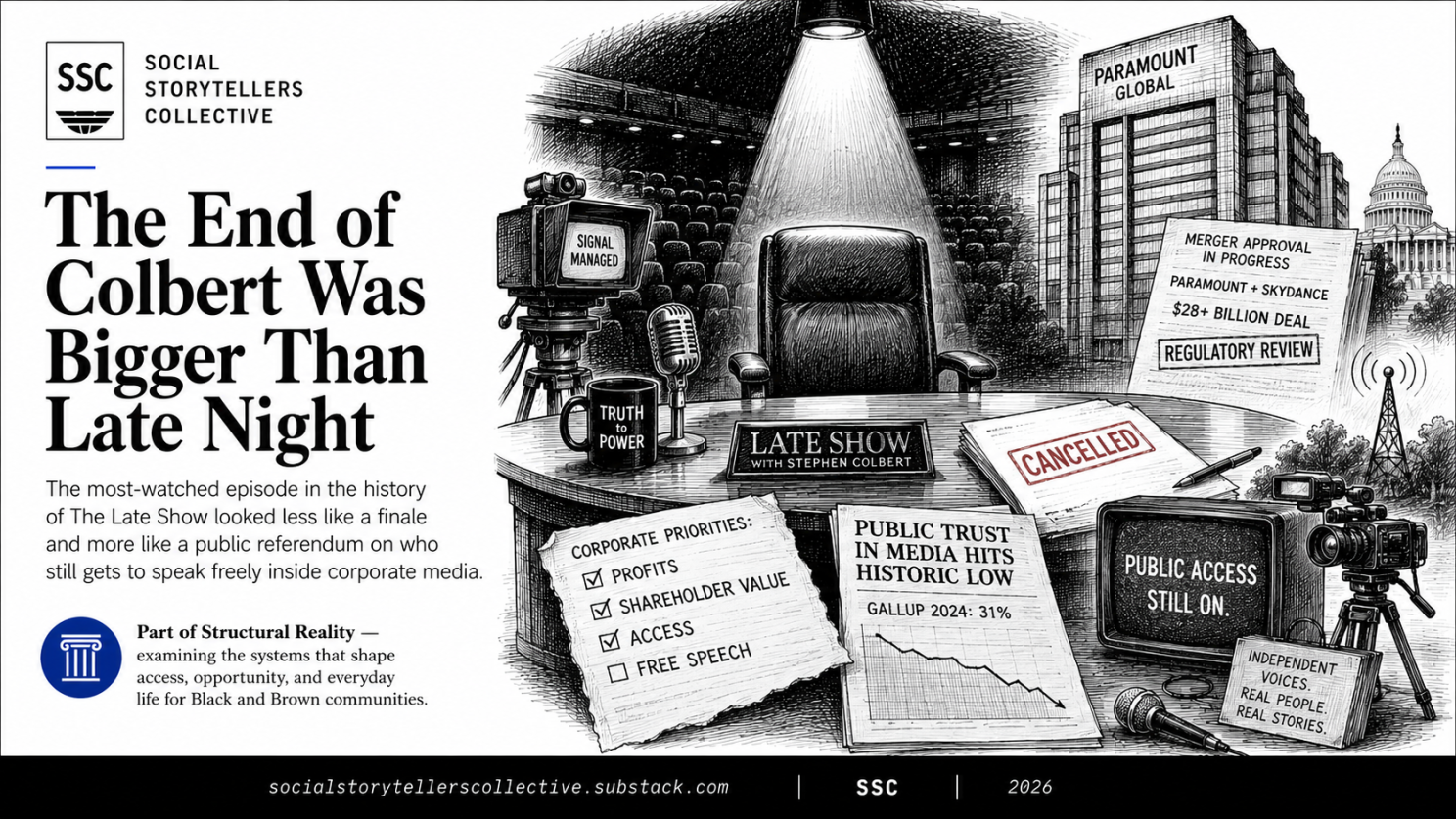
The cultural story this week began on a Thursday night and continued on public access television in Michigan the following day. 6.74 million people watched the finale of The Late Show with Stephen Colbert — the most-watched weeknight episode in the show’s history, more than the 6.55 million who tuned in for the 2015 premiere. As SSC examines in The End of Colbert Was Bigger Than Late Night, the audience size mattered because the show was not failing when it ended. Colbert was winning his time slot. The program had just earned its sixth Emmy nomination for Outstanding Talk Show. The cancellation was announced last July, three days after Colbert publicly called Paramount Global’s $16 million settlement with Donald Trump a “big fat bribe” — the same settlement that required federal regulatory approval to clear obstacles for Paramount’s proposed merger with Skydance Media. Two U.S. senators questioned the timing publicly. Paramount called it a financial decision. The 6.74 million people who showed up Thursday night called it something else.
Less than 24 hours later, Colbert turned up on Monroe Community Media — a public-access station in Michigan — with Jack White on a boombox, Jeff Daniels making sandwiches, Eminem as the fire marshal, and a line about hoping Monroe Community Media doesn’t get acquired by Paramount. The production looked almost deliberately local. When corporate platforms become managed environments, the honest voices don’t disappear. They find a smaller stage — and sometimes that’s where the real broadcast happens.

The live music industry is learning the same lesson the hard way. Promoters spent years convinced that fan complaints about prices were just noise — and kept raising them anyway. The average concert ticket is now $144, up from $82 in 2020. Post Malone, Jelly Roll, the Pussycat Dolls, and Meghan Trainor have all cancelled or downsized tours amid lagging sales. The industry calls the unsold seats scattered across venue maps “blue dots.” Leena Alridge calls them what they actually are in Blue Dot Fever Is Exposing the Real Concert Economy — the market responding honestly to an industry that kept raising prices while the people buying the tickets ran out of room to absorb them. The tickets are still expensive. The crowds are more selective. And the illusion of endless demand is starting to crack.
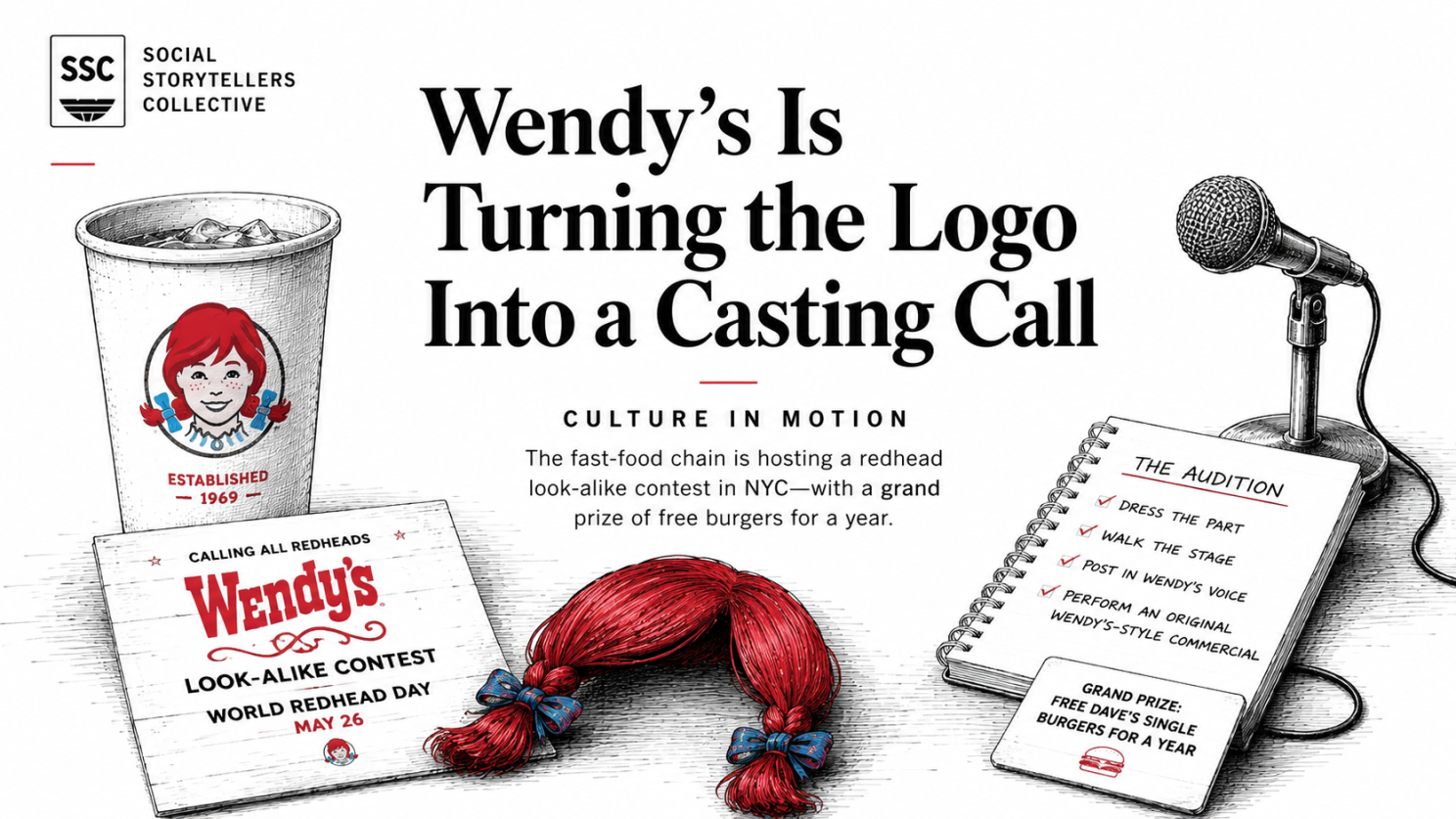
Tomorrow is World Redhead Day — and Wendy’s is making it a whole moment. The chain is hosting a look-alike contest at Seaport Square in New York City, inviting fans to show up in full costume — red wig, pigtails, freckles — walk a stage, deliver a social-media-style post in Wendy’s voice, and perform an original Wendy’s-style commercial in front of a live crowd. The grand prize is free Dave’s Single burgers for a year. The runner-up gets free Frosty desserts for a year. The event sounds unserious because it is designed to. But as Social Storytellers Collective examines in Wendy’s Is Turning the Logo Into a Look, the real prize for Wendy’s is not the contest — it is the content the contest generates. Every contestant on that stage is brand content the company did not have to produce. Every phone pointed at the stage is distribution it did not have to buy. The brand is now the celebrity. The mascot is now the audition.
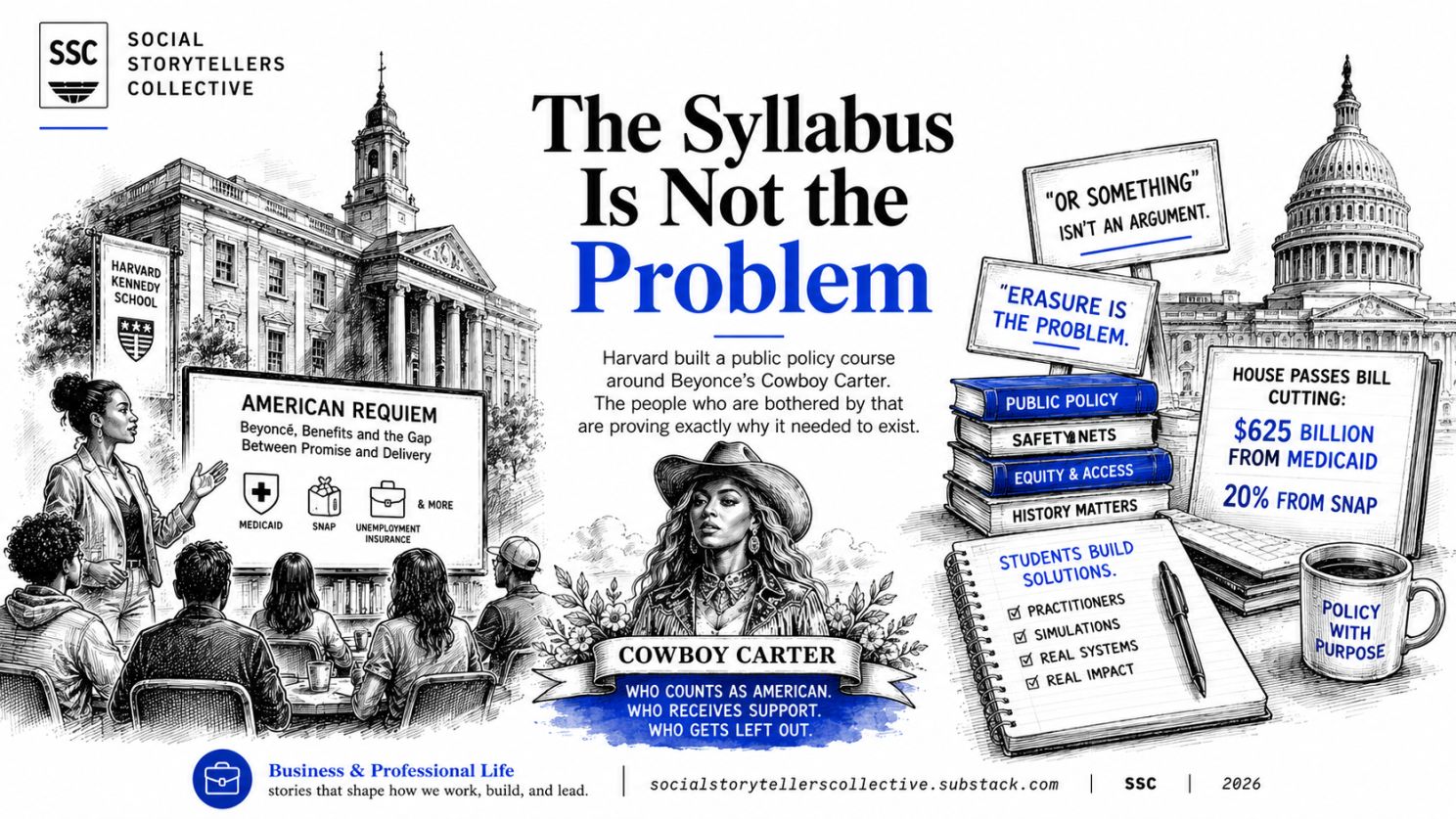
And then there is the story that landed this week that some people filed under “or something” — and in doing so, made the argument for why it exists. Ayushi Roy, an adjunct lecturer at the Harvard Kennedy School Executive Education, walked out of the Beyoncé Cowboy Carter tour at MetLife Stadium last summer convinced the album belonged in her classroom. The course she built around it — The Syllabus Is Not the Problem — uses Cowboy Carter to teach future policymakers why Medicaid, SNAP, and the social safety net consistently fail the people they were designed to serve. Roy’s argument is precise: Beyoncé wasn’t documenting Black erasure from country music as a genre. She was documenting erasure from the country itself — from the body politic, from the institutions that decide who receives support and who receives scrutiny. The week this course entered public conversation is the same week the House voted to cut $625 billion from Medicaid and 20% from SNAP. The gap between promise and delivery is not a theoretical problem this week. SSC names the pushback directly — and names why erasure of history is the line we do not move from.
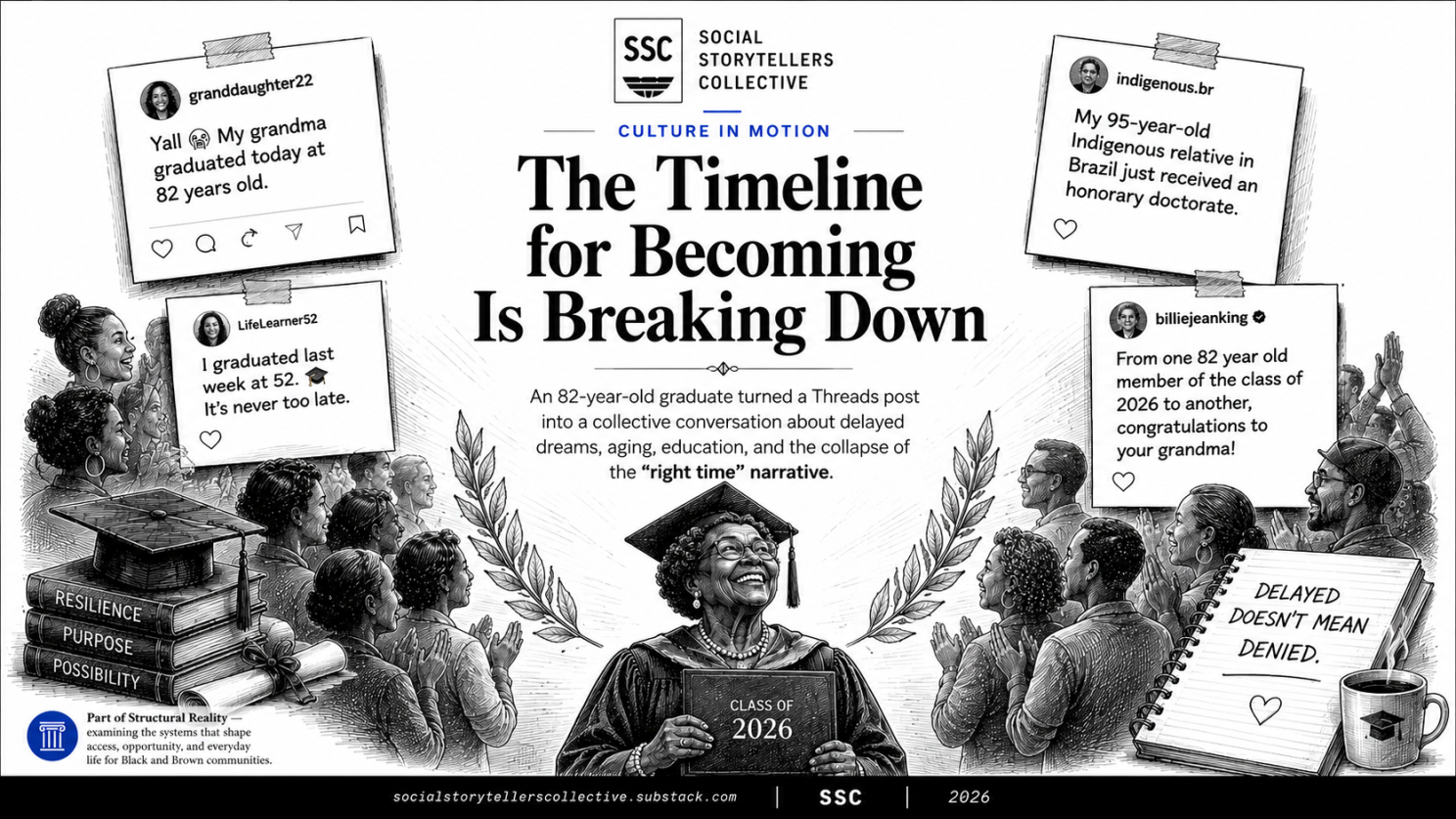
The thread running through today’s coverage is not pessimism. It is precision. An 82-year-old woman graduated this week, and her photo turned a Threads comment section into something that felt almost like collective permission. In The Timeline for Becoming Is Breaking Down, Leena Alridge examines what actually happened inside that thread — why millions of people responded not just with admiration but with relief. The invisible timeline model American culture runs on — graduate young, establish stability early, treat delays as failure — has been quietly breaking down for years. Economic instability, caregiving, illness, layoffs, and the compounding cost of just getting through have interrupted the clean chronology the system still rewards. The grandmother’s image didn’t just inspire people. It disrupted the internalized belief that their own timeline had already run out. One commenter wrote that it made them want to apply to law school. Another described it as something that “made everyone’s day.” What it actually did was something harder to name: it gave people permission to still be becoming.
The Daily Visual Signal
A visual interpretation of the deeper systems, tensions, and structural shifts shaping the current moment — designed to translate complex societal changes into a single image.
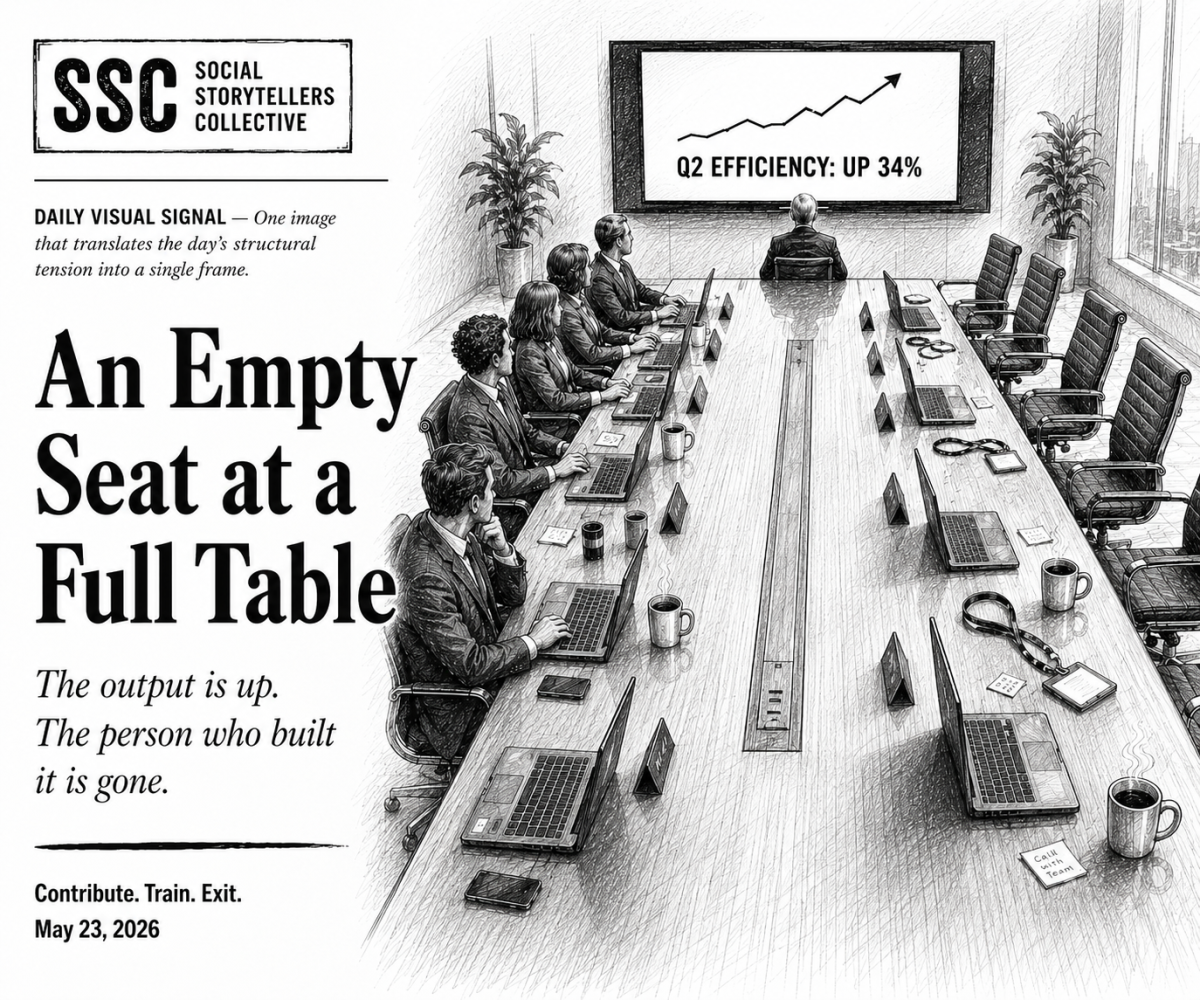
Today’s image is an org chart. Half the boxes are empty. Q2 earnings per share at the top — up. ROI from AI at the bottom — no data available. The people are already gone. The number never arrived. The memo said it would.
Featured Story: The Diploma Isn’t the Signal Anymore
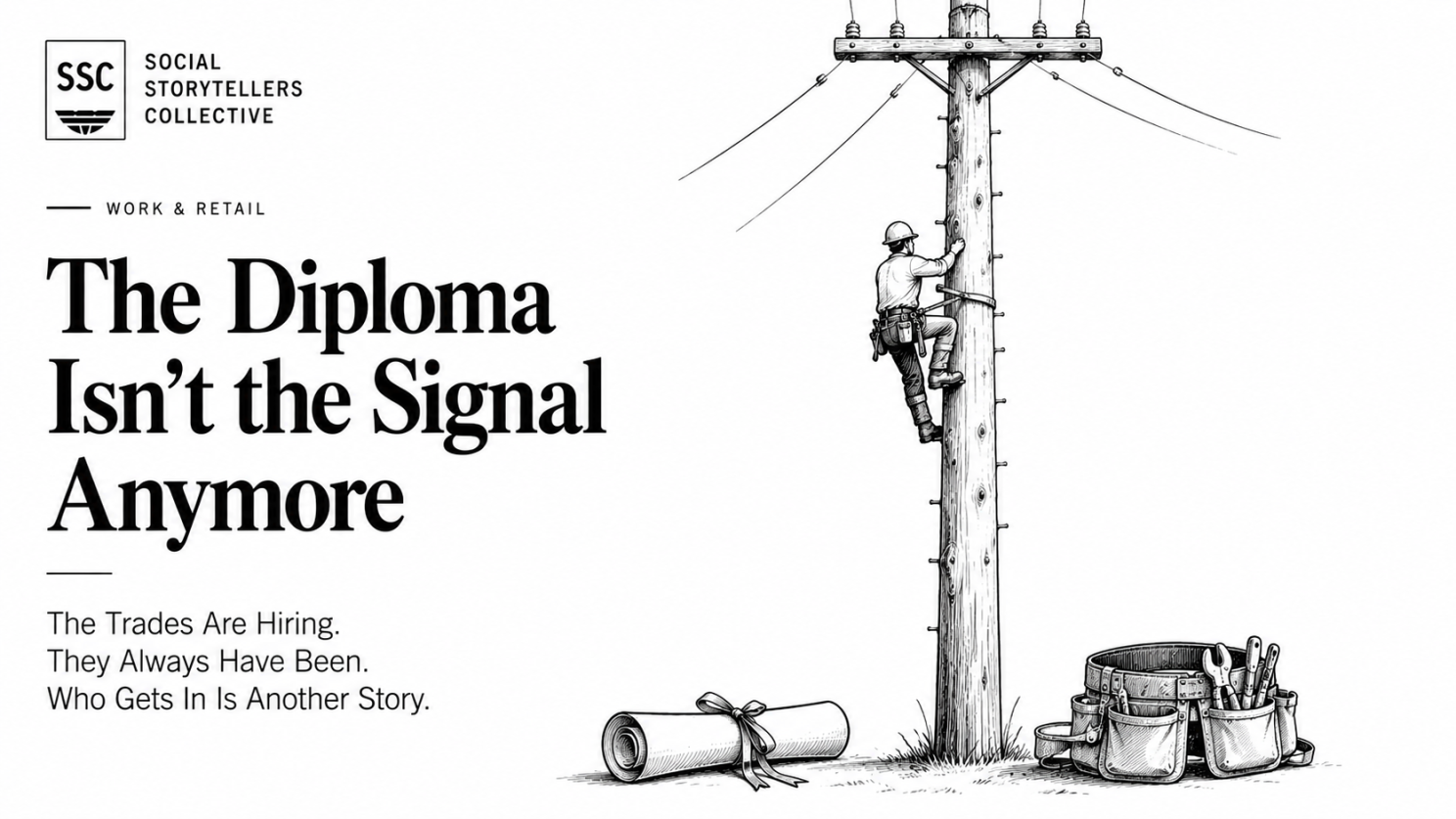
The trades are booming. The credential is deflating. And the question nobody in the pivot narrative is asking — who gets into the pipeline, and what happens when the build cycle ends — is the one that determines whether this moment becomes an opening or another door that closes on the people who needed it most. The Diploma Isn’t the Signal Anymore is where SSC examines the full architecture of the shift — the AT&T investment, the scarred early-career workers, the Stanford data, and the argument the pivot narrative keeps skipping. It is also the piece that opens the door to what comes next. Part I — While PWIs Contract, HBCUs Are Growing — is live now. Tuesday we go deeper with Part II — The Infrastructure Moment: the HBCU Research Institution launch is not symbolism. It is the structural investment that makes the growth mean something ten years from now. The institutions the system is trying to squeeze are growing anyway. We will show you exactly how, and what it will take to make that growth permanent.
That is the thread SSC wants to leave you with today. The systems restructuring around us are not restructuring around our timelines. They are restructuring around their own continuity. The workers are absorbing the disruption. The families are navigating the uncertainty. The credentials are deflating. And the people absorbing the cost of decisions made on floors they never had access to are still showing up — graduating at 82, organizing petitions at 4AM, turning public access television into the most talked-about broadcast of the week.
The becoming is still happening. The timeline is theirs to set.
We will be back Tuesday with Part II of The HBCU Ascent — The Infrastructure Moment: the HBCU Research Institution launch is not symbolism. It is the structural investment that makes the growth mean something ten years from now.
— SSC
All of today’s coverage lives at socialstorytellers.substack.com. The full archive, beat navigation, and every linked piece are best experienced on a computer. If you have been reading and have not yet subscribed, we would be glad to have you with us.