
We’ve been tracking this story for months.
When Anthropic posted a head of product communications position with compensation reaching $400,000, it signaled something larger than an aggressive hiring strategy. In our earlier analysis, “Communications Chiefs Are No Longer Managing Reputation. They’re Managing Risk”, we argued that communications functions were evolving into enterprise risk management rather than traditional public relations.
That trend became even clearer when we examined the extraordinary salaries being offered for AI communications executives in “The $775,000 Question: Who Gets to Tell the AI Story?”. Our argument was that companies were no longer paying communications leaders simply to explain products—they were paying them to shape the public understanding of artificial intelligence itself. The latest reporting from The Wall Street Journal suggests that what first appeared to be an AI industry phenomenon is becoming a broader shift across corporate America.
A LinkedIn post circulating widely this month captures the mood perfectly. It opens with a striking set of numbers—elite technology companies budgeting hundreds of thousands of dollars for a single non-technical communications role—before pivoting into a personal reflection about the profession. The numbers are real. The framing is the problem. The story is not that communicators are finally receiving long-overdue recognition. The story is that the cost of getting communication wrong has become extraordinarily expensive.
The salaries illustrate the shift. Anthropic recently advertised a head of product communications role with compensation reaching $400,000. Netflix listed a senior director of communications position with a salary range of $656,000 to $1.2 million. OpenAI posted communications leadership roles paying up to $430,000, plus equity. These executives are responsible for defining the overarching story a company tells to investors, regulators, customers, employees, and the broader public. Their responsibilities range from framing the risks and benefits of powerful AI models to crafting executive speeches and pressure-testing language in blog posts that could move markets or trigger regulatory scrutiny.
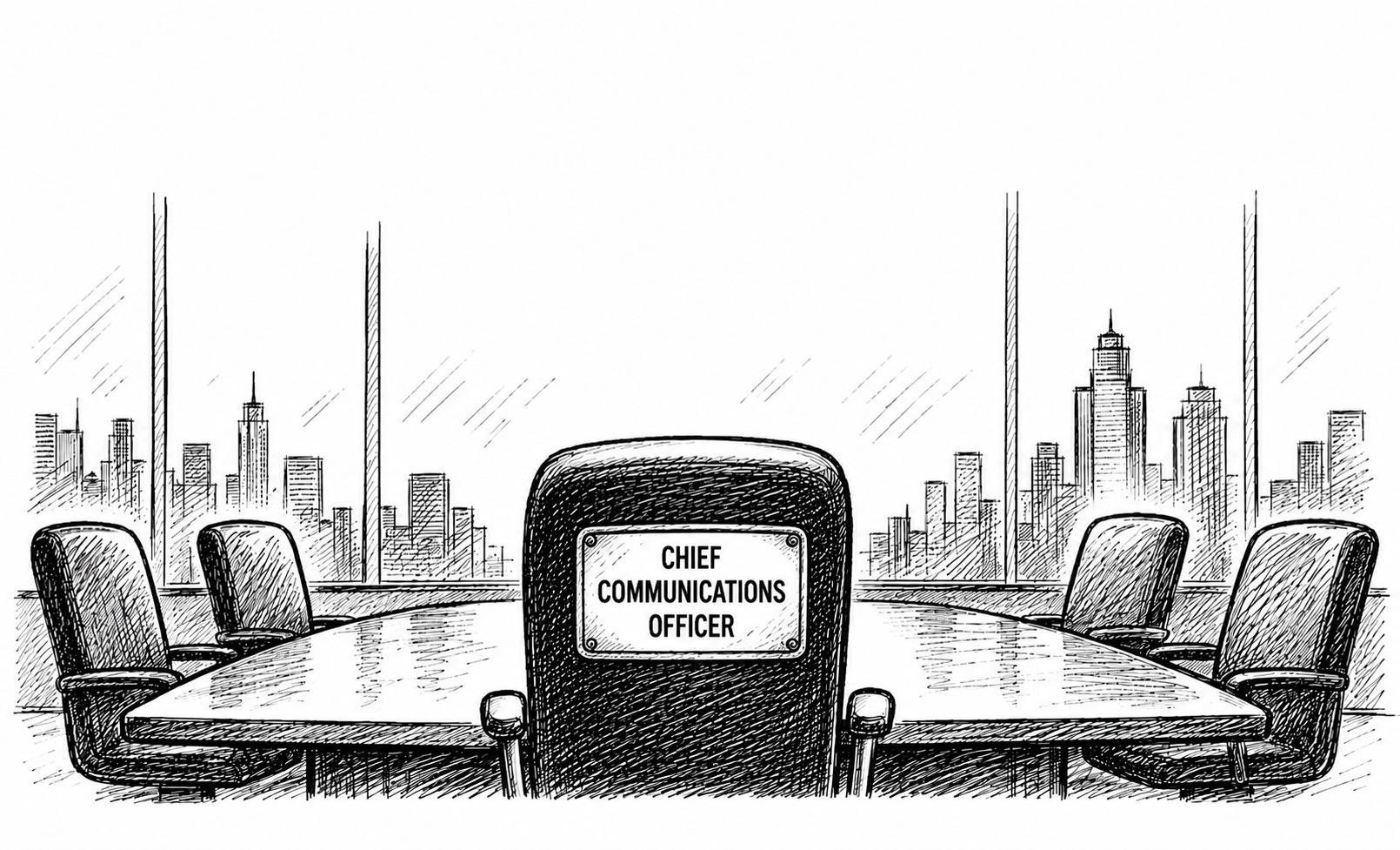
The same structural shift is now visible well beyond the AI sector. According to The Wall Street Journal, companies including Accenture, Gap, and State Farm have recently hired their first-ever chief communications officers. Nearly half of chief communications officers now report directly to the CEO, compared with 37% a decade ago. That reporting line matters because it reflects when organizations believe communications should enter the decision-making process. The old model asked communications to explain decisions after they were made. The new model asks communications whether those decisions should be made in the first place and how every stakeholder will interpret them.
For decades, communications was often viewed as a support function—responsible for media relations, internal announcements, and crisis response. Today’s environment has fundamentally altered that equation. Investors react to executive statements in real time. Employees organize publicly on social platforms. Customers can mobilize within hours. Regulators increasingly scrutinize public messaging alongside corporate actions. In an economy where trust itself is an asset, narrative has become part of the operating system rather than a marketing exercise.
Artificial intelligence has accelerated this transformation. Every major AI company is asking society to trust technologies that many people do not fully understand. That means communication is no longer simply about explaining innovation; it is about governing expectations around innovation. The executives responsible for articulating safety standards, competitive advantages, ethical guardrails, and long-term strategy are influencing adoption just as surely as the engineers building the models themselves. Communication has become a form of governance.
Yet the profession’s growing influence has created its own paradox. Many newly empowered communications leaders report expanding responsibilities without corresponding increases in staffing or resources. They are expected to advise CEOs, reassure employees, engage journalists, anticipate political controversies, satisfy investors, navigate activist pressure, and respond to a twenty-four-hour information cycle that never truly ends. As one communications executive recently observed, the job comes with “a lot of bosses.” The elevation of the role has not reduced the risk of burnout—it has often intensified it.
This story is not about the rise of communications professionals. It is the rise of communication itself as corporate infrastructure. Companies are discovering that strategy does not end when a decision is made—it begins when that decision enters the public conversation. The chief communications officer is increasingly sitting in the C-suite for the same reason chief information officers and chief cybersecurity officers do: because in an economy built on trust, technology, and perception, narrative has become a strategic asset.