
Structural Reality is a series examining how systems produce unequal outcomes across work, income, and opportunity.
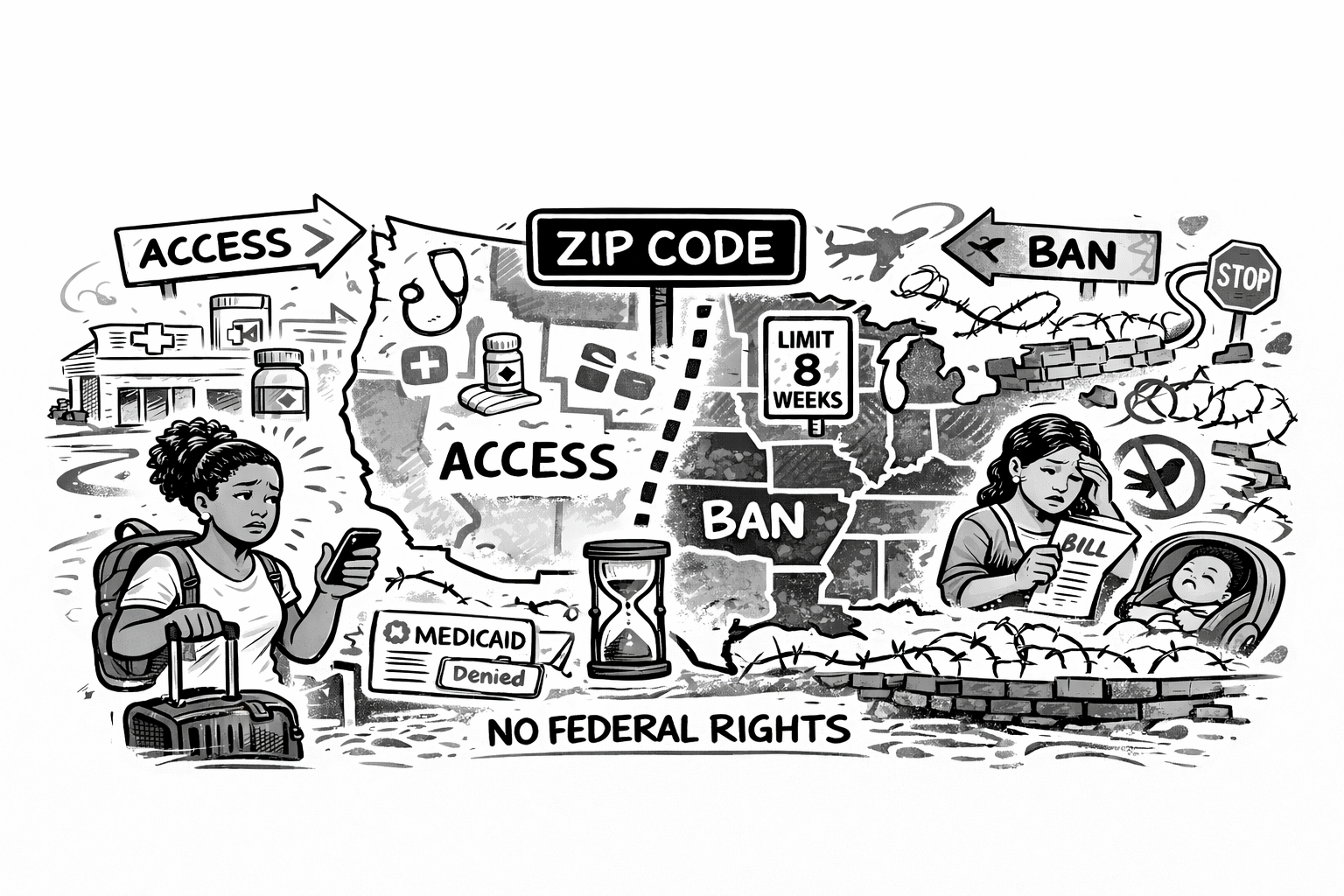
Three years after Dobbs, the patchwork is permanent. There is no federal protection for reproductive healthcare — legality, access, and even the ability to travel for care varies entirely by state. What’s emerging isn’t just an uneven policy landscape. It’s a two-tiered system where geography determines rights.
The strategy has shifted. Open bans have given way to quieter mechanisms: restricting specific medications, reframing anti-abortion measures as “equal rights” protections, and tightening the window between diagnosis and legal intervention for physicians. The result is a system where providers face legal exposure, patients face bureaucratic delay, and the most vulnerable — those without the means to travel or take time off work — absorb the sharpest consequences. Black Americans, who make up over 20% of Medicaid recipients, are disproportionately affected by coverage changes that compound access barriers already rooted in structural inequality.
This is not a partisan issue at its core. It is a question of whether government can override a physician’s medical judgment — and whether where you’re born determines what rights you hold. It’s a pattern we’ve explored before in When Access Becomes Conditional — and the answer still demands a bipartisan response.