
Culture in Motion — examining how culture is created, distributed, and who ultimately benefits from it.
Atlanta has long been a center of Black culture. Music, film, and television have all flowed through the city in ways that shaped national and global audiences. But what’s happening now is different. The shift isn’t just cultural. It’s structural.
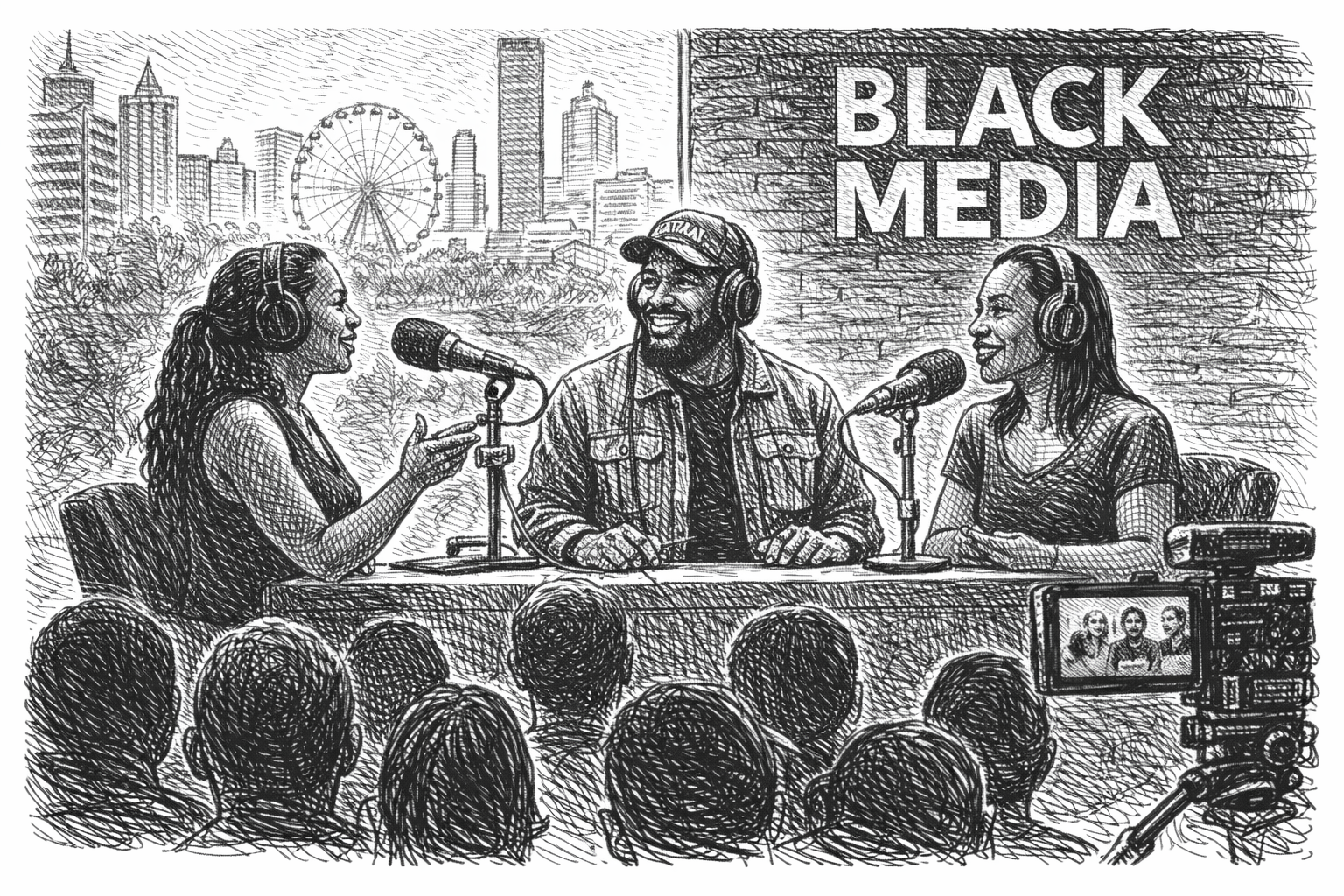
The return of the Black Effect Podcast Festival is one visible signal of that shift. On the surface, it looks like an event — another gathering of creators, audiences, and brands. But underneath it is something more significant. It reflects a broader movement toward Black-owned media ecosystems that are being built outside the traditional platforms that once defined access.
For decades, Black media has largely existed within systems it did not control. Radio, television, publishing, and later digital platforms offered distribution, but rarely ownership. The result was a familiar dynamic: Black creators shaped the culture, while institutions determined how that culture was packaged, monetized, and scaled.
Podcasting — and the broader creator economy — has begun to disrupt that structure. The barriers to entry are lower. The distance between creator and audience is shorter. And most importantly, the opportunity for ownership is real. Intellectual property, audience relationships, and revenue streams can now sit closer to the people creating the work. That shift does not eliminate platforms, but it changes the terms of engagement with them.
Atlanta is emerging as a central node in that transformation because it already holds the ingredients: talent, audience, infrastructure, and a long history of cultural production. What is new is the alignment of those elements around ownership. Creators are not just producing content. They are building networks, forming partnerships, and creating systems that allow them to retain more control over their work.
At the same time that Black creators are building new forms of media ownership in Atlanta, the city itself is undergoing a different kind of transformation — one where infrastructure investment is quietly reshaping who gets to remain in the communities that helped define its culture. The neighborhoods that produced the sound, the style, and the stories are not guaranteed to be home to the people who created them. In Atlanta, Going Green Is Pushing Black Homeowners Out.
This is where the idea of infrastructure becomes critical. Infrastructure is not just physical. It is the system that determines how things move — who gets access, who gets visibility, and who captures value. For Black media, building infrastructure means moving beyond participation in existing systems and toward the creation of new ones.
That shift is still in its early stages. Traditional platforms remain powerful. Distribution still matters. Scale still often requires partnership with larger institutions. But the direction is clear. The question is no longer whether Black media can reach audiences. It already does. The question is whether it can do so on terms that allow for sustained ownership and control.
Why This Matters
Growth without ownership is visibility without power. For years, Black media has expanded its reach while remaining structurally dependent on systems it did not control. What’s happening now signals a different possibility. If Black creators are able to build and sustain their own infrastructure, the impact extends beyond content — it reshapes who benefits from culture itself. That possibility is unfolding against a backdrop where the physical communities that shaped Atlanta’s culture are being quietly eroded, which makes the question of who owns what, and where, more urgent than it might otherwise seem.