Amazon Pharmacy is expanding its GLP-1 offerings by adding an Ozempic pill for type 2 diabetes to its growing healthcare ecosystem, with same-day delivery now available across roughly 3,000 locations and plans to expand to 4,500 by the end of the year. The medication will reportedly cost $149 per month for some customers, or as little as $25 with insurance. On the surface, the move looks like another healthcare convenience story. Underneath it is a much larger infrastructure play.
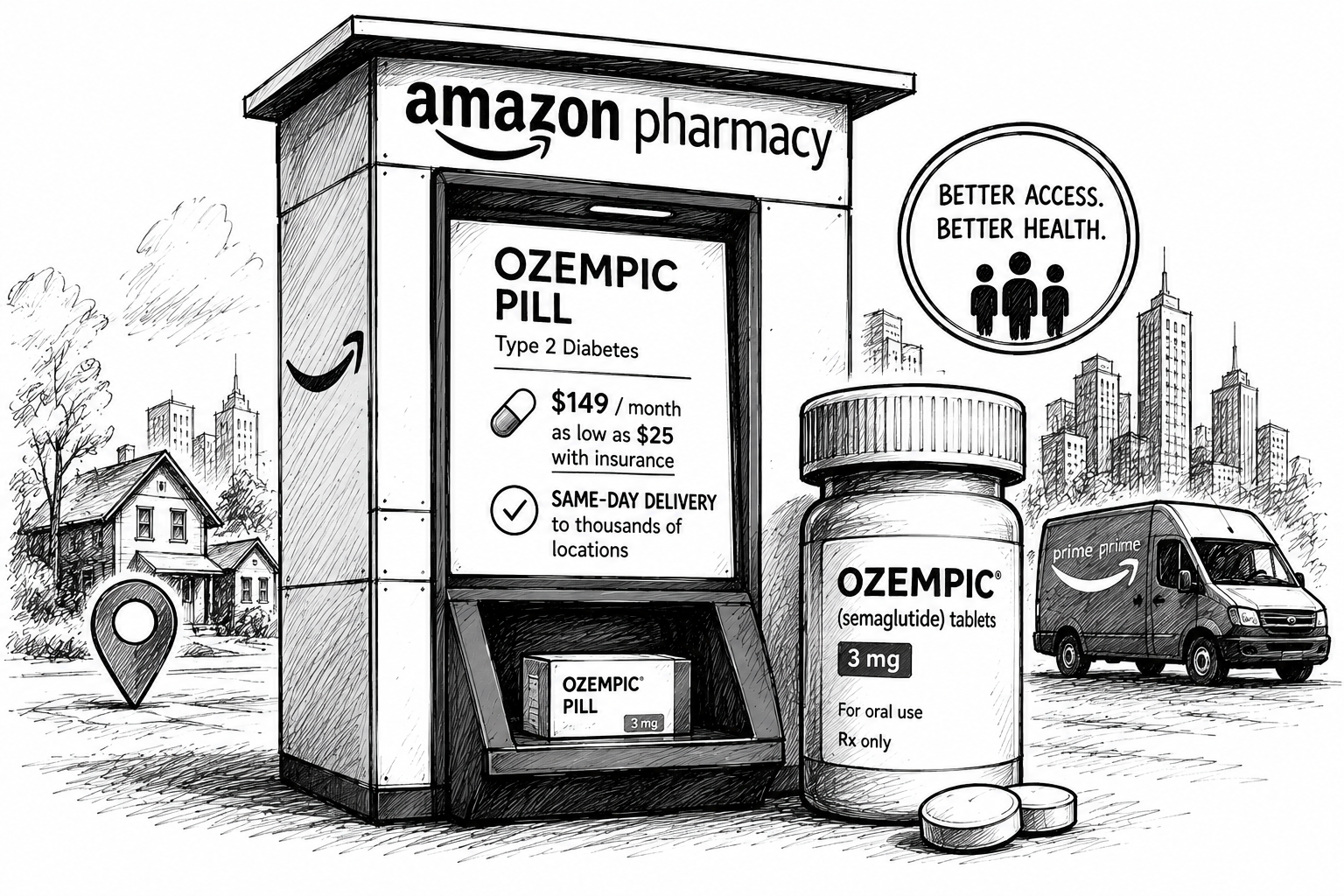
Amazon is not simply competing in pharmaceuticals. It is competing to become the logistics layer for modern healthcare consumption.
That distinction matters because the GLP-1 market is no longer just about efficacy. The category is rapidly becoming a distribution and accessibility battle centered around convenience, delivery speed, insurance integration, and behavioral friction reduction. Every additional barrier removed — injections, pharmacy wait times, transportation, prescription fulfillment delays — expands the size of the addressable market. The “Ozempic pill” matters not only because of the medication itself, but because oral formats and same-day delivery lower the psychological and logistical thresholds that previously limited participation.
The expansion into kiosks is especially revealing. It transforms healthcare access into something increasingly embedded within everyday retail infrastructure. Amazon’s strategy appears designed to normalize pharmaceutical fulfillment the same way it normalized rapid e-commerce delivery: by making the process feel frictionless, immediate, and integrated into daily life rather than a separate healthcare experience.
The underserved-area framing also deserves attention. Retail healthcare companies increasingly recognize that access gaps themselves represent market opportunities. Communities with fewer nearby pharmacies, longer prescription delays, or reduced healthcare infrastructure become highly attractive expansion targets for delivery-based healthcare models. That creates a paradox where some of the same populations historically underserved by traditional healthcare systems may now become central to the next wave of pharmaceutical distribution growth.
What emerges is a broader shift in how healthcare is being reorganized. Pharmacies are becoming logistics networks. Medications are becoming subscription-like consumer products. And companies like Amazon are positioning themselves not just as retailers, but as infrastructure providers sitting between patients, prescriptions, insurers, and delivery systems. The future of healthcare access may increasingly depend on who controls the fastest and most scalable pathways to everyday convenience.