
The latest agreement between the United States and Mexico over airline access to Mexico City looks like a routine diplomatic resolution. It is more precise than that. The months of tension between transportation officials and airline operators that preceded it reveal something about how aviation infrastructure is being repositioned — not as a logistical system that moves people and goods, but as an economic pressure point that governments are learning to use.
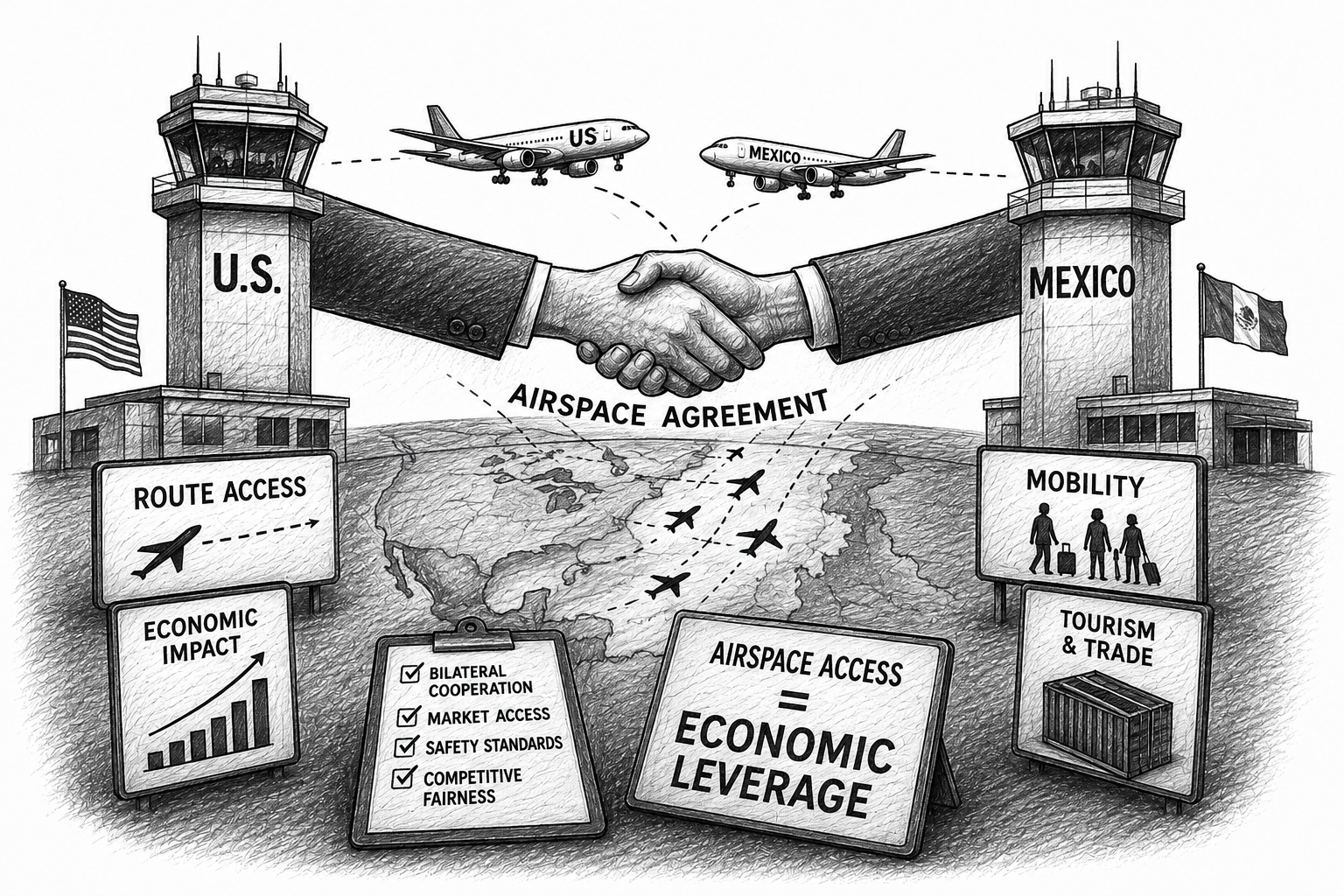
Airport access shapes far more than travel convenience. It determines route dominance, pricing leverage, tourism flows, cargo efficiency, and business connectivity across entire regional economies. Mexico City’s airport system is particularly important because of its role as both a commercial gateway and a strategic connector between North America and Latin America. Restricting or negotiating access to that system affects airlines, travelers, tourism industries, and trade relationships simultaneously. That is not a transportation dispute. It is an economic negotiation conducted through transportation infrastructure.
SSC has been tracking how aviation infrastructure is being converted into a policy instrument across multiple contexts. The Airport Isn’t Just a Transit Hub Anymore — It’s a Checkpoint documented how DHS threatened to withdraw customs agents from sanctuary city airports — a move that would have effectively halted international travel not through legislation but through a staffing decision. The U.S.-Mexico dispute is the trade and diplomatic version of the same logic: control over who can fly where, and on what terms, is being exercised as leverage rather than managed as shared infrastructure. And as Airlines Raise Baggage Fees Nationwide as Fuel Costs Surge showed, the downstream effects of aviation policy decisions consistently land hardest on the travelers with the fewest alternatives — not on the institutional players negotiating the terms.
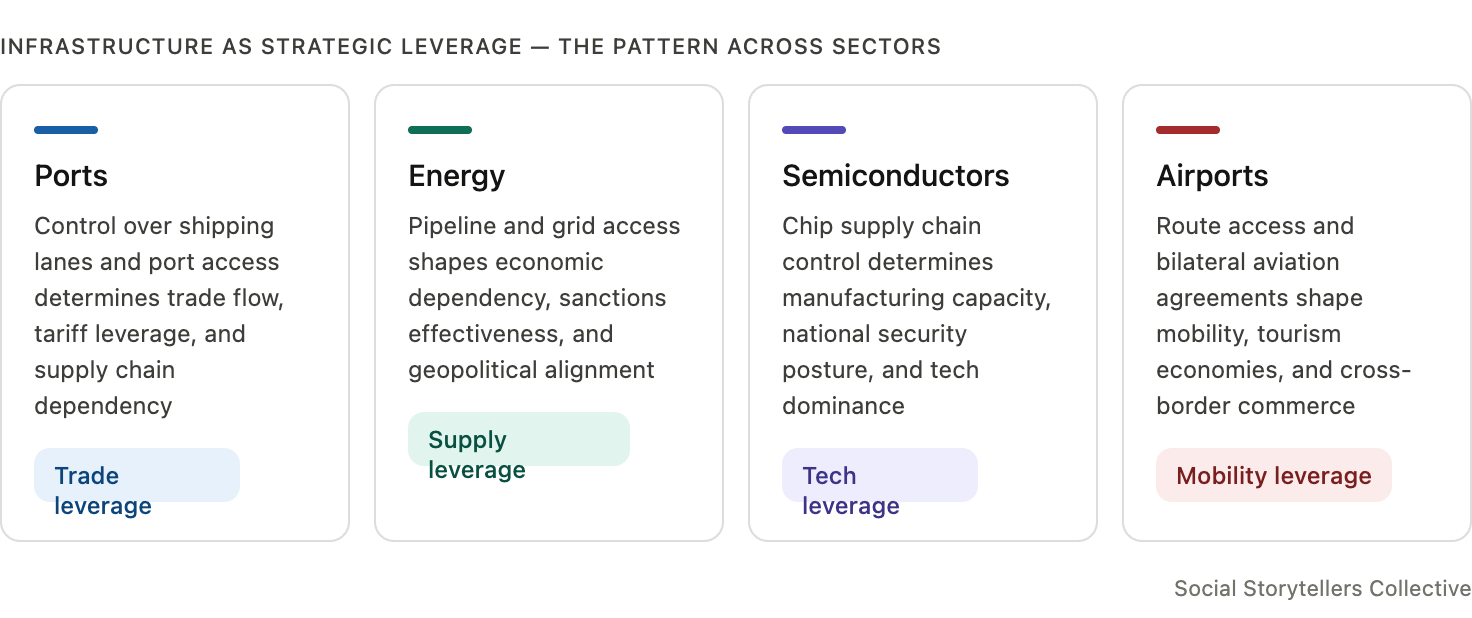
The dispute also reflects the growing scarcity value of major aviation infrastructure globally. As passenger demand rebounds and international travel stabilizes, airports with limited capacity become chokepoints with real economic power. Governments are treating airport access similarly to how they treat ports, energy corridors, or semiconductor supply chains — as strategic infrastructure tied directly to national economic competitiveness. In that environment, airline negotiations become geopolitical negotiations, and the outcome of those negotiations shapes who can move, at what cost, and on whose terms.
For travelers, the consequences surface through pricing and flexibility. Reduced access limits competition, concentrates market power among dominant carriers, and increases fare pressure on high-demand international routes. Business travelers, tourism economies, migrant communities, and cross-border labor networks absorb those downstream effects differently — and the people with the least flexibility to absorb them are the ones with the fewest alternatives. Access becomes unevenly distributed through infrastructure policy decisions most travelers never directly see.
The U.S.-Mexico resolution may hold. What it reveals about how aviation infrastructure is being governed will not quietly disappear with the agreement. Airport access is being treated as leverage. That is a different kind of system than the one passengers thought they were moving through.