
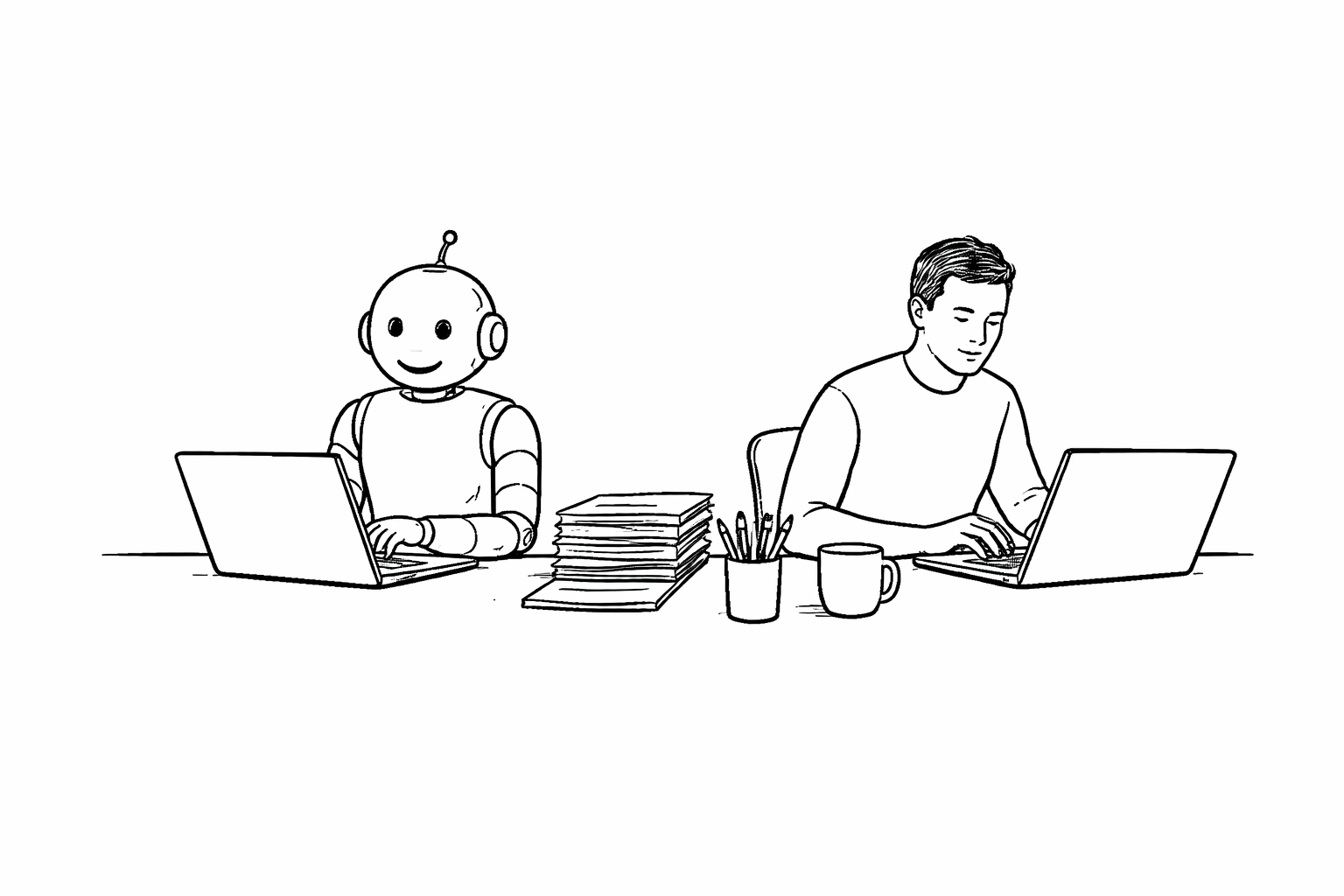
The conversation around AI and jobs tends to focus on what disappears. But for most workers right now, the disruption isn’t arriving as a sudden loss. It’s unfolding more quietly — inside the structure of the work itself. Tasks are being redefined, expectations are shifting, and the way work gets done is changing in real time. Research shows that 80% of the U.S. workforce could have at least 10% of their tasks influenced by large language models — not replaced, but reshaped. That distinction matters more than it’s getting credit for.
According to Harvard Business Review research, AI doesn’t reduce work — it intensifies it. Workers are expected to incorporate AI into their workflows while maintaining the same output and accountability. Mistakes made by automated systems still require human correction, but the time spent managing those errors is rarely accounted for. In some cases, AI raises expectations rather than reducing them, compressing timelines and increasing performance demands. Competence is being redefined — not just by what you can do, but how effectively you can work alongside systems that are still evolving. That adaptability is unevenly distributed depending on access, training, and organizational support.
There’s also a psychological dimension that doesn’t show up in productivity data. Work that once felt stable begins to feel provisional. The boundaries of a role become less fixed. The sense of ownership over tasks becomes more diffuse. It’s the same quiet tightening we explored in Low Layoffs Are Hiding a Harder Truth About Work Right Now — the labor market looks functional in aggregate while the lived experience inside it keeps shifting. AI isn’t just changing what work looks like. It’s changing how work feels. And that distinction matters, because it shapes how people engage, perform, and make decisions about their careers over time.