
Lowe’s CEO Marvin Ellison put it plainly: “As powerful as AI will become, AI can’t climb a ladder to change the batteries in your smoke detector. It can’t change your furnace filter; it can’t clean your dryer vent; it can’t repair a hole on your roof.” That is not a talking point. It is the business logic behind a $250 million investment the Lowe’s Foundation announced on April 7 — the largest corporate commitment to skilled trades training in the company’s history, and a five-fold increase from its previous $50 million program. The goal is to train 250,000 skilled trade workers by 2035, channeling funds through community colleges and nonprofits across the country.
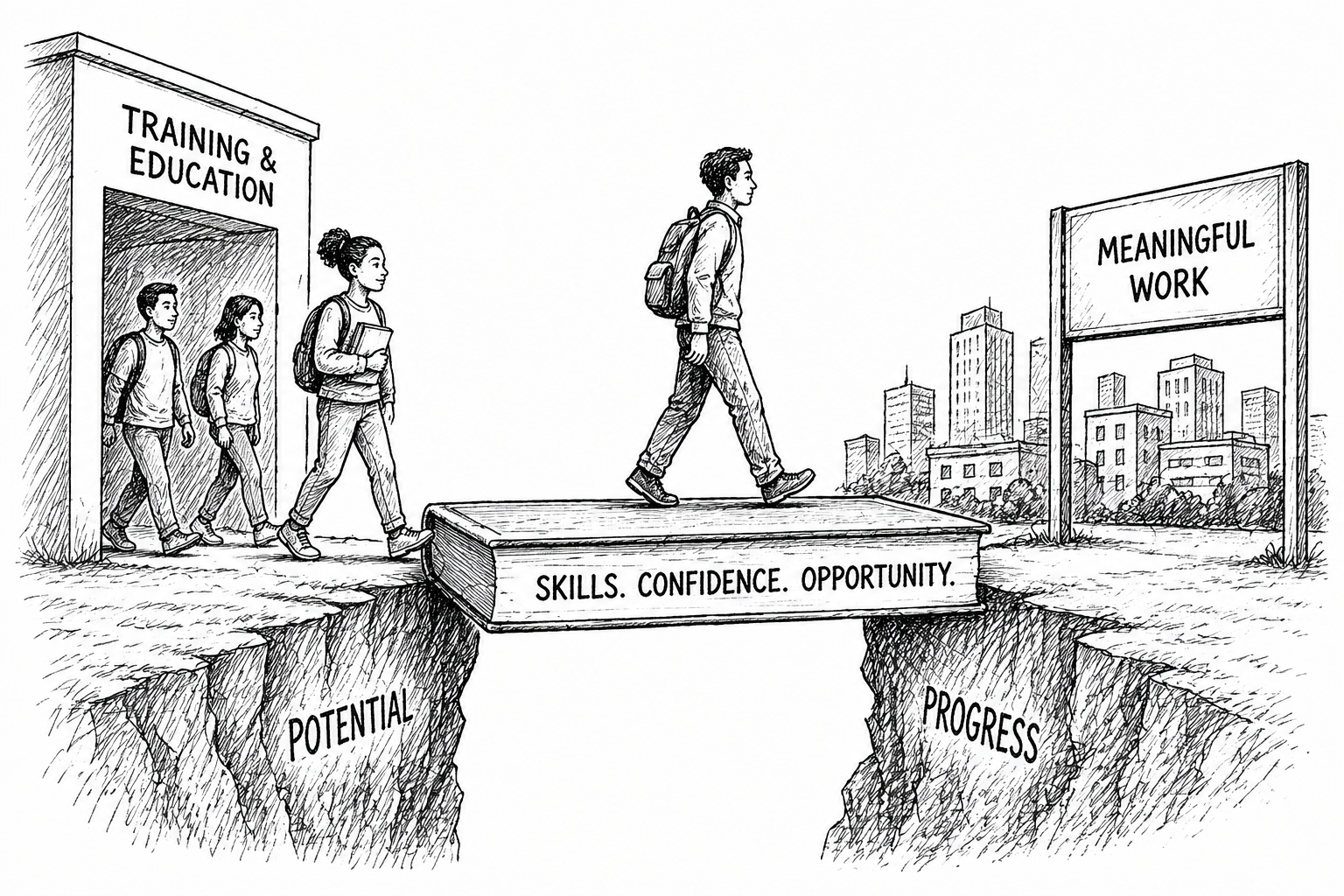
The investment is a direct response to a measurable gap. The construction industry alone was projected to need 439,000 net new workers in 2025 to meet anticipated demand, according to the Associated Builders and Contractors. Nearly 1.4 million trade jobs could go unfilled by 2030. The skilled labor shortage is responsible for the lost production of thousands of newly built homes and costs the industry an estimated $10.8 billion per year. These are not projections about a future problem. They are current conditions. Contractors cannot find enough workers. Homeowners cannot get projects done. The shortage is already showing up in project delays, higher costs, and longer wait times for routine repairs.
The reasons behind the shortage are not complicated, but they are structural. More than one in five construction workers are 55 or older, producing a high rate of retirements that the incoming workforce is not replacing fast enough. For decades, the education system steered students away from vocational paths. College was the American Dream. Trade school was the backup plan. Ellison grew up in Brownsville, Tennessee, where the message was unambiguous: go to college. His brother went to vocational school instead and built a career as a welder. For too long, Ellison said, careers like his brother’s have been treated as second-tier options. The result is a generation-long pipeline failure that is now colliding with a labor market that desperately needs what that pipeline was supposed to produce.
What has changed is the economic context around that failure. AI is reshaping white-collar work — coding, drafting, analysis, administrative functions — in ways that are making the trades look less like a fallback and more like a hedge.
Ellison framed it directly: “We’re a company that believes strongly in the future of AI. But in a world where administrative and analytical occupations are going to be increasingly dominated with the acceleration of AI, we think the skilled trades initiative is going to be even more important here in the near future.” The irony is precise. The same technological wave displacing knowledge workers is making physical labor more valuable, not less. You cannot automate a plumber. You cannot prompt-engineer a roof repair.
Workers who complete trade training programs gain direct pathways into jobs paying $60,000 to $80,000 per year, with top earners clearing six figures. That earnings profile is now competitive with many four-year degree outcomes — without the debt. Ellison noted that some of Lowe’s own top executives are steering their children toward trade careers instead of four-year degrees, drawn by strong earning potential and rising college costs. That is a significant cultural signal coming from inside a Fortune 500 boardroom.
Lowe’s is not acting alone. BlackRock committed $100 million to train tradespeople to support growing infrastructure demand. Google committed funds to train 100,000 electrical workers and 30,000 apprentices in partnership with the electrical training alliance, responding directly to surging demand from AI data centers and EV infrastructure expansion. The pattern is consistent: institutional capital is beginning to treat workforce development as both a philanthropic and economic priority. The labor shortage is not an abstraction for these companies. It is a constraint on their own ability to build.
There is a community access dimension to this story that deserves more attention than it typically gets. The Lowe’s Foundation channels its investment through the Gable Grants program, funding nonprofits and community colleges — not four-year institutions. Many programs are free or low-cost for participants. That matters because the people most underrepresented in trade careers — Black and Brown workers, people without four-year degrees, workers in underinvested communities — are also the people most likely to benefit from lowered barriers to entry. The trades have not always been accessible or welcoming to those communities. Whether this investment reaches them or replicates existing access patterns will determine whether $250 million produces broad workforce development or simply accelerates opportunity for the already-positioned.
The question is not whether the trades will grow. They will. The question is who gets trained, where the programs are located, and whether the communities carrying the most economic pressure are part of the pipeline being built. Growth in the trades is not inherently equitable. It has to be designed that way.