
María del Carmen Abascal lived in the same Madrid apartment for more than 70 years. After an investment firm sought to increase her monthly rent more than fivefold, her eviction brought thousands into the streets. Now the 87-year-old is going home — and Spain’s government is moving on new housing protections.
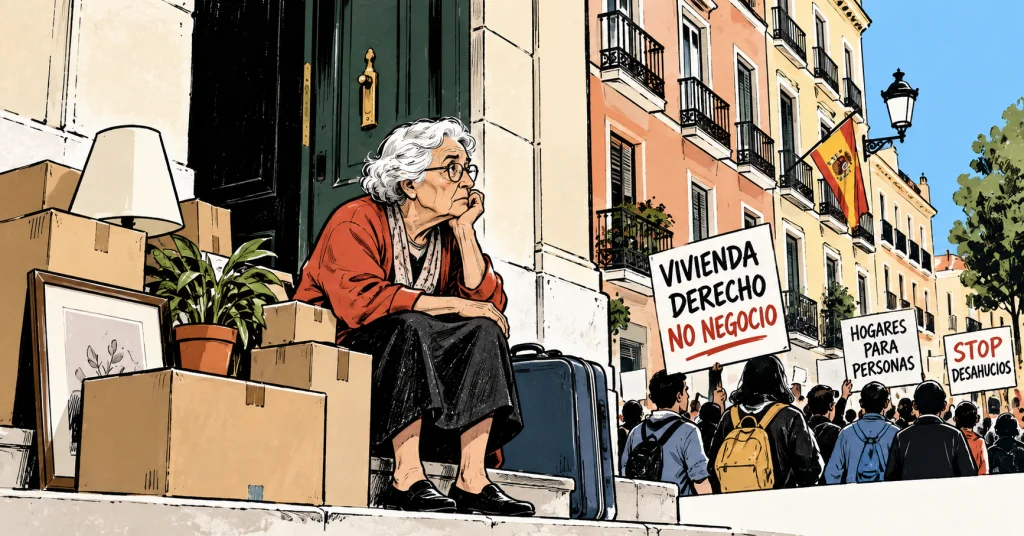
For more than seven decades, María del Carmen Abascal lived in the same apartment in Madrid’s Retiro neighborhood. Her father first rented the home in 1956, and Abascal remained there under a rent-controlled tenancy after her parents died. She was paying about €500 ($567 USD) a month when the building changed hands. Eventually, investment firm Urbagestión sought to raise the monthly rent to €2,650 ($3,003 USD). The amount was later reduced to €1,650 ($1,870 USD), but that was still more than her reported €1,350 ($1,530 USD) monthly pension.
One eviction became something larger
On Sept. 23, Abascal was removed from the apartment on a stretcher after courts had blocked several earlier attempts to evict her. Images of the 87-year-old leaving the home where she had spent most of her life quickly turned an individual landlord-tenant dispute into a symbol of Spain’s wider housing crisis. Days later, thousands marched through Madrid demanding stronger protections for renters, restrictions on evictions without alternative housing and action against speculative property practices.
The numbers help explain why the case resonated. The initial proposed rent represented a 430 percent increase, taking Abascal’s housing cost to more than five times what she had been paying. Even after the proposed amount was cut to €1,650 ($1,870 USD), the rent would have exceeded her entire monthly pension. Her case arrived amid a broader shortage of affordable homes: Spain has one of the smallest subsidized public-rental sectors among developed European economies, with public rental housing representing less than 2 percent of housing stock, compared with an EU average of about 8 percent.
The pressure produced a reversal
By Sept. 29, the story had changed again. Abascal’s lawyer announced an agreement allowing her to return to the apartment after she leaves the hospital, where she has been treated for exhaustion. Under the new arrangement, her rent will be limited to about 30 percent of her income for an eight-year lease, according to reports. The agreement effectively reverses an eviction that had already been carried out and shows how quickly sustained public pressure changed the outcome for one tenant.
The government response is also expanding beyond Abascal’s apartment. Prime Minister Pedro Sánchez’s governmenthas announced a housing package that includes extending protections against certain evictions involving vulnerable residents through 2030, new restrictions aimed at speculative property investment, regulation of some short-term and room rentals, and incentives intended to increase affordable housing. The measures still require parliamentary approval, meaning the political response remains unfinished.
The argument is now about who housing is for
Abascal’s case landed because the increase was easy to understand without knowing anything about Spanish housing law: €500 ($567 USD) a month became a proposed €2,650 ($3,003 USD). Behind those numbers is a broader collision between investment capital, limited housing supply and tenants whose incomes have not kept pace with the market. The protests suggest Spain’s housing debate is moving beyond whether people can afford to buy homes toward something more basic — whether longtime residents can afford to remain renters at all.
Abascal appears likely to get her home back. The larger test is whether Spain can convert the attention generated by one highly visible eviction into policies that reach tenants who will never become national symbols. Her case changed because thousands of people noticed. Spain’s housing crisis will be measured by what happens to everyone else.