
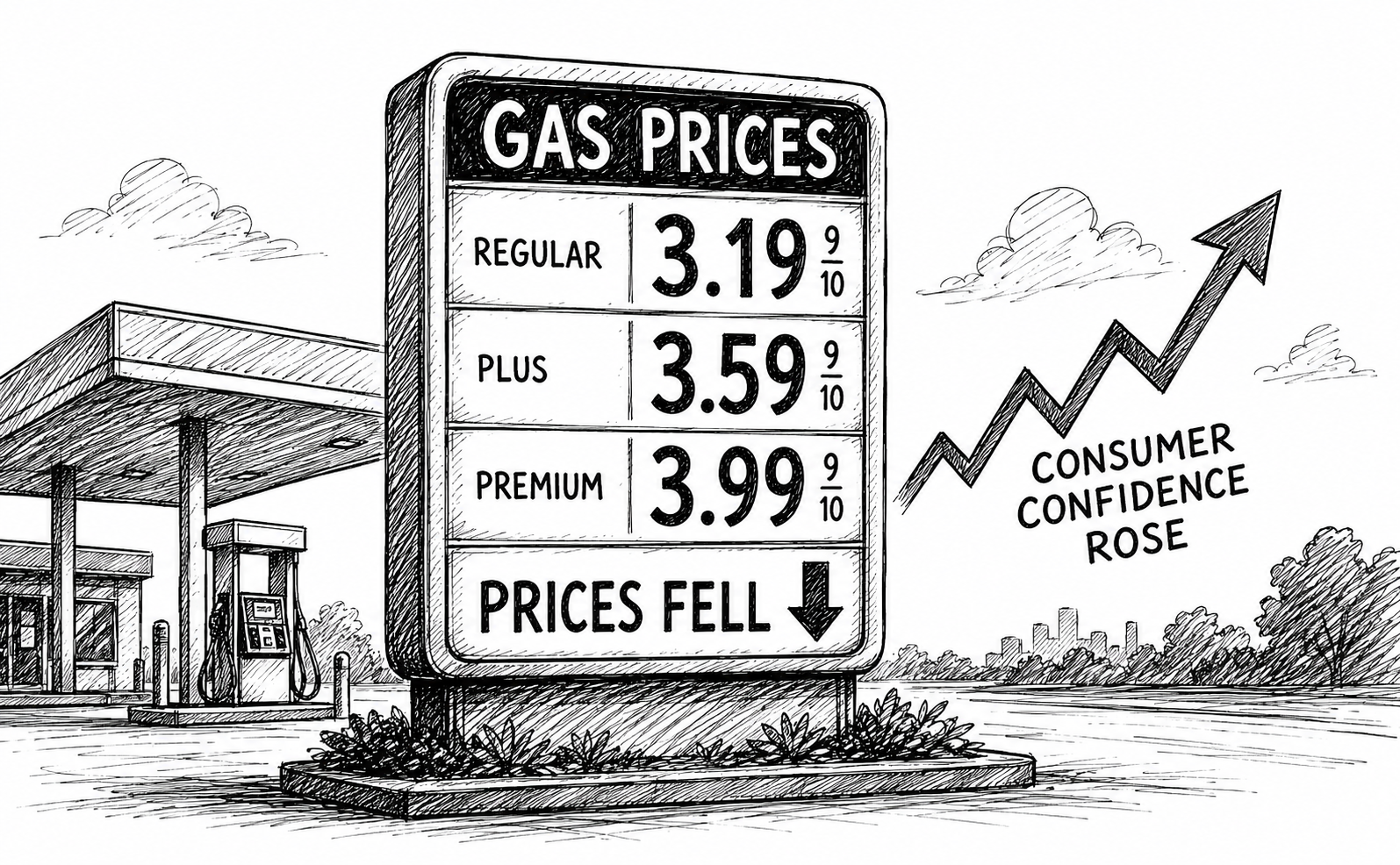
The University of Michigan’s consumer sentiment index improved in June after falling to one of its lowest levels in recent history. Economists expected continued weakness, but lower gasoline prices gave Americans—particularly lower-income households—a reason to feel slightly more optimistic. The improvement was modest, yet it revealed something significant about the current economy: for millions of families, a few dollars at the pump can meaningfully change how they view their financial future.
That may sound like good news, but it also illustrates how little cushion many households have left. Gasoline is one of the few prices consumers encounter almost every day. Unlike housing costs or insurance premiums, which arrive monthly, the price displayed on a gas station sign is a constant reminder of purchasing power. When it falls, people immediately feel relief. When it rises, anxiety follows just as quickly.
The increase in confidence was strongest among lower-income Americans, for whom transportation expenses consume a larger share of household budgets. A ten-dollar difference in filling a tank is not simply discretionary spending—it can determine whether money remains for groceries, prescriptions, or utilities. The improvement in sentiment therefore reflects more than optimism; it reflects temporary breathing room.
Yet the broader affordability picture remains difficult. Housing costs remain elevated in many markets, insurance premiums continue climbing, and many everyday goods still cost substantially more than they did just a few years ago. Consumers may feel better than they did last month while simultaneously believing the economy remains harder to navigate than it once was. Those two realities can coexist.
Geopolitical uncertainty also continues to shape expectations. Ongoing conflict involving Iran has raised concerns about energy markets and future inflation, reminding households that today’s lower prices may not last. Consumer confidence is not simply a measure of current finances—it is also a measure of whether people believe tomorrow will be more manageable than today.
The larger lesson is that confidence has become increasingly sensitive to everyday expenses. Economic resilience once meant households could absorb fluctuations in fuel prices without dramatically changing their outlook. Today, relatively small movements can shift national sentiment because financial margins have narrowed. The economy did not suddenly become secure because gasoline became cheaper. It simply became slightly easier to get through the week.
That may be the most important signal in the data. Americans are not necessarily demanding prosperity before they feel optimistic. Increasingly, they are responding to moments of relief. When a single category of spending can noticeably improve national confidence, it suggests the modern economy is being experienced not through GDP or stock indexes, but through the everyday calculations people make between the gas pump and the grocery store.