
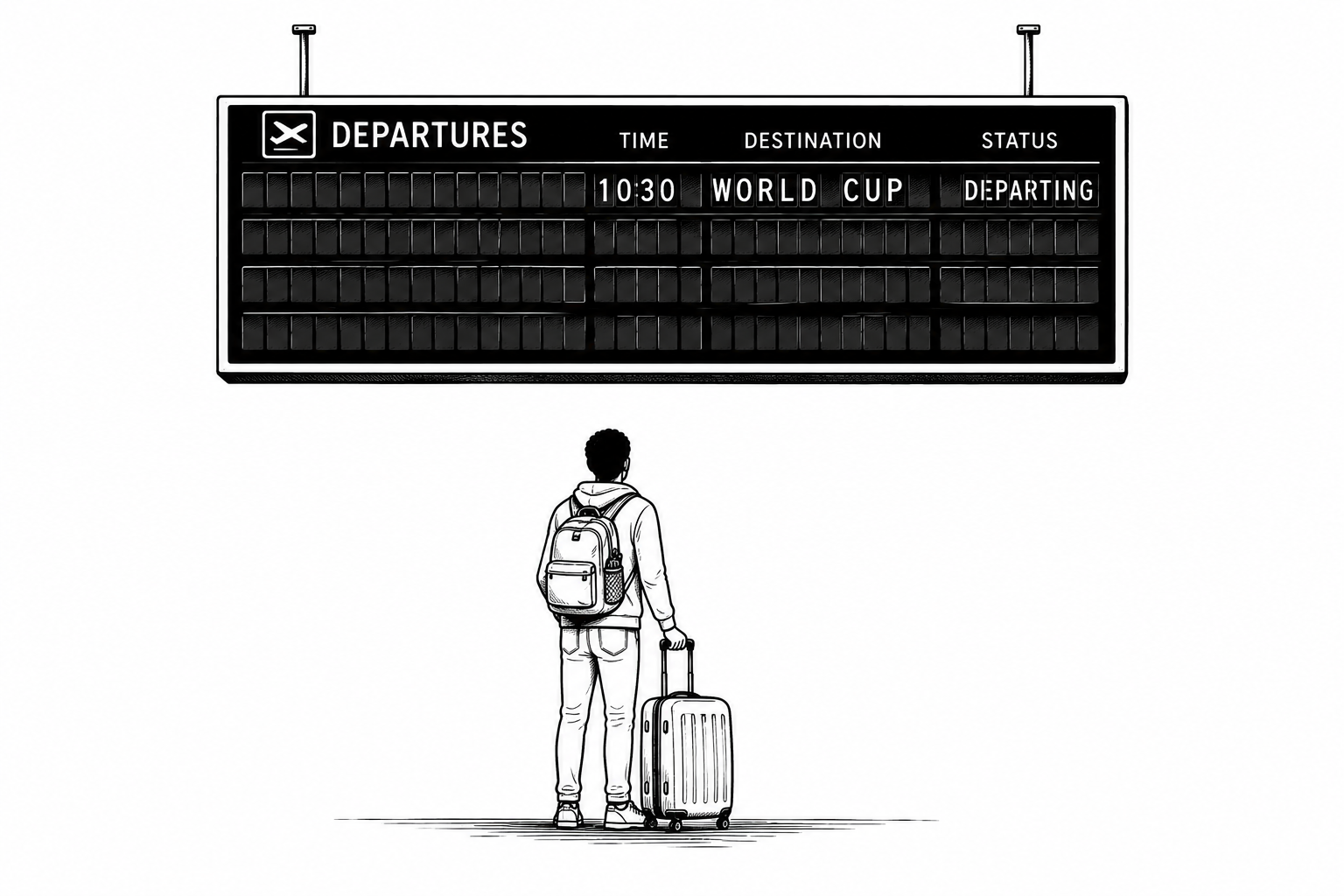
The first match of the 2026 FIFA World Cup kicked off Thursday in Mexico City, where Mexico faced South Africa at the historic Estadio Azteca. The tournament is unprecedented: 48 teams, 104 matches, three host countries, and 16 host cities stretching from Vancouver to Miami before culminating with the final at MetLife Stadium on July 19.
On paper, this is the most globally inclusive World Cup ever created.
In practice, access to the tournament is being distributed far less equally.
Five million fans are expected to travel to North America over the course of the competition. The expansion to 48 teams was intended to bring more nations — and by extension more supporters — into the world’s largest sporting event. Yet many of the communities most likely to travel internationally now face a different reality: higher costs, visa uncertainty, and an immigration enforcement environment that changes the calculus of whether making the trip is worth the risk.
The economics tell part of the story. The cheapest ticket for the World Cup Final at MetLife Stadium begins around $2,030. Tickets for the United States’ group-stage opener against Paraguay start around $560 — before airfare, hotels, local transportation, and food are added to the total. For many families, attending requires several thousand dollars before arriving at the stadium gates.
But money alone does not explain the uneven demand emerging across host cities.
Hotel bookings in several host cities are running below early projections despite record global interest in the tournament. Analysts tracking hospitality demand have identified international visa uncertainty as a primary driver — fans who are unsure whether they will receive a visa, or worry that enforcement priorities could complicate entry, are not booking trips they cannot guarantee.
The consequences extend beyond tourism statistics.
Restaurants in Houston, bars in Philadelphia, hotels in Miami, retailers in Seattle, and small businesses in Kansas City expanded staffing and inventory around projected World Cup crowds. Local governments invested in infrastructure, security, and transportation. Those costs are largely fixed. The crowds are not.
The tournament was designed for one world. It is arriving in another.
FIFA expanded the competition to include more nations because the World Cup has evolved into more than a sporting event. It is a global cultural gathering where migration, music, fashion, language, and national identity converge in public space. The fans are part of the spectacle. Streets become festivals. Neighborhoods become temporary embassies. Entire cities become stages.
Yet the ability to participate increasingly depends on systems operating far outside the sport itself.
The communities that produce much of the tournament’s visible culture — the jerseys, scarves, chants, food traditions, and fan rituals — often come from regions where international mobility is more complicated, more expensive, and more uncertain. The tournament invites the world. The border determines who can accept the invitation.
Global events assume a world where movement is possible. Modern immigration systems remind us that movement is conditional. Two supporters with identical passion for their national team face entirely different pathways to the stadium depending on the passport they carry. The sport doesn’t make that distinction. The border does.
The World Cup was built to expand participation. The tournament on the field reflects that ambition. The journey to the stadium does not.
The matches have begun. One of the tournament’s defining stories is already unfolding far from the pitch — in visa offices, airport checkpoints, and booking cancellations that determine not who qualifies to play, but who gets to show up.
— SSC News Desk | Social Storytellers Collective
Get SSC analysis delivered to your inbox every day. Subscribe free on Beehiiv: socialstorytellerscollective.beehiiv.com