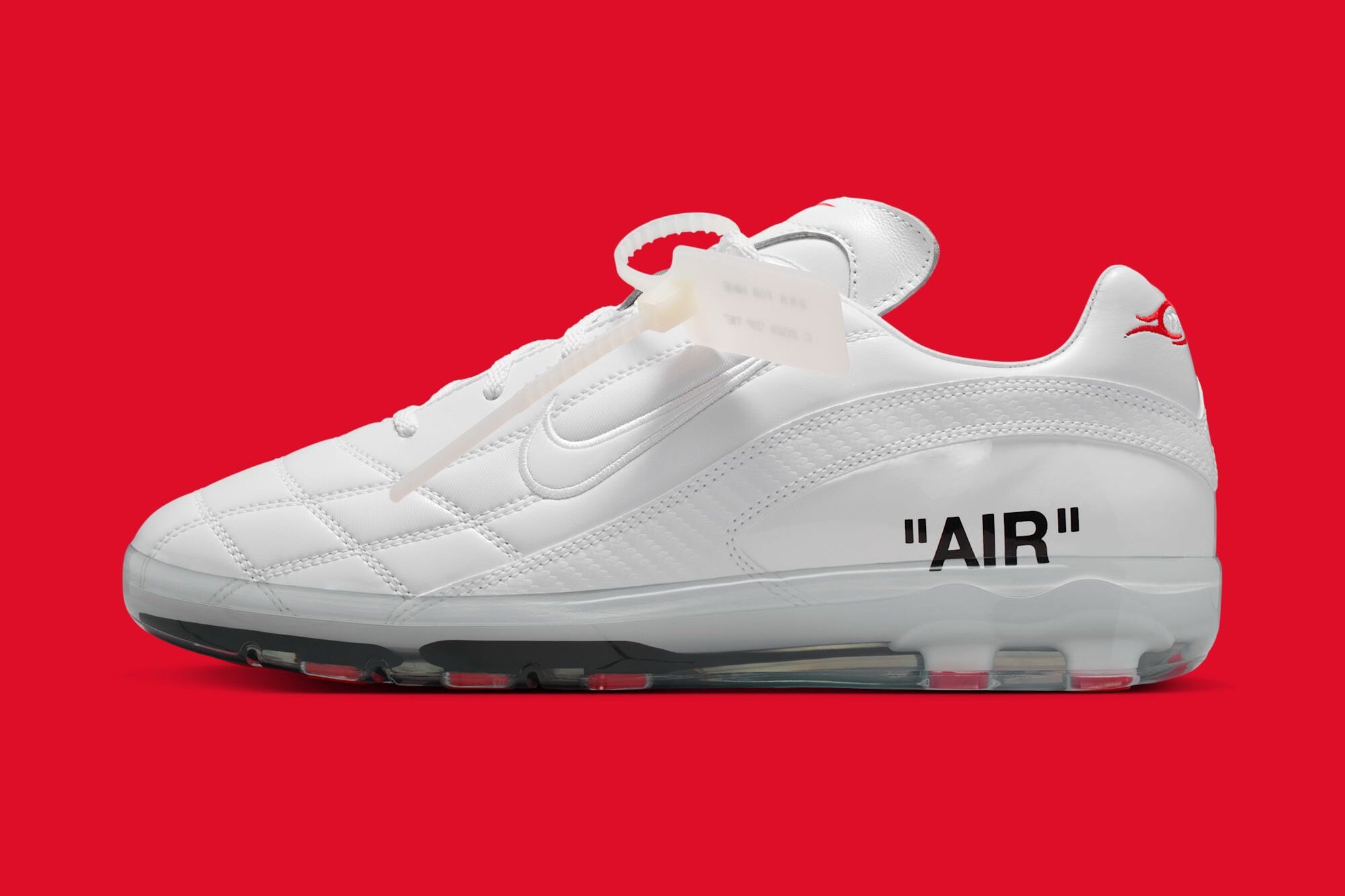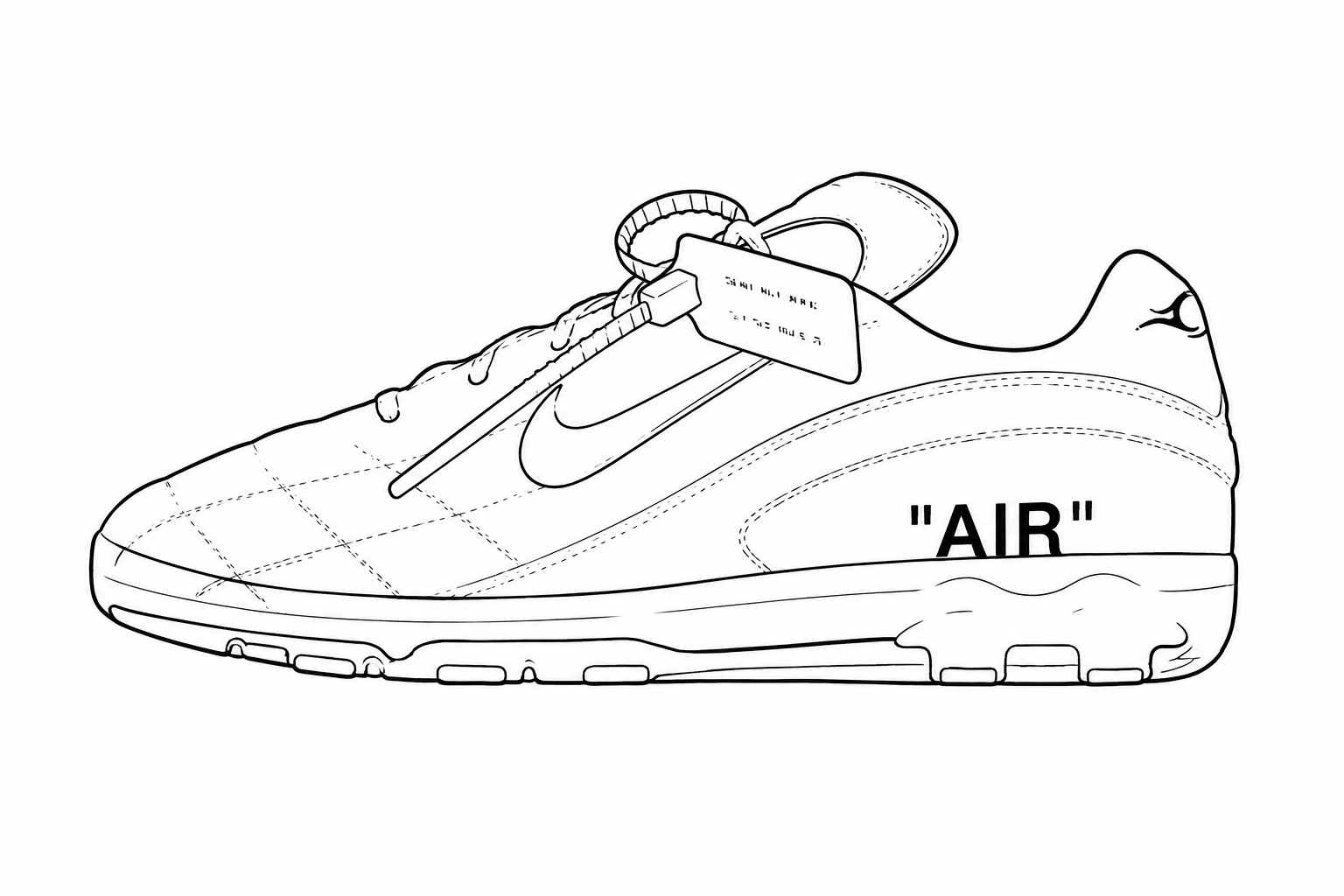
Nike and the Virgil Abloh Archive are releasing the V.A.A. x Nike Cryoshot Zoom M9 “Team USA” in a staggered drop that began June 11 through the V.A.A. website and U.S. Soccer channels, continued June 13 through Dover Street Market, and reaches SNKRS and select retailers June 16 — priced at $210. [Sourcing note for Leena: name the reporter and outlet for the Cryoshot release details here.] The Air Zoom M9 was originally released in 1999 as the first women-first pitch performance model, closely associated with Mia Hamm and America’s 1999 Women’s World Cup victory. The Cryoshot concept encases traditional soccer studs within a clear TPU base, preserving the look of heritage boots while making them wearable off the pitch. Cultural legitimacy, not performance, is what the shoe is being sold on — and that legitimacy belongs to a designer who died in November 2021.
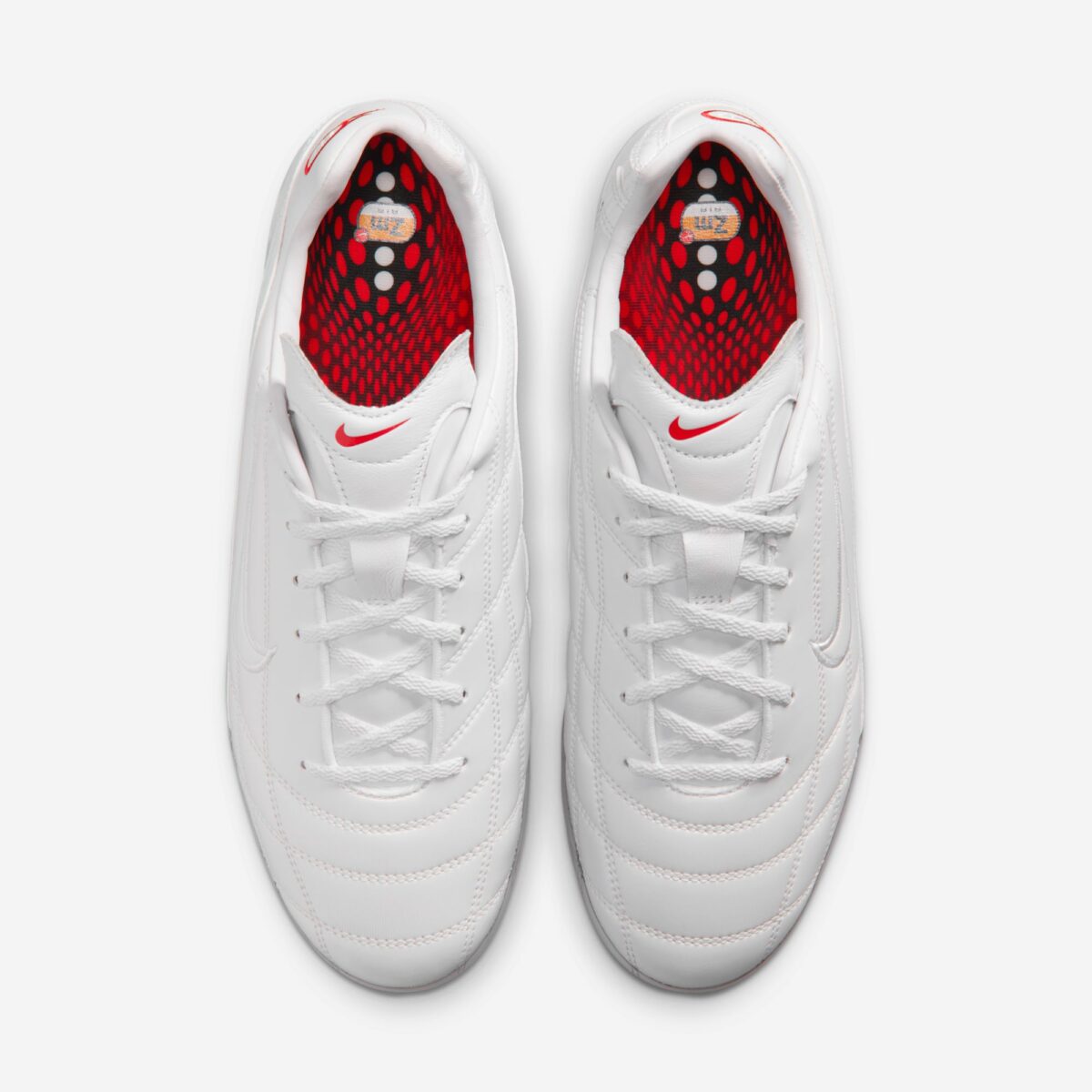
Design language, it turns out, can be managed like a portfolio. Abloh‘s quotation marks, exposed “AIR” branding, industrial references, and conceptual framing of familiar objects as artifacts requiring interpretation have become intellectual property that his estate — the Virgil Abloh Archive — continues licensing and releasing years after his death. Abloh‘s “relative novelty” approach held that fresh ideas emerge from reinterpretation rather than origination. The irony is structural: the designer who argued that originality was a myth has himself become the original being reinterpreted, and the institutions managing that reinterpretation are extracting the same margins luxury always has.
Nike tapped seven collaborators for its Cryoshot X2 range — NOCTA for Canada, Palace for England, Jacquemus for France, Patta for the Netherlands, Slawn for Nigeria, Peaceminusone for Korea, and the Virgil Abloh Archive for the United States. Every collaborator represents a country through a cultural institution rather than a national brand. The shoe standing in for American identity is the estate of a deceased designer whose most commercially significant work — “The Ten” collection in 2017, which deconstructed ten iconic Nike silhouettes with Off-White‘s signature zip-tie tags and exposed stitching — became the most commercially successful designer-sneaker partnership in history, with individual pairs reselling for $2,000 to $15,000. What Nike is releasing is not a new collaboration. It is a licensed memory of the original one, priced accordingly.
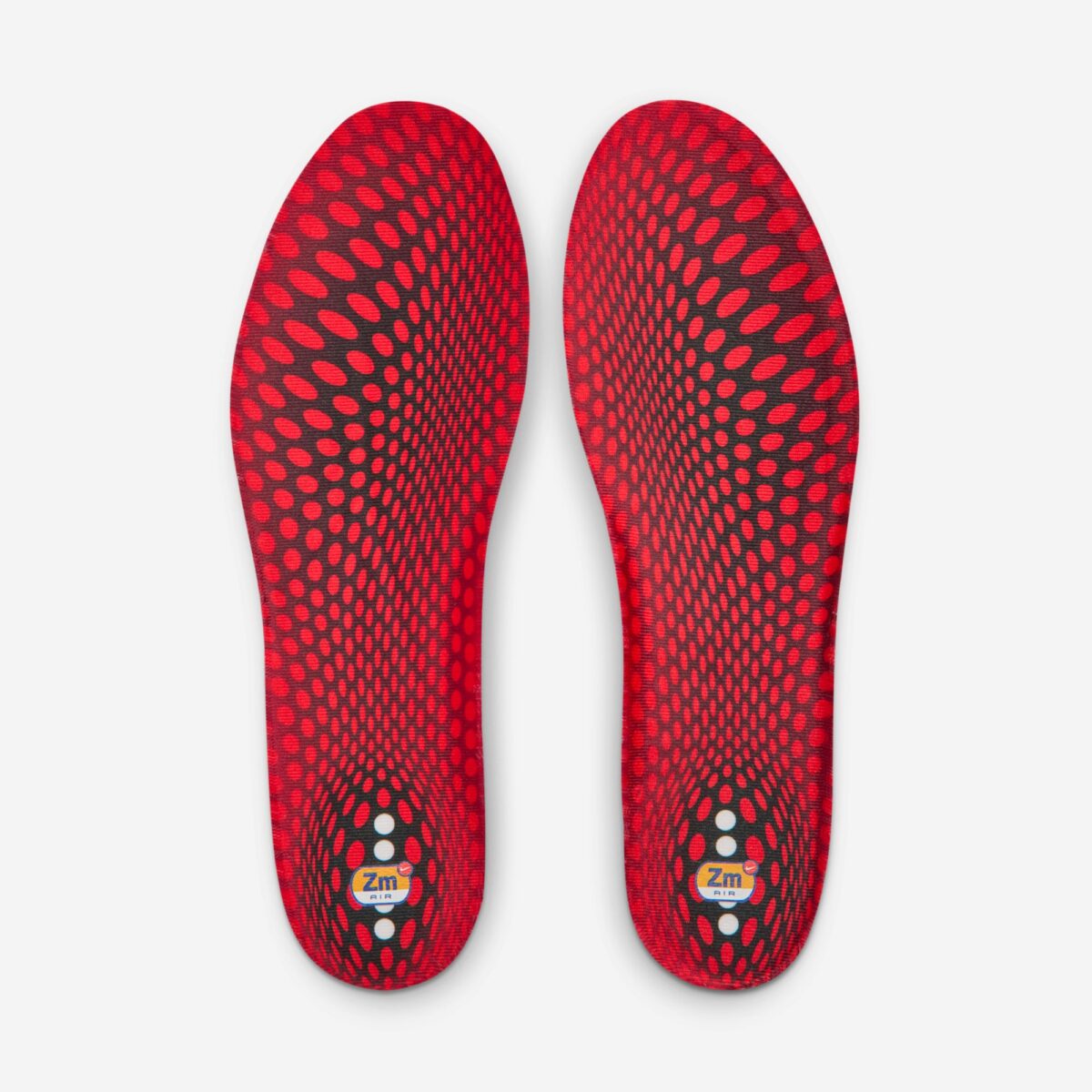
The mechanism connecting this drop to a longer history is the one SSC examined in Luxury Took From Streetwear. Now It’s Selling Us Nostalgia. Streetwear generated cultural power inside communities luxury institutions had deliberately excluded — skate culture, hip-hop, sneaker collecting, youth identity built entirely outside traditional fashion. Ablohdisrupted conventional elite fashion structures by using streetwear to expand Black cultural legitimacy. His appointment to Louis Vuitton brought a demographic to the Champs-Elysées store that had never considered entering: young men of color who saw themselves reflected in a luxury house for the first time. Luxury absorbed that language. Then it priced access back to those same communities at luxury margins. The V.A.A. x Nike Cryoshot is the phase that follows: the disruption has been archived, and the archive generates revenue on a release schedule.
Nike‘s World Cup positioning confirms how deliberately the archive is being managed. Early campaign teasers featured hand-drawn spots with Travis Scott and Mia Hamm. The shoe first appeared publicly at the Virgil Abloh: The Codesexhibit in Paris. A cleat Mia Hamm wore to win the 1999 Women’s World Cup, reengineered as a lifestyle object, endorsed by the estate of the designer who redefined how luxury speaks to youth culture, released during the largest sporting event in American history — each layer adds legitimacy that the product alone could not carry. The $210 retail price and the staggered release cadence are both mechanisms for managing that legitimacy. Scarcity controls value. The archive controls scarcity.
Music catalogs are investment assets. Vintage sports merchandise appreciates like collectibles. Television reboots dominate streaming. Hollywood mines existing franchises. Luxury brands revive archival designs. Across the culture economy, institutions compete not by generating new cultural moments but by controlling existing ones — because legitimacy, unlike innovation, can be stored and monetized indefinitely. Abloh built his career on the argument that culture belongs to those who can reinterpret it. Today’s archival economy extends that argument past the individual: whoever controls the archive controls the reinterpretation. The communities that built streetwear’s original value created the disruption. The institutions managing its legacy are collecting the return.