
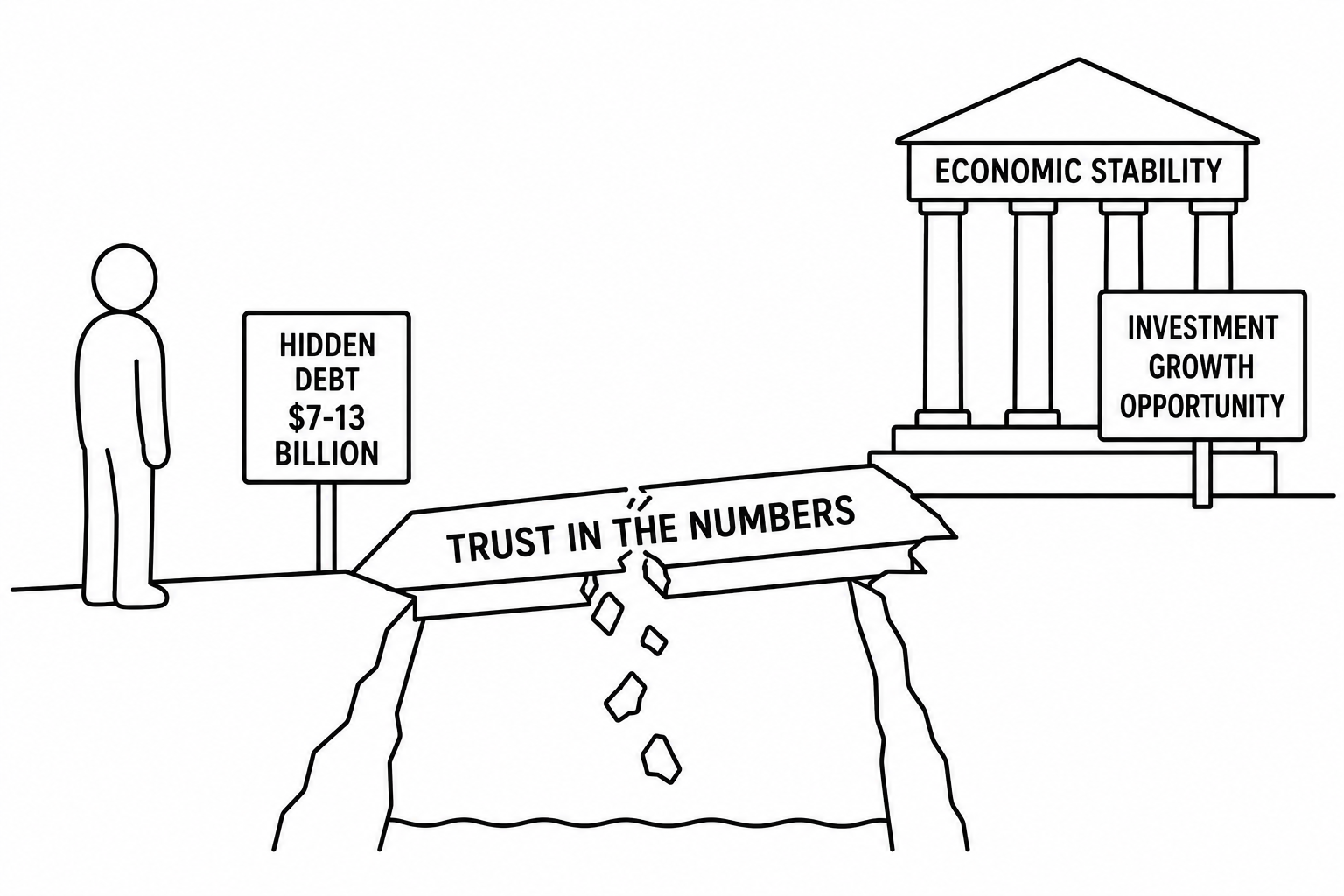
When Bassirou Diomaye Faye won Senegal’s presidential election in March 2024, he inherited a country whose finances were not what they appeared to be. The previous administration under Macky Sall had borrowed billions of dollars that never showed up in official government accounts. When Faye’s government disclosed the gap, the numbers were staggering — Senegal’s actual debt was nearly $7 billion higher than reported, pushing the country’s debt burden to 119 percent of GDP. A government audit confirmed the previous administration had understated debt by more than 25 percentage points of GDP. Reuters reporters Portia Crowe and Ayen Deng Bior reported Thursday that negotiations between Senegal and the IMF to restore a suspended $1.8 billion lending facility are expected to resume later this month.
Faye’s government did not hide the debt. It found it and disclosed it. That distinction matters — but it has not protected Senegal from the consequences. Moody’s and S&P Global Ratings have each downgraded the country’s credit rating multiple times since the disclosure. International bonds hit record lows. The IMF suspended its lending facility. Growth projections have been cut from 6.7 percent in 2025 to an estimated 2.2 percent in 2026. A new government chose transparency — and is now paying the financial price for a previous government’s decisions.
That is the structural reality hidden debt creates. The borrowing happened under one administration. The consequences arrived under another. And the citizens who depended on public investment, infrastructure, and services are absorbing the cost of both — the original concealment and the years of financial pressure that followed its exposure.
The broader damage is not just financial. A government’s budget figures are the foundation of everything else — borrowing costs, investor confidence, international aid, and the basic credibility of official communications. When those figures turn out to be wrong, every number that follows carries less weight. S&P placed Senegal’s hidden debt as high as $13 billion in its July 2025 assessment. The IMF, which lent to Senegal throughout the period when the debt was being concealed, is now conducting an internal investigation into how its own oversight missed it. The institution that suspended Senegal’s facility for misreporting is asking why it did not catch the misreporting itself.
Prime Minister Ousmane Sonko has called debt restructuring a “disgrace” and said Senegal will not pursue it. Finance Minister Cheikh Diba has told lawmakers that IMF talks are progressing. The Faye administration is navigating a narrow path — transparent enough to restore confidence, firm enough to resist adjustment conditions that would further limit what the government can do for its own people.
Fiscal transparency is a form of political power. Governments with credible numbers can borrow more cheaply, attract investment, and respond to crises with greater flexibility. Governments whose numbers come into question face tighter constraints on everything — regardless of whether they created the problem. Senegal’s debt can be refinanced. Its budget can be adjusted. Rebuilding the confidence that the previous administration eroded will take years of consistent, verified reporting. That work is now underway in Dakar — and how it resolves will shape how international lenders engage with West African governments for years to come.