
The Federal Reserve’s latest Beige Book, released on June 4, found that inflation continued to rise across most regions of the United States while businesses reported growing consumer caution, increased use of credit cards, and fewer discretionary purchases. At first glance, those observations sound like familiar economic indicators. Americans have spent years navigating higher prices, rising interest rates, and persistent uncertainty. What makes this report notable is not that inflation remains a challenge. It is that debt increasingly appears to be the mechanism through which many households are adapting to it.
For much of the post-pandemic period, public conversations about inflation focused on prices themselves. Headlines tracked the cost of groceries, housing, transportation, and energy. Policymakers debated whether inflation was temporary or structural. Consumers adjusted budgets accordingly. Over time, however, inflation has evolved from a pricing problem into a behavioral one. The question is no longer simply whether goods cost more. The question is how households are absorbing those costs without corresponding increases in income.
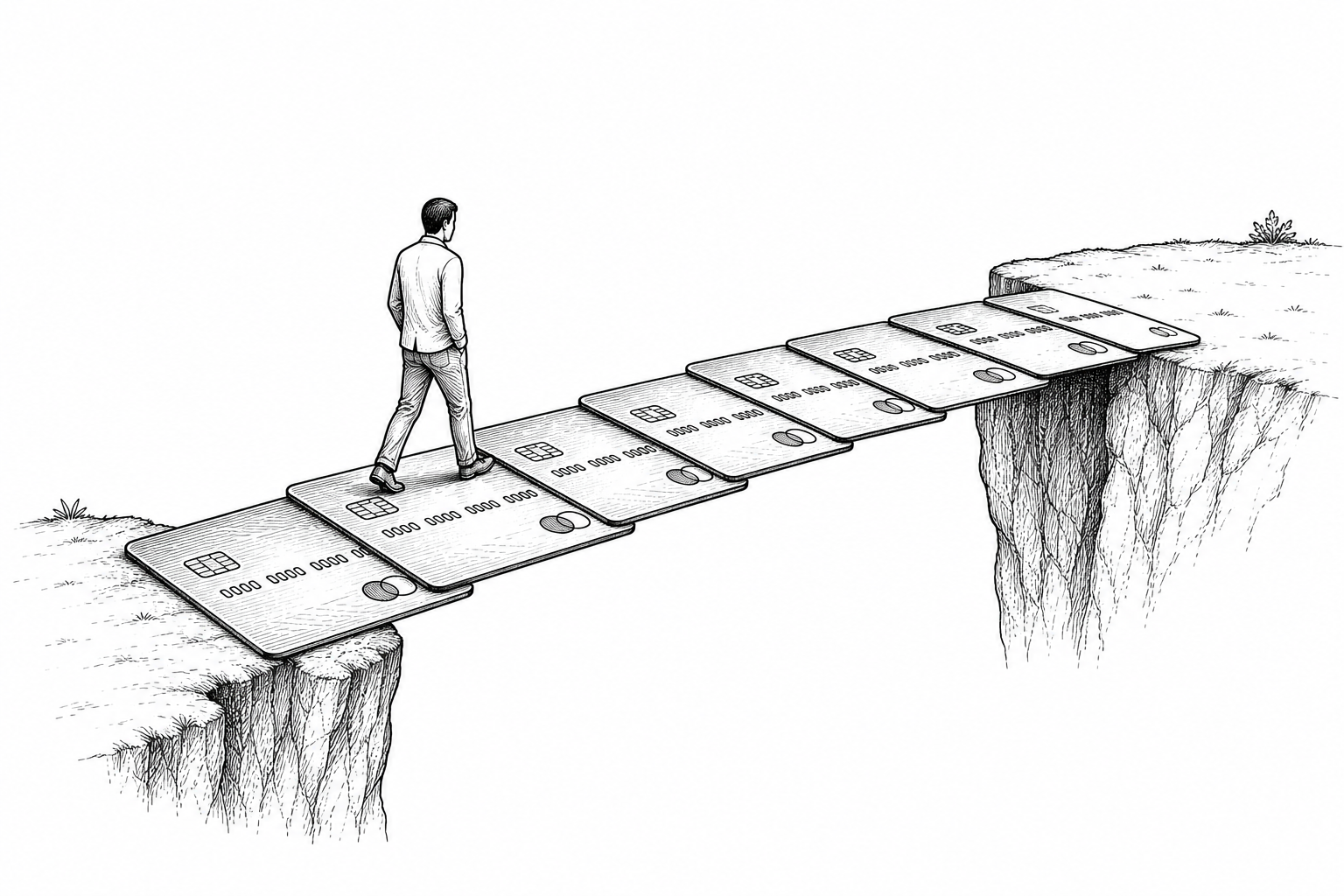
Credit cards sit at the center of that adjustment. Historically, credit has often been associated with convenience or discretionary spending. Increasingly, it functions as a bridge between stagnant purchasing power and rising living expenses. Households are using debt not necessarily to buy more, but to maintain existing standards of living. That distinction matters because it changes the role debt plays in the economy. Borrowing is no longer primarily fueling consumption. It is preserving continuity.
Wages have risen in some sectors, but the gap between income growth and essential expenses remains wide enough that many families have limited options. They can reduce spending, increase income, draw down savings, or rely on credit. For many households, credit becomes the most immediately available solution.
Yet debt carries consequences that are often delayed rather than avoided. Credit cards provide short-term flexibility while creating long-term obligations. Interest payments transform temporary financial pressure into ongoing expense. What appears manageable during one month can become restrictive over the course of a year. This dynamic creates a cycle in which households devote increasing portions of future income to covering past necessities. The result is not financial collapse but gradual constraint. As SSC examined this week in Stable Jobs. Unstable Workers., the official economic indicators and the lived experience of workers are increasingly telling different stories — and the credit card data is one of the clearest signals of that gap.
Economists often view consumer spending as a sign of confidence and economic health. However, spending supported by borrowing tells a different story than spending supported by income growth. One reflects optimism. The other reflects necessity. The distinction becomes increasingly important when assessing the true resilience of households. An economy can appear strong while families quietly accumulate financial strain beneath the surface.
What the Federal Reserve’s report reveals is that adaptation has limits. Americans have proven remarkably resilient in the face of economic disruption, but resilience should not be confused with comfort. Households continue finding ways to manage rising costs through mechanisms that accumulate quietly — debt obligations that convert last year’s groceries into this year’s interest payments. The inflation story of 2026 is no longer primarily about prices. It is about the growing distance between what everyday life costs and what many households can comfortably afford.Thanks for reading Social Storytellers Collective! This post is public so feel free to share it.