
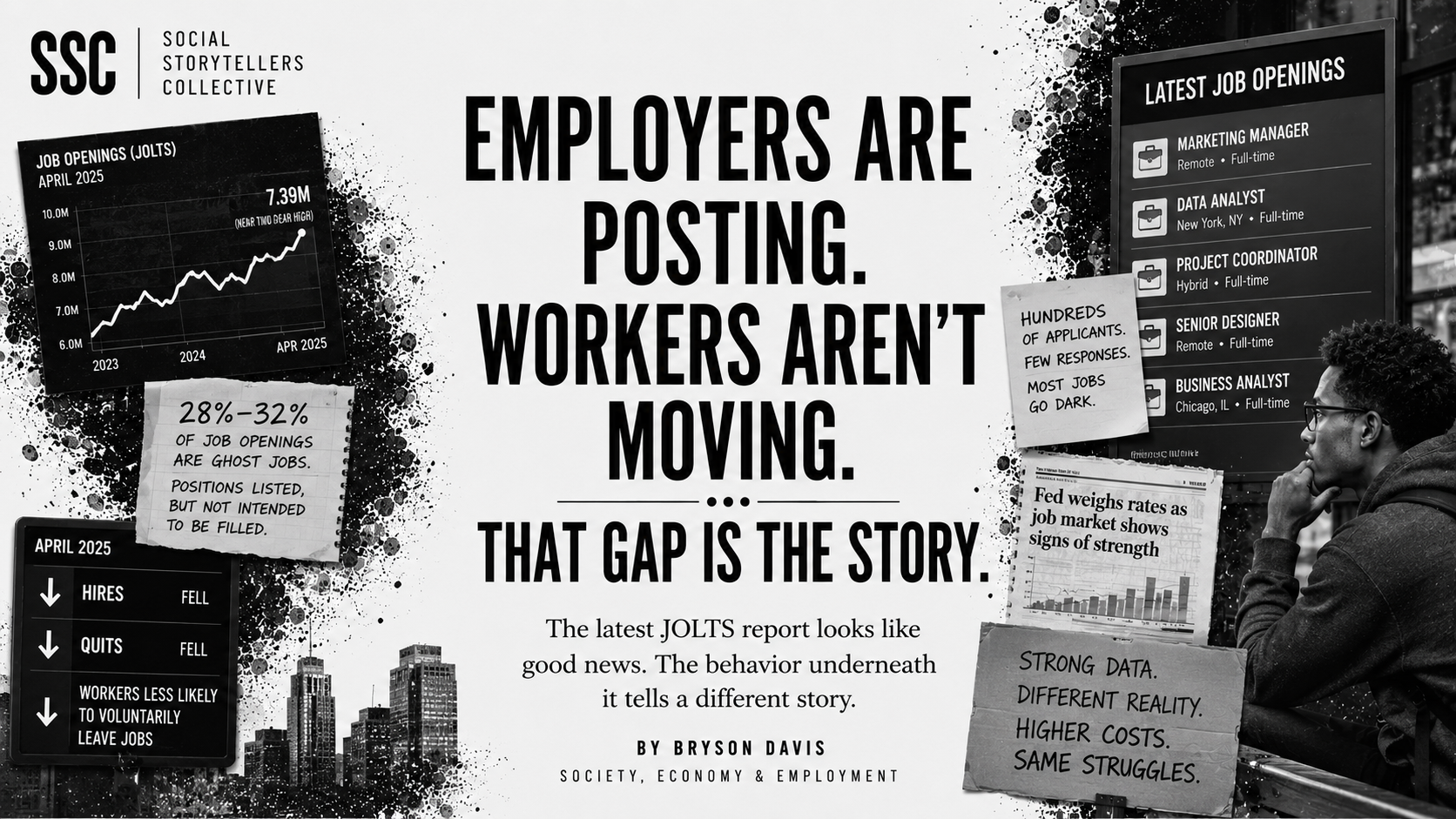
In April, hires fell. Quits fell. Workers became less likely to voluntarily leave their jobs, not more. Those three data points from the Bureau of Labor Statistics’ latest Job Openings and Labor Turnover Survey landed in the same report as a near two-year high in posted job openings — and almost nobody is talking about the contradiction. Employers are reporting more open positions. Workers are not behaving as though opportunities have suddenly become easier to find. That gap is where the real labor market story lives.
It is worth asking what those posted openings actually represent. SSC has previously reported that research estimates between 28 and 32 percent of job openings at any given time are ghost jobs — positions listed publicly that were never intended to be filled, or that exist to collect resumes, satisfy internal HR requirements, or create the appearance of organizational growth. The Bureau of Labor Statistics measures positions employers report as actively trying to fill. It does not measure whether those employers are interviewing candidates, moving through hiring processes, or intending to extend offers on any meaningful timeline. The posted number and the lived experience of job seekers are measuring different things — and conflating them produces a headline that bears little resemblance to what is actually happening in the market.
That disconnect explains something that has frustrated workers and analysts alike for the better part of two years: why sentiment and data keep pointing in opposite directions. Workers in healthcare, skilled trades, and many service industries may be seeing genuine opportunity. Workers in white-collar professions — many of whom absorbed the first wave of AI-driven restructuring — describe a labor market where searches take longer, competition is more intense, and open positions attract hundreds of applicants before going quietly dark. Both experiences are real. The aggregate number captures neither cleanly.
The Federal Reserve is now calibrating interest rate decisions against a headline that may be overstating labor market health. Strong opening numbers argue against rate cuts — high demand suggests the economy doesn’t need the stimulus. But if a meaningful share of those openings are phantom listings, and if hires and quits are telling a more cautious story about actual labor market activity, policy is being set against incomplete data. Borrowing stays expensive. Housing stays unaffordable. The households already stretched thinnest absorb the cost of a miscalibration built on a number that looked stronger than it was.
The workers who most need the labor market to be as healthy as the posted figures suggest are the ones least likely to be accessing the opportunities driving those figures. A job opening is a data point. Getting through the door is a different question — and the JOLTS report does not answer it.