
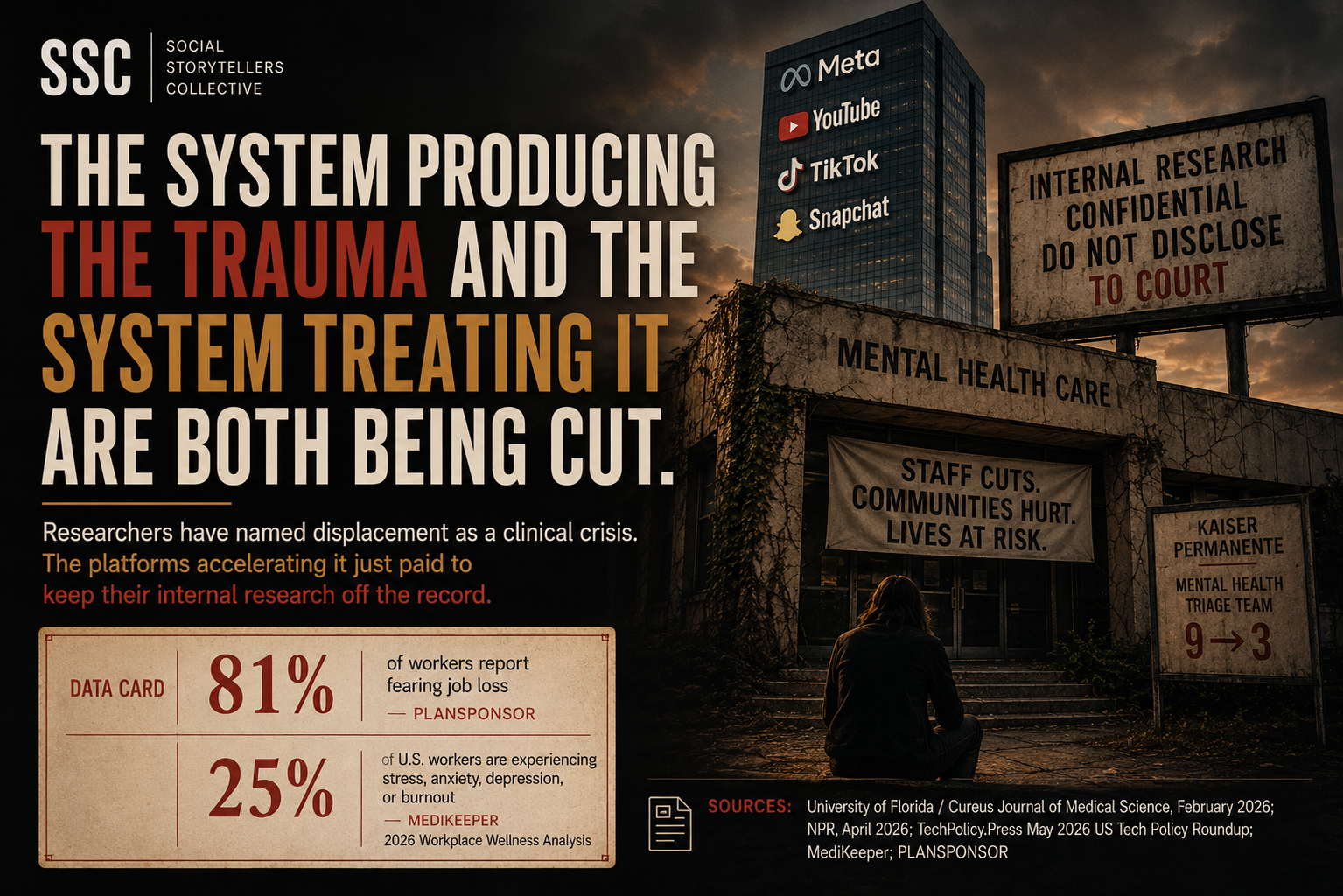
University of Florida researchers formally established “AI Replacement Dysfunction” — AIRD — as a clinical framework in February 2026, published in the Cureus Journal of Medical Science. The condition describes the chronic psychological distress produced by workforce displacement: persistent job-loss fear, identity disruption, anxiety escalation, and withdrawal from professional life. Researchers describe it as “an invisible disaster” and call for the mental health system to recognize and treat it with the same urgency applied to other large-scale economic disruptions. The problem is that the mental health system is itself being restructured by the same forces. Kaiser Permanente cut its mental health triage team from nine licensed providers to three, replacing clinical judgment with telephone intake. That prompted a one-day strike in March. Medicaid cuts under the One Big Beautiful Bill Act are defunding the community behavioral health infrastructure that serves the workers most at risk.
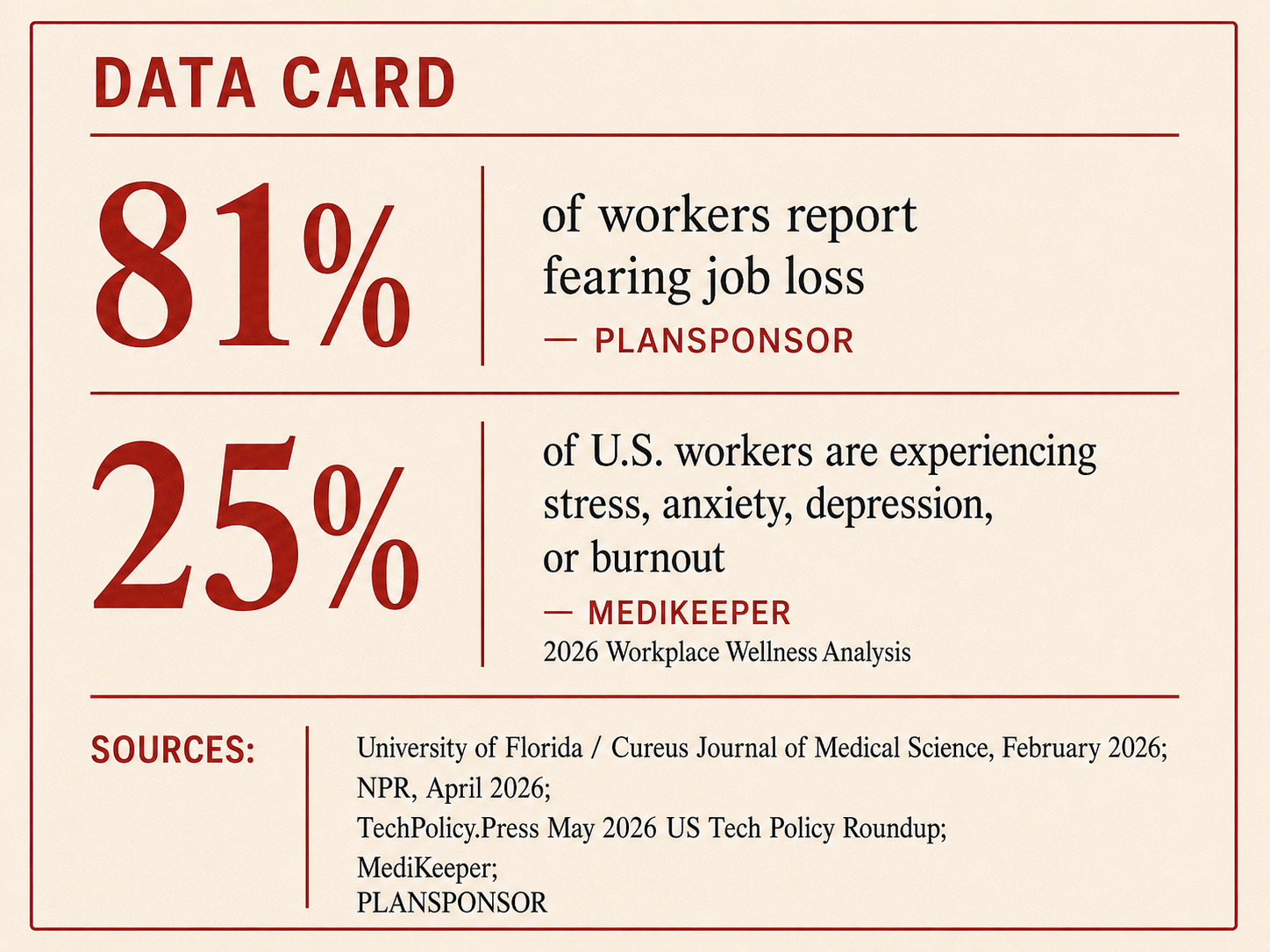
Meanwhile, YouTube, Snap, TikTok, and Meta settled the first school district social media addiction lawsuit set for trial — brought by Breathitt County School District in Kentucky — rather than face a jury with their internal research on the record. All four platforms had argued for years that their products do not cause harm. They settled when that claim was about to be tested in court. Per TechPolicy.Press’s May 2026 US Tech Policy Roundup, this was the first of thousands of similar lawsuits to reach trial readiness. The settlement will accelerate the others. What platforms pay to keep off the record is itself a form of evidence. Eighty-one percent of workers currently report fearing job loss. Twenty-five percent are already experiencing clinically significant stress, anxiety, depression, or burnout. The platforms that helped produce those numbers just paid to avoid explaining them to a jury.