
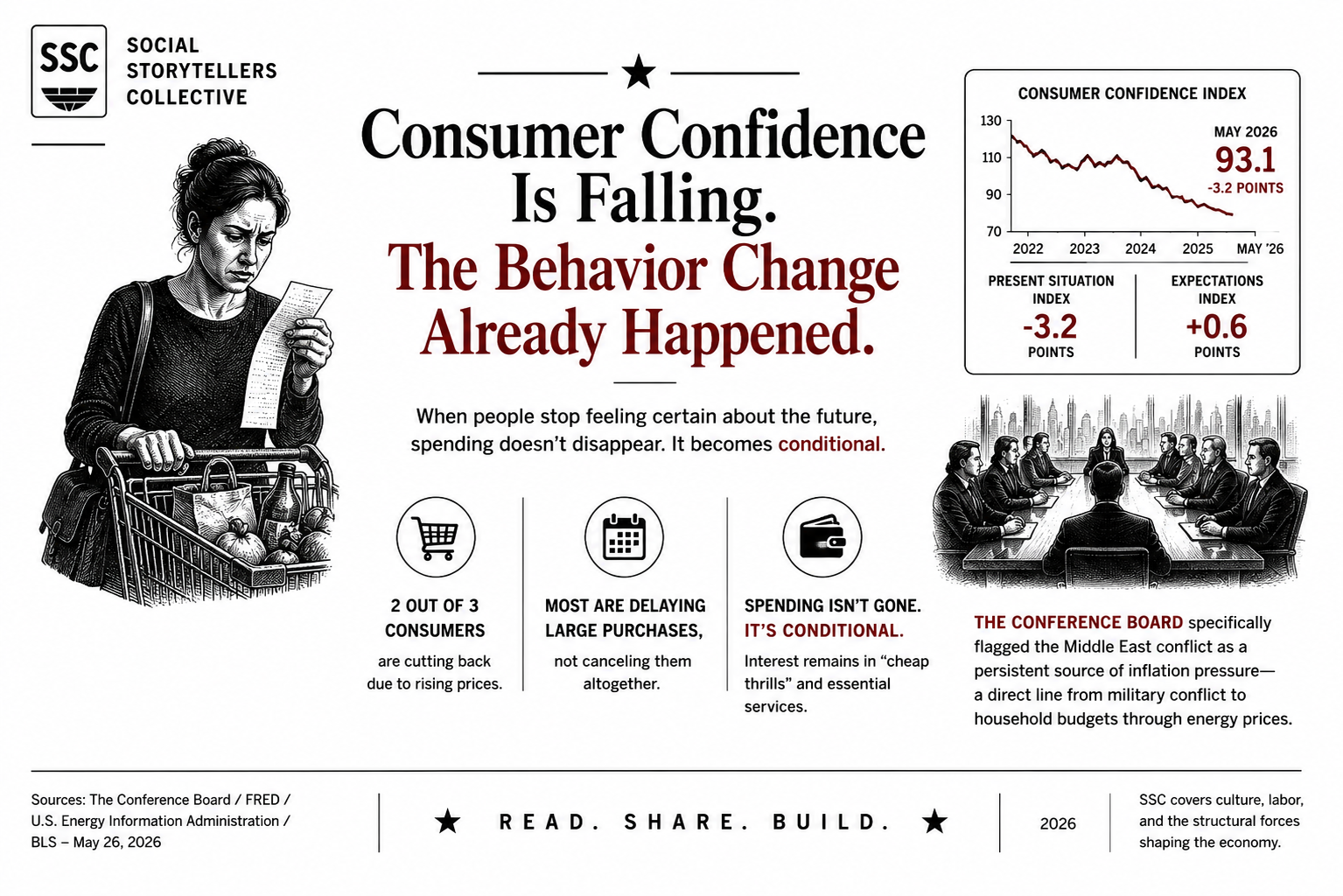
The Conference Board’s Consumer Confidence Index dropped to 93.1 in May — the first decline in four months — but the headline number is the least interesting part of the report. The split underneath it is. The Present Situation Index fell 3.2 points while the Expectations Index actually rose slightly, meaning consumers feel worse about right now but marginally less fearful about where things are headed. That is not reassuring. The Expectations Index has remained below 80 for months — a threshold historically associated with recessionary conditions. Gas prices hovering around $4.50 a gallon and a 3.8% year-over-year increase in consumer prices — the fastest rate in nearly three years — haven’t stopped Americans from spending. They’ve changed what Americans are willing to spend on.
Two-thirds of consumers in the survey reported cutting back because of rising prices. Most reported delaying larger purchases rather than canceling them entirely. The Conference Board noted continued interest in “cheap thrills” and essential services. The consumer is still in the economy. The burden of proof for every discretionary dollar has just gone up significantly — and that shift was already visible before this data landed. SSC has been tracking it through the live music contraction, retail layoff cycles, and the broader pattern of post-pandemic spending normalization. What the May numbers add is the demand-side confirmation for supply-side decisions companies have been making for months.
The Conference Board specifically flagged the Middle East conflict as a persistent source of inflation pressure — a direct line from military conflict to household budgets through energy prices. A consumer filling a tank at $4.50 a gallon while managing housing costs and credit card balances is reading the environment accurately. Their uncertainty isn’t irrational. It’s informed. What this moment signals is a consumer economy in sustained selective participation — not collapse, but a structural recalibration of what people will pay for and why. The brands that built growth models around post-pandemic spending as a permanent baseline are finding out it was always conditional.