
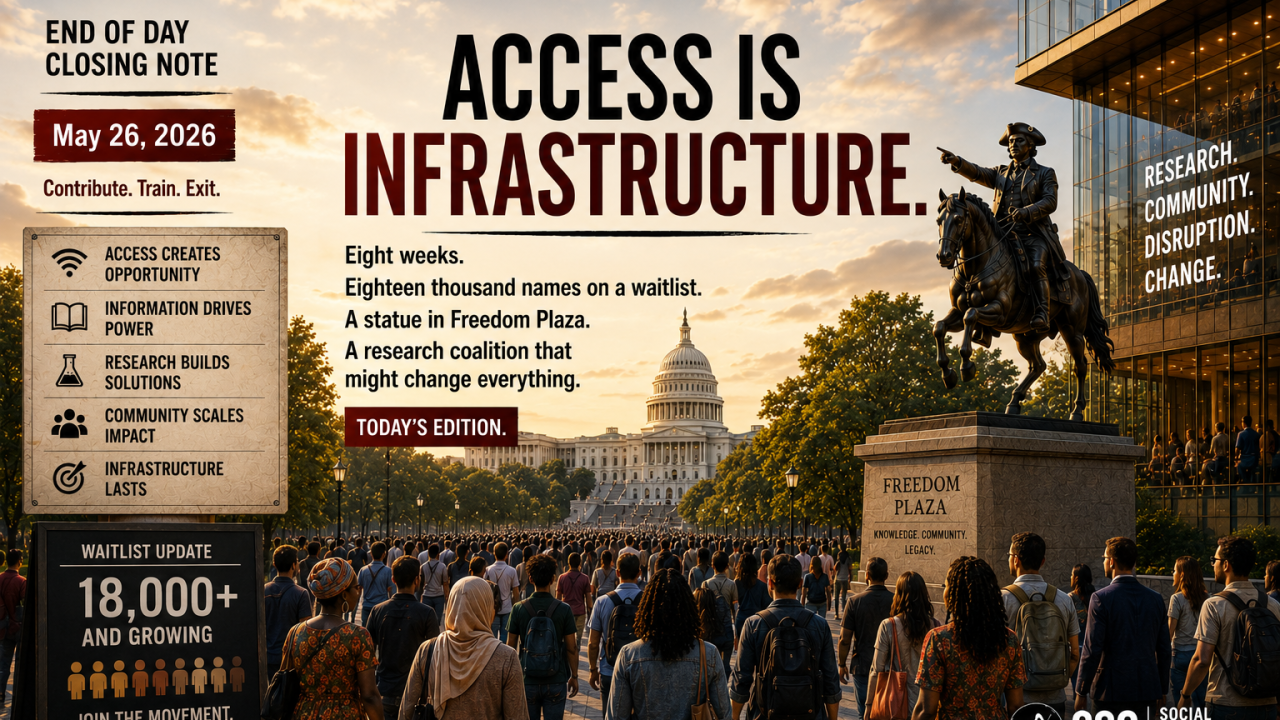
Eight weeks. Eighteen thousand names on a waitlist. A statue in Freedom Plaza. A research coalition that might change everything. Today’s edition.
Welcome back. We hope yesterday gave you what it was supposed to give you — rest, memory, the people who matter. Today we return to the work. And if you are in New York — or just a fan of a good redemption story — the Knicks are in the NBA Finals on an 11-game win streak. Some news deserves a moment before the rest of it arrives.
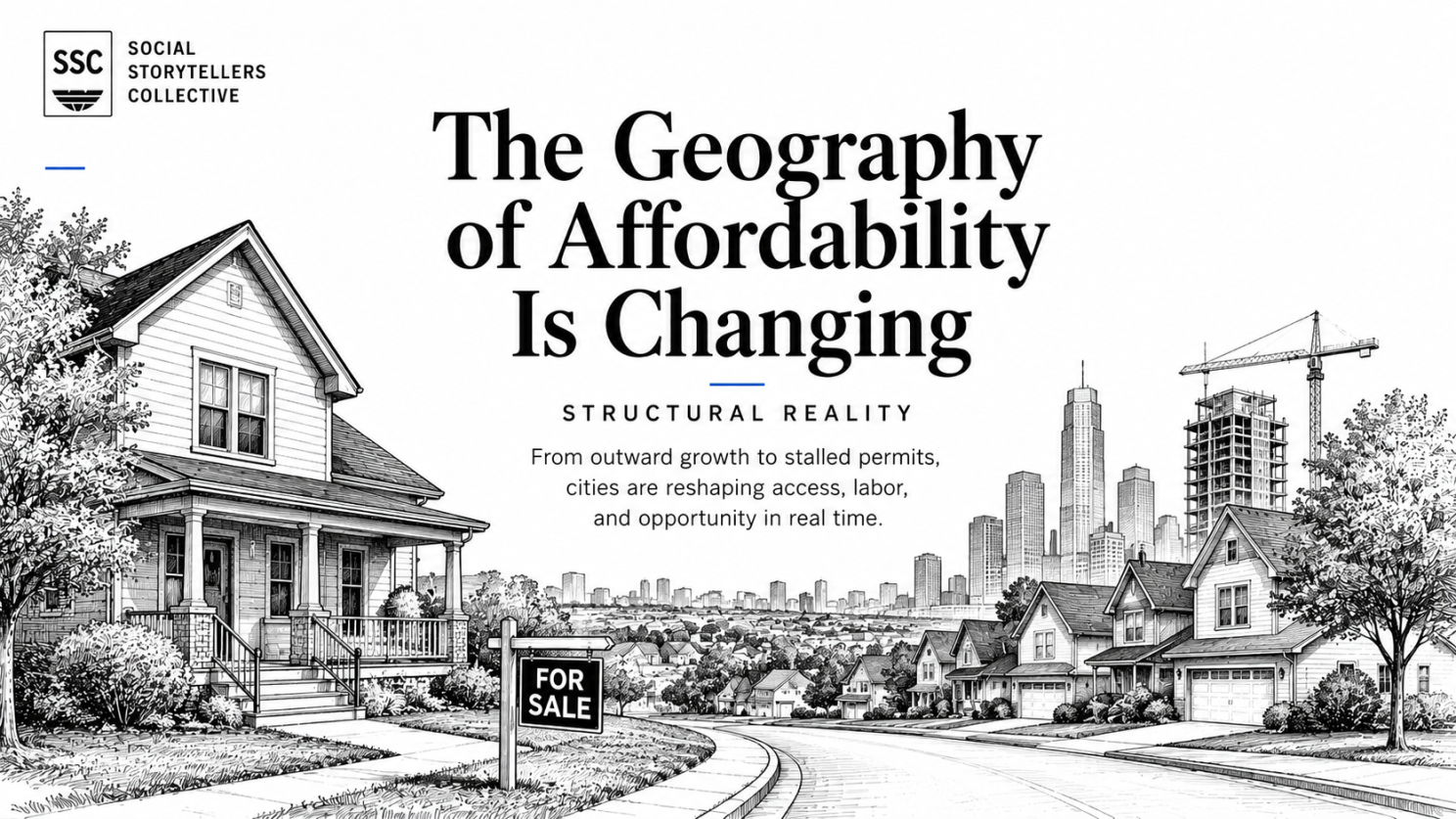
The housing story this week is not one story. It is a national map of the same structural failure playing out in different cities at different speeds. Houston will reopen waitlists for eight public housing properties in June — the first time since 2023 — even as the city’s housing authority carries a $250 million capital investment shortfall and more than 18,000 applicants still waiting for vouchers that have not moved since the list was last opened in 2016. At the same time, a developer has announced a new 500-home subdivision in Hockley at prices starting around $250,000 — nearly 40 miles from downtown. The waitlist reopens. The housing gets built. Just not in the same place, for the same people, or anywhere near the same economic reality. In Boston, 432 units were permitted in the first quarter of 2026 — down from 549 the year before — putting the city on pace for its slowest construction year since 2010. Massachusetts issued just 12,096 permits statewide in 2025, the fewest since 2012, dramatically behind the pace needed to meet Governor Maura Healey’s goal of 222,000 homes by 2035. Austin, by contrast, dropped median rent 16.2% since its 2021 peak after adding 120,000 housing units over nine years. Its median rent now sits 4% below the national average. The lesson is not that Austin solved housing. It is that constrained supply guarantees pricing pressure while political systems argue about who deserves protection from it. SSC traces the full national map in The Geography of Affordability Is Changing.
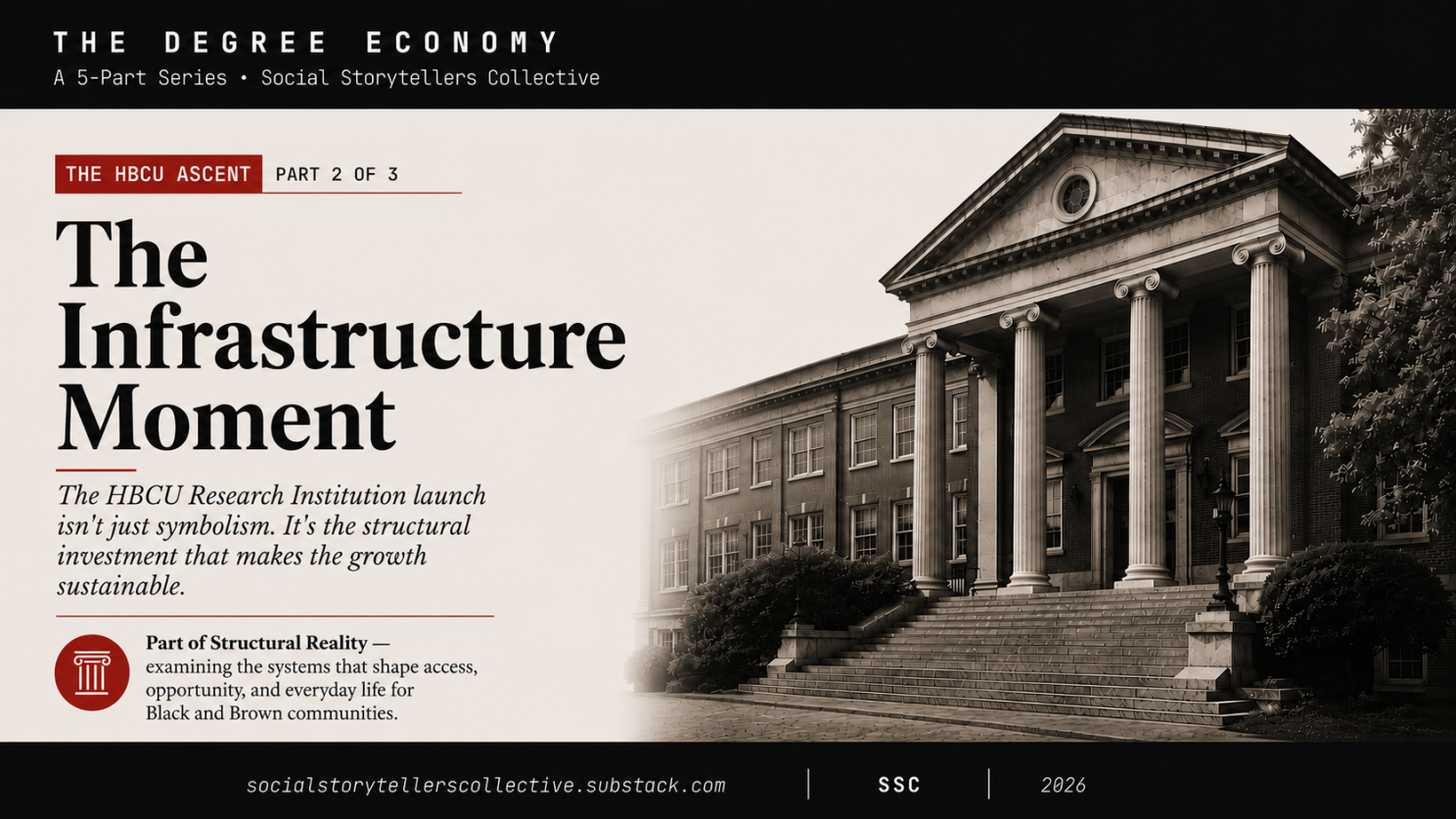
Today we continue The Degree Economy series with Part II of The HBCU Ascent. Enrollment growth is a signal. It is not a foundation. The history of HBCUs is full of moments where increased interest produced enrollment surges that the underlying infrastructure could not fully absorb. Students arrived. The resources to serve them at scale did not. What makes the current moment different is that the infrastructure investment is arriving alongside the enrollment surge rather than lagging behind it. On April 29, 2026, at Howard University , the Association of Historically Black Colleges and Universities Research Institutions — AHRI — formally launched, bringing together 15 of the top HBCU research institutions in the country. Howard — the only HBCU to hold R1 Carnegie Classification — anchors the coalition alongside 13 R2 institutions: Clark Atlanta University Delaware State University , Florida Agricultural and Mechanical University , Hampton University, Jackson State University , Morgan State University , North Carolina Agricultural and Technical State University , Prairie View A&M University , South Carolina State University , Southern University, Tennessee State University Texas Southern University, and Virginia State University — plus the University of Maryland Eastern Shore . Collectively, AHRI institutions account for 50% of competitively awarded federal research funding among HBCUs. The window to turn momentum into permanence is open. Part II — The Infrastructure Moment — examines what it will take to keep it that way.
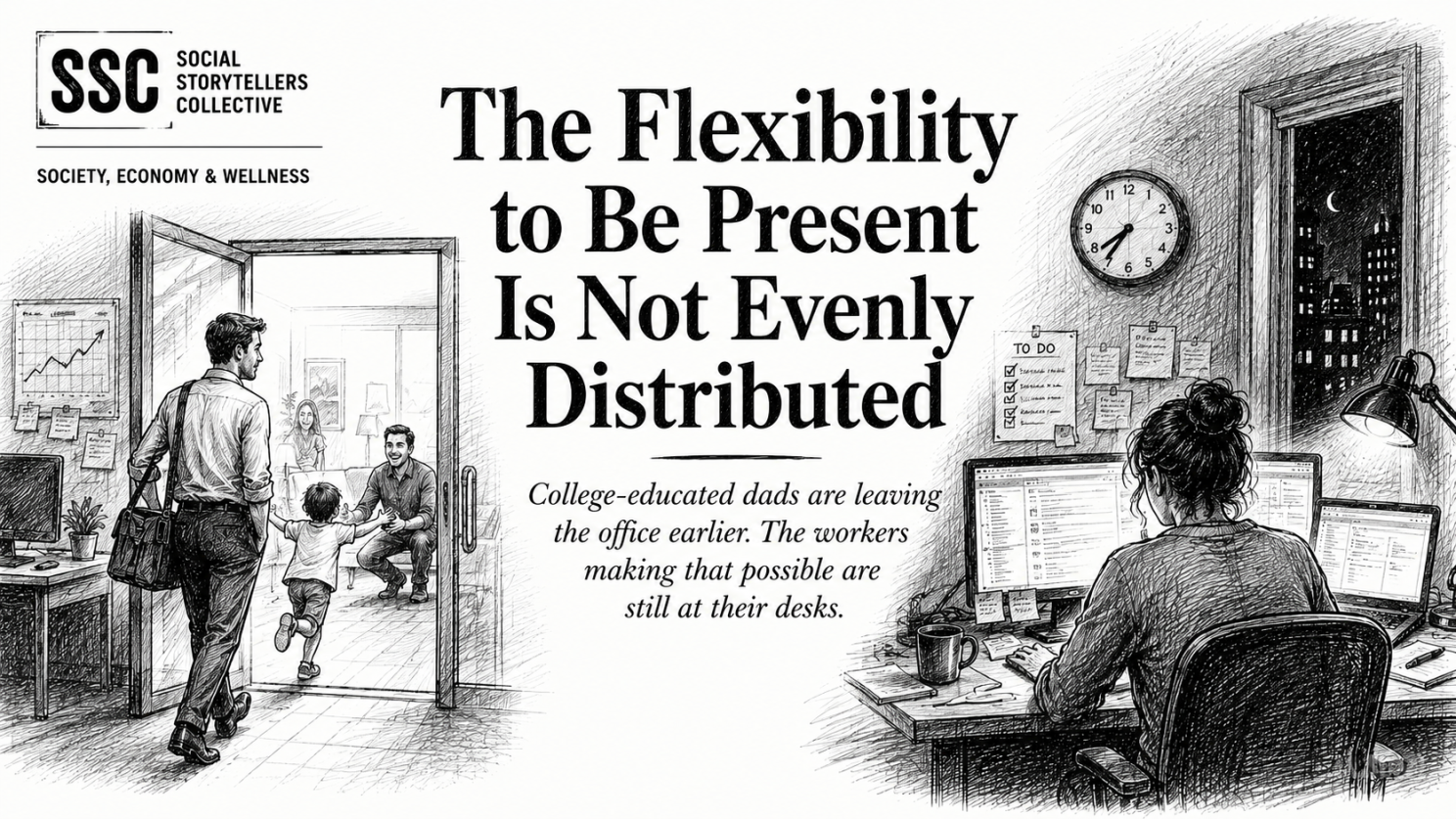
The Wall Street Journal reported this week that college-educated fathers are leading a shift away from long office hours — trading face time for presence at home. The data is real. The trend is documented. What the headline doesn’t name is what SSC examines in The Flexibility to Be Present Is Not Evenly Distributed: the ability to rewrite the terms of professional life belongs first to the people whose credentials and income already give them negotiating power. CEOs at Nestlé , HSBC , 3M , and Unilever are simultaneously telling their workforces to perform harder while the workers at the top of those same organizations structure their days around personal priorities. The language of performance culture flows downward. The flexibility of professional autonomy flows upward. The dad leaving at 3PM has a job that allows for that negotiation. The worker still at the desk at 7PM is often the one making it structurally possible.

The Ebola outbreak spreading across the Democratic Republic of Congo and Uganda has now reached 1,010 suspected and confirmed cases and at least 231 deaths. The connection between what is happening in Ituri Province right now and decisions made in Washington over the last fifteen months is specific and documented. USAID funding to the DRCdropped from nearly $1.2 billion in fiscal year 2024 to $67 million in the final three months of 2025. HHS health funding fell from $33 million to under $10 million. A grant for infection control in the outbreak region — set to expire in 2028 — was cancelled early. The Bundibugyo strain driving this outbreak has no approved vaccine and no approved treatment. Dr. Peter Stafford, an American physician working for the charity Serge in Bunia, tested positive and was evacuated to Charité University Hospital in Berlin. His wife Dr. Rebekah Stafford is being monitored. The Congolesehealth workers who cannot be evacuated are doing the same work, with fewer tools, in a surveillance system that was intact the last time this happened — and isn’t anymore. SSC traces the full timeline in The Outbreak Was Predicted. The Infrastructure to Stop It Was Defunded First.

As America prepares to celebrate 250 years of independence, a new survey from The Asian American Foundationfinds the country sharply divided over a fundamental question: what does it mean to be truly American? 50% of U.S.adults say being born here is essential. 77% of Asian Americans and Pacific Islanders say it is not — the highest share of any racial or ethnic group. Three-quarters of AAPIs say they feel belonging overall, compared with 83% of white Americans. 1 in 5 reported being harassed or threatened because of their race in the past 12 months. Worry (44%) outranks hope (40%) among AAPIs — the only group in the survey where that is true. The Supreme Court is currently weighing the birthright citizenship case. The Country Can’t Agree on What Makes You American. 25 Million People Are Living Inside That Disagreement. names what that gap costs — not just culturally, but economically, professionally, and structurally.
Hims & Hers is no longer just selling access to hair-loss drugs and weight-loss prescriptions. The company is expanding into peptides, testosterone, biological-age testing, and full-body scans — a pivot that reveals where consumer health is moving next: away from the doctor’s office as the primary gatekeeper and toward digital platforms that package optimization, prevention, and emotional reassurance into recurring subscription models. Biological-age testing is the clearest expression. The science remains contested, but the consumer appeal is powerful because it gives people a number to track, improve, and worry about. Once the body becomes measurable this way, the business model expands naturally. Consumers do not simply buy treatment. They buy management, reassurance, and the ongoing feeling of remaining ahead of decline. SSC examines the full architecture of that shift in The Wellness Platform Wants the Whole Body.
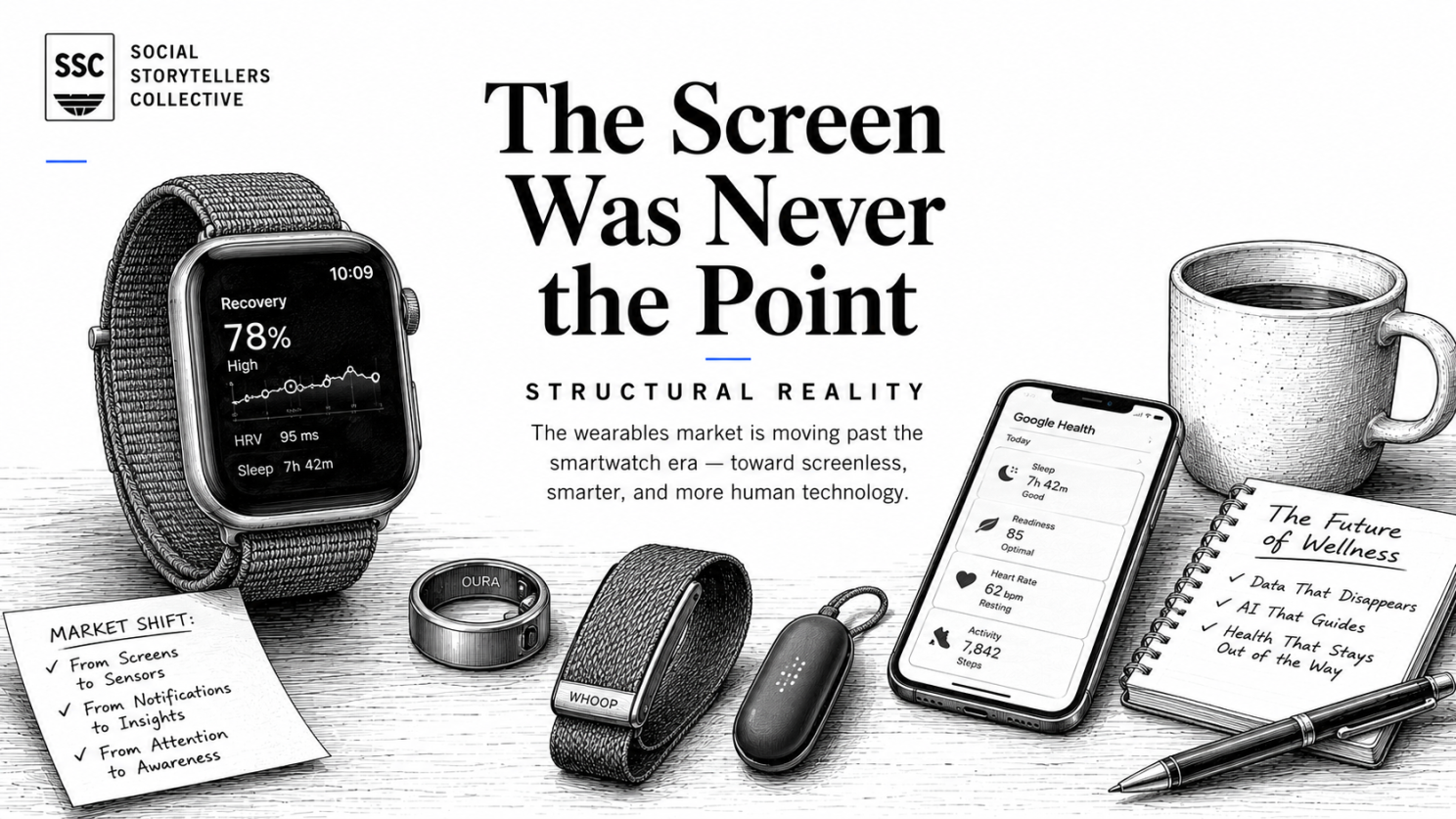
The wearables market is making the same argument in a different form. Apple built more than 50% of the smartwatch market by putting a screen on your wrist. Whoop built a $10.1 billion valuation by removing it. Google launches the Fitbit Air this week — a $99 screenless tracker with a Gemini-powered health coach — at the price point that makes the category accessible at scale. Bloomberg ‘s Mark Gurman reported this week that Apple needs a significant shake-up: leadership in flux, health and hardware talent lost to ŌURA and a Health app that feels cluttered and overly clinical against competitors building actionable coaching systems. The screenless pivot is not a design preference. It is a business model — a device you never take off generates more data, more continuously, than one you occasionally glance at. The people designing that future are still optimizing for the customer who already has the most access to healthcare. SSC names the access argument underneath the product cycle in The Screen Was Never the Point.
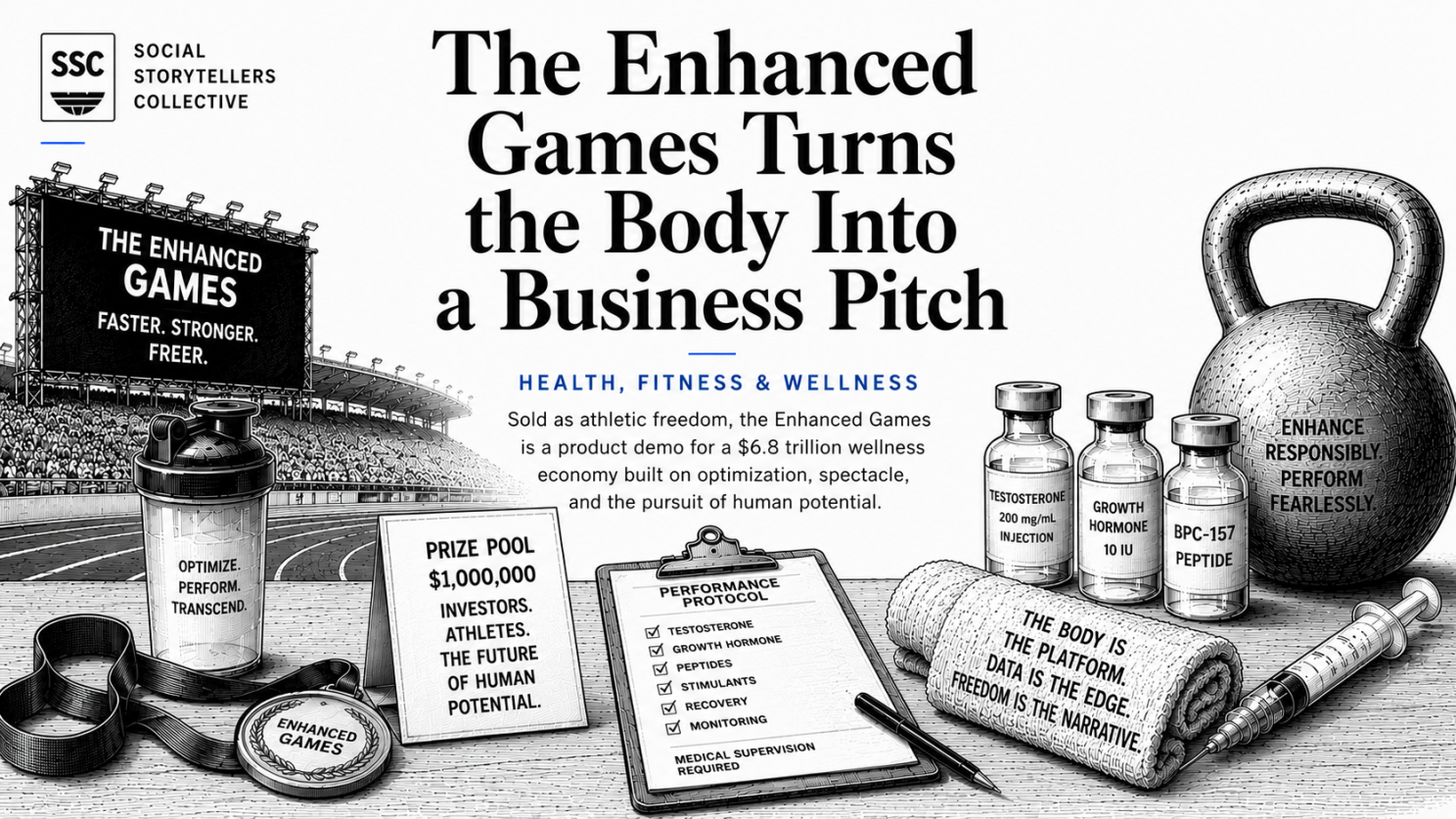
And in Las Vegas this week, 42 elite athletes competed with access to testosterone, growth hormone, peptides, and stimulants banned in traditional Olympic competition — not as a scandal, but as a market. The Enhanced Games is not rejecting the wellness industry. It is revealing it. Underneath the spectacle is a $6.8 trillion optimization economy looking for social permission, and the body is the platform being used to get it. WADA has warned the event could normalize combinations of substances with uncertain long-term effects. Transparency does not erase pressure. It can simply make the pressure more polished, better funded, and easier to sell. SSC makes the full argument in The Enhanced Games Turns the Body Into a Business Pitch.
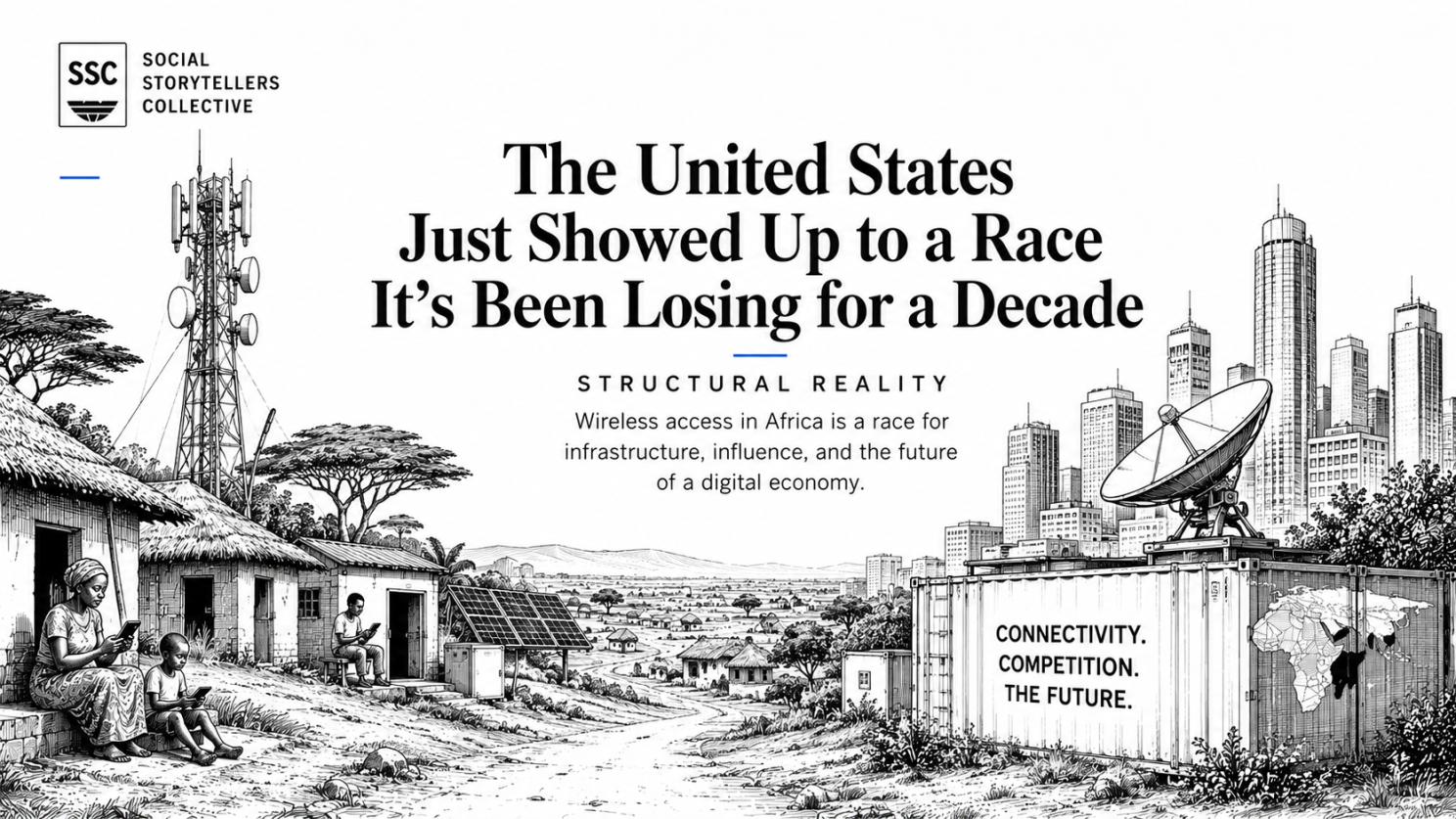
The zero-tariff policy China extended to 53 African countries on May 1 is not a trade announcement. It is Beijing’s strategic posture made concrete — and it connects directly to what SSC documented in China Has Already Decided America Is in Decline. The Question Is What It Does Next. Every nation with diplomatic relations with Chinareceived tariff-free access to a 1.4 billion-person consumer market — except Eswatini, which maintains ties with Taiwan. The exclusion makes the message plain without stating it: market access is connected to recognition, and recognition is connected to Beijing’s position on Taiwan. The U.S. responded to the same moment in West Africa with 1,500 wireless base stations and a feasibility study — arriving a decade after China built the fiber, the 5G networks, and the telecom standards that govern how much of the continent’s digital economy operates. SSC examines what that gap looks like on the ground, and what it would take to close it, in The United States Just Showed Up to a Race It’s Been Losing for a Decade.
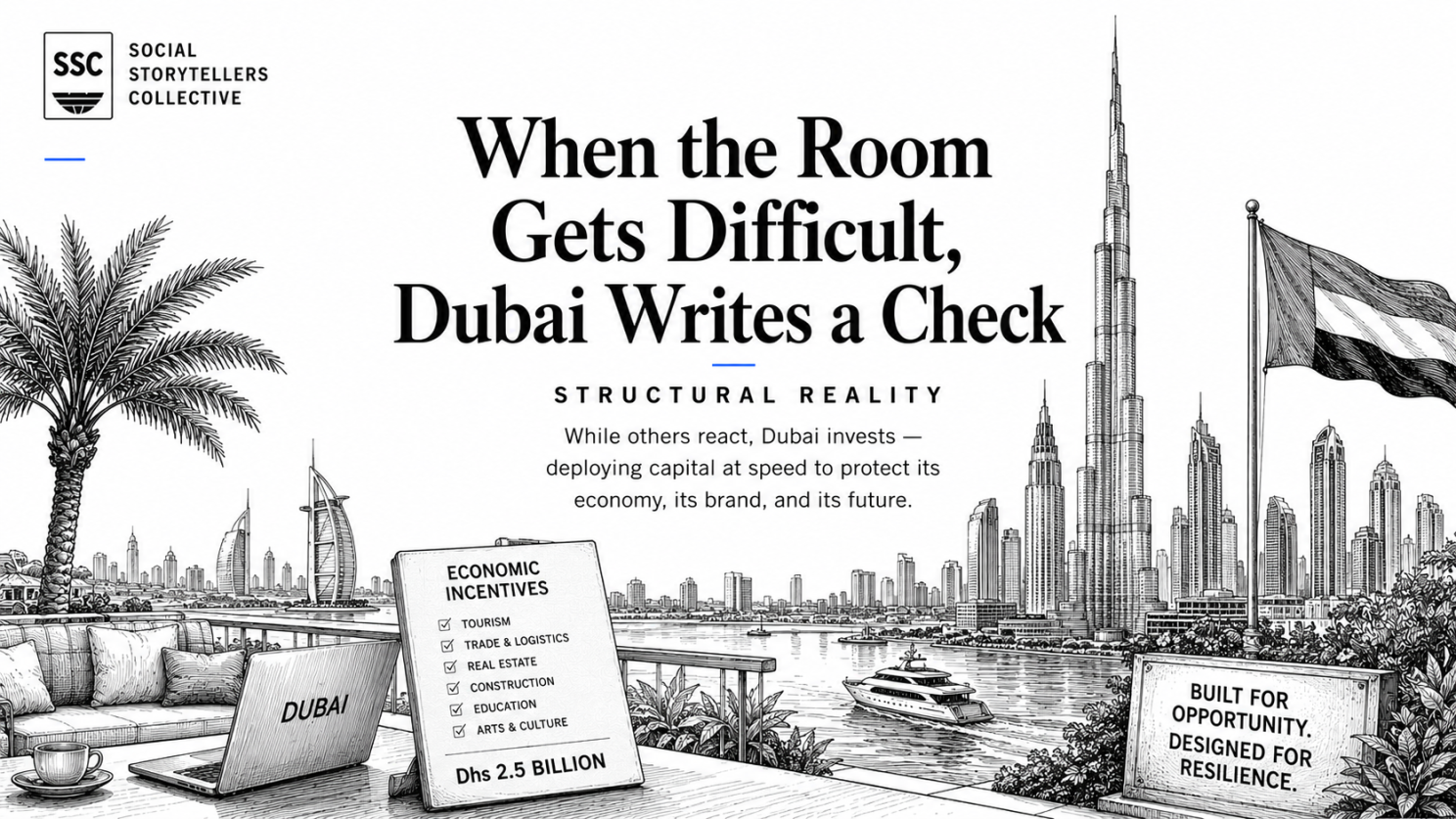
And then there is Dubai. While the Iran conflict pushes energy prices higher across every market connected to the Persian Gulf — and while American workers absorb that pressure with a 3.6% savings rate and $1.2 trillion in consumer debt — Sheikh Hamdan bin Mohammed bin Rashid Al Maktoum deployed $680 million in economic incentives across 33 specific initiatives in under eight weeks, covering tourism, hospitality, trade, logistics, construction, and education. The UAE workforce grew 12.4% year-on-year in 2025. UAE GDP is forecast at 5.6% in 2026. The U.S.has no announced domestic economic response to the same energy price pressure. SSC examines what Dubai’s speed reveals — and what it doesn’t — in When the Room Gets Difficult, Dubai Writes a Check.
The Daily Visual Signal
A visual interpretation of the deeper systems, tensions, and structural shifts shaping the current moment — designed to translate complex societal changes into a single image.
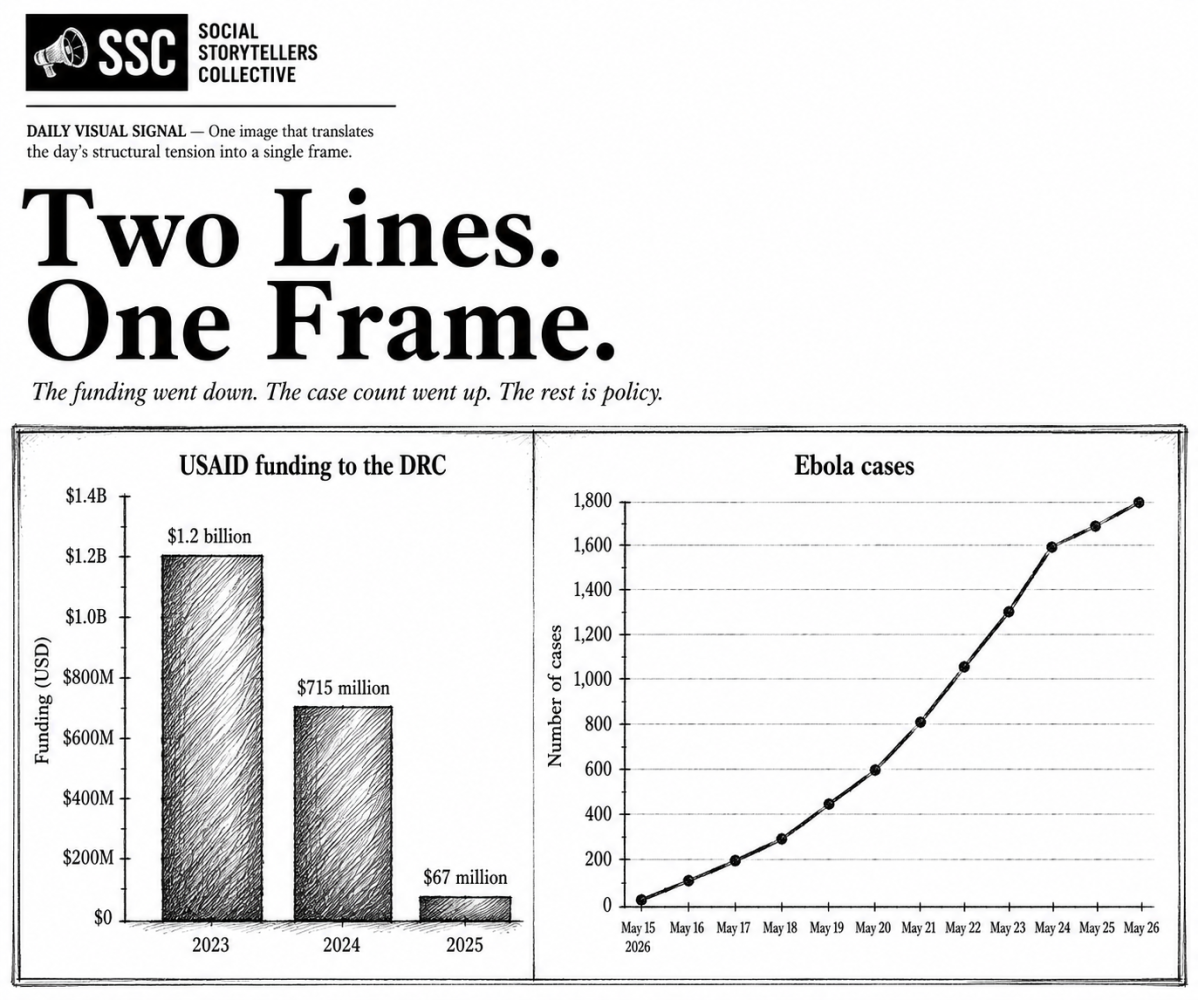
Two columns side by side. Left column: USAID funding to the DRC by year — $1.2 billion in 2024, $715 million in 2025, $67 million in the final three months of 2025. Right column: Ebola case counts by week since May 15, 2026 — a line moving sharply upward. The two lines move in opposite directions. No annotation. No headline. Just the data, in the same frame.
Featured Story: The Return of Caesar Rodney Is About More Than a Statue
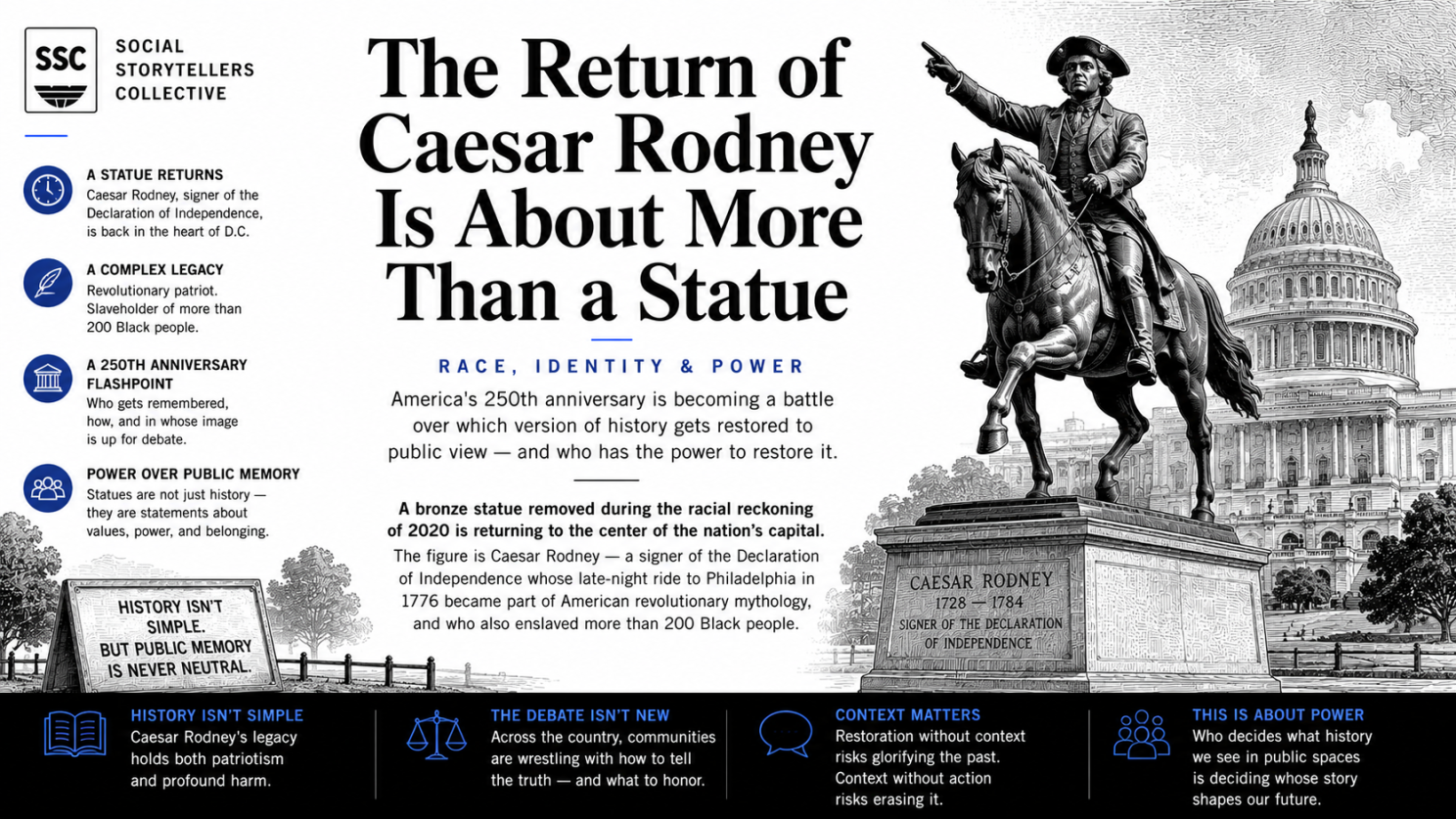
A bronze statue of Caesar Rodney — signer of the Declaration of Independence and enslaver of more than 200 people — is being temporarily reinstalled in Washington, D.C.’s Freedom Plaza, a space named in honor of Martin Luther King Jr., under plans tied to America’s 250th anniversary celebration. The Interior Department framed it as honoring “the full breadth” of American history. Federal descriptions of Rodney emphasize courage, endurance, and revolutionary sacrifice while barely referencing the people whose enslaved labor underwrote his political standing. This is not a statue being quietly returned after community consensus. It is a monument being repositioned through federal power during the single most prominent moment of national self-definition in a generation. The structural shift is not about statues. It is about who holds the power to decide which contradictions get acknowledged and which get installed in bronze while the country tells itself a story about who it has always been. SSC makes the full argument in The Return of Caesar Rodney Is About More Than a Statue.
The thread running through today’s coverage is access — who gets it, who designs it, and who profits from the terms. The housing waitlist that reopens while the housing gets built 40 miles away. The research infrastructure arriving just in time to meet the enrollment surge. The flexibility to be present at home that accrues to the people whose credentials already give them leverage. The wellness subscription that upgrades the people who can already afford to optimize. The trade policy that opens a door while the infrastructure to walk through it remains unbuilt. The monument that gets restored while the people most affected by its subject weren’t asked. Every story today is about the distance between the announcement and the outcome — and who lives in that gap.
We will be back Wednesday with the final installment of The HBCU Ascent — Part III: The Employer Gap.
— SSC
All of today’s coverage lives at socialstorytellers.substack.com. The full archive, beat navigation, and every linked piece are best experienced on a computer. If you have been reading and have not yet subscribed, we would be glad to have you with us.