
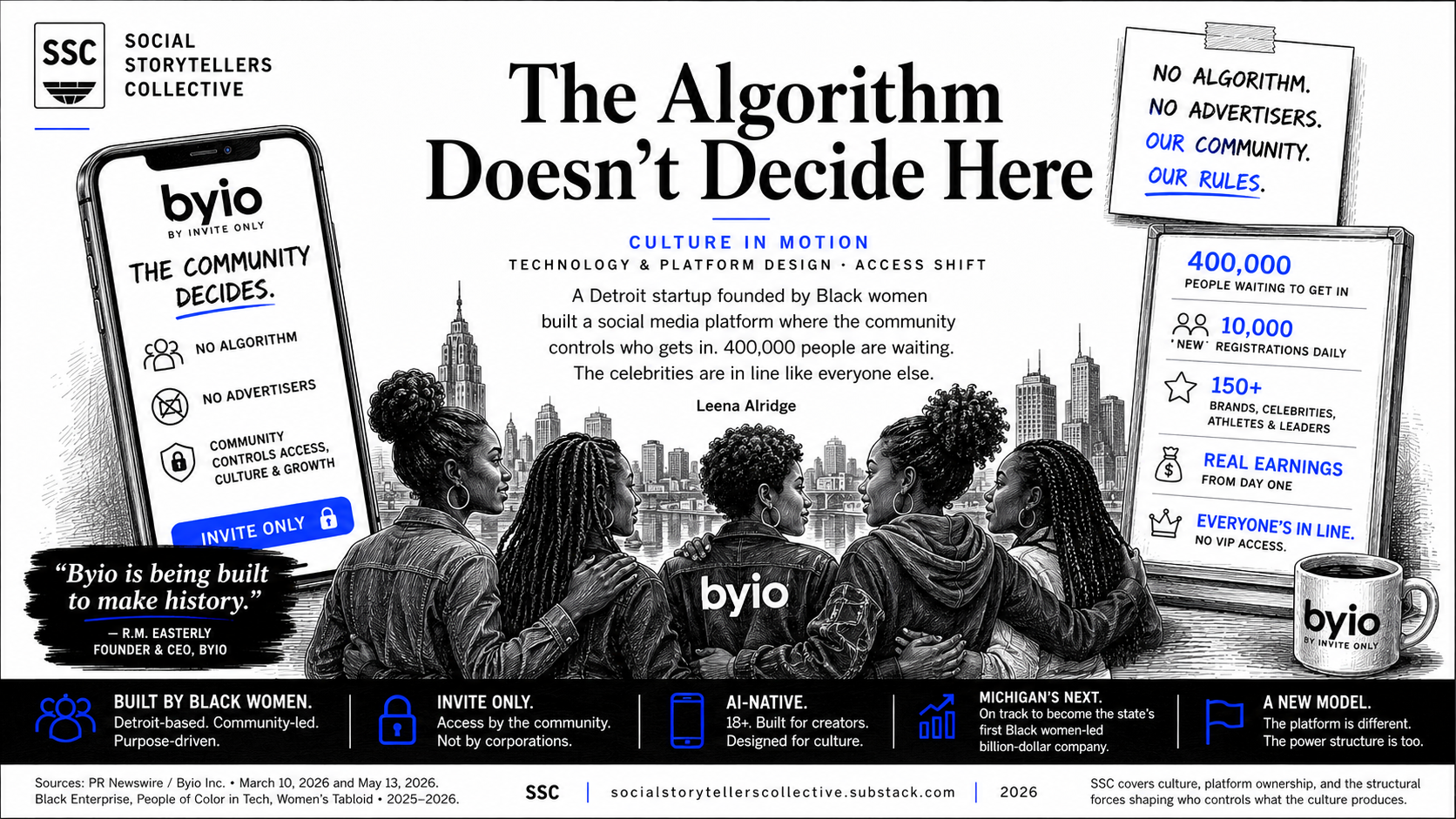
For nearly two decades, the rules of social media have been set by algorithms, advertisers, and tech corporations. Those systems determine who gets seen, who gets paid, and whose voices get amplified. R.M. Easterly, Founder and CEO of Byio, decided the community should make those decisions instead.
Byio — short for By Invite Only — is a Detroit-based social media platform founded and led by Black women. The model is simple and unprecedented: the community decides who gets in and who stays. No algorithm. No advertiser determining your reach. No corporation making moderation decisions behind closed doors. Users control access, culture, and growth. The platform is AI-native, strictly 18+, and built to give creators real earnings from day one through live streaming, gifting, subscriptions, and e-commerce.
The numbers tell you everything about the demand. Byio launched its closed beta in early 2026 with 50,000 registrations and 10 million views. By May 13, 2026, 400,000 people were registered and waiting to get in — 10,000 new registrations arriving daily. More than 150 brands, celebrities, athletes, Grammy-winning artists, reality TV personalities, and political figures have registered. They are in line like everyone else. Jesse Tayler — the creator of the App Storewho sold it to Steve Jobs — joined as an advisor. The platform could become Michigan’s first billion-dollar company founded by Black women.
Easterly was direct about why she built it: “Byio is being built to make history — the first platform of its kind created by Black women who have endured the same discrimination and silencing that millions of creators face on social media.”
The SSC argument here connects directly to what we have been covering all week across platform ownership, cultural control, and who decides the terms. Colbert lost his platform three days after calling a corporate settlement what it was. Sway and King Tech spent decades building culture on networks they didn’t own before launching SKT Network. Byiotakes the same argument one structural step further — not just building a platform, but building a platform where the governance model itself is community-controlled. The algorithm doesn’t decide who gets amplified. The community does. The advertiser doesn’t decide whose content gets suppressed. The community does.
That is not a small distinction. It is the entire design philosophy of every major social media platform inverted. Metatrained AI on its workers before reducing them. X changed its moderation rules overnight based on one owner’s preferences. TikTok has been under federal pressure over data sovereignty. Byio is being built on the premise that none of those systems should have that power — and that the people most consistently harmed by the way those systems exercise it should be the ones building the alternative.
Byio is early-stage. Closed beta. The hard work of scaling a community-controlled platform without replicating the moderation failures of the platforms it is challenging has not been done yet — it is being done. Whether the invite-only model holds its cultural integrity as the user base expands is a real structural question. What is not a question is the demand. 400,000 people waiting. 10,000 new registrations a day. Celebrities in line like everyone else.
The algorithm doesn’t decide here. That is the whole point.
SSC covers culture, platform ownership, and the structural forces shaping who controls what the culture produces.