
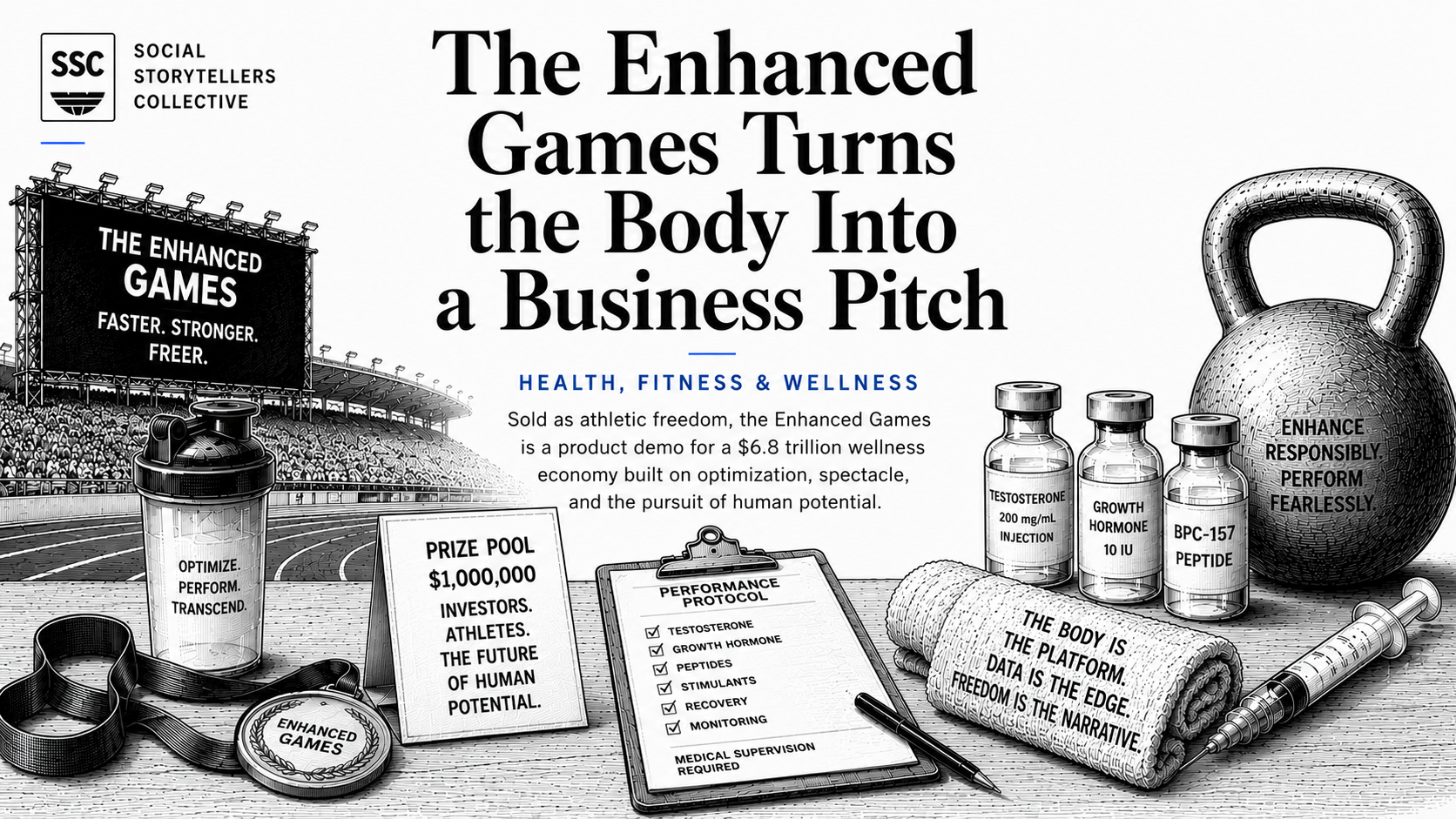
The Enhanced Games is not rejecting the wellness industry. It is revealing it.
The event arrived in Las Vegas with a premise that sounds like provocation but behaves like strategy: let elite athletes use performance-enhancing drugs under medical supervision, build a spectacle around the results, and turn the controversy itself into a market. 42 elite athletes competing with access to testosterone, growth hormone, peptides, and stimulants banned in traditional Olympic competition. Backers argue the existing system is hypocritical and outdated. Critics argue it is dangerous, exploitative, and likely to normalize risk for younger athletes.
Both sides are describing the surface. The structure underneath it is simpler: this is a $6.8 trillion wellness and longevity economy looking for social permission — and the body is the platform being used to get it.
The spectacle is not separate from the business model. It is the business model. The Enhanced Games is tied directly to the same booming optimization economy that is selling biological-age tests, peptide protocols, testosterone clinics, longevity subscriptions, and biohacking culture to ordinary consumers at scale. As SSC examined in The Wellness Platform Wants the Whole Body, the consumer health industry is no longer treating illness — it is monetizing the distance between how healthy people are and how optimized they believe they should become. The Enhanced Gamestakes that premise and puts it on a track, in a stadium, with prize money and cameras.
The athlete becomes the marketing surface. The competition becomes the launch event. And the question being answered — can the culture be moved toward accepting enhancement as a normal consumer choice — is worth far more to investors than any medal.
The old sports debate was organized around fairness. Who competed clean, who cheated, who damaged the integrity of the game. The new debate is organized around optimization. If adults can medically supervise performance enhancement, the argument goes, why should institutions prevent them from testing the limits of the body?
That framing borrows the language of autonomy while obscuring the incentives around it. When prize money, investors, sponsorships, and public attention enter the room, “choice” no longer operates in a vacuum. It operates inside a market that profits from the choice being made. WADA has warned that the event could encourage risky drug use and normalize combinations of substances with uncertain long-term effects. Supporters respond that underground doping already exists and that transparency is safer than denial.
Transparency does not erase pressure. It can simply make the pressure more polished, better funded, and easier to sell.
The cultural story is what SSC wants to name directly. The substances and concepts being staged as entertainment in Las Vegas — testosterone optimization, growth hormone, peptides, stimulants — are the same ones being quietly normalized through biohacking communities, longevity clinics, anti-aging culture, and the wearables market. The Enhanced Gamesdid not invent this ecosystem. It made it visible. The athlete is the extreme version of a much broader consumer message: your body is improvable, measurable, and commercially expandable if you are willing to intervene.
The danger is not only that young athletes see doping as glamorous. The danger is that the line between medicine, enhancement, and aspiration becomes harder to locate — and that the optimization economy, which profits from that line being blurry, has now found a way to perform that blurriness in front of an audience and call it sport.
The mainstream coverage will ask whether this is the future of athletics. The sharper observation is that sports is simply the first arena where the optimization economy is willing to say its premise out loud.
Underneath the spectacle is a market that has been building toward this moment for years. The Enhanced Games is the coming-out party. The product launch already happened — in your gym, your wellness app, your biohacking subreddit, your longevity clinic’s waiting room. Las Vegas just put it on a scoreboard.
SSC covers health, access, and the structural forces shaping how people live and work. Read the companion analysis: The Wellness Platform Wants the Whole Body — how the longevity economy is changing how people are taught to relate to their bodies.