
The Consolidation Holiday – March 23, 2026
When the Holiday Says Abundance and the Data Says Otherwise
Weekend Edition
The thematic thread running through today is consolidation — things that were once distributed, neutral, or widely accessible narrowing into fewer hands. IMAX is exploring a sale that will hand the hierarchy of theatrical visibility to one company. Spotify and Universal carved a licensed AI framework that covers their catalog and leaves independent artists with no equivalent protection. New York’s most iconic food turns out to have been made with an additive the rest of the world banned decades ago, and the argument for keeping it is essentially that the mythology hardened before anyone looked at the ingredient list. And the Memorial Day cookout — the holiday ritual sold as universal — costs 13% morethis year than last, a number that lands differently depending on whose driveway the grill is in.
Rob Base died yesterday. He and DJ E-Z Rock proved in 1988 that the music could move any room without a major label, without institutional permission, without waiting for the industry to decide hip-hop counted. “It Takes Two” is 38 years old and it still arrives before you do. That is the only version of this story where the thing built without gatekeepers outlasts the gatekeepers. Keep watching where the others end up.
A man is standing in a Brooklyn grocery store on the Friday before Memorial Day, doing math he did not expect to do. The ground beef is $20 more than last year. The corn costs twice what it did. The grill is waiting. The holiday is the same one it’s always been. The table that was supposed to be for everyone is quietly becoming for some.
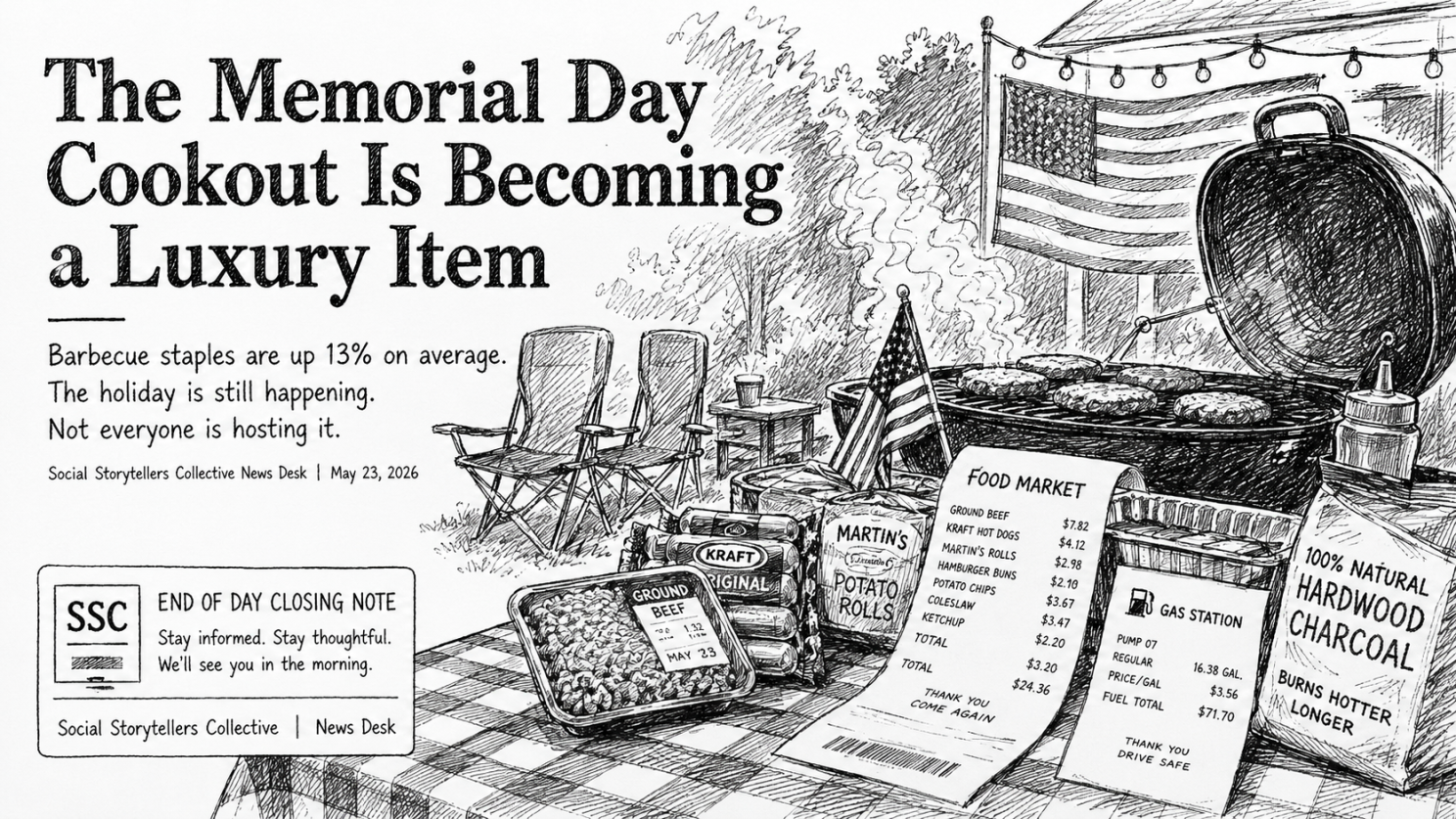
Barbecue staples are up 13% on average — more than 4x the general inflation rate. Corn is up 98%. Ground beef +20%. Gas at $4.56 a gallon, a four-year holiday high. The personal savings rate is at 3.6%, the lowest since 2022, and roughly 40% of households earning under $66K have no summer travel plans this weekend — not scaled back, none. AAAprojects 45 million Americans traveling 50+ miles, the largest Memorial Day movement on record — and that number is being driven by the top half of the income distribution. The mechanism behind all of it is traceable: energy prices spiked after Iran closed the Strait of Hormuz, sending wholesale inflation to 6% against 2025 — the highest since late 2022 — and tariff pressure compounded it at the supply chain level. Consumer prices came in at 3.8% YoY in April. The holiday will be called a record — the data underneath it is telling a different story about who’s actually hosting it.
The Numbers the Headline Isn’t Telling You Structural Reality | Bryson Davis / Social Storytellers Collective
The headline number from April’s jobs report came in at 4.3% unemployment. 100,000 jobs added — the first back-to-back month of positive growth since April 2025. If you stopped reading there, you’d think the labor market was stabilizing.
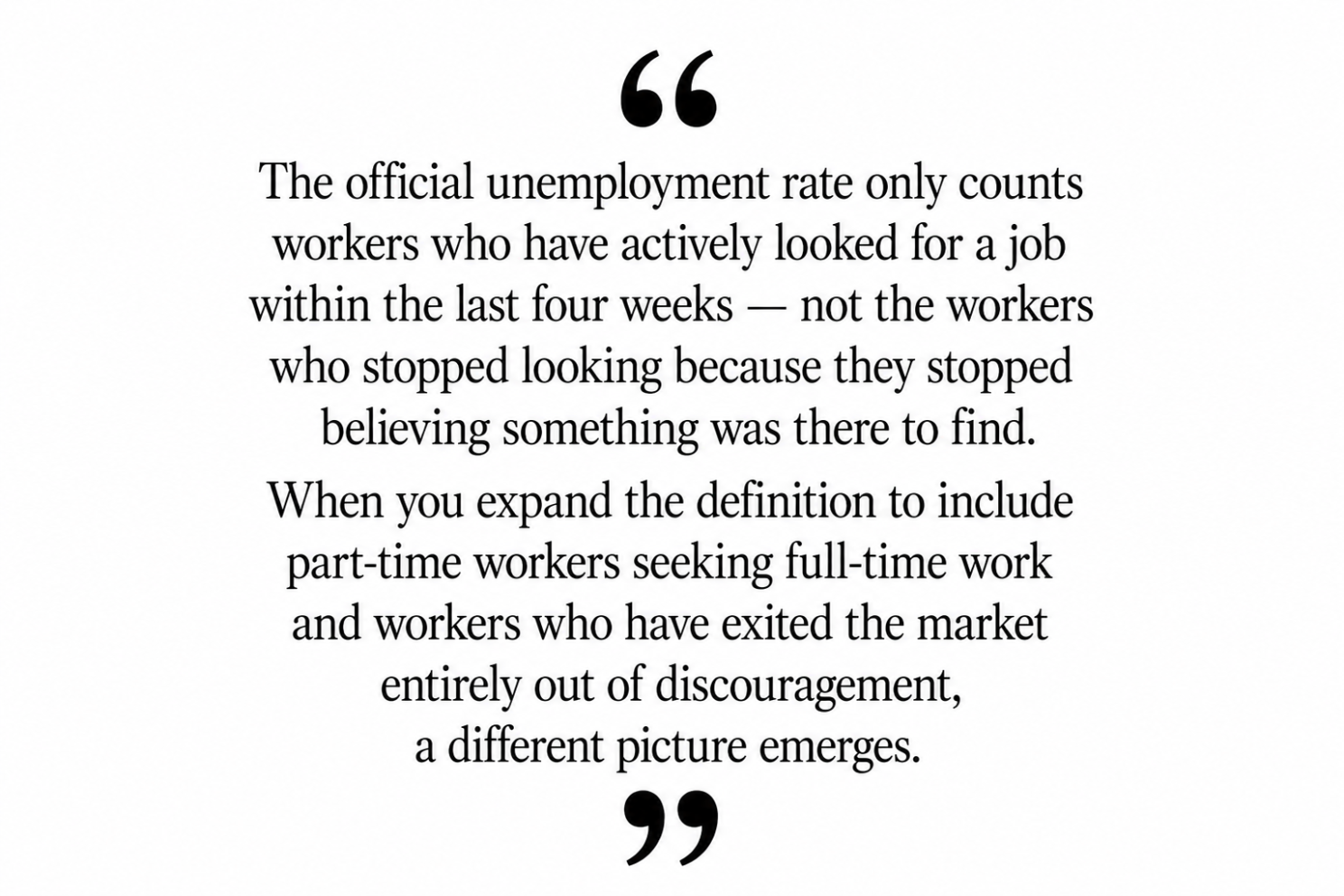
The National Community Reinvestment Coalition released its May 2026 Race, Jobs and Economy Update this week and the data underneath tells a story the headline was never designed to tell. The official unemployment rate only counts workers who have actively looked for a job within the last four weeks — not the workers who stopped looking because they stopped believing something was there to find. When you expand the definition to include part-time workers seeking full-time work and workers who have exited the market entirely out of discouragement, a different picture emerges. For Black men specifically, that picture has been deteriorating for months. The number of unemployed Black men went down — which should be good news. It isn’t, because the number of Black men in the labor force went down at the same time. Their labor force participation rate declined across 2025 and into early 2026, while the rate for every other racial and gender group held constant or increased. Since November 2025, the number of employed Black men over 20 has declined by roughly 650,000. These are working-age men. They are not retiring. Logistics is the largest sectoral employer of Black men and it has seen virtually no job growth since the summer of 2022. Since April 2025, transportation and warehousing has lost nearly 90,000 jobs — including 22,000 truck drivers and 50,000 warehouse positions. The Iran energy shock is compounding it. The share of unemployed workers jobless for longer than 27 weekshas crossed 26% and continues to climb. Among Black men specifically, 30% of the unemployed have been out of work for longer than six months — the highest rate of any racial or ethnic group tracked by the Bureau of Labor Statistics. The April jobs report is not lying. It is just measuring something narrower than the problem.
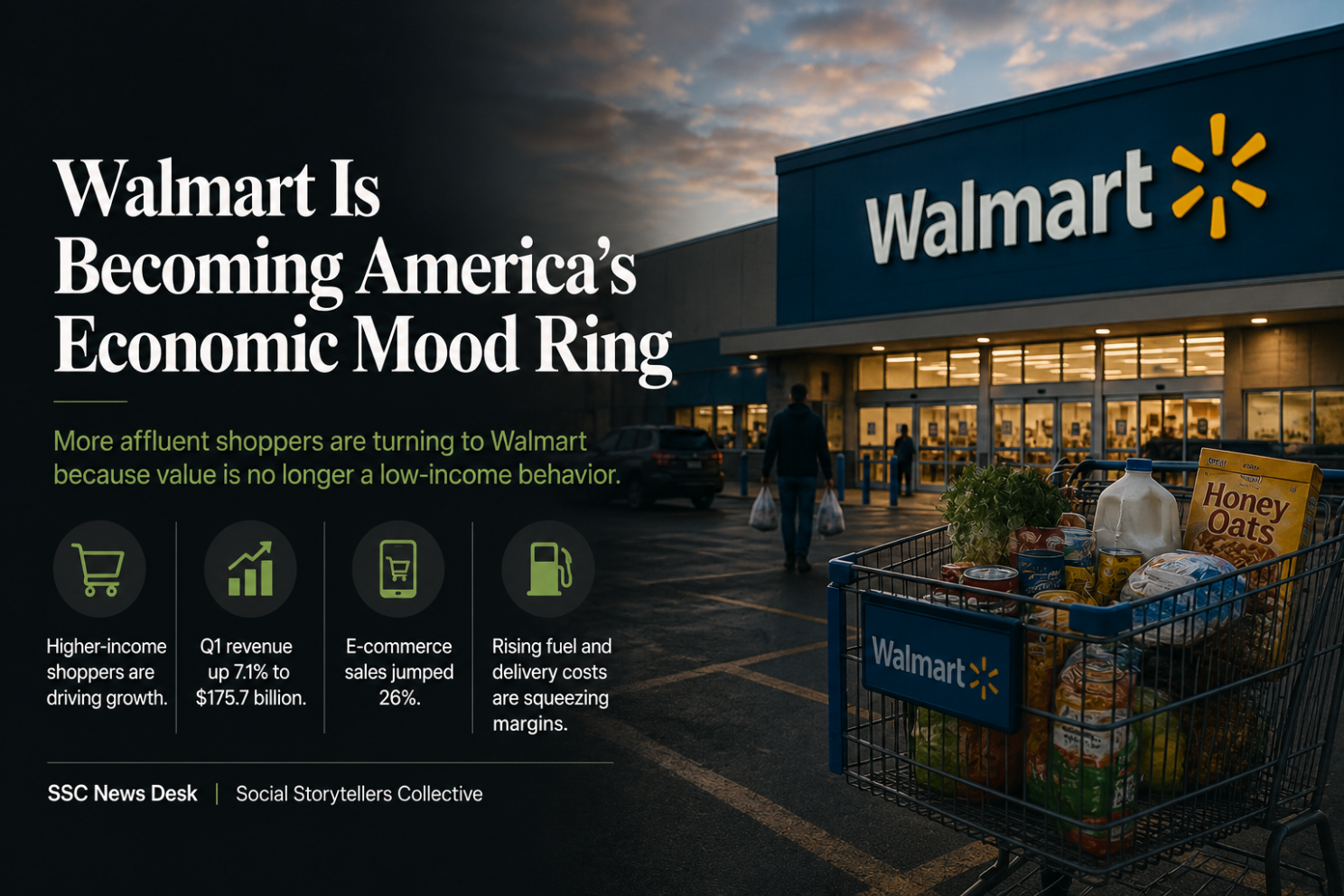
Walmart reported quarterly revenue of $175.7 billion this week, up 7.1% year over year, with e-commerce sales jumping 26%. The number getting less attention than it should: the company’s fastest-growing customer segment earns more than $100,000 a year. For years Walmart occupied a specific psychological position inside American retail culture — affordability, necessity, scale. Higher-income consumers might shop there occasionally but it wasn’t central to how they thought of themselves as shoppers. That distinction has weakened significantly since the inflation surge that began in 2021. Cost pressure is now reaching households that previously had meaningful financial cushion, and value-seeking behavior has stopped being coded as hardship — it’s become mainstream financial strategy. What makes this more than a retail story is the second Walmart story running underneath it — while more Americans are migrating toward Walmart as a survival move, Walmart is simultaneously restructuring 1,000 corporate roles, requiring affected employees to relocate to Bentonville, Arkansas or Sunnyvale, California or exit quietly. The company generated more than $680 billion in revenue in fiscal year 2026. It is not restructuring because it is struggling. It is restructuring because it has decided distributed corporate roles are less valuable than a tighter operational core built around AI-assisted workflows. The same institution benefiting from household financial stress is engineering that stress for its own workforce at the same time.
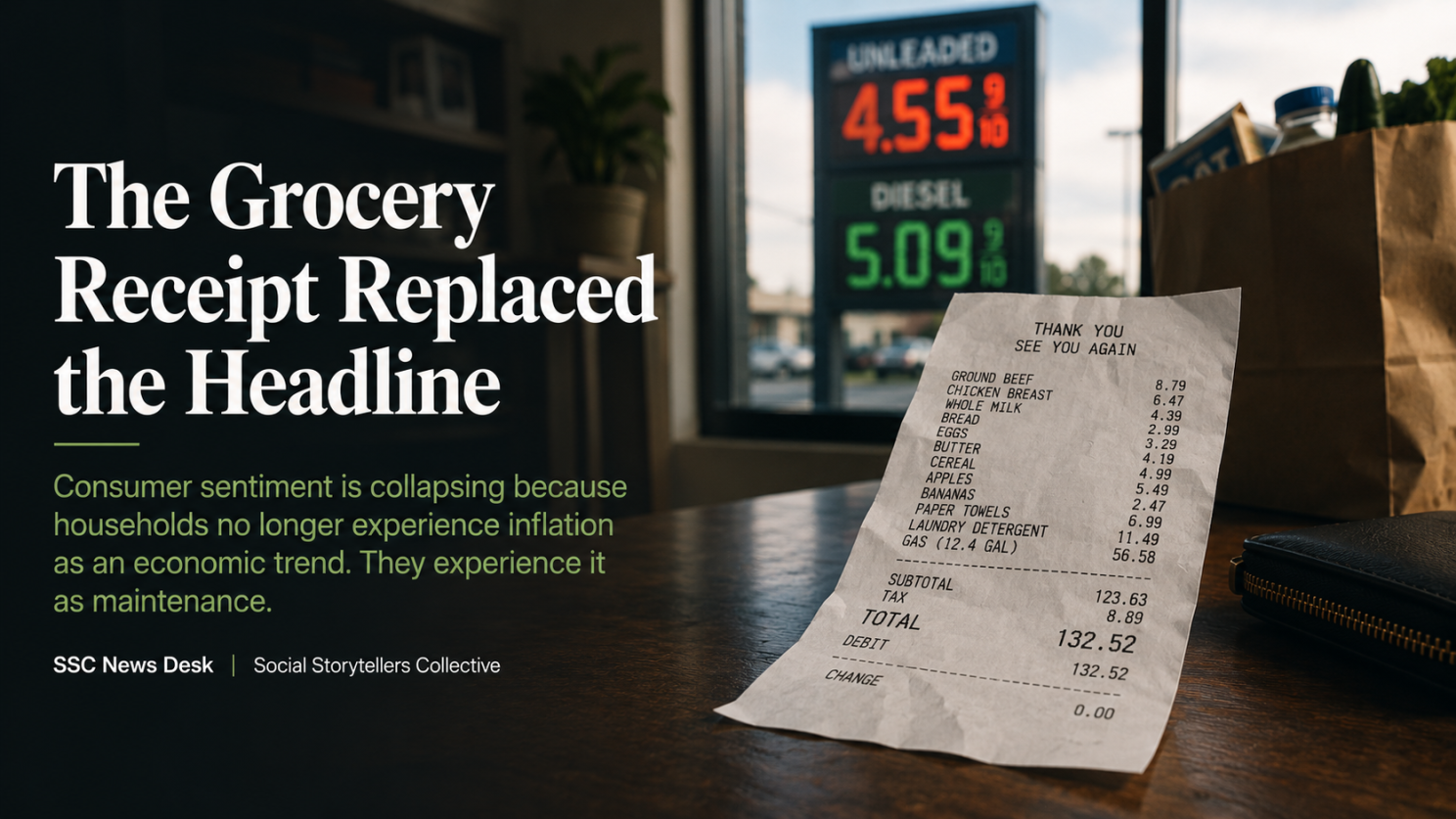
U.S. consumer sentiment fell to 44.8 in May — the lowest reading ever recorded by the University of Michigan survey — even as broader economic indicators continue to describe the labor market as relatively stable. The national average for gas climbed above $4.55 per gallon this week. Credit card balances surpassed $1.2 trillion earlier this year. The personal savings rate dropped to 3.6% this spring. What changed over the last year is not simply that things became more expensive — it’s that the cumulative cost of maintaining ordinary life has started breaking through psychological thresholds for middle-income households. Inflation entered public conversation as a temporary macroeconomic disruption tied to supply chains and interest rates. Now it’s showing up as exhaustion. The headline inflation rate declining matters far less when the baseline cost structure of ordinary life has permanently reset upward. Americans are driving less, consolidating shopping trips, delaying travel, cutting restaurant visits, moving toward discount retailers even in higher income brackets. Airlines and hospitality brands are reporting softening domestic demand in lower-tier travel segments while premium experiences remain resilient. The result is an economy becoming more stratified not only by wealth but by who still has the capacity to absorb volatility without altering their lifestyle. Mainstream coverage still tends to frame inflation as something consumers are reacting to emotionally. Increasingly, the reaction is mathematical. The grocery receipt is not symbolic. It is operational.
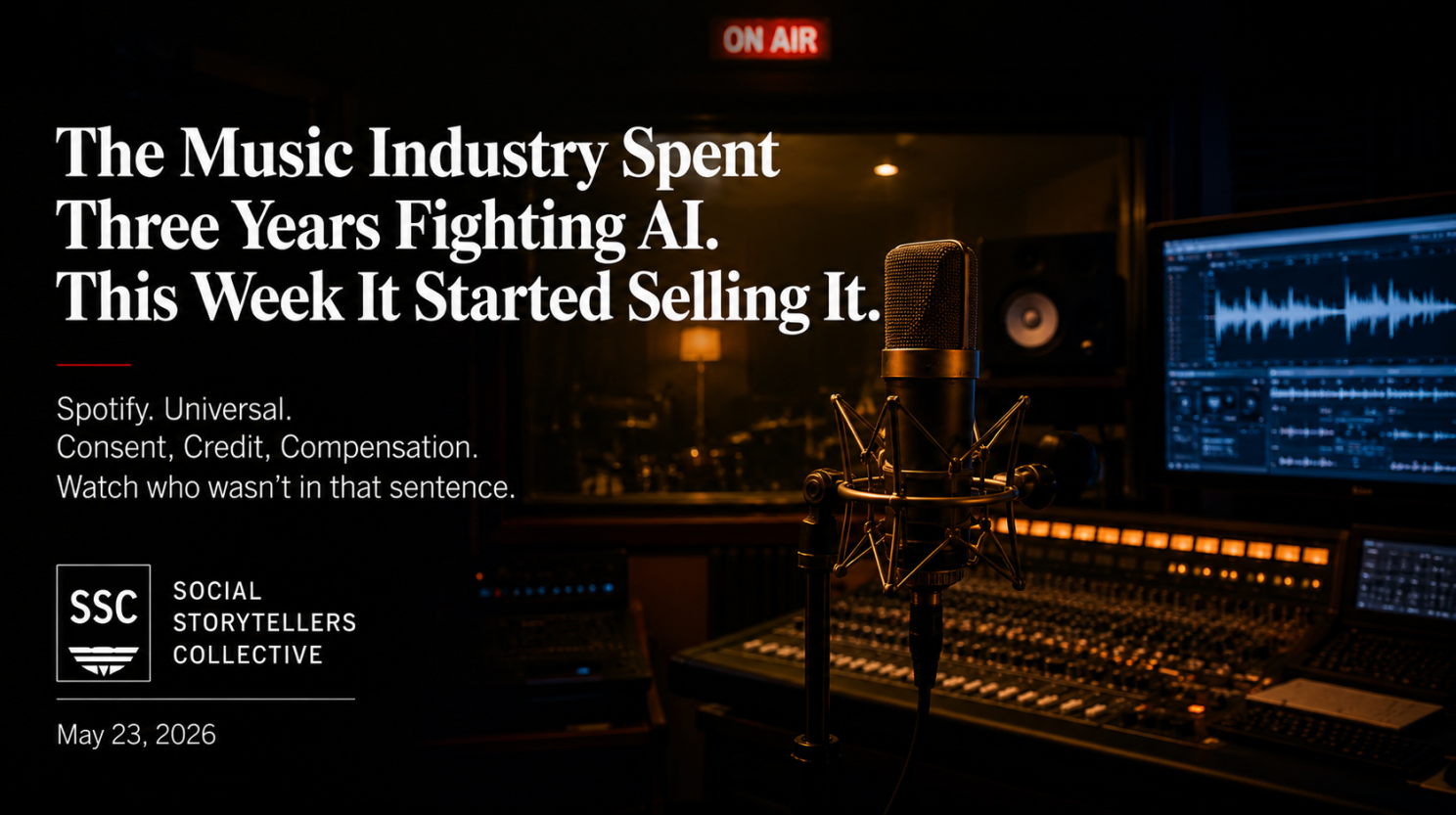
Spotify and Universal Music Group announced a landmark licensing agreement this week — Spotify Premium subscribers can now create AI-powered covers and remixes of songs from participating artists, opt-in only, with consent, credit, and compensation baked into the framework from day one. Spotify Co-Chief Alex Norström named those three words explicitly and they’re doing a lot of work, because they represent exactly what was missing from every AI music tool that came before this one. Suno and Udio trained on existing recordings without permission. Deepfakes of Tupacand Amy Winehouse have been flooding platforms with no mechanism for estates to object, get credited, or get paid. Spotify has 761 million users across 184 markets and 293 million paying subscribers. UMG is the world’s largest music rights company. The scale of what this covers is real — and so is the scale of what it doesn’t.
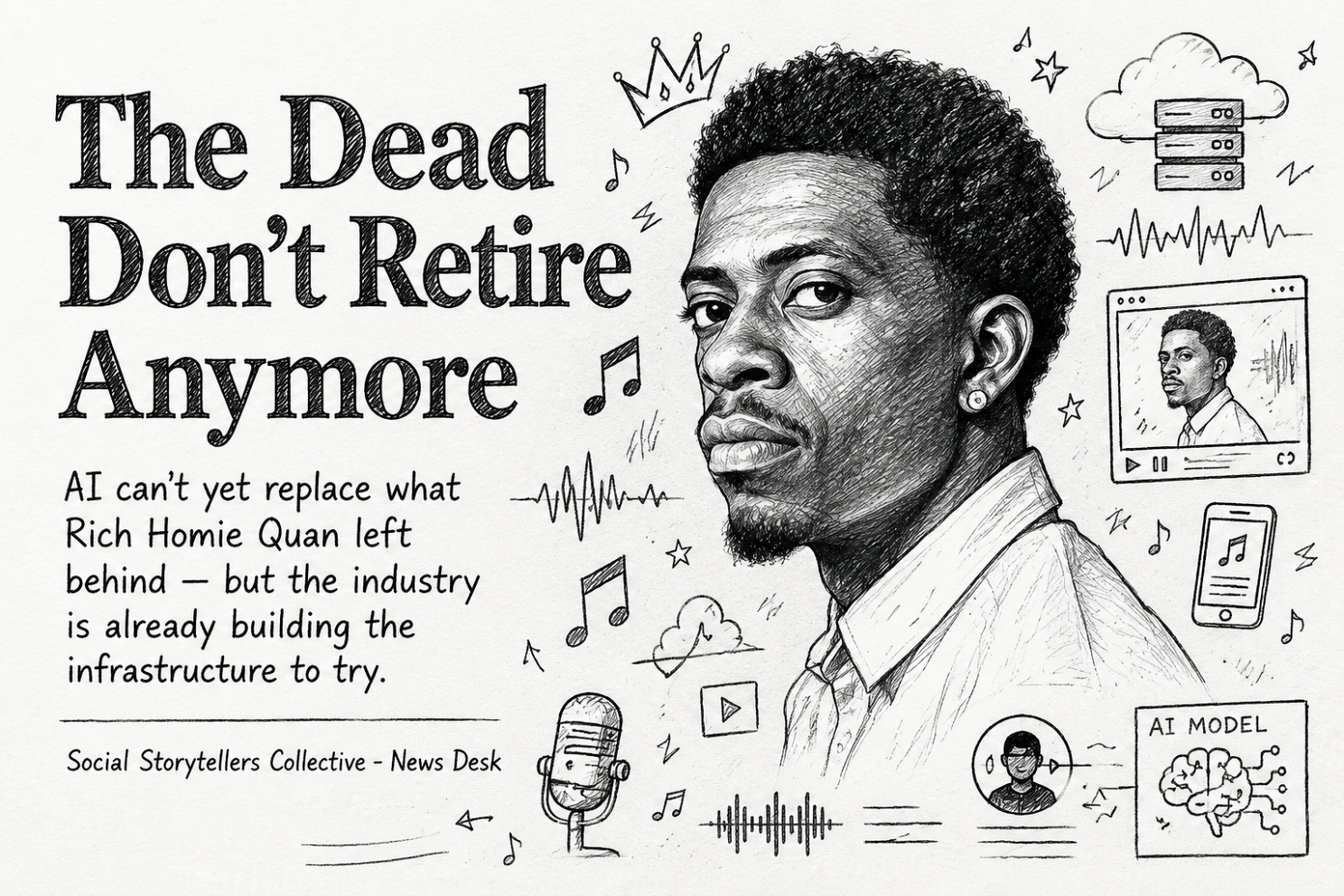
Sony Music and Warner Music Group have announced nothing comparable. Independent artists outside major label deals have no equivalent protection, no opt-in, no revenue share. The contextual spine here is the Rich Homie Quan moment earlier this week — his team released a posthumous music video using no AI at all and the internet assumed otherwise anyway. Audiences have already absorbed AI as the default assumption. The industry is now racing to own the terms of its entry. Watch who wasn’t offered a seat at that negotiation.

IMAX is exploring a sale. Shares jumped ~14% by Friday. The buyer list reads like a map of the entire American entertainment economy: Sony, Apple, Amazon, Disney, Netflix, Comcast/NBCUniversal, Sphere Entertainment, sovereign-backed investors. Every major player with a content library has a reason to want what IMAX has. IMAXgenerated a record $1.28 billion at the global box office in 2025 — more than 40% above 2024, 13% above its previous record from 2019. Domestic box office share climbed from 3.2% in 2019 to 5.2% last year. Premium screens now account for 16% of U.S. and Canadian ticket sales, up from 13% in 2021. Project Hail Mary has made nearly $670 million worldwide since its mid-March IMAX release. Eric Wold of Texas Capital Securities named the structural problem plainly — no studio can acquire IMAX without immediately facing a conflict no amount of money resolves. No competing studio would accept a rival deciding which films get the IMAX slate. The asset is valuable because it’s neutral. The moment it belongs to one studio, it stops being neutral — and that’s not a cinema story, it’s a power story.
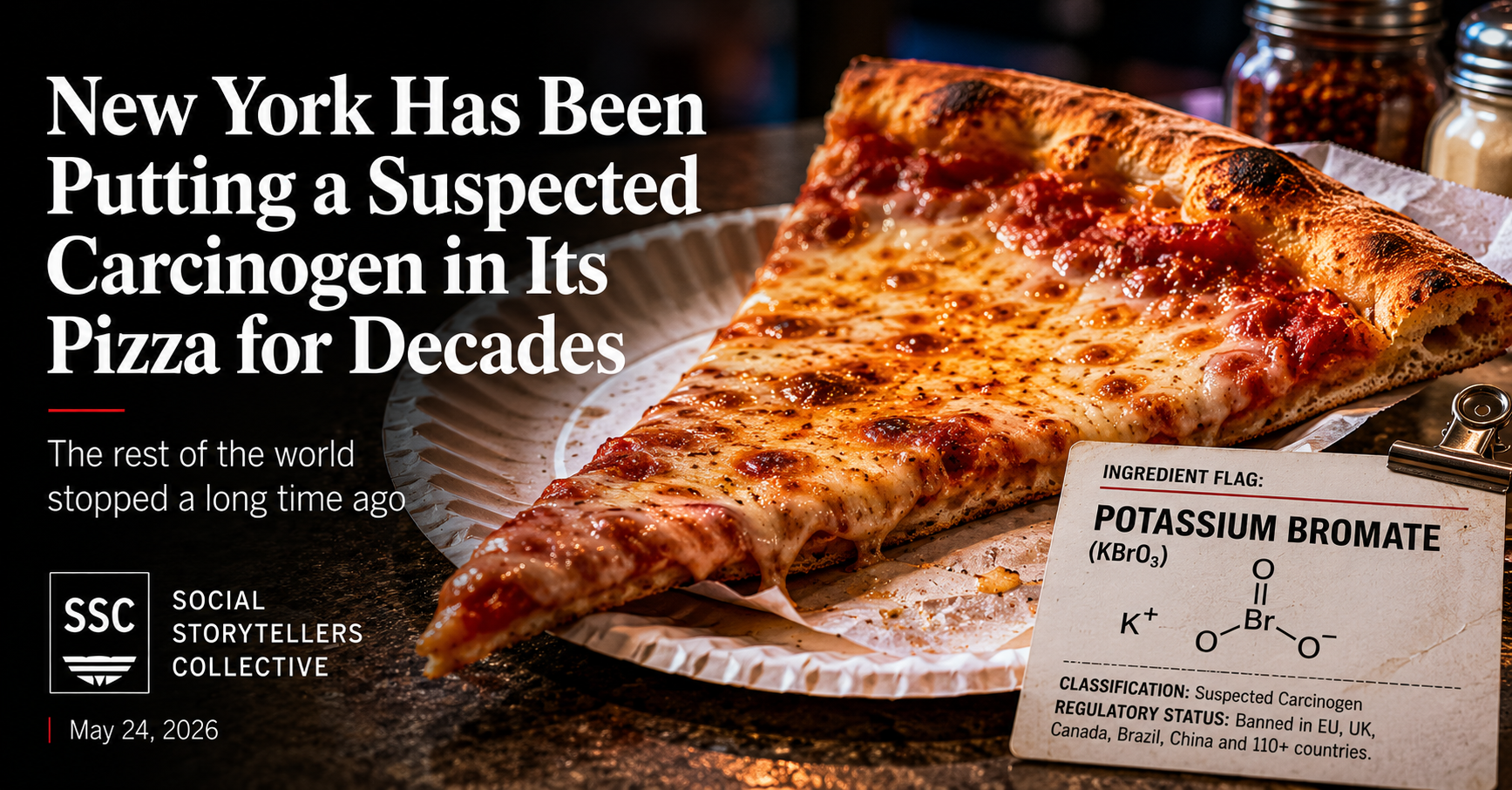
A bill banning potassium bromate has passed the New York state legislature and is sitting on Gov. Kathy Hochul’s desk. The ingredient is already illegal in the EU, UK, Canada, Brazil, and China. The FDA classified it as a potential carcinogen and still hasn’t moved to ban it federally, holding to a “generally recognized as safe” standard that puts the United States in a distinct minority position globally. Pizza historian Scott Wiener puts ~80% of New York pizza and bagel shops on bromated flour. Brooklyn pizzeria owner Salvatore Lo Duca of Lo Duca Pizza already made the switch and said the quality held — it costs a little more, but the slice survived. The argument for keeping potassium bromatehas never really been about quality. It’s been about identity, and the fear that changing the recipe changes what the food means. Here’s the thing though — Italy, which invented pizza, never used it. The mythology hardened before anyone looked at the ingredient list.

Bad Bunny didn’t just design clothes for Zara. He became a distribution system. The collection is 150 pieces long — oversized tailoring, linen separates, sun-faded Caribbean palettes — launched first through a surprise pop-up in San Juan, Puerto Rico under his real name, Benito Antonio, before expanding globally through Zara’s retail network on May 21. The campaign had been quietly embedded into the Super Bowl halftime show and the Met Gala months before the collection dropped. By the time consumers could buy it, the cultural groundwork had already been laid. Zara is not partnering with a musician — it is partnering with a cultural distribution system that moves simultaneously through music, sports, luxury fashion, and mass retail. Spotify’s most-streamed global artist across multiple years. A Calvin Kleincampaign that generated $8.4 million in media impact value within 48 hours. Adidas collaborator. Met Gala co-chair. Pieces in the Benito Antonio collection range from €29.95 to €149 — placing it within reach of the audiences whose style language the collection draws from, the ones who would never realistically access Prada or Saint Laurent. Mainstream coverage treats that accessibility as a side note. It is the central business innovation. But the tension sitting underneath all of it is the part worth sitting with: Zara’s model depends on industrial scale and speed. Bad Bunny’sidentity is built on Puerto Rican specificity, local authorship, and cultural ownership. The campaign imagery pulls from Puerto Rican street infrastructure — electrical poles, handmade textures, everyday urban environments. The supply chain behind it does not. A collection that draws its visual language from a specific place and a specific people, then manufactures it at global scale, is making a complicated cultural statement — and it deserves to be named as one.

Rob Base — born Robert Ginyard in Harlem — died May 22, 2026, four days after his 59th birthday, surrounded by family. He had been fighting cancer privately. DJ E-Z Rock — Rodney “Skip” Bryce — died in 2014 from complications of diabetes at 46. “It Takes Two” dropped in 1988 on Profile Records, sampled Lyn Collins’ “Think (About It)” — a James Brown production from 1972 — and went platinum. So did the album. The record is 38 years old and still functions less like a song you discover and more like one you inherit. It’s already playing when you arrive. Rob Baseand E-Z Rock proved at a moment when hip-hop was still being dismissed as a genre that the music could move any room, reach any crowd, hold any floor — without a major label, without waiting for the industry to decide hip-hop counted. The song outlived every designation attached to it. It’ll be played this weekend at cookouts and block parties by people who didn’t learn it so much as absorb it. That’s the only kind of permanence that actually holds.
Daily Visual Signal
A visual interpretation of the deeper systems, tensions, and structural shifts shaping the current moment — designed to translate complex societal changes into a single image.
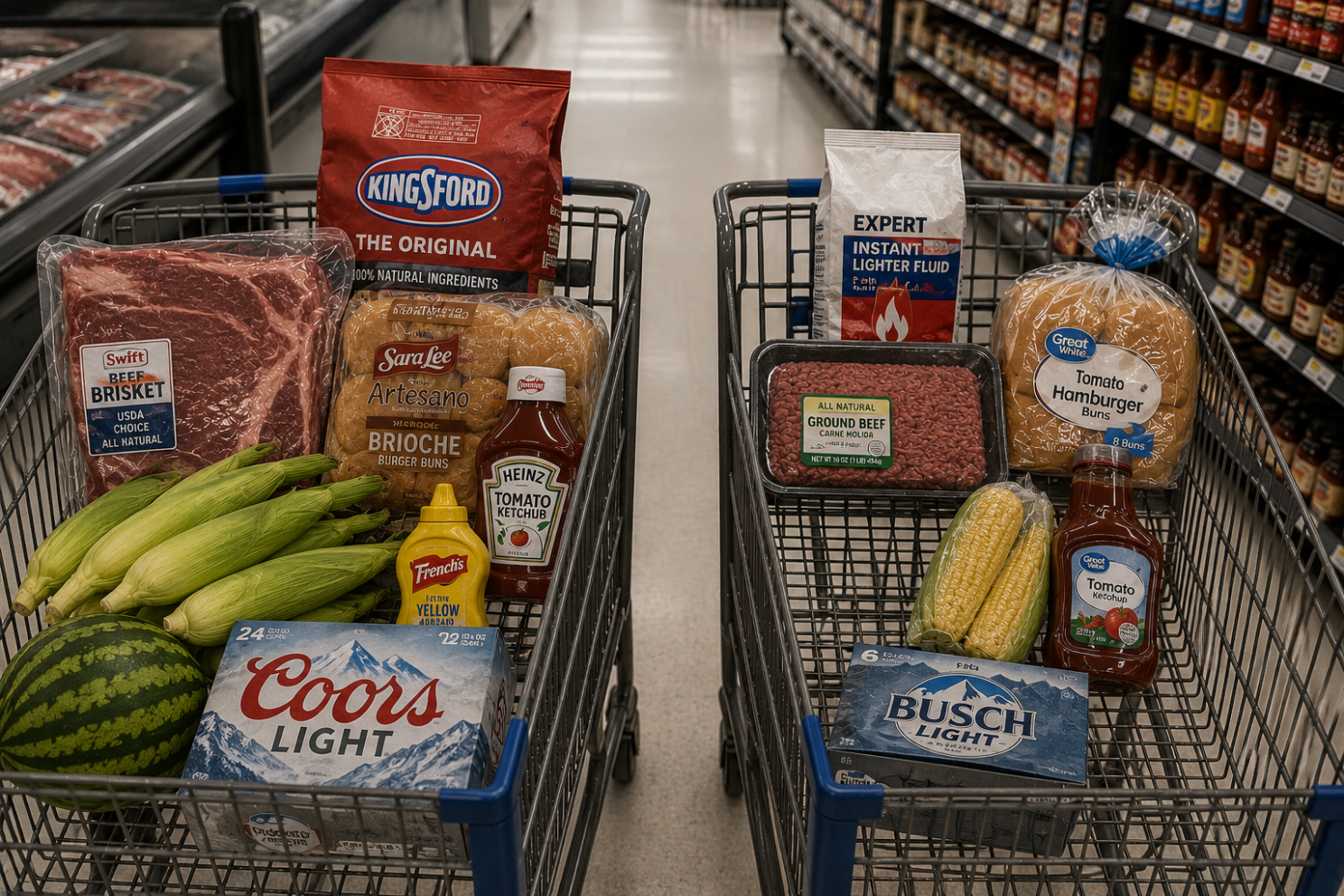
Same Holiday, Different Math: Two grocery carts. Same store. Same aisle. Same holiday weekend. One has the brisket, the name-brand buns, the full case, the watermelon. The other has ground beef where the brisket was, a six-pack instead of a case, two ears of corn instead of a bag. No caption. No price tags. Just two versions of the same cookout sitting side by side under the same fluorescent light — and everything the gap between them says about who this weekend actually belongs to.
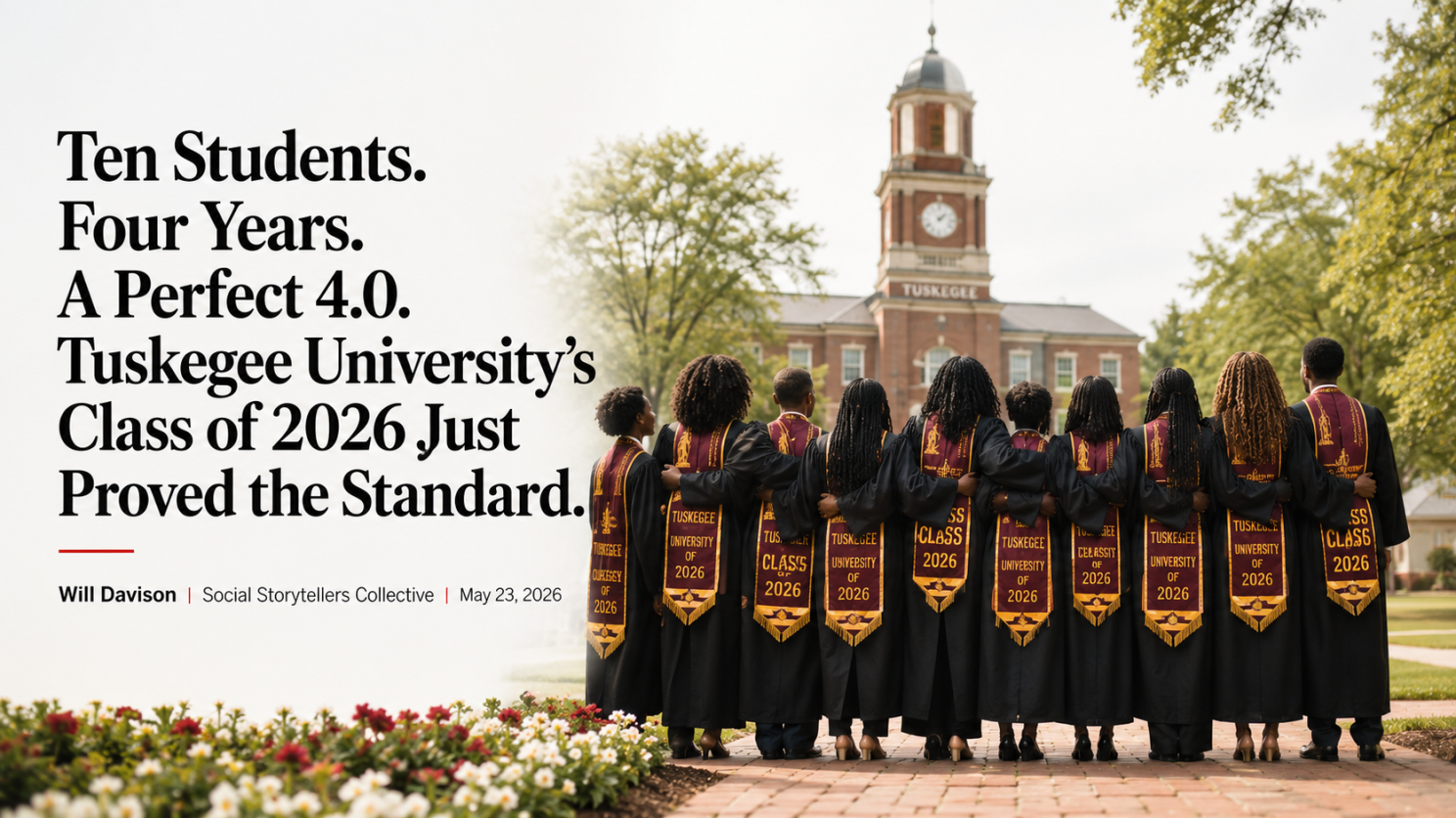
When the Tuskegee University Class of 2026 walked across the stage on May 9th, ten of them did it with something most people spend an entire undergraduate career chasing and never catch — a perfect 4.0 GPA, held from orientation to commencement without interruption. Not one semester. Not one standout year. All four. Their names: Joi Kayla Axem, Kerri Danielle Barnes, Nilajah Nyota Buchanan, Yasmin Aleksandria Davis, Alaynah Eldridge, Darren Raymond Hall, Keevion Hardamon, Charniece Elliana Jones, Brooklyn Monae Macklin, and Leah D. Saunders. Nearly 55%of the entire graduating class earned cum laude honors or above. More than 300 undergraduates walked — 40% of them stepped directly into full-time roles in their chosen fields. Over 70% had a clear next step secured between full-time employment, graduate school, and military commissioning. More than 75% completed at least one internship before graduating, most completing two or more. Twenty graduates were commissioned as U.S. military officers the day before commencement — through the only ROTC program at an HBCU offering training in all five branches of the armed forces, including the Space Force. Fifteen students graduated with private pilots’ licenses through a new aviation science program — a direct lineage from the Tuskegee Airmen. Tuskegee University is ranked No. 1 in Social Mobility among regional universities in the South by U.S. News & World Report and holds the Carnegie Foundation’s Opportunity College designation, awarded in 2025. More than 62% of first-year students receive need-based financial aid. This is not a school where students arrive with every advantage already in place. Which is exactly what makes ten consecutive 4.0s more remarkable, not less. Say their names again. All ten.
The HBCU Ascent – Starting Monday, May 25th – Part 2 of The Degree Economy
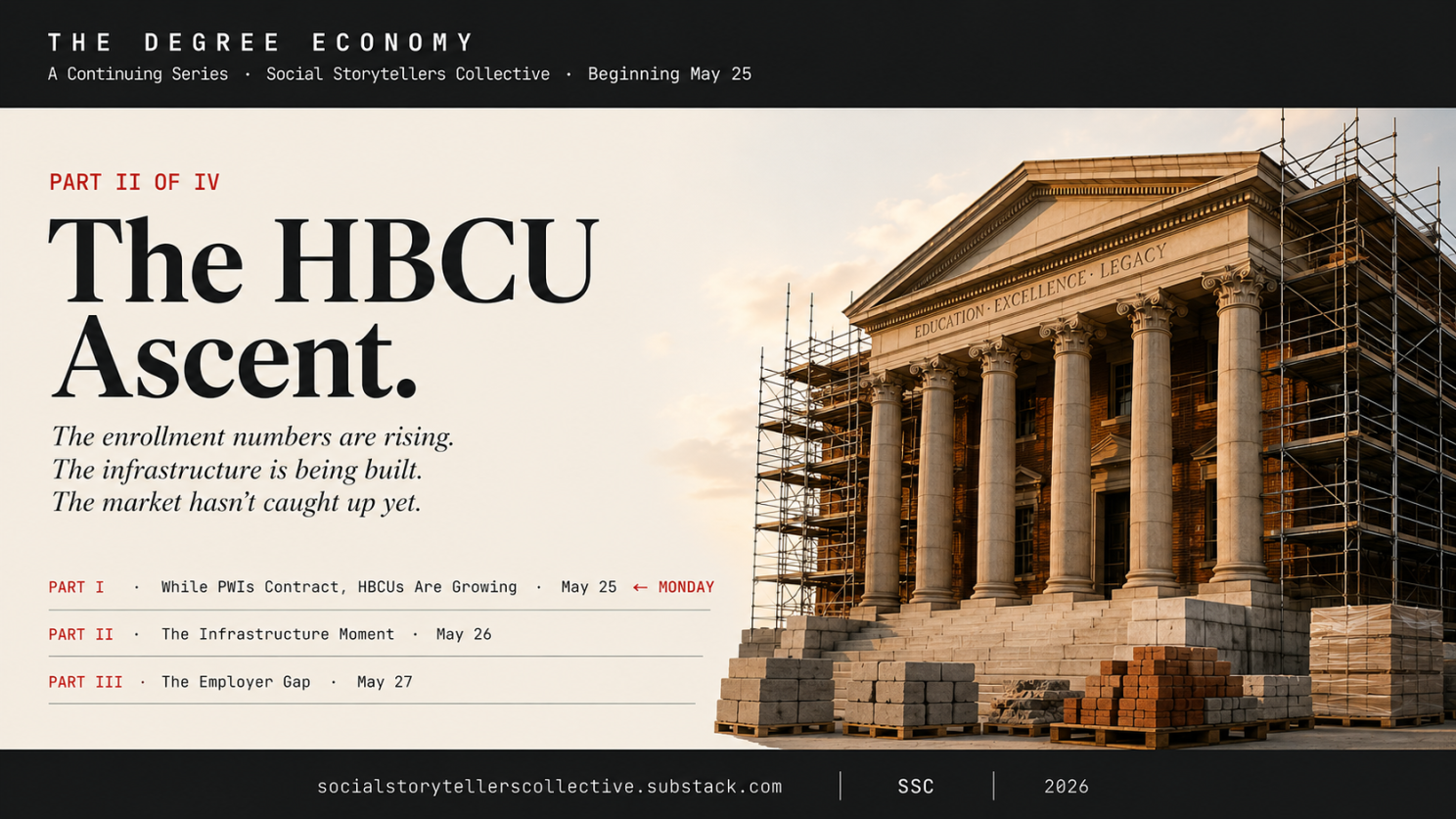
Something is happening at HBCUs that the mainstream narrative hasn’t caught up to yet. Enrollment is climbing. Research infrastructure is being built. The institutions the system has historically underfunded are growing — in the middle of a moment when a lot of other schools aren’t.
But momentum is not the same thing as permanence. The employer pipelines aren’t there. The recruiting infrastructure hasn’t kept pace. The starting salary outcomes don’t yet reflect what the talent pool is producing. The growth is real. The structures that would lock it in are still being built.
SSC spent three days making the argument in full.
Part I — While PWIs Contract, HBCUs Are Growing The enrollment numbers tell a story the headline writers keep missing.
Part II — The Infrastructure Moment The HBCU Research Institution launch is not symbolism. It is the structural investment that makes the growth mean something ten years from now.
Part III — The Employer Gap More students. More talent in the pipeline. The market is not absorbing it proportionally — and that gap is the next fight.
Three pieces. One through line. The window is open. The question is whether the investment follows before it closes.
Everything moving today is moving toward fewer hands. The cookout costs more because of decisions made in energy markets, trade corridors, and supply chains — rooms most families were never invited into. The music catalog, the premium screen, the ingredient list — all of it narrowing, all of it being claimed by someone. The University of Michigan put a number on how that feels: 44.8. The lowest it has ever been. And yet ten students at Tuskegee just walked across a stage with a perfect record, in a school where 62% of first-years need financial aid to be there at all. The consolidation is real. So is what gets built inside it. If the holiday ritual costs this much to maintain and everything is moving toward fewer hands — what exactly are we commemorating this weekend.
More on Monday!
-SSC