
HIV stigma is not a Black problem. It is a human one. But the specific ecosystem in which Ekubo’s silence was interpreted — Nigerian digital culture, the diaspora, the comment sections that run across WhatsApp and X and TikTok — is the one SSC covers. And that ecosystem has a particular history worth naming.
Alexx Ekubo’s last Instagram post was in December 2024. He was in his car, talking about a masquerade he had encountered in his village, visibly happy, clearly proud of his culture. That was the last time millions of people who followed him saw him choose to be seen.
He did not explain the silence that followed. He did not owe anyone an explanation. He was fighting stage 4 metastatic kidney cancer — privately, deliberately, on his own terms — at Evercare Hospital in Lagos. He had prepared his will. He bore what his family later described as “remarkable strength, unwavering faith, and enduring hope.” He died on May 11, 2026. He was 40 years old.
By the time his death was announced, the internet had already spent months deciding what was wrong with him.
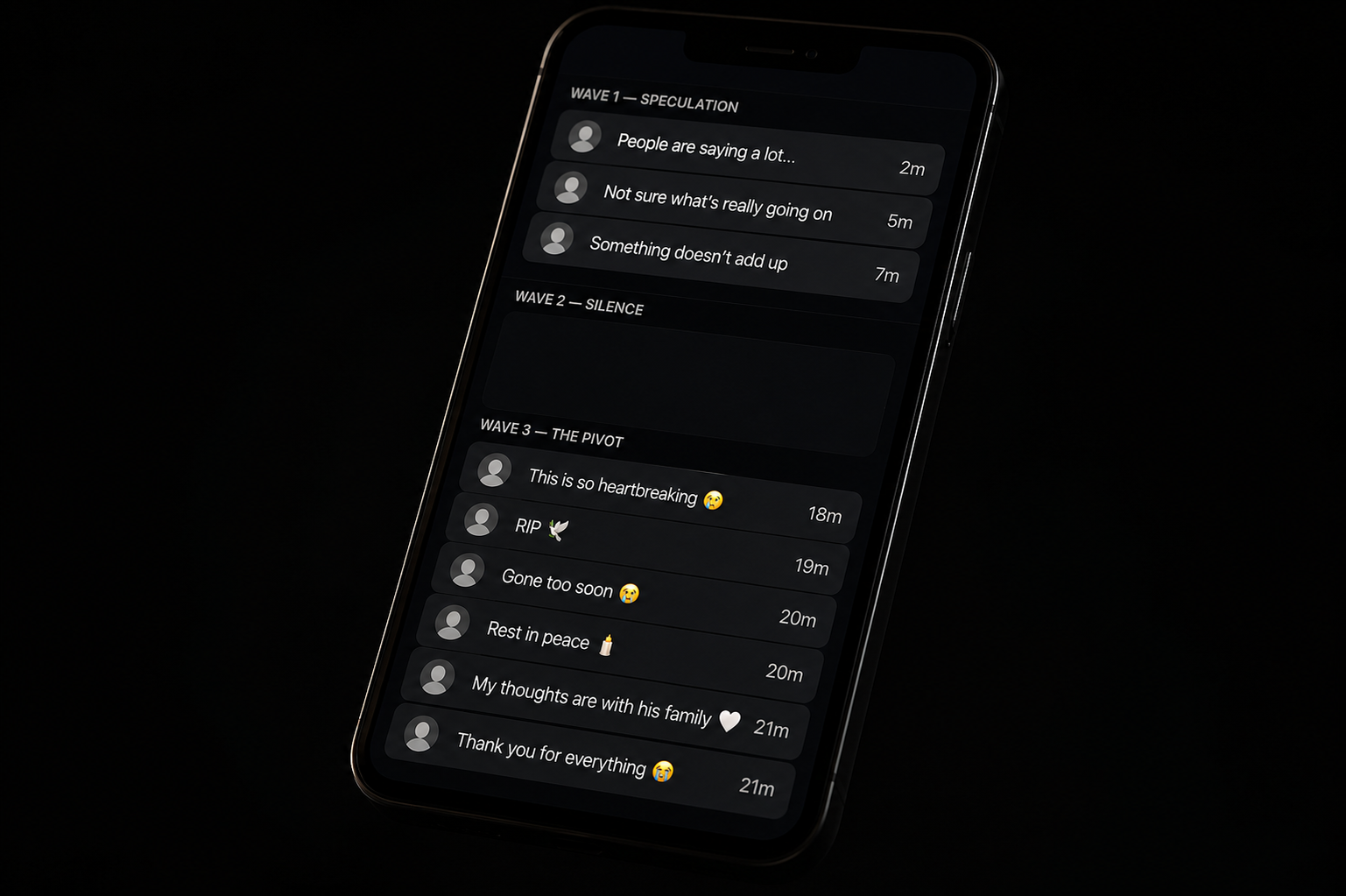
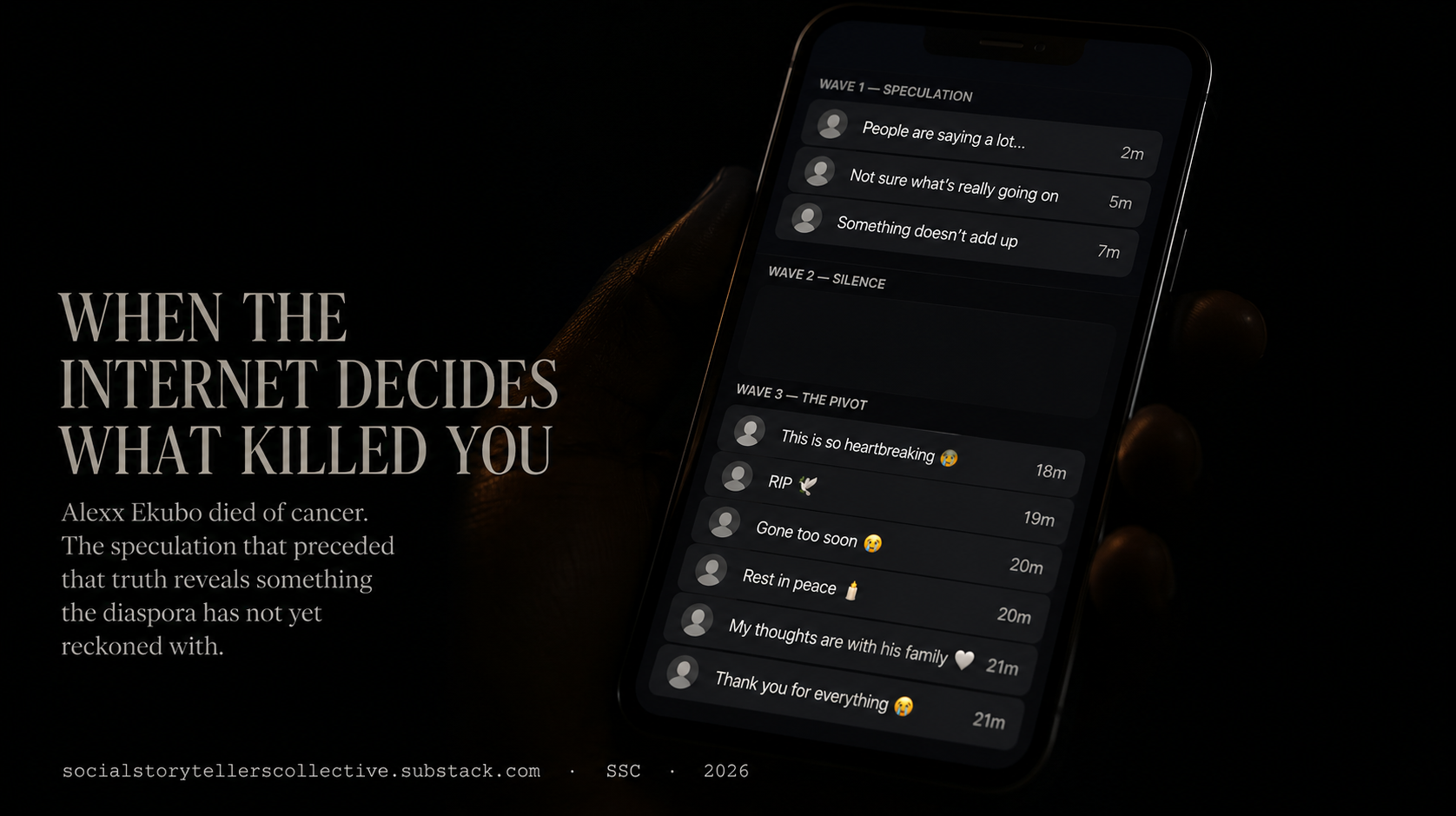
The speculation began the way it always begins. Absence. A noticeably slimmer frame in a video that surfaced in May 2025 — Ekubo interacting with children, subdued, visibly changed from the man his audience knew. The video spread with the caption: “Alex Ekubo spotted for the first time since disappearing from social media.” What followed was not concern organized into prayer. It was concern organized into theory. And the theory the Nigerian digital ecosystem reached for first — not universally, but consistently enough to name — was HIV/AIDS.
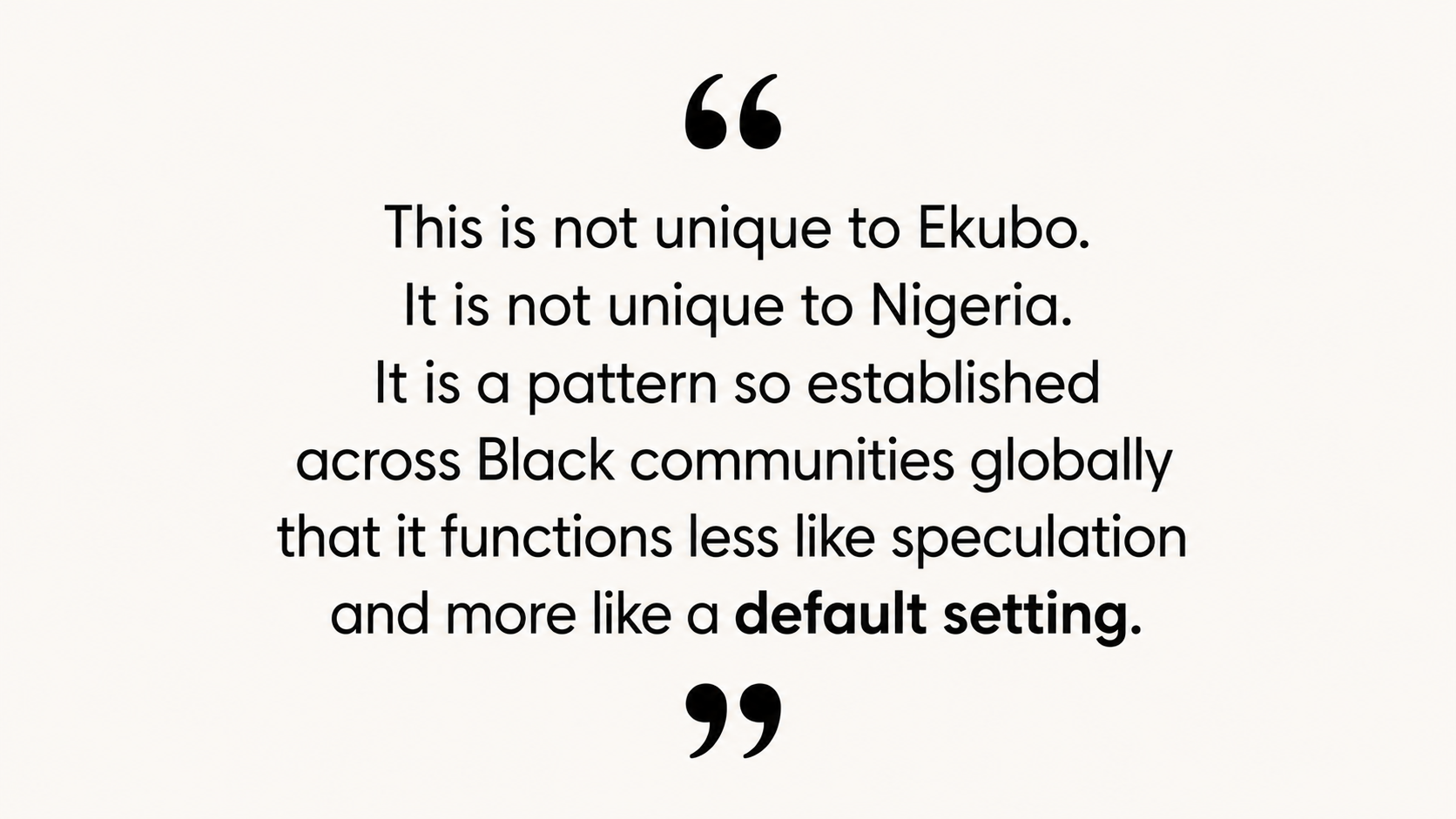
This is not unique to Ekubo. It is not unique to Nigeria. It is a pattern so established across Black communities globally that it functions less like speculation and more like a default setting. A Black male celebrity withdraws from public life. His body changes visibly. The silence deepens. And the first narrative that circulates — in WhatsApp groups, in comment sections, in the coded language of “we know what it really is” — is HIV.
Chadwick Boseman experienced a version of this. In April 2020, four months before his death, he posted an Instagram video promoting “Operation 42,” a PPE distribution initiative for Black communities disproportionately impacted by COVID-19. The comments ranged from concern to mockery. His gaunt appearance triggered public speculation about his health that he never addressed publicly and was never obligated to. He had been quietly filming some of Hollywood’s most demanding productions while undergoing cancer treatment since 2016. The internet decided what it saw before it knew what it was looking at.
The difference between Boseman and Ekubo is geography and the specific texture of the stigma. In Nigeria — the country with the second highest HIV burden in the world after South Africa — roughly half the population carries HIV-related stigma, according to a national survey of more than 56,000 people. That number is not abstract. It is the operating environment in which a sick man’s silence gets interpreted. It shapes what people think when they see a body change. It determines which diagnosis gets whispered first.
HIV stigma in Nigeria and across the diaspora is not simply a cultural failure. It is a structural one. The epidemic in sub-Saharan Africa has historically been framed — by governments, by religious institutions, by media — as a consequence of moral failure. A disease of the irresponsible. Of the promiscuous. In communities where sexuality itself is layered with shame and where LGBTQ identity is criminalized, HIV carries a specific additional weight: it signals not just illness but a life that needed to be hidden. That framing has never been adequately dismantled. It has simply migrated — from whispered conversation into comment sections, from neighborhood gossip into TikTok speculation, from private shame into public entertainment.
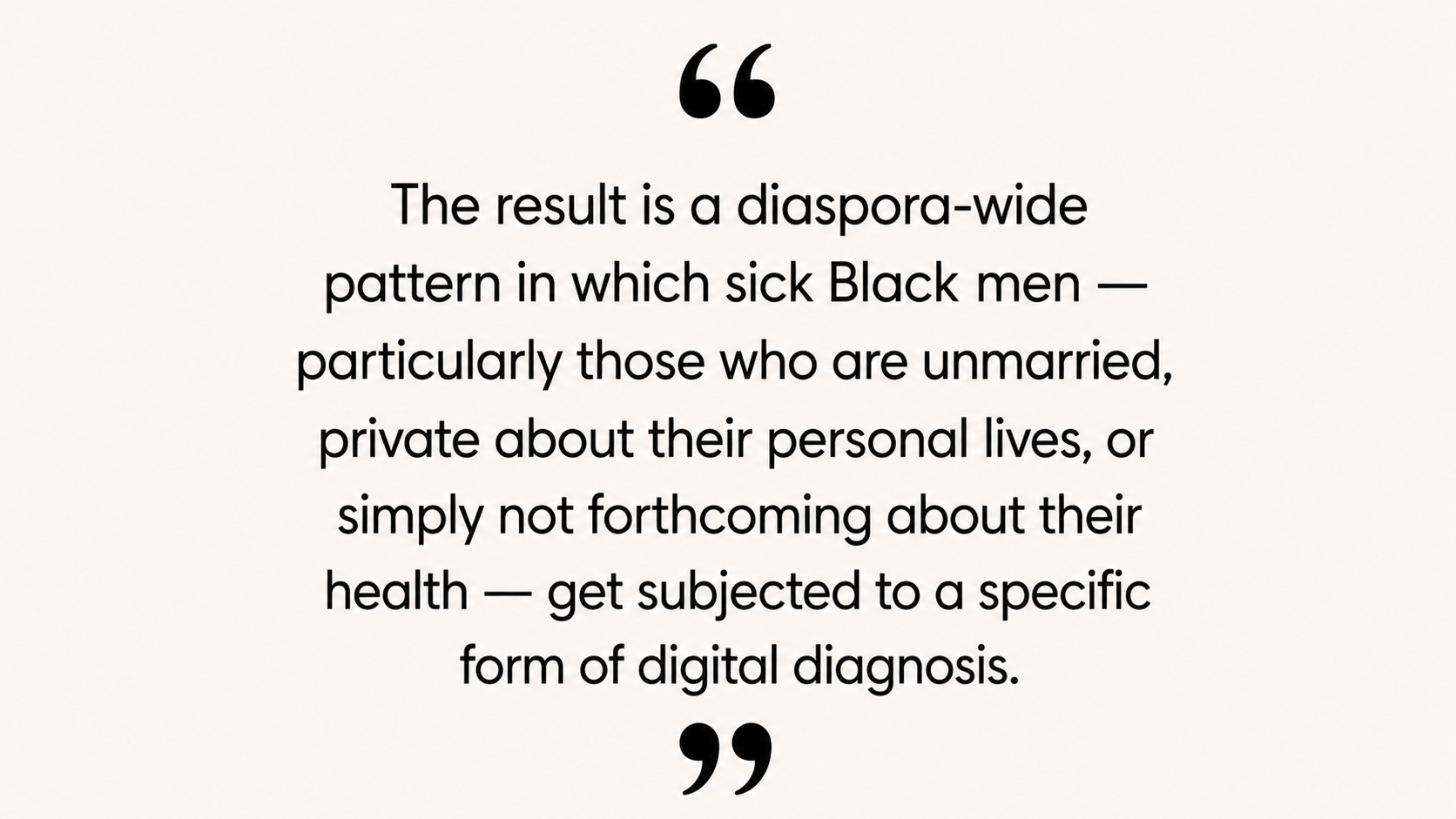
The result is a diaspora-wide pattern in which sick Black men — particularly those who are unmarried, private about their personal lives, or simply not forthcoming about their health — get subjected to a specific form of digital diagnosis. The silence that in any other context would be respected as privacy becomes, in this ecosystem, evidence. The weight loss that in any other context would prompt quiet concern becomes proof of a story someone has already written.
Ekubo had broken off a high-profile engagement in 2021. He was known to be private. He was a man whose body changed publicly while he chose to say nothing. In the absence of information, the internet filled the void with the one narrative it had already decided fit.
The grief pivot is the part nobody wants to talk about.
The same accounts that speculated — that trafficked in “we know what it really is” energy — are now posting RIP graphics. Crying emojis. “He deserved better.” Tributes to a man whose privacy they spent months attempting to violate. The comment that circulated most widely in the days after his death made the point directly: “Nobody asked if he was okay. Nobody asked what battles he was fighting silently. People laughed while a human being was hurting. Now the same social media is filled with RIP messages and emotional tributes.”
This is not hypocrisy in the ordinary sense. It is something more structurally embedded. Social media has created an environment in which celebrity illness is a content category — something to be decoded, debated, and distributed — and celebrity death is a mourning category, in which the same audience that generated the content pivots to grief without accountability for what it produced. The two modes are treated as separate. They are not. The speculation and the tribute are part of the same relationship — a parasocial entitlement that grants audiences the right to narrate a person’s life, and then the right to narrate their death, without ever having been invited into either.
But here is the argument that goes further — and has to be made.
Ekubo had cancer. That fact has become the basis of the diaspora’s outrage on his behalf. He deserved better, people are saying, because the speculation was wrong. Because the diagnosis was cancer, not HIV. Because he was innocent of what the internet accused him of.
The logic underneath that defense is worth sitting with. It suggests that the speculation would have been more acceptable — or at least more forgivable — if the diagnosis had been HIV. That his dignity in death is retroactively secured by the revelation that he had the right disease. That the people defending him now would have defended him equally if the illness had been different.
They would not have. And that is the problem.
There are people dying privately from HIV right now — across Nigeria, across the diaspora, across the world — who are making the same choice Ekubo made. Choosing silence. Choosing privacy. Bearing their illness with strength and faith and the hope that their story will eventually be theirs to tell. They are not dying privately because they are ashamed of something they did wrong. They are dying privately because the environment the diaspora has created — the comment sections, the WhatsApp groups, the coded speculation, the “we know what it really is” energy — has made disclosure feel like a second diagnosis. A social death layered on top of a physical one.
HIV does not only come from irresponsibility. It comes from trust — from a partner who did not know their status, from a healthcare system that failed to provide adequate education, from a single moment that cannot be undone. It comes from a blood transfusion. From a needle shared in a moment of desperation. From a marriage in which one person was faithful and the other was not. From the ordinary, human vulnerability that none of us are exempt from.
The stigma that treats HIV as evidence of a moral failing — that reaches for it as the first explanation when a Black man goes quiet and loses weight — does not only harm the people it speculates about. It harms the people living with HIV who watch that speculation and understand exactly what disclosure would cost them. It keeps people away from testing because a positive result feels less like a medical diagnosis and more like a verdict. It keeps people away from treatment because treatment requires acknowledgment, and acknowledgment requires a community that will not make it worse.
We do not get to defend Ekubo’s dignity while maintaining the framework that would deny that same dignity to someone whose diagnosis was different. The defense of his privacy cannot be conditional on what the illness turned out to be. Either a person deserves to be sick on their own terms — without the internet narrating the cause, without speculation dressed as concern, without the “we know what it really is” certainty of strangers — or they do not. There is no version of dignity that only applies to the diseases we have collectively decided are respectable.
The public health stakes of this pattern are not theoretical. When HIV is consistently invoked as the first explanation for a sick Black celebrity — when the speculation precedes any diagnosis, when it functions as an assumption rather than a question — it reinforces the stigma that keeps people from getting tested, from disclosing their status, from seeking treatment. Nigeria has made real progress in HIV prevention and treatment over the past two decades. But stigma remains one of the primary barriers to voluntary testing and disclosure. The fear of being seen the way Ekubo was seen — the fear of having your illness narrated publicly, in the worst possible terms, by people who do not know you — keeps people away from clinics and keeps diagnoses private until they cannot be concealed.
Ekubo kept his cancer private because social media had become, in his own words relayed by a colleague, too toxic for him. He chose silence because the alternative — offering himself to the internet’s interpretation — was a burden he decided not to carry. That is a reasonable human decision. It is also a damning indictment of the digital environment that made the silence necessary.
Boseman’s death produced a measurable public health response. Colon cancer screening searches increased by 707% in the weeks following his announcement. His death — and the way he had chosen to live inside it — became a public health intervention without anyone planning it that way. The research that followed documented what public health professionals have long known: when a beloved public figure’s diagnosis becomes public, communities that share their demographics seek information, get screened, and make appointments.
The inverse is also true. When speculation precedes diagnosis — when the first story is HIV, when the framework is shame rather than solidarity — it does not mobilize communities toward healthcare. It mobilizes them toward judgment. It deepens the silence that the stigma already enforces.
Ekubo died of cancer. The internet decided it was something else. The grief that followed was real. But grief without accountability for what preceded it is not a reckoning. It is a reset — a return to baseline before the next celebrity’s silence becomes the next comment section’s content.
He bore his pain, his family said, with remarkable strength. He believed his testimony would one day be shared with the world.
This is part of that testimony. Not the part he chose. The part the internet wrote for him while he was still alive.