
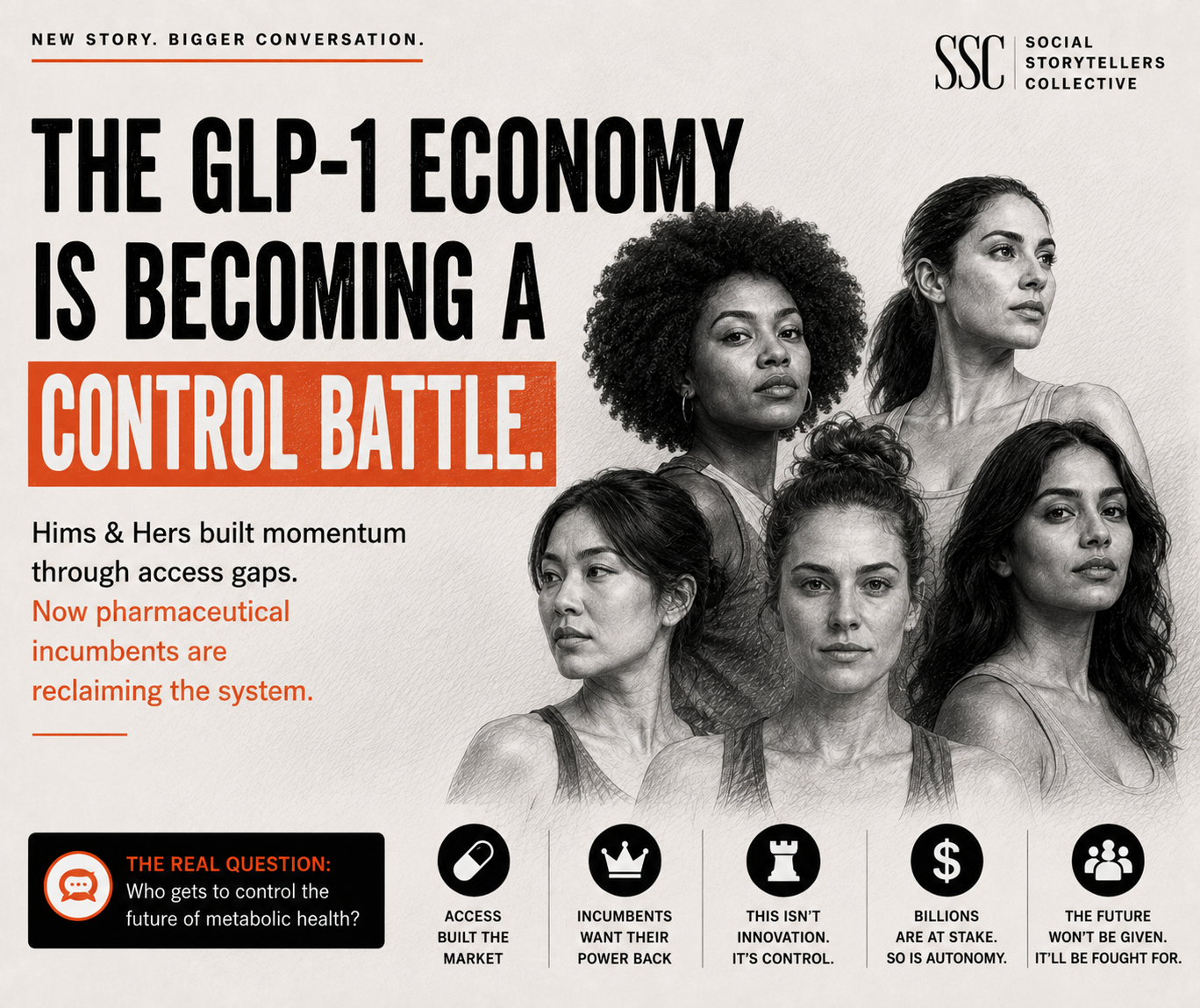
Hims & Hers reported quarterly revenue of $608.1 million this week, a 111% increase year over year, while also posting a surprise quarterly loss that immediately triggered a double-digit stock decline.
The company’s subscriber base climbed to roughly 2.6 million users as investors simultaneously questioned whether the telehealth platform can maintain momentum now that major pharmaceutical companies are restoring supply of blockbuster GLP-1 weight-loss medications. The reaction illustrated a larger shift already underway across the wellness economy: the transition from scarcity-driven access disruption back toward institutional control.
For much of the past two years, telehealth platforms including Hims & Hers benefited from extraordinary consumer demand surrounding GLP-1 medications such as Ozempic, Wegovy, and Mounjaro. Supply shortages created openings for compounding pharmacies, digital wellness platforms, subscription models, and alternative distribution systems that allowed consumers to bypass portions of the traditional pharmaceutical and insurance infrastructure. The rapid expansion was not solely about weight loss. It reflected consumer frustration with cost barriers, access restrictions, and slow-moving health systems. That environment has now shifted.
Pharmaceutical manufacturers are regaining production stability while simultaneously tightening enforcement around compounding practices and distribution relationships. As shortages ease, the companies controlling patents, regulatory approval, and insurance negotiations regain leverage over pricing and distribution. Hims & Hers therefore faces a structural challenge larger than quarterly earnings volatility. The company succeeded partly because the established system temporarily failed to meet demand. Its long-term viability depends on whether consumers continue prioritizing convenience and digital access even after institutional supply stabilizes.
The economics surrounding GLP-1 treatments explain why the fight is intensifying. Analysts project the global obesity treatment market will exceed $100 billion annually within the next decade, with some estimates rising substantially higher if long-term metabolic treatments become normalized. That scale transforms weight-loss medication from a pharmaceutical category into an ecosystem touching insurance, food consumption, fitness, wellness branding, workplace health costs, and even hospitality behavior. Companies are competing not simply for prescriptions but for long-term behavioral influence.
The cultural dimension matters equally. GLP-1 medications have already reshaped conversations surrounding body image, self-optimization, aging, and wellness consumption. Restaurants, snack brands, alcohol companies, and fitness platforms are increasingly analyzing how appetite suppression and changing consumer habits could affect spending patterns. Analysts have projected that widespread GLP-1 adoption could significantly alter food industry demand over time. What began as a medical treatment is becoming an economic variable influencing multiple sectors simultaneously.
Hims & Hers occupies a revealing position inside that transition because the company sits between traditional health care systems and digitally native consumer behavior. Its success depends partly on whether consumers continue viewing wellness as a service relationship rather than solely a clinical interaction. Telehealth companies understand that modern consumers increasingly expect convenience, personalization, and subscription-style continuity across nearly every aspect of life, including medicine. Supply chain control remains the more durable form of market power.
Much mainstream coverage frames the GLP-1 market primarily around hype cycles, celebrity culture, or quarterly stock reactions. The deeper structural issue involves who ultimately controls access to one of the fastest-growing health categories in the world. The battle is no longer only about the drugs themselves. It is about whether the future of wellness operates through flexible consumer platforms or through tightly regulated institutional systems that determine who receives treatment, at what cost, and under whose terms.