
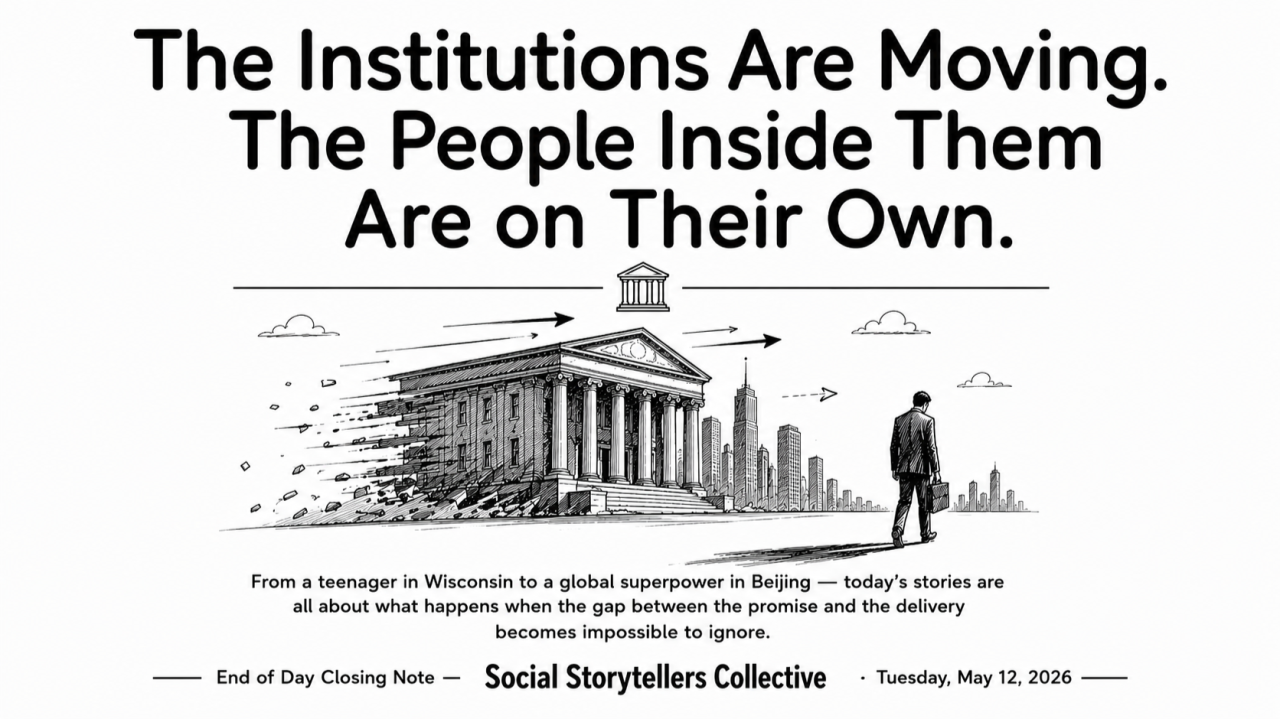
The Institutions Are Moving. The People Inside Them Are on Their Own. – May 12, 2026
We are building something new. SSC Systems & Signals is a closed LinkedIn group for professionals who want to go beyond the daily coverage — brain trust conversations, emerging trend analysis, and the kind of structural discussion that doesn’t fit in a comment section. We are just getting started, which means you get to help shape what it becomes. Early members always matter most. Request to join: linkedin.com/groups/20390015
Today’s note is full of institutions reorganizing around their own survival while the people inside them absorb the consequences. Companies restructuring at record profit. Universities compressing education to chase a job market AI is already eliminating. Cities growing faster than they can distribute what they build. Governments expanding faster than anyone can track them. Markets promising booms that haven’t arrived.
But today also arrived with a reminder that the most consequential commitments are not made in boardrooms or quarterly earnings calls. Sometimes they are made by a toddler who meant every word.
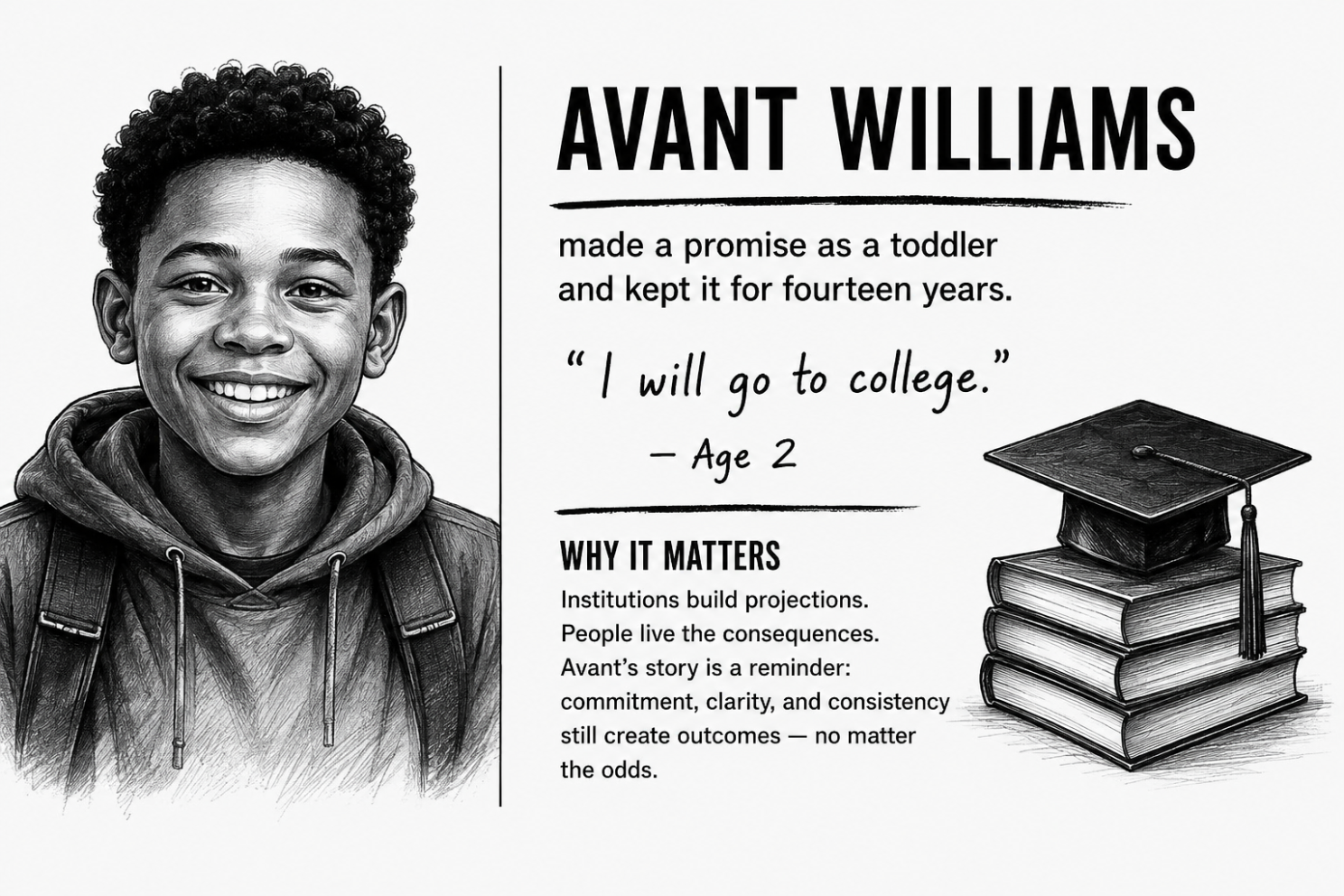
Avant Williams was not yet old enough to remember the exact moment he made the promise. But his family remembers. As a small child in Wisconsin, he told his grandmother that one day — when he was old enough — he would take her to prom. This spring, at 14 years old, he kept it. He put on his suit. She got dressed up. They walked in together. Fourteen years between the promise and the delivery, and not one day of forgetting. In a week full of institutions that built projections they couldn’t meet, Avant Williams met his. Some promises hold. The people who keep them are worth paying attention to.
Those are the stories that remind you why the systems matter in the first place. Now here is what the systems are actually doing.
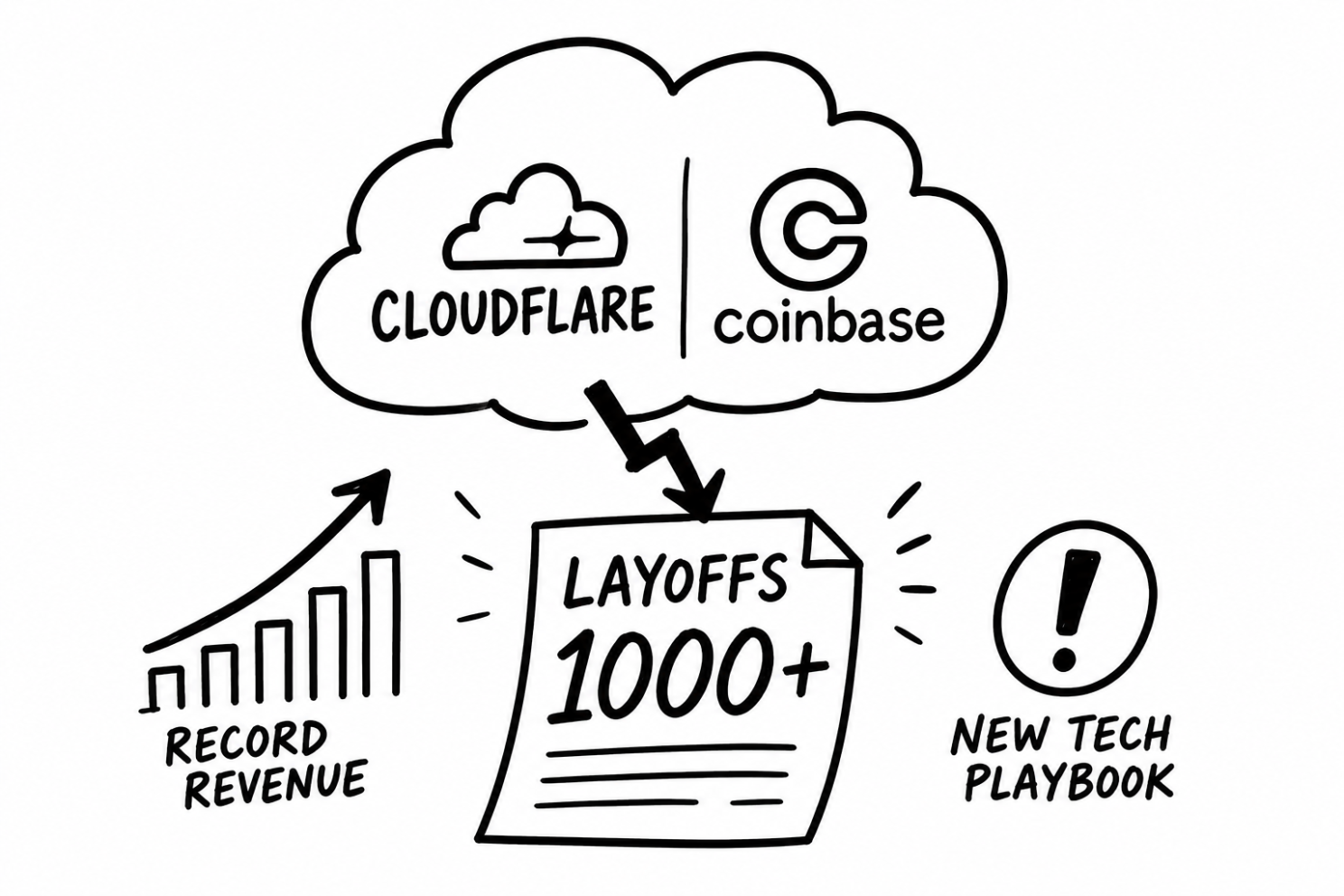
The technology story today is hiding inside a booming earnings report. Cloudflare and Coinbase Are Booming. They’re Also Cutting Hundreds of Jobs. Cloudflare just announced its largest layoff in company history during its highest revenue quarter ever — in the same earnings report. Coinbase cut roughly 14% of its workforce while remaining one of the strongest-positioned companies in crypto. Neither company is collapsing financially. Both are restructuring around a future where AI allows them to operate with fewer people while maintaining — or increasing — output. The question is no longer whether AI will impact labor. It is what happens when profitable companies simply decide they do not need as many workers anymore.
The education system is running the same calculation. Are Universities Adapting to AI — or Adapting Themselves Out of Their Own Purpose? The UNC system approved accelerated three-year degrees across 16 public universities, compressing the traditional 120-credit degree to 90 credits in the name of affordability and workforce readiness. The timing is its own argument. Stanford research confirms a 13% decline in entry-level hiring for AI-exposed roles since generative AI emerged. The biggest tech firms cut early-career hiring by 25% from 2023 to 2024. Entry-level postings calling for AI skills nearly doubled year over year. Universities are compressing exactly the education — cross-disciplinary thinking, ethical reasoning, creative synthesis — that AI cannot replicate, in response to market signals pointing toward the jobs AI is already eliminating. That is not workforce readiness. It may be the wrong answer to the right question.
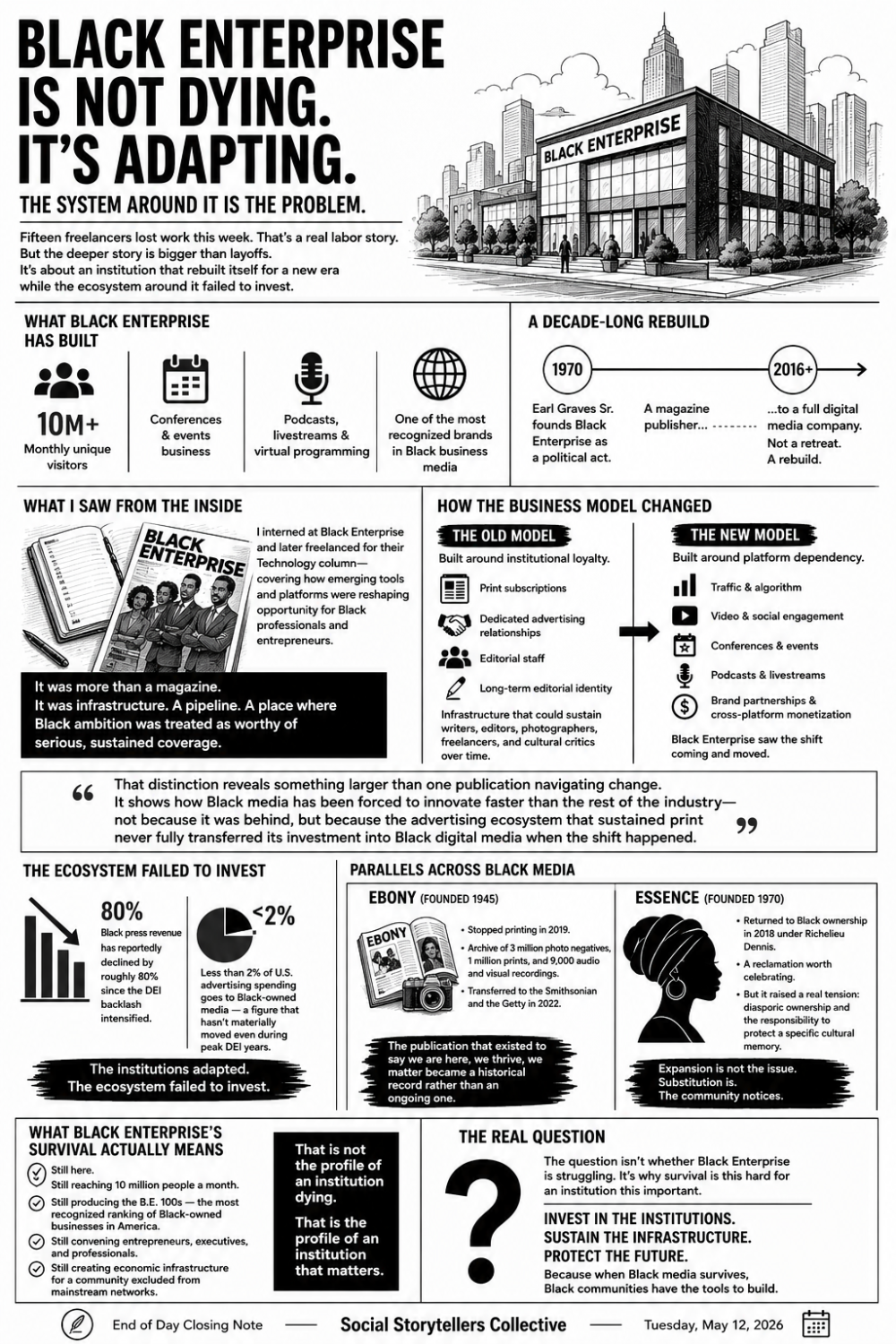
The media industry is navigating the same ecosystem pressure — but with a longer history behind it. Black Enterprise Was Already Telling The Story. Earl Graves Sr. founded Black Enterprise in 1970 as a political act. The publication completed its transition from print to digital by 2016 and today reaches more than 10 million monthly unique visitors. The fifteen freelancers who lost work this week are a real labor story. But they are not evidence of an institution in decline. They are evidence of an institution making hard structural decisions inside an advertising ecosystem that has directed less than 2% of US ad spending toward Black-owned media — even during the peak years of corporate DEI commitments. The institution didn’t fail to adapt. It adapted. The ecosystem failed to invest.
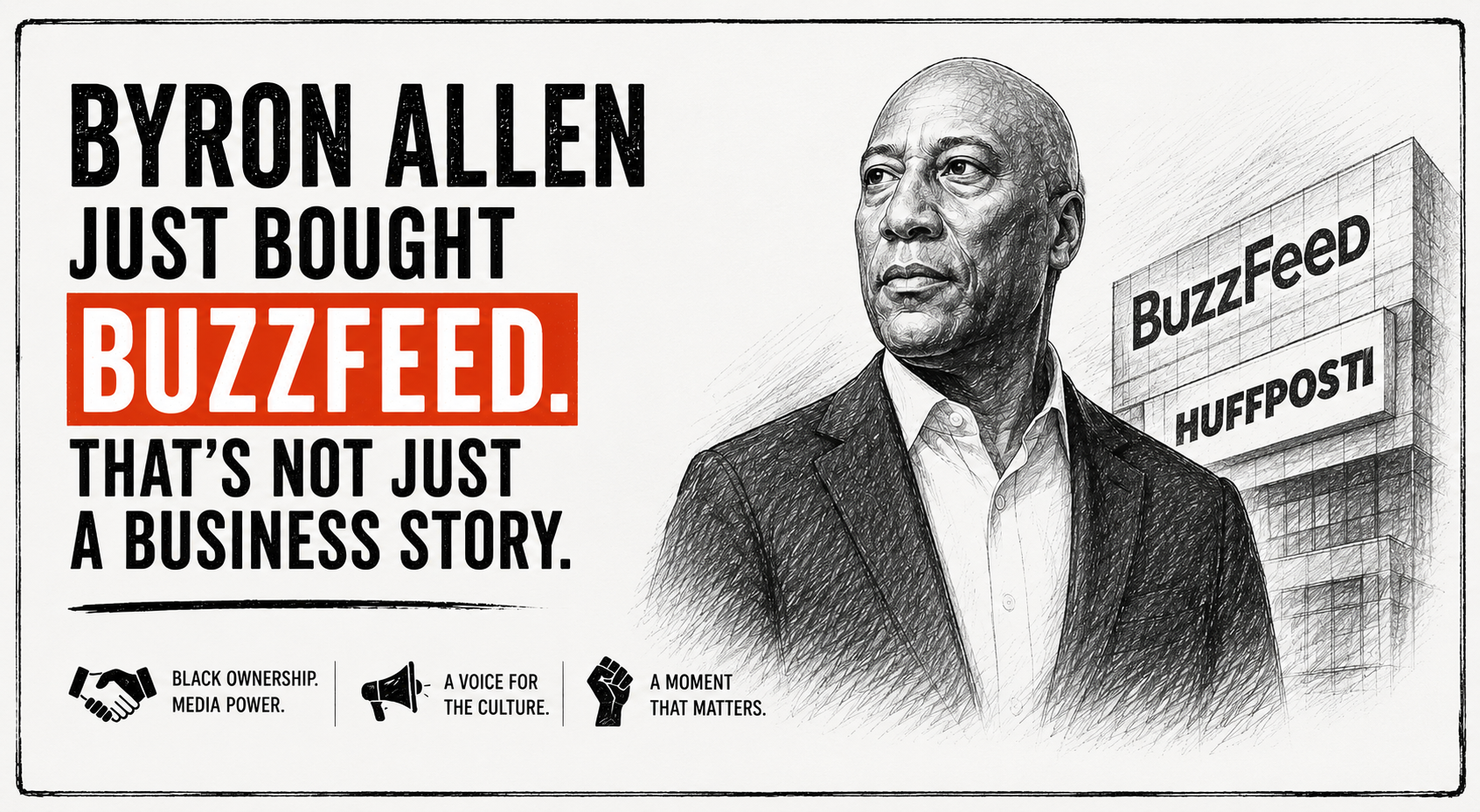
Yesterday, Byron Allen’s family office agreed to acquire a 52% majority stake in BuzzFeed for $120 million — $20 million in cash at closing and a $100 million promissory note due five years from closing. Allen will become Chairman and CEO. Founder Jonah Peretti will transition to a new role as President of BuzzFeed AI. The deal is expected to close by the end of May.
The headline is a business transaction. The story underneath it is about who controls the infrastructure that shapes what gets covered, whose stories get told, and whose voices get amplified inside American media at a moment when all three of those questions are more consequential than they have been in decades.
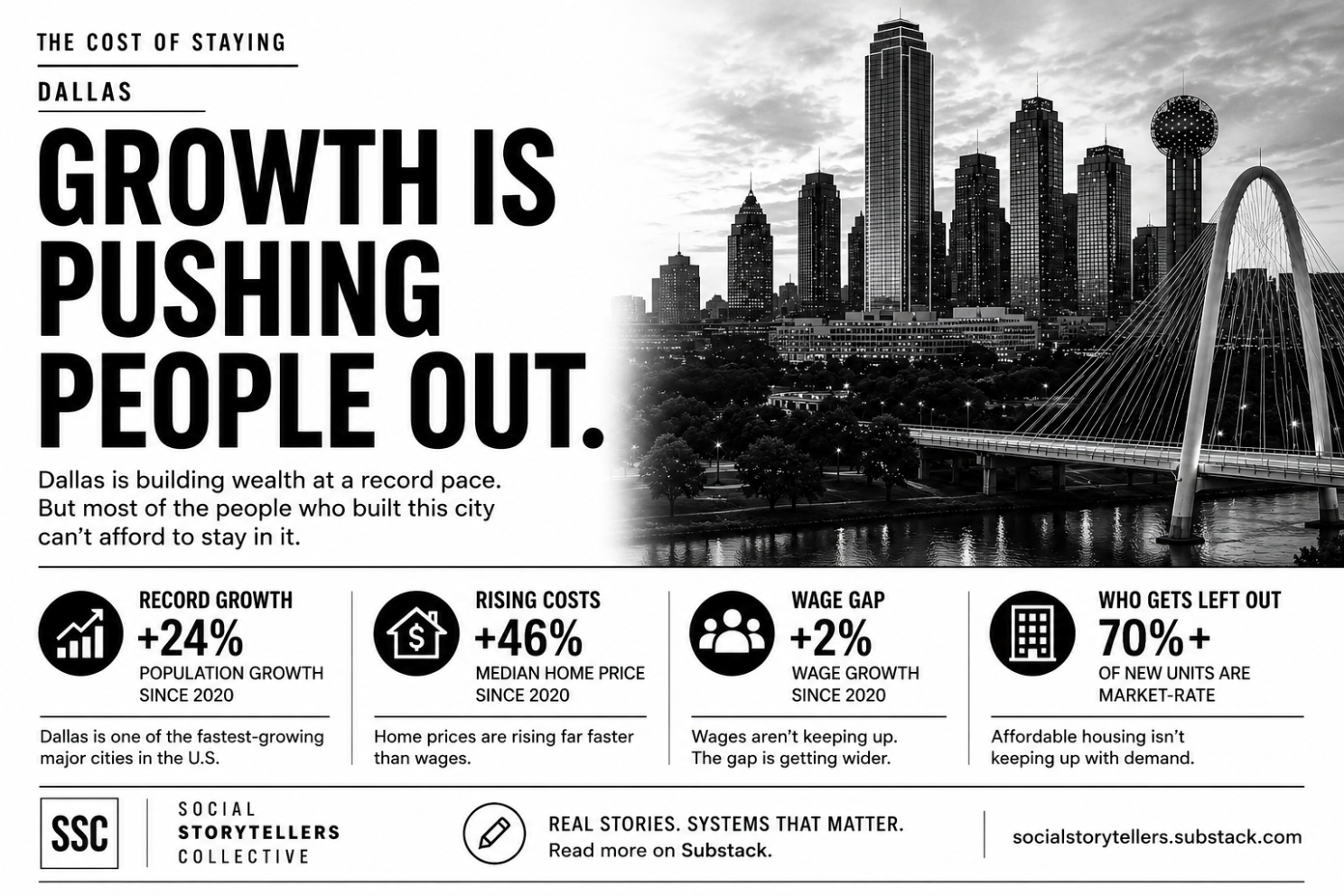
The growth story has a gap inside it. Dallas Isn’t a City Under Strain. It’s a City Revealing What Unmanaged Growth Actually Produces. The Dallas-Fort Worth metro is the fifth largest economy in the United States — $744 billion in GDP, unemployment at 4.0%, 180,000 new residents added between 2023 and 2024. By every aggregate metric Dallas is performing. But 83% of lower-income census tracts in DFW are predominantly non-white. 95% of upper-income tracts are predominantly white. Black and Hispanic residents earn less than 60 cents for every dollar white residents bring home. The city is short tens of thousands of affordable units for households earning below median income. Dallas is simultaneously growing and sorting. The aggregate numbers will keep looking strong. The distance between who the growth is working for and who it is working around is becoming harder to explain away.
The tourism boom that wasn’t. The World Cup Is Coming. The Tourists Aren’t. Nearly 80% of hotels across all 11 US World Cup host cities are reporting bookings below projections — five weeks before kickoff. In Kansas City, between 85% and 90% of hotels are underperforming. In Boston, Philadelphia, San Francisco, and Seattle, hoteliers are describing the tournament as a “non-event.” Hotel rates surged 55% year over year in anticipation of demand that hasn’t materialized. Visa barriers, geopolitical concerns, and FIFA’s own room block cancellations created what the industry is calling an artificial early demand signal. The boom was priced in before it arrived. The tourists are still deciding.
The cultural conversation today started on Instagram Live and ended up everywhere. You Ask for R&B. You Just Don’t Buy It. Dawn Richard said plainly this week that her analytics tell a story her audiences don’t always want to hear — her electronic and dance-oriented projects consistently outperform her R&B work in engagement, streaming numbers, and commercial returns. The online reaction spread immediately because the observation wasn’t really about Dawn Richard. It was about a tension sitting at the center of Black music culture that rarely gets named this directly: audiences publicly champion “real R&B” while commercially rewarding something very different. The artists referenced most — Rihanna, SZA, Tinashe, Ciara, Kelly Rowland — share a pattern. Their biggest commercial moments came when they stopped staying in the lane the market assigned them. The nostalgia is loud. The purchasing behavior is quieter.
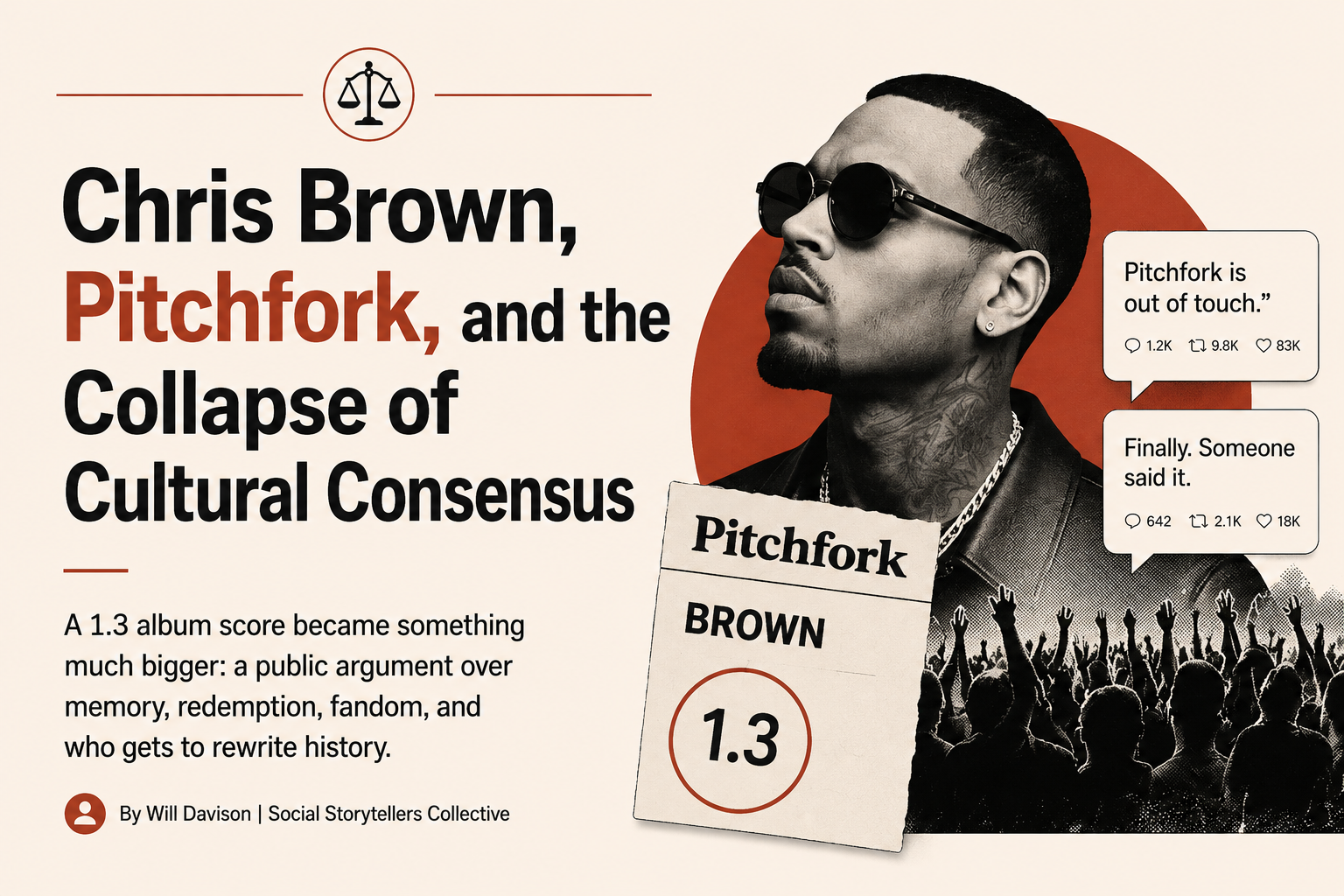
A 1.3 album score became a proxy battle over public memory. Chris Brown, Pitchfork, and the Collapse of Cultural Consensus unpacks what happened when Pitchfork reviewed BROWN, attached one of its lowest scores in recent memory, and then posted four words on X — “This album is a real piece of shit” — pulling 1.6 million views by midday. The backlash revealed how emotionally embedded Brown remains for a specific generation: for his supporters, an attack on Brown reads less like cultural accountability and more like an attack on personal memory. The review’s sharpest argument was structural — that Brown’s public image became more culturally powerful because of the Rihanna assault controversy, not despite it. Fan communities now operate as reputational defense systems strong enough to outlast criticism cycles, negative press, and institutional distancing. The disagreement playing out online is not ultimately about music. It is about competing philosophies of memory, punishment, and what cultural forgiveness is actually supposed to cost.
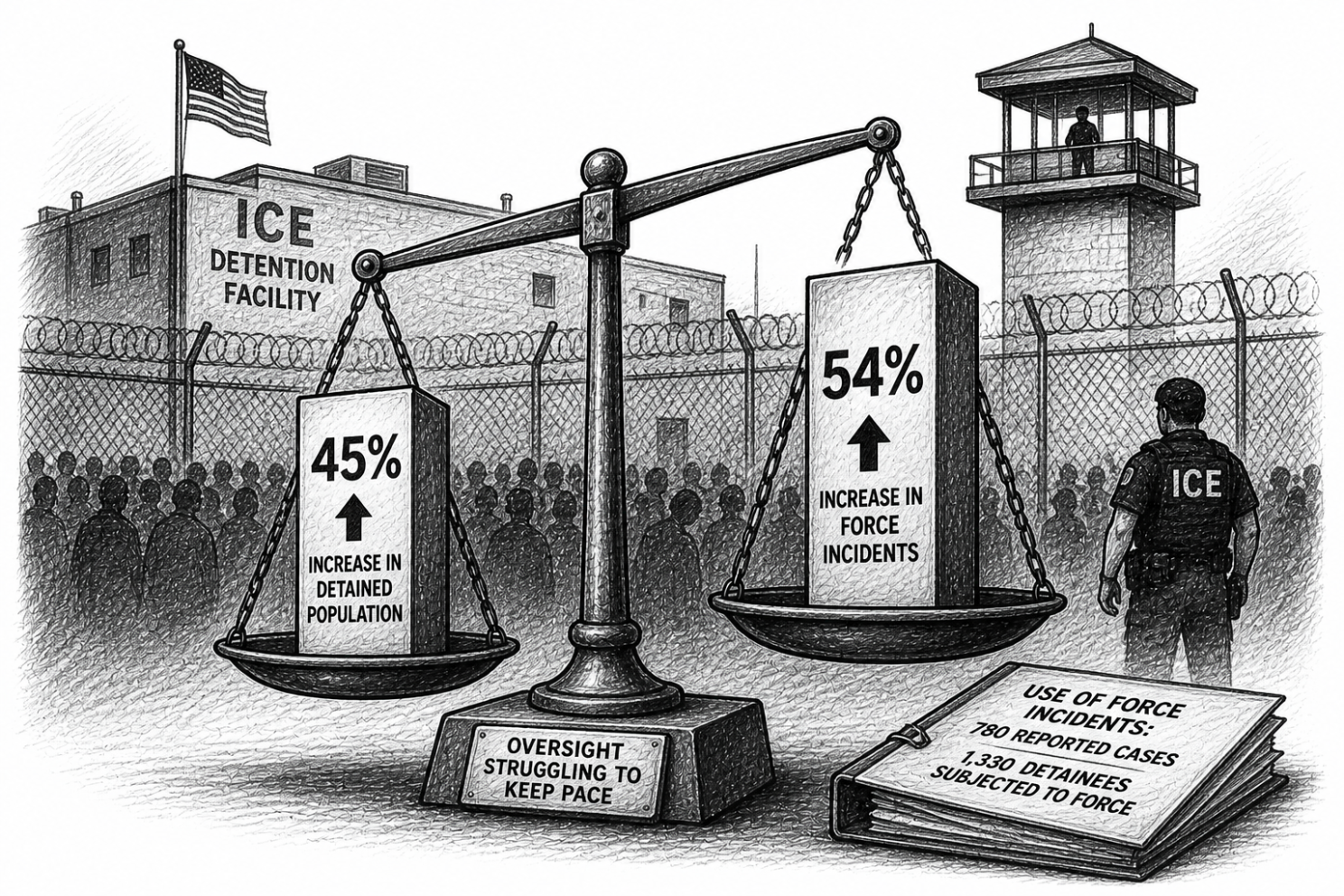
And the enforcement story is the one expanding fastest with the least oversight. ICE Detention Expansion Is Outpacing Oversight. ICE detention capacity is expanding at its fastest rate in decades — new contracts with private prison operators, converted facilities, and county jail agreements are adding thousands of beds faster than the accountability infrastructure can track them. The gap between what is being built and what is being monitored is not incidental. It is becoming the architecture.
The Daily Visual Signal
A visual interpretation of the deeper systems, tensions, and structural shifts shaping the current moment — designed to translate complex societal changes into a single image.
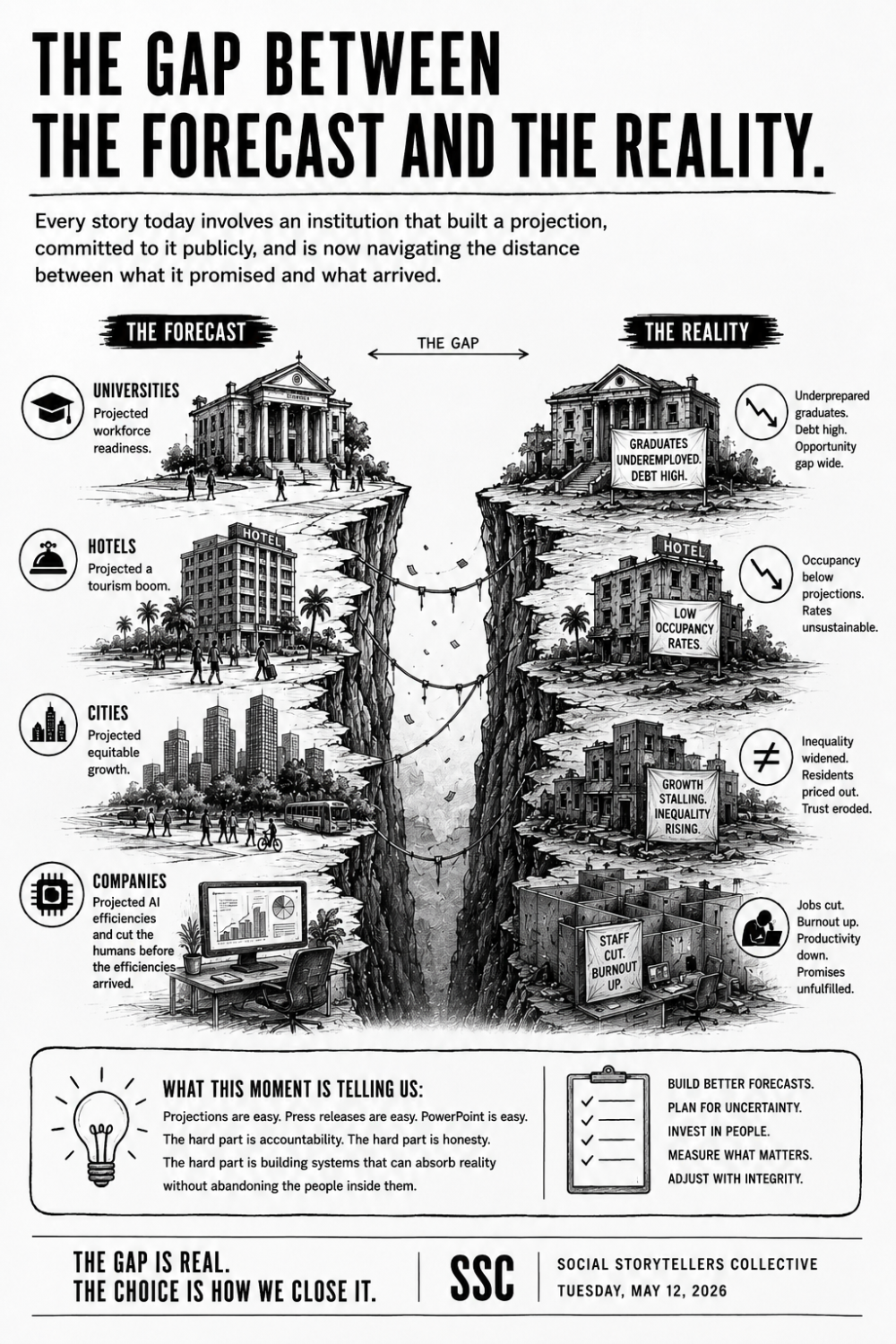
The Gap Between the Forecast and the Reality. Every story today involves an institution that built a projection, committed to it publicly, and is now navigating the distance between what it promised and what arrived. Universities projected workforce readiness. Hotels projected a tourism boom. Cities projected equitable growth. Companies projected AI efficiencies and cut the humans before the efficiencies arrived. Avant Williams made a promise as a toddler and kept it for fourteen years. Institutions could learn something from a fourteen-year-old in Wisconsin.
Featured Story: When The Question Is Legitimate and the Answer Is Personal
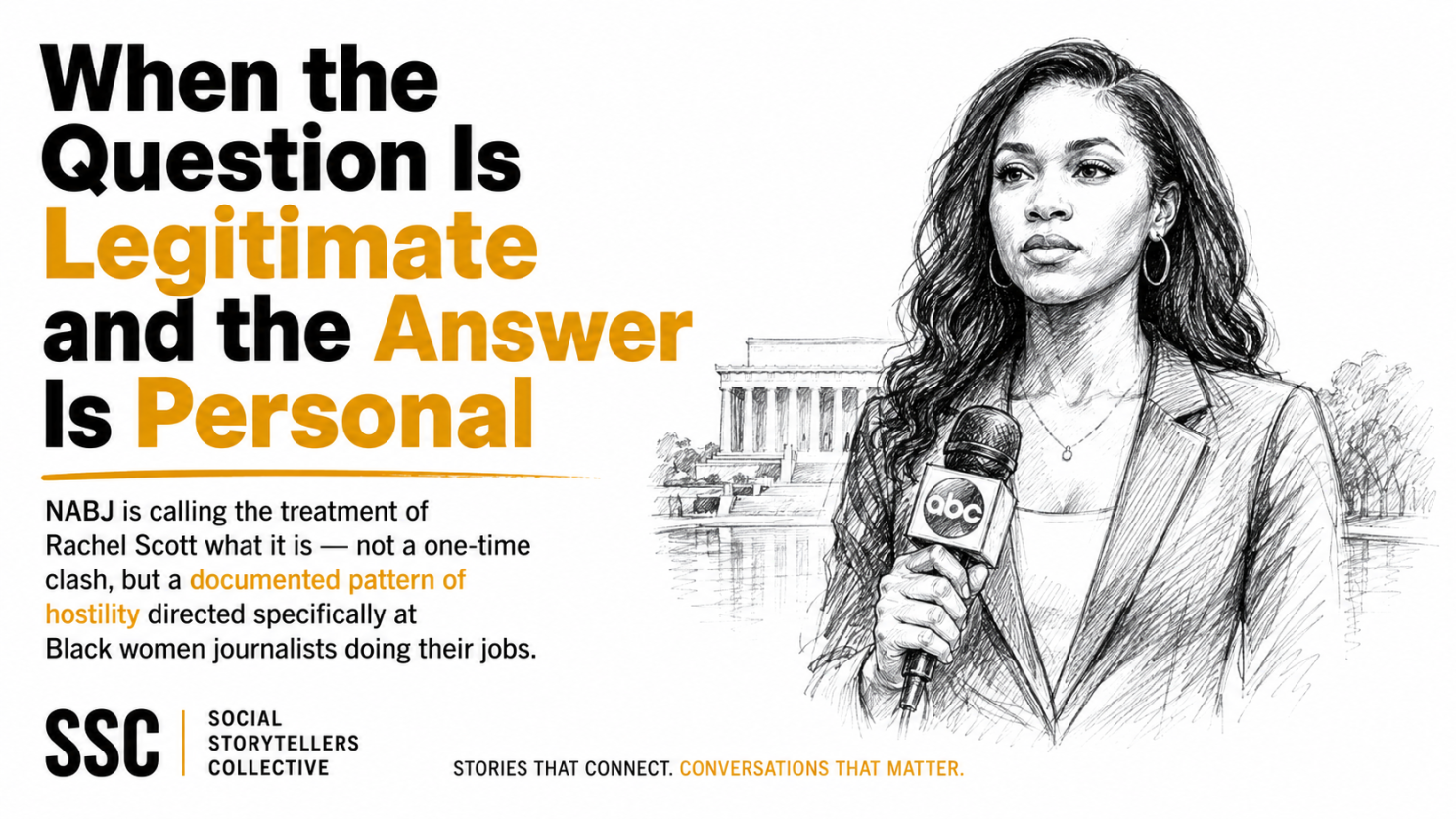
On May 7, ABC News Senior Congressional Correspondent Rachel Scott asked Donald Trump a straightforward question: with gas prices rising and a war in Iran underway, why focus on construction and renovation projects in Washington right now? What followed was not a policy disagreement. It was personal. Trump called her “a horror show,” told her she “can understand dirt,” and turned a group of construction workers into his audience for a public attack on a 33-year-old reporter doing her job.
NABJ’s response placed the exchange inside a documented pattern that predates this administration. April Ryan. Yamiche Alcindor. Jemele Hill. Jasmine Wright. The targets are not random. They are women. They are, with notable frequency, Black women. And the attacks are not responses to inaccurate reporting. They are responses to questions.
“When Black women journalists are targeted, insulted or demeaned for asking legitimate questions,” NABJ President Errin Haines said, “it is not only an attack on them personally — it is an attack on the role of a free press in our democracy.”
Rachel Scott asked why a president was focused on beautifying Washington during a war. The question is still unanswered. That, too, is part of the pattern.
→ Read the full analysis: https://socialstorytellers.substack.com/p/when-the-question-is-legitimate-and]
Today’s stories looked like they were covering different beats. They were covering the same one. These are not comfortable stories. They are necessary ones.
For the full experience, view this edition on desktop or laptop. If this briefing sharpened how you see the world, share it with someone else and subscribe to Social Storytellers Collective to stay ahead of the shifts shaping everything around us.
More tomorrow—
The SSC Team