
The 2026 FIFA World Cup was supposed to be the economic event of the decade for American cities. Sixteen host markets across North America. Forty-eight teams. A projected surge of international visitors spending freely on hotels, restaurants, transportation, and experiences. Cities planned around it. Hotels priced for it. Tourism boards built entire campaigns around the windfall that was coming.
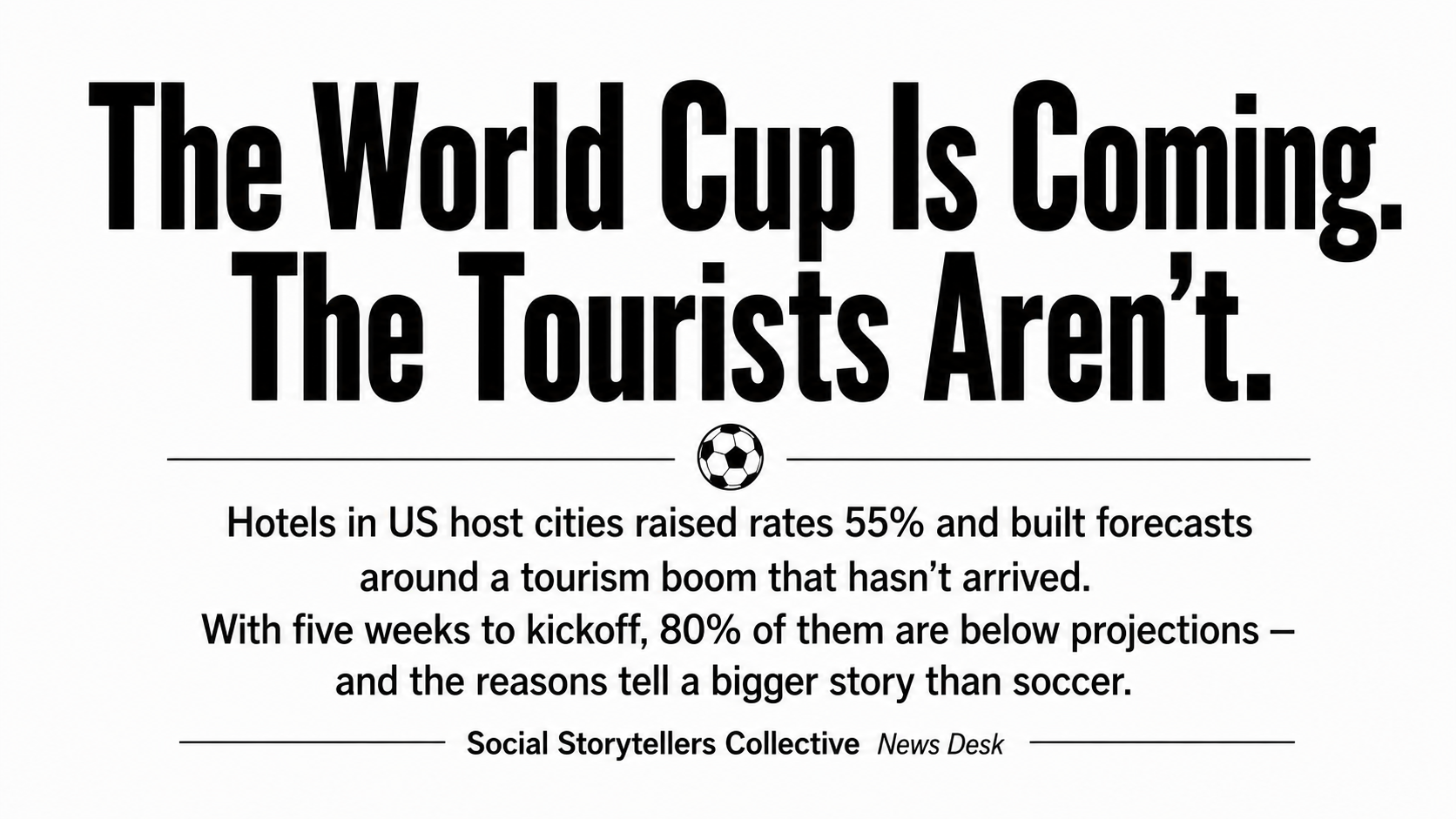
Five weeks before the first kickoff, the windfall hasn’t arrived.
According to a survey released this week by the American Hotel and Lodging Association — which polled hoteliers across all 11 US host markets, from New York to Los Angeles — nearly 80% of respondents said bookings are currently tracking below initial forecasts. In Kansas City, between 85% and 90% of hotels reported bookings below projections. In Boston, Philadelphia, San Francisco, and Seattle, hoteliers used a phrase that should alarm every economic development office in those cities: they described the World Cup as a “non-event.”
What happened to the boom
The AHLA identified three primary drivers of the shortfall. First, FIFA room block cancellations — the organization had reserved large blocks of hotel inventory that were later released, creating what the report called “an artificial early demand signal” that made bookings look stronger than they actually were. Hotels priced and planned around that phantom demand. When it disappeared, the gap it left behind was larger than anyone had publicly acknowledged.
Second, visa barriers and geopolitical concerns. Between 65% and 70% of survey respondents across all markets cited these as active suppressants of international demand. The US visa process has become a meaningful obstacle for fans from many of the countries most passionate about soccer — including several in Latin America, Africa, and Southeast Asia. International arrivals to the US are projected to drop 6.3% in 2025, a trend that did not reverse itself in time for the tournament.
Third — and perhaps most predictably — pricing. Hotel rates in US host cities surged 55% year over year in anticipation of demand that hasn’t fully materialized. Rooms that cost $200 on a normal summer night are now being listed at $600 or more during match windows. Younger fans and traveling supporter groups — the backbone of World Cup atmosphere in host cities — looked at those prices and made a different calculation. Many are booking Airbnb-style rentals. Others are staying in secondary markets outside the host cities and commuting in. Some simply aren’t coming.
The tournament attracted millions of ticket buyers. The hotels assumed those buyers would need their rooms. They underestimated how many of those buyers would find other options — or decide the full trip wasn’t worth the math.
The cities that are outperforming
Not every host market is struggling. Miami and Atlanta are reporting demand that has exceeded initial expectations — cities with strong international communities, warmer climates for summer travel, and reputations as destinations in their own right rather than stops on a soccer itinerary.
The contrast between Miami and Kansas City is instructive. Miami is a city people want to visit regardless of the World Cup. The tournament is additive. Kansas City is a city where the World Cup was supposed to be the primary draw — and without the international wave of visitors that was projected, the economic case for the infrastructure investment and the hotel price increases looks significantly weaker.
The structural argument underneath the headline
The World Cup hotel story is a specific version of a pattern that appears across the American tourism economy. Events get bid for, infrastructure gets built or priced around, forecasts get generated, and cities commit to a version of the future that assumes the demand will come because the event is large enough to guarantee it.
Sometimes it does. Sometimes it doesn’t. And when it doesn’t, the people who absorbed the most risk in anticipation of the boom are not the institutions that made the forecasts — they are the small hotels, the local restaurants, the independent hospitality workers, and the vendors who staffed up for a surge that arrived smaller than promised.
The World Cup is still coming. It will still generate significant economic activity. The final in the New York/New Jersey metro area alone will draw massive crowds and international attention. But the gap between what was projected and what is materializing is real — and it is a reminder that mega-event economics tend to benefit the cities and institutions best positioned to capture demand regardless of whether the event delivers its maximum projection.
The boom was priced in before it arrived. The tourists are still deciding.