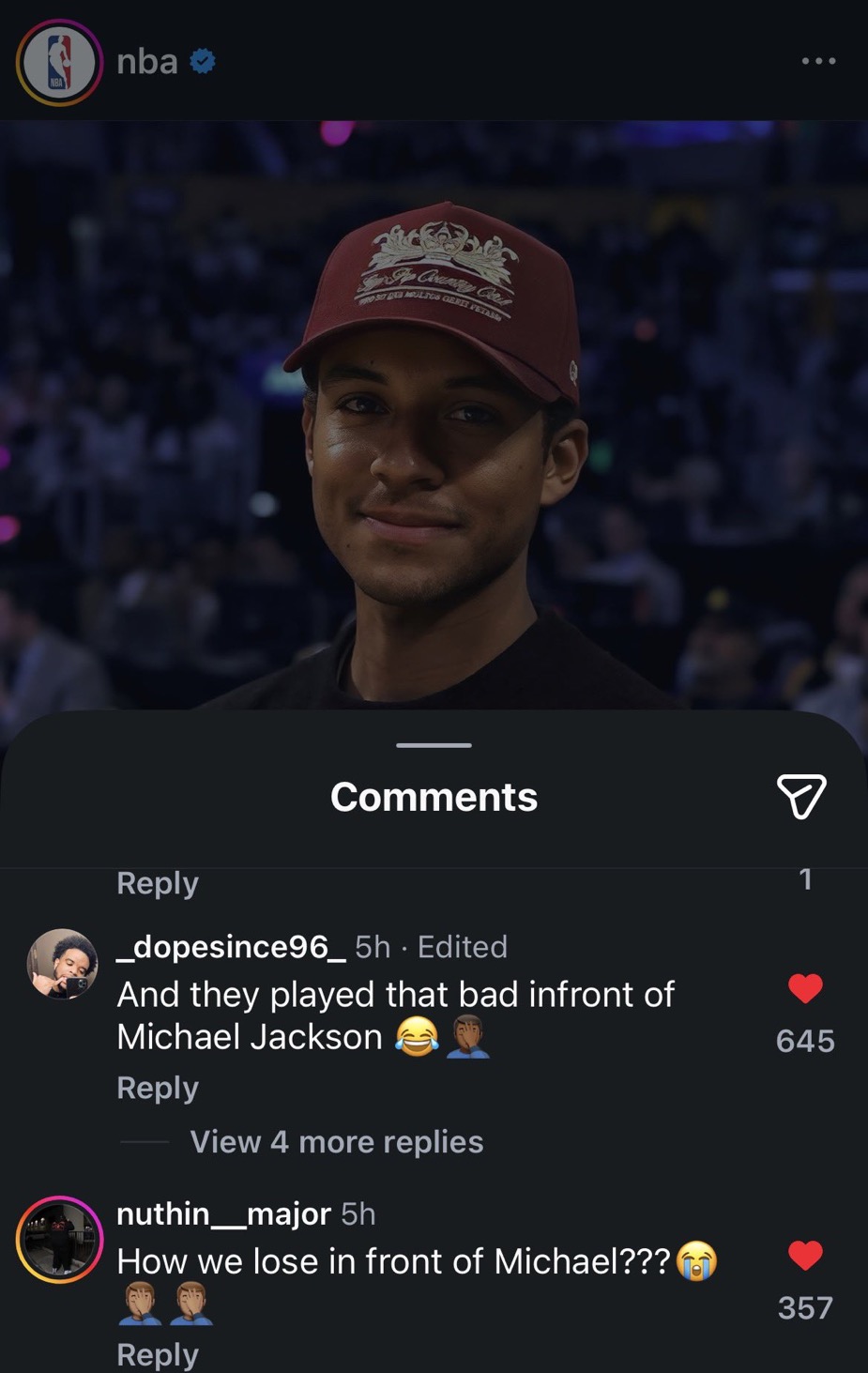
When photos of Jaafar Jackson surfaced courtside at an NBA game, the internet did what it does — it moved fast. “How we lose in front of Michael???” “And they played that bad in front of Michael Jackson.” The jokes landed immediately because the resemblance landed immediately. But the moment carried more weight than a lookalike observation.
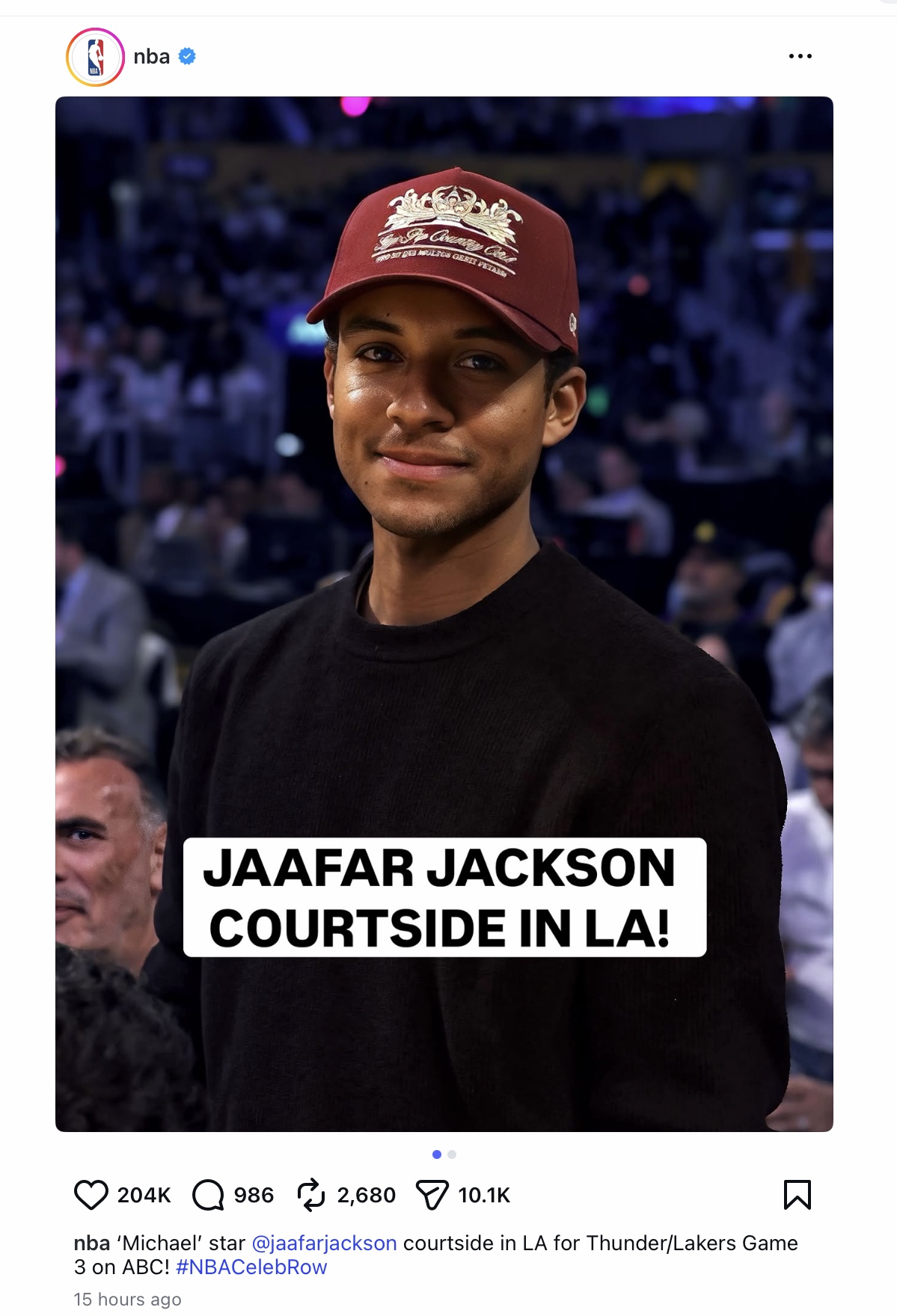
Jaafar Jackson is not a random fan who happens to share his uncle’s features. He is Michael Jackson’s nephew — Jermaine Jackson’s son — and the actor who spent two years in an intense audition process before being cast to portray his uncle in the biographical film Michael, released April 24, 2026. The film has grossed $497 million worldwide in its first three weeks, delivering the biggest opening ever for a music biopic at $97 million domestically and breaking first-day box office records in multiple countries. Critics praised Jaafar’s performance while criticizing the story as sanitized. Audiences went anyway — $497 million worth of them.
That context changes the entire reaction to the courtside photos. The internet was not just responding to resemblance. It was responding to the strange experience of seeing one of the most recognizable cultural images in modern history reappear — through a younger face, at a basketball game, without warning — weeks after watching that face carry a blockbuster film.
The comments read like humor. Underneath them was something closer to disbelief. A facial expression, a smile, certain angles — and the association was immediate. Decades after his death, Michael Jackson’s physical presence still operates as instant cultural shorthand. That is not nostalgia. That is scale. Most fame fades. Very little becomes generational.
The moment also revealed how legacy travels differently now. In previous decades, cultural inheritance moved slowly — through interviews, magazine covers, controlled media rollouts. Now it moves through screenshots, reposts, memes, and comment sections at algorithmic speed. Jaafar Jackson appeared at a basketball game and was instantly absorbed into participatory internet culture because audiences no longer passively consume celebrity imagery. They collectively remix it in real time.
To prepare for the role, Jaafar moved into the Jackson family’s Hayvenhurst estate in California — where Michael Jackson lived during much of the period depicted in the film — and worked with acting coaches for months to capture his uncle’s dance moves and persona. The result was a performance critics called “uncanny” and audiences responded to at a scale that made Michael the fourth highest-grossing film of 2026 so far.
That is why the comment section felt like more than jokes. It exposed something true about permanence. Jaafar Jackson walked into a basketball arena and the internet instantly understood exactly who he was carrying with him. That kind of recognition does not require introduction — even through someone else’s face.