

Most layoff stories follow a familiar arc. Revenue falls, costs get cut, workers go home. What is happening in tech right now does not follow that arc at all.
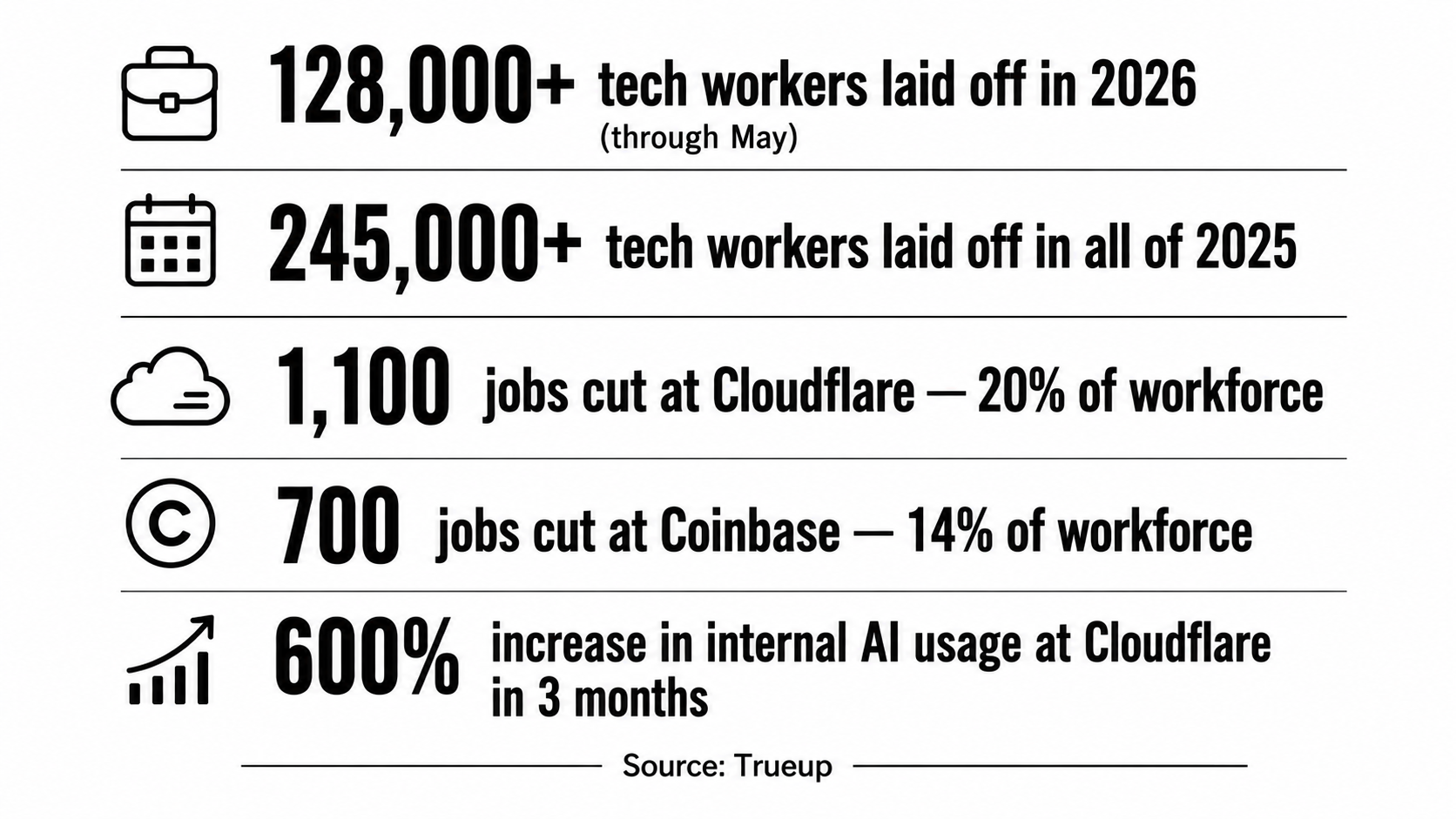
Cloudflare is a company most people have never heard of, even though they use it every day. It sits behind a significant portion of the internet — handling security, performance, and reliability for millions of websites globally. The infrastructure is largely invisible, which is exactly how it is supposed to work. This week, Cloudflare announced it was cutting 1,100 jobs — roughly 20% of its entire workforce and the first mass layoff in the company’s 16-year history — even as it reported quarterly revenue of $639.8 million, a 34% year-over-year increase and its highest single quarter on record.
Read that again. Record revenue. Largest layoff in company history. Same announcement.
CEO Matthew Prince and co-founder Michelle Zatlyn told employees the company is rebuilding itself for what they called an “agentic AI era,” stressing that the cuts were not based on employee performance or short-term financial pressure. Internal AI usage at Cloudflare had increased by more than 600% in just three months, with employees across engineering, HR, finance, and marketing running thousands of AI agent sessions each day to get their work done. The company was not struggling to survive. It was restructuring to operate with less human labor while producing more output — and doing so at a moment of peak performance, not desperation.
The market did not celebrate the honesty. Cloudflare shares sank 24% following the announcement. Investors, it turns out, are still working out whether to read this kind of move as discipline or as a warning sign about how much of the workforce is actually necessary going forward.
Coinbase is making a nearly identical bet, in a different industry. The largest cryptocurrency exchange in the United States, Coinbase announced it is cutting 700 employees — 14% of its workforce — framing the move not as cost reduction but as a fundamental restructuring of how the company operates. CEO Brian Armstrong eliminated what he called “pure managers,” replacing them with “player-coaches” who oversee teams while remaining strong individual contributors. The company is building “AI-native pods” — potentially including one-person teams directing AI agents that handle the responsibilities previously split among engineers, designers, and product managers.
Armstrong’s memo to employees did not soften the message. “We are not just reducing headcount and cutting costs — we’re fundamentally changing how we operate: rebuilding Coinbase as an intelligence, with humans around the edge aligning it.” The organizational structure will run no more than five layers deep below Armstrong himself. The logic is speed. “Layers slow things down and create coordination tax,” he wrote. AI, in his framing, removes the need for the people whose job it was to manage the coordination.
What connects Cloudflare and Coinbase is not sector or size. It is the nature of the justification. Neither company is cutting because the business is failing. Both are cutting because AI is allowing them to redefine what a team needs to look like to produce the same — or greater — amount of work. The headcount reductions are a byproduct of where the capital is going, not evidence that the company is in trouble.
That distinction matters for workers, because it removes the traditional signal. In the old model, layoffs were a canary. When they came, something had gone wrong — a missed quarter, a market shift, a product failure. Workers and investors alike could read the situation and draw conclusions. The pattern now — deploying AI efficiency gains as justification for workforce reductions during a period of strong revenue growth — is fast becoming a familiar script across the tech industry. Meta, Microsoft, and Amazon are running the same playbook at larger scale. Strong earnings and mass layoffs are no longer in contradiction. They are arriving in the same press release.
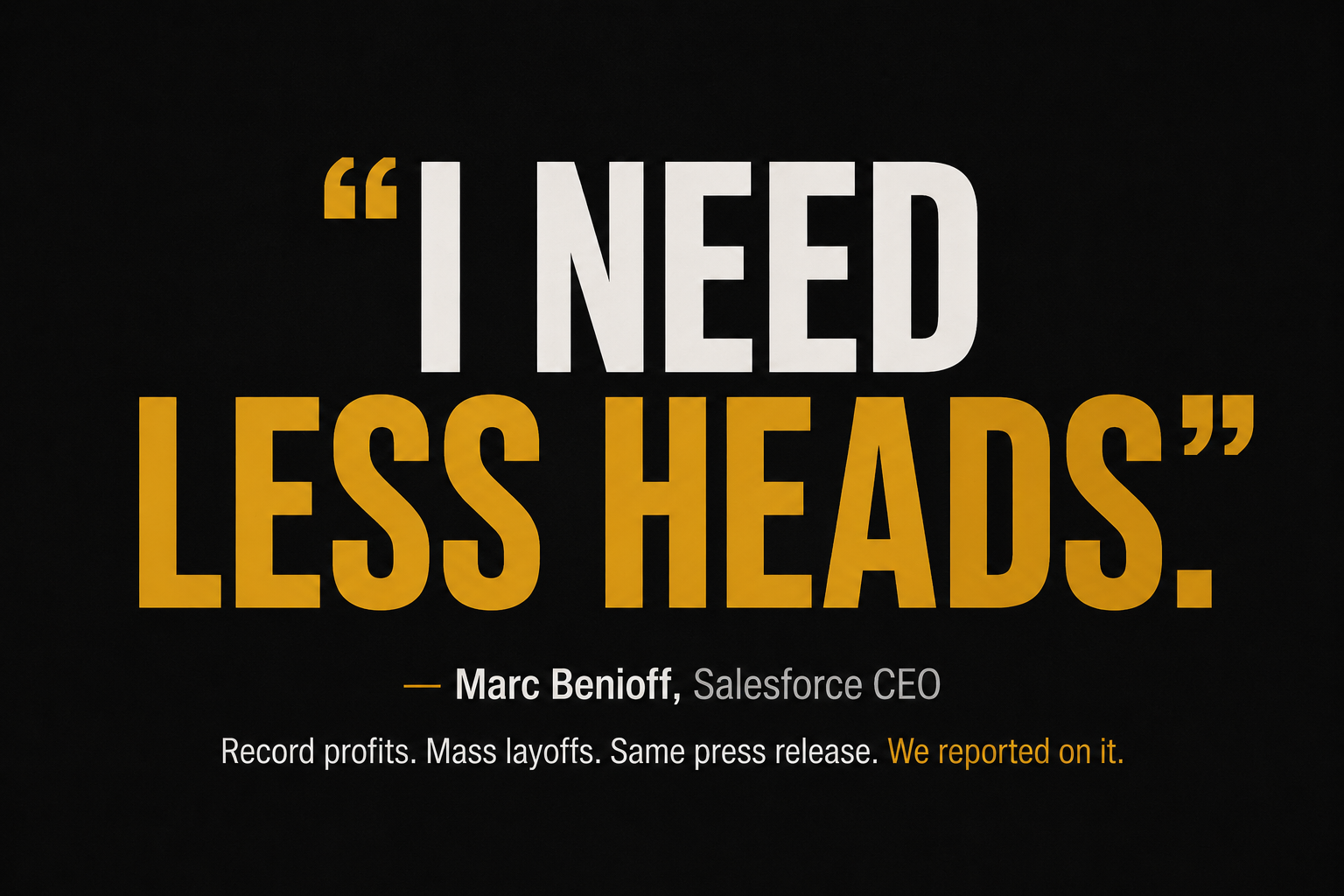
The language across every announcement follows the same pattern — streamlining, realignment, agility, technological enablement. Salesforce CEO Marc Benioff offered the most unvarnished version of that message when he explained his own round of cuts in four words: “I need less heads.” Strip the euphemism from every other announcement and the message is identical. The work that humans were paid to do is now being done faster and cheaper, and the savings are not being passed to workers or consumers. They are being captured at the top of the capital stack.
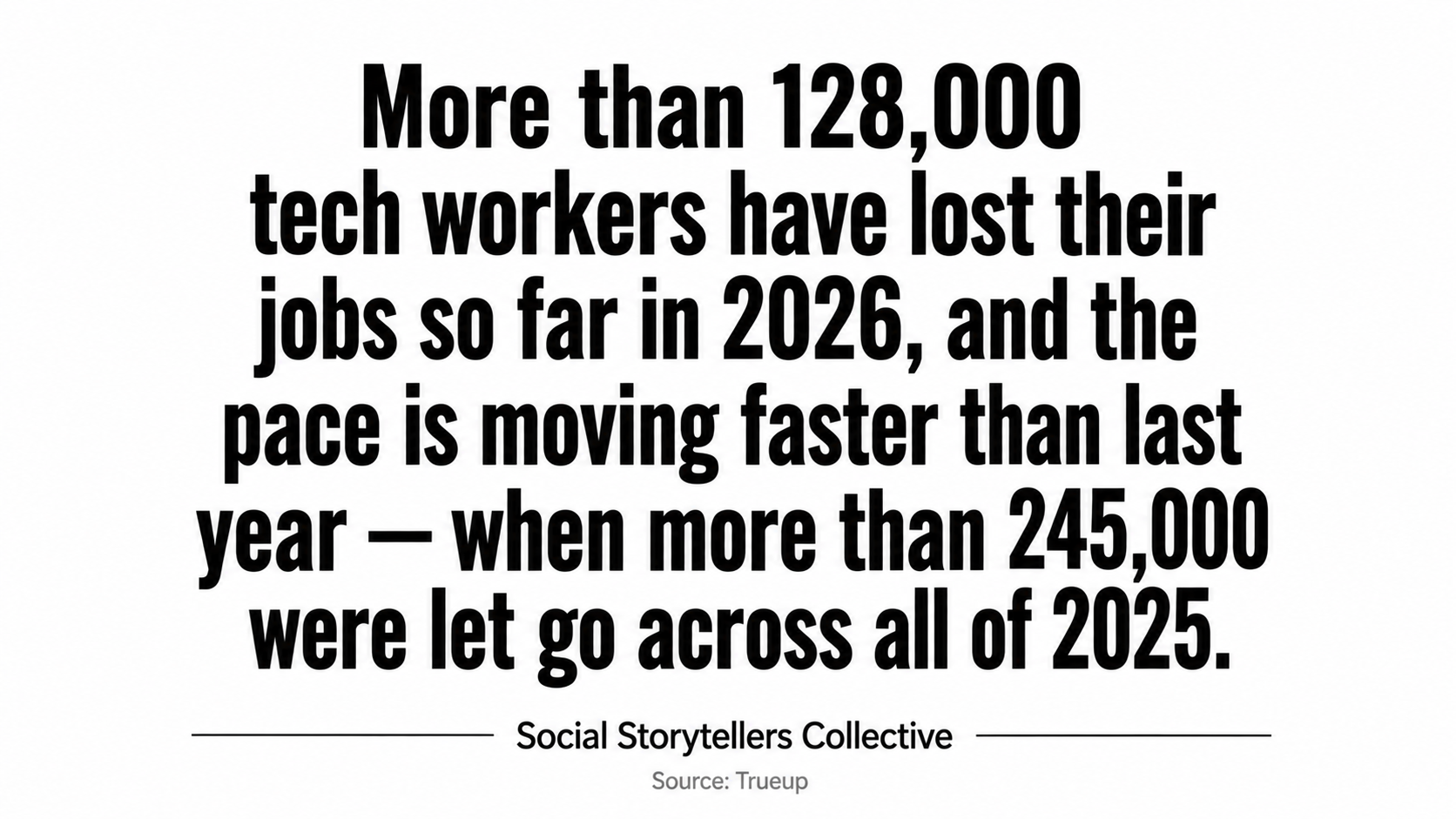
According to data from Trueup, more than 128,000 tech workers have lost their jobs so far in 2026 — and the pace is moving faster than last year, when more than 245,000 were let go across all of 2025. The workers absorbing that disruption are not, for the most part, working at companies on the brink. They are working at companies that are winning — and deciding they can win with fewer people.
The math is not complicated. AI is not coming for these jobs someday. For a growing number of tech workers, it already has.