
The gig economy was sold as freedom. New Jersey just asked what that freedom actually costs — and who pays for it.
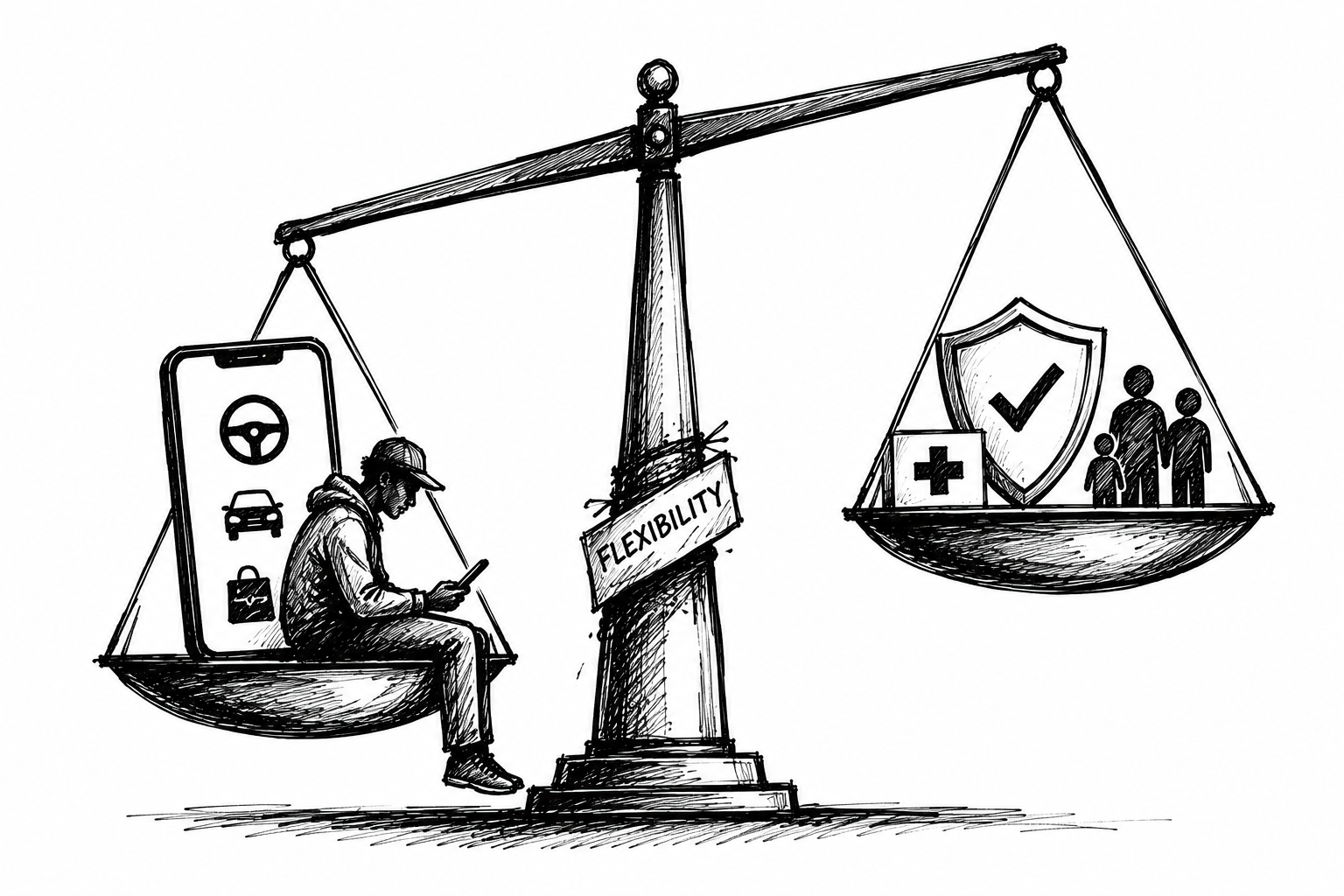
On May 5, the New Jersey Department of Labor finalized new worker classification regulations that take effect October 1. Under the rules, workers are presumed to be employees unless a company can prove all three criteria of the state’s ABC test for independent contractor status. Ride-hailing companies and delivery platforms are in the direct line of impact.
What the ABC Test Actually Does
The test is straightforward: to classify someone as a contractor, a company has to prove the worker operates independently, performs work outside the company’s core business, and runs their own enterprise. For a DoorDash driver or Uber driver, clearing all three bars is nearly impossible. The work is central to the platform’s entire business model. That was always the tension — and New Jersey is now formally naming it.
The Trade-Off Is Real
There is a legitimate debate here. Research shows that when jurisdictions implement employee classification requirements, platform labor supply typically drops by about 18% — but hourly compensation for remaining workers rises by 31%. Fewer people in the pool, better pay for the ones who stay. Whether that trade-off is worth making depends on what you think gig work is actually for.
For a lot of workers, it was never a lifestyle choice. It was a survival mechanism — something people turned to when traditional employment was inaccessible. The platforms understood that, and built their cost structures around it.
The Bigger Picture
New Jersey’s rule arrives the same week federal data confirmed AI as the leading stated reason for U.S. job cuts. The workforce is being pressured from both ends simultaneously — automation removing roles at one level, platform reclassification reshaping what remains at another. The workers caught in the middle, particularly lower-wage workers of color, are getting compressed from both directions at once. New Jersey is not solving that problem. But it is at least acknowledging that the current model was built on someone else absorbing the cost.