
A nightclub in Mexico City has gone viral after announcing a nearly $300 cover charge for U.S. citizens while offering dramatically lower prices for Mexicans, Latin Americans, students, and teachers. On the surface, the policy reads like provocation. But the reaction online suggests something deeper is happening. For many residents, the pricing structure is being interpreted less as discrimination and more as symbolic retaliation against a broader economic shift that has transformed parts of the city over the last several years.
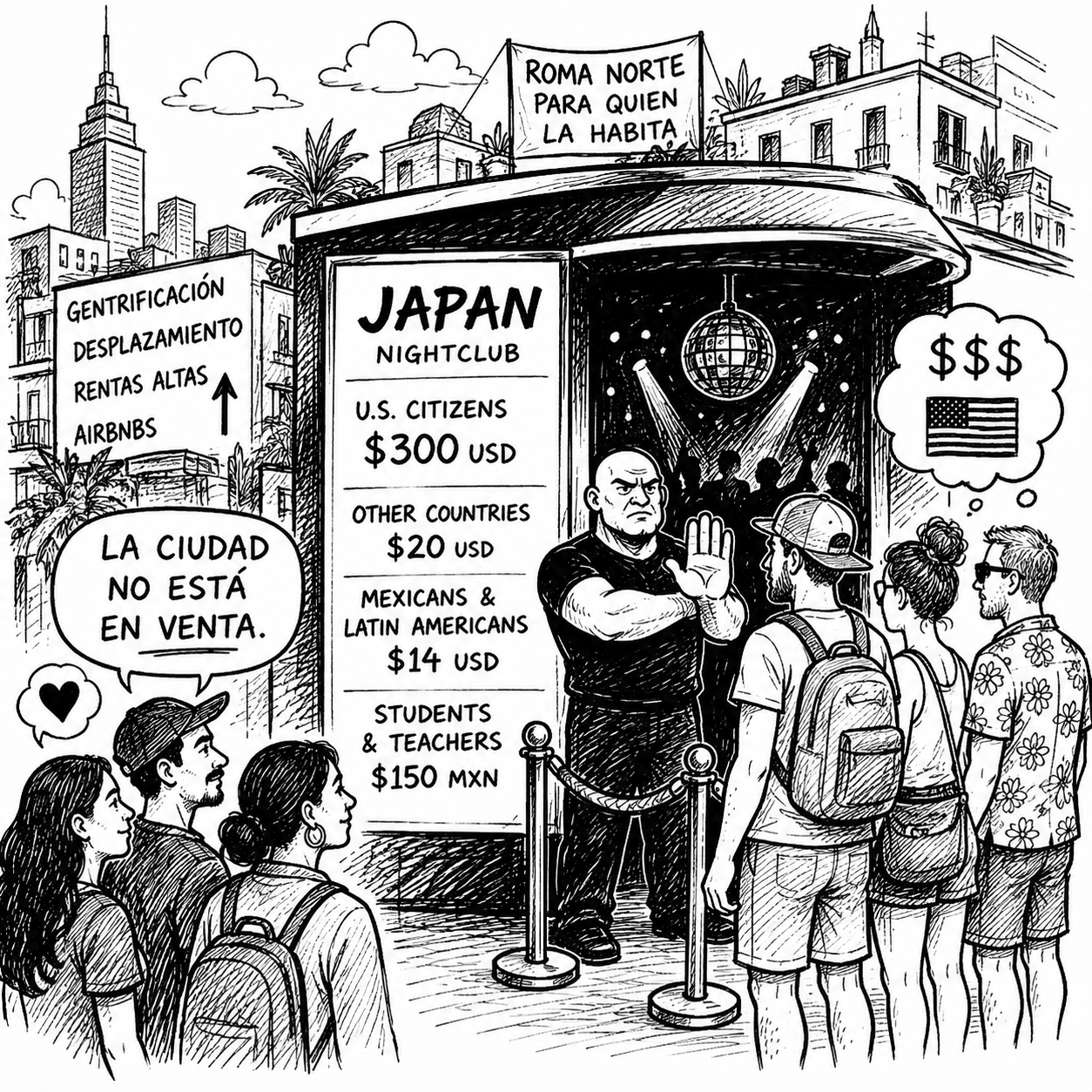
The nightclub, Japan, located in the Roma Norte neighborhood, framed the policy as both political and economic. Its owner linked the decision to deteriorating U.S.-Mexico relations under Donald Trump while also directly referencing gentrification and touristification in the city. That distinction matters because the backlash is no longer just about tourism. It is increasingly about displacement. During and after the pandemic, Mexico City became one of the most visible destinations for remote American workers seeking lower costs of living while maintaining U.S.-level incomes. Entire neighborhoods began reshaping around foreign demand. English became more common in cafes and coworking spaces. Airbnb proliferation accelerated. Rents surged in areas that had once been accessible to local residents.
What makes the story significant is that the pricing model is being widely supported online inside Mexico rather than dismissed as a publicity stunt. That reflects a growing shift in public mood across global cities dealing with the second-order effects of remote work migration. Mexico City is now joining Barcelona and Lisbon, where frustration toward digital nomad culture has evolved from online discourse into organized public backlash. In many of these cities, residents argue that foreign remote workers benefit from local affordability without proportionally contributing to the tax base, infrastructure burden, or long-term community stability. The resentment is not simply cultural. It is economic.
The symbolism of the cover charge also reveals how pricing itself is becoming political language. The club defended the policy by arguing that Americans are not being charged more, but rather that locals are receiving discounts because they are the ones absorbing the pressure of rising living costs. That framing mirrors a larger tension emerging in urban economies worldwide: local populations increasingly feel forced to subsidize mobility for wealthier outsiders who can arbitrage geography while remaining insulated from local wage realities.
For years, the digital nomad narrative was framed almost entirely through aspiration — freedom, flexibility, borderless work, lifestyle optimization. But cities are beginning to confront the structural consequences of what happens when large numbers of relatively affluent remote workers enter housing markets disconnected from local income levels. Mexico City’s nightclub controversy may seem contained in isolation, but the intensity of the reaction around it signals something larger. The global competition for affordability is no longer abstract. It is becoming socially visible, politically charged, and increasingly difficult for cities to ignore.