
Zoom’s new $150,000 grant initiative targeting solopreneurs is not a philanthropy story. It is a positioning story. The platform that built its dominance around remote work infrastructure during the pandemic is now aligning itself with a labor environment where a single individual, equipped with AI tools and digital systems, can operate with capabilities that once required an entire company.
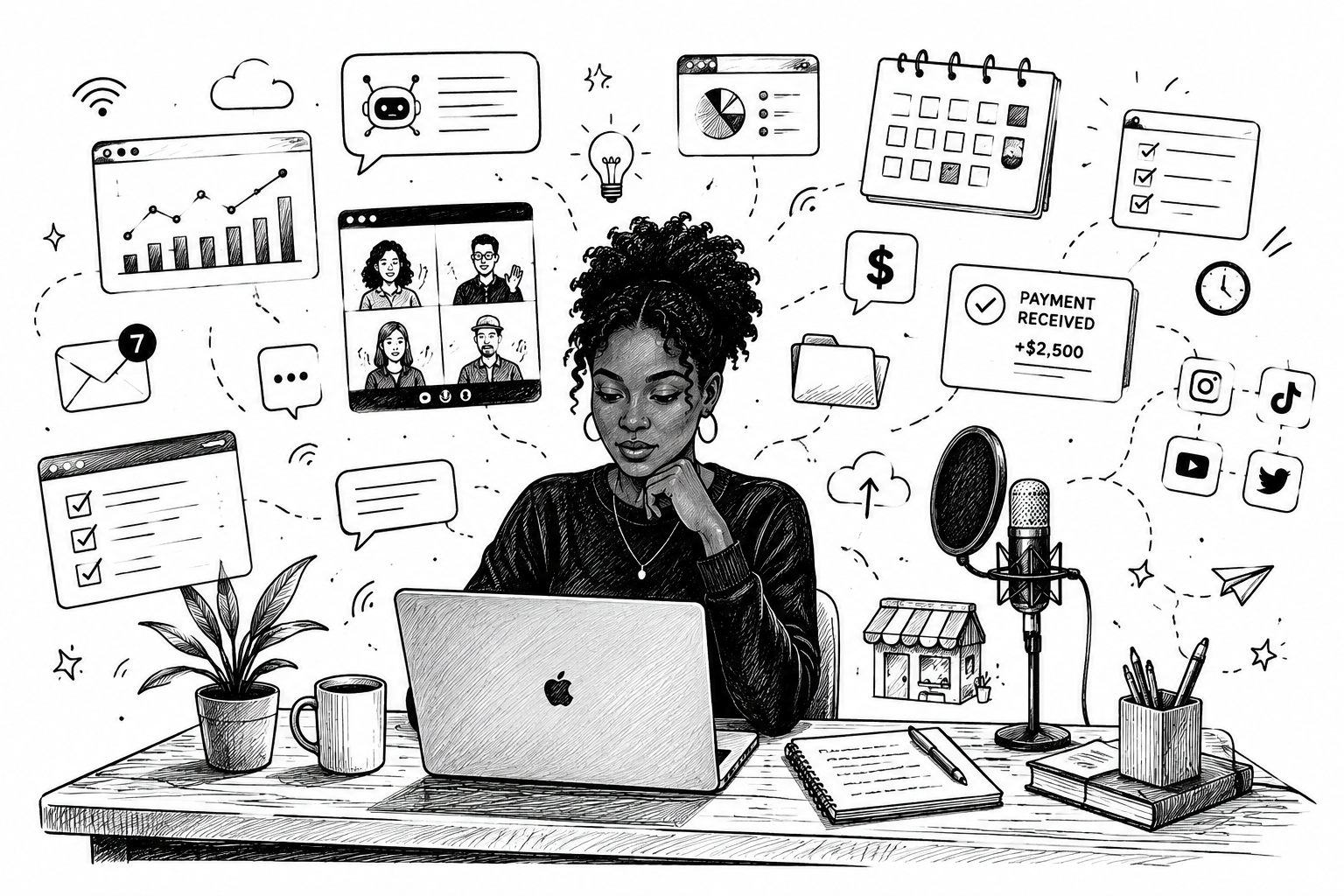
The scale of the shift is no longer speculative. There are currently 29.8 million solopreneurs operating in the United States, collectively generating $1.7 trillion in revenue — approximately 6.8% of total U.S. economic output. LinkedIn has recorded a 69% jump in people adding “founder” to their profiles, and 47% of those surveyed said AI makes them more likely to start a business. The infrastructure is catching up to the ambition.
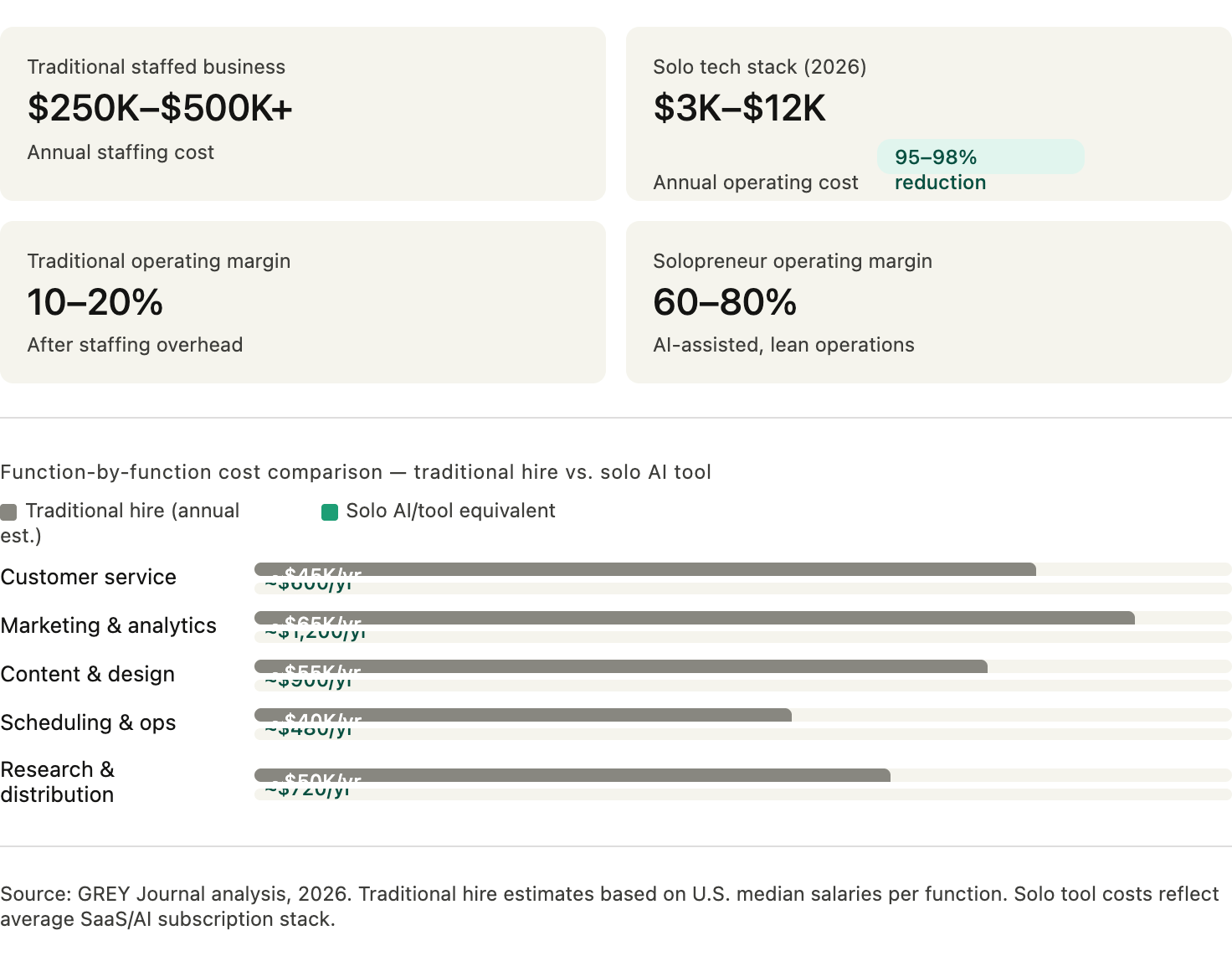
The cost compression driving that shift is significant. As the breakdown above illustrates, a complete solopreneur tech stack in 2026 runs between $3,000 and $12,000 annually — a 95 to 98% cost reduction compared to hiring equivalent staff — while operating margins for AI-assisted solo businesses reach 60 to 80%, compared to the 10 to 20% typical of traditionally staffed operations. Functions that once required dedicated hires — customer service, marketing, content, scheduling, research — are now being handled by a single founder with the right tool stack.
The result is a growing class of workers operating as full-scale economic units. Consultants functioning like agencies. Creators functioning like media companies. Educators functioning like institutions. The organizational hierarchy that once defined business growth is being replaced by leaner, individually controlled systems built around portability and digital ownership.
What the accessibility narrative around solopreneurship tends to obscure is the structural gap underneath it. Independence still depends on stable internet infrastructure, startup capital, healthcare access, and platform algorithms that can change without warning. The people best positioned to thrive in the one-person economy are often those who already possess financial cushioning, professional networks, or existing digital reach. Flexibility creates opportunity. It also shifts institutional risk directly onto individuals.
Zoom’s investment signals where technology firms believe future economic activity is concentrating. The office is no longer the center of economic identity. Increasingly, the individual is.