
The numbers are not subtle. Black entrepreneurs represent 17% of TikTok’s global creators. Nielsen data consistently shows that Black creators generate higher media value than their non-Black counterparts in fashion, lifestyle, and gaming — the three categories that drive the most advertiser spending in the creator economy. Black audiences consume media at rates 31.8% higher than the general population. The culture is not a niche. It is the engine.
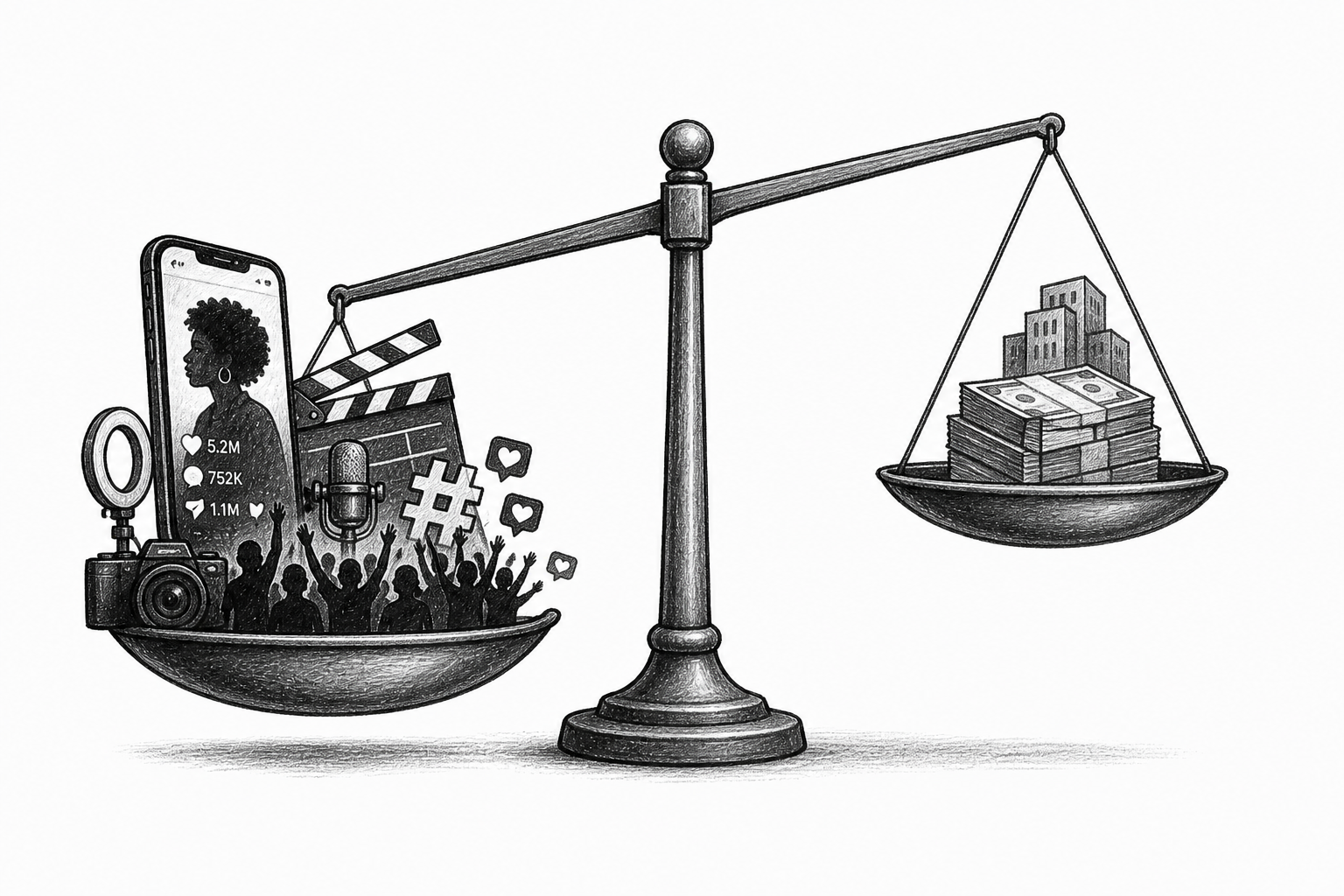
And yet only 4% of U.S. media is Black-owned.
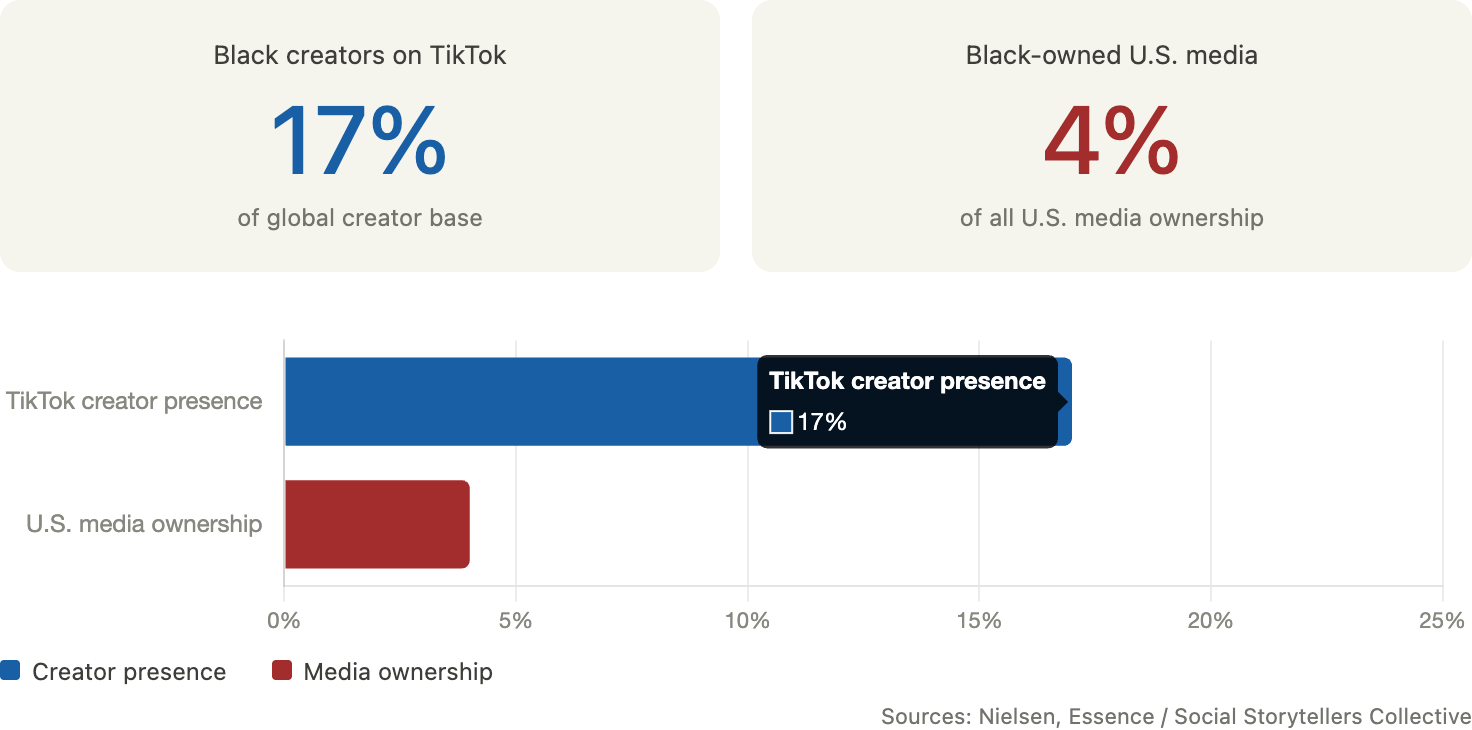
That gap — between the cultural value Black creators produce and the economic infrastructure they control — is not an accident of timing or a problem that scale will eventually solve. It is structural. It is the same mechanism that has governed Black creative economies across music, film, fashion, and now digital media for generations: the culture produces the value, the platform captures it, and the return that flows back to the community that built it is a fraction of what it generated on the way out.
The creator economy was supposed to be different. The premise of platforms like TikTok, YouTube, and Instagram was that the barriers separating creators from audiences — and from the revenue those audiences generate — had been removed. Distribution was democratized. Discovery was algorithmic. Anyone with a phone and something to say could build an audience. That premise is partially true, and it matters. Black creators have used it to build followings, launch brands, and redirect consumer spending in ways that traditional media gatekeepers never allowed. In January 2026, as the U.S. Consumer Confidence Index fell to its lowest level since 2014, spending was being redirected through trusted creator voices — and Black creators were disproportionately driving that trust economy.
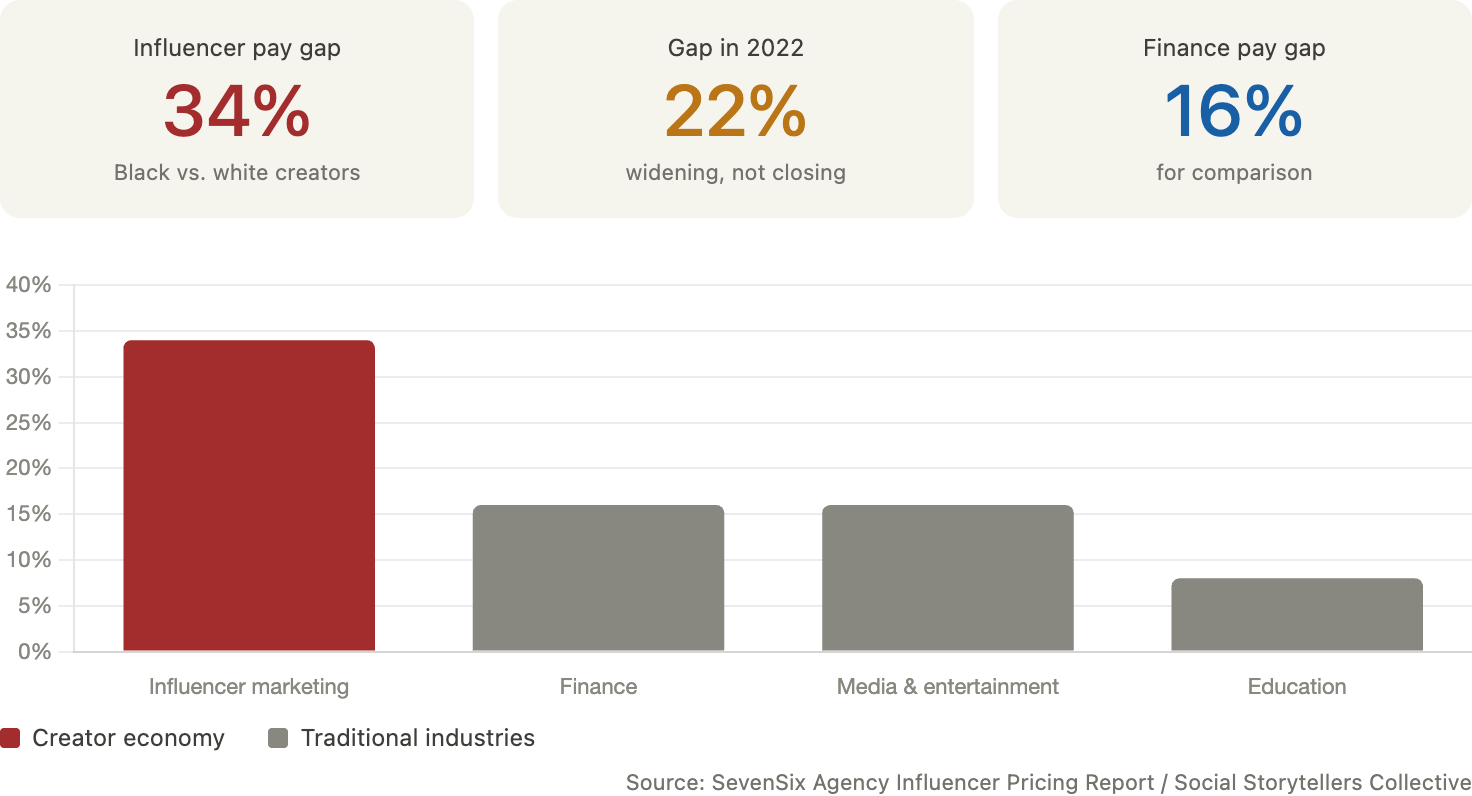
But platform access is not platform ownership. And the distinction between the two is where the structural story lives. Black creators generate engagement, shape trends, and drive purchasing decisions at scale — and the platforms that host them capture the advertising revenue, the data, and the infrastructure value that engagement produces. The creator gets a share of what the platform decides to pay. The platform keeps the rest, along with the audience relationship, the algorithmic knowledge of what performs, and the leverage to change the terms at any time. SSC has been tracking this dynamic since the creator economy began accelerating — documenting how a dance trend moves from a Black creator’s video to a brand campaign in seventy-two hours, converting cultural labor into commercial value without the legal, contractual, or institutional mechanisms that would ensure the originator participates in that value. The SevenSix Agency’s influencer pricing data made the gap measurable: Black influencers earn 34% less than white influencers — a pay gap that exceeds the documented racial pay gap in every other major industry. And the Afrobeats revenue repatriation piece showed the same pattern operating at global scale — less than 0.4% of global music industry revenue returning to the continent whose culture drives the genre’s commercial dominance.
The DEI rollback has accelerated this exposure. The brand investment that followed 2020 — the partnerships, the creator funds, the diversity-focused advertising commitments — has contracted significantly. Black-owned media organizations and Black creators who built their business models around that moment of corporate alignment are now navigating a market where the dollars have receded but the cultural dependency has not. Brands still want Black cultural credibility. They are increasingly unwilling to pay what that credibility is worth, or to structure deals that give creators the ownership stakes that would make the relationship durable rather than transactional.
The next phase of the creator economy is being designed right now — in the deals being structured, the platforms being built, and the policy frameworks being debated around AI, data ownership, and digital rights. Black creators are generating the content that makes those platforms valuable. Whether they will own any of the infrastructure their work is building is the question the follower counts and engagement metrics don’t answer. Visibility was always the first step. Ownership is the one that determines whether the economy built on Black creativity ever belongs to the people who created it.