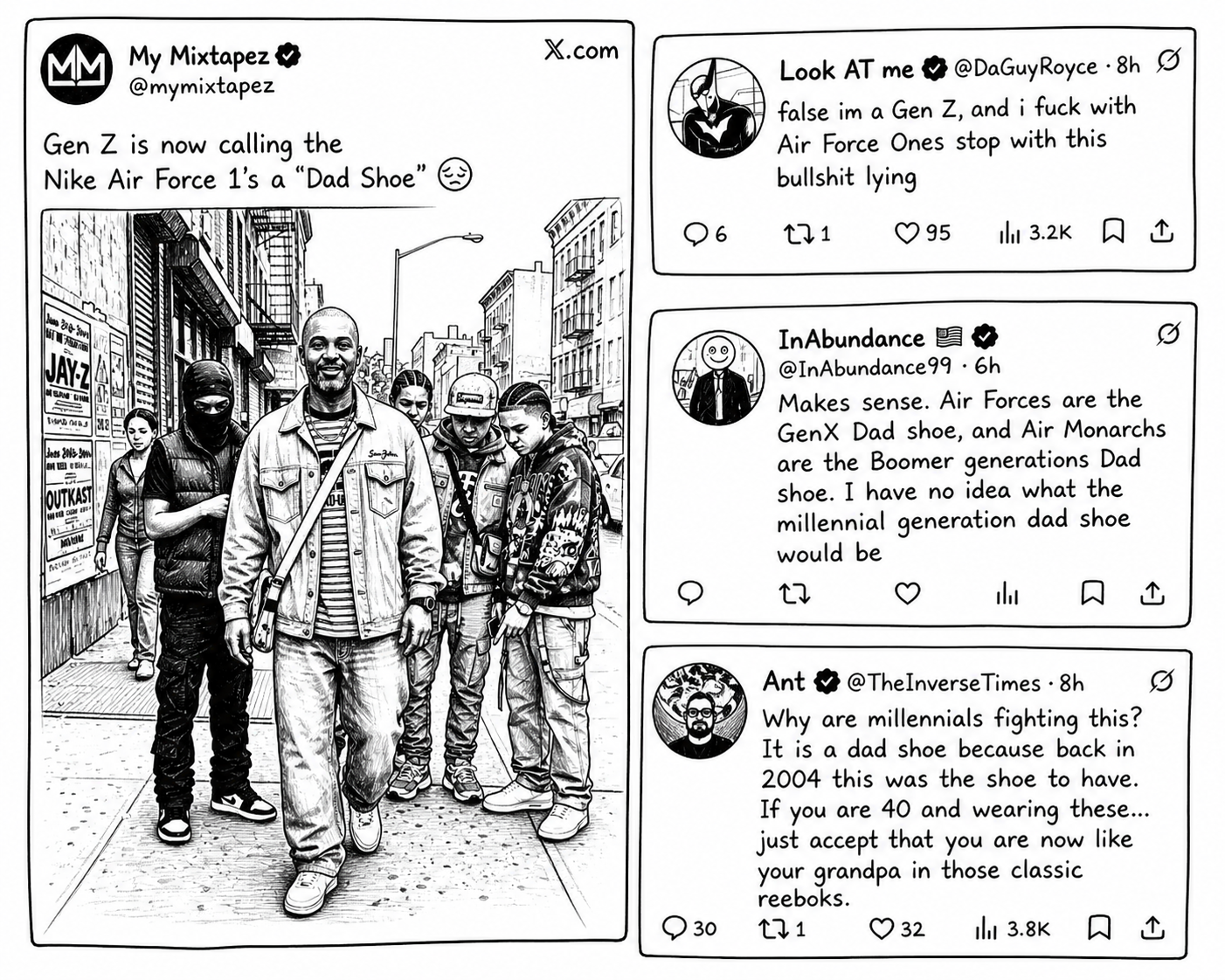
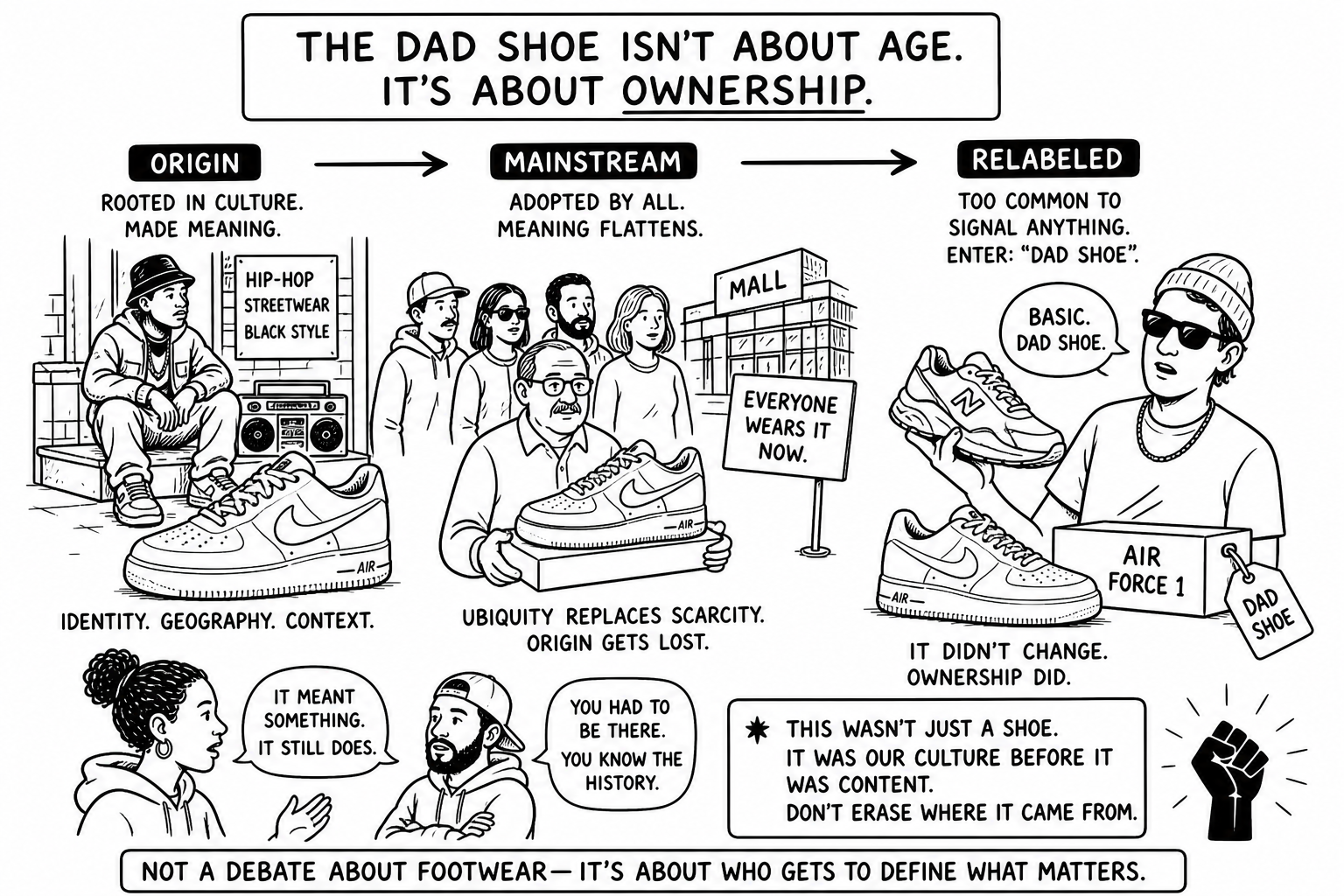
There’s a familiar cycle playing out again, but this time it’s happening in real time, in public, and with a little more tension. A generation that grew up watching certain styles define cool is now watching those same styles get reclassified — flattened into something safer, older, less culturally sharp. The shift isn’t really about the shoe. It’s about what happens after a product crosses over.
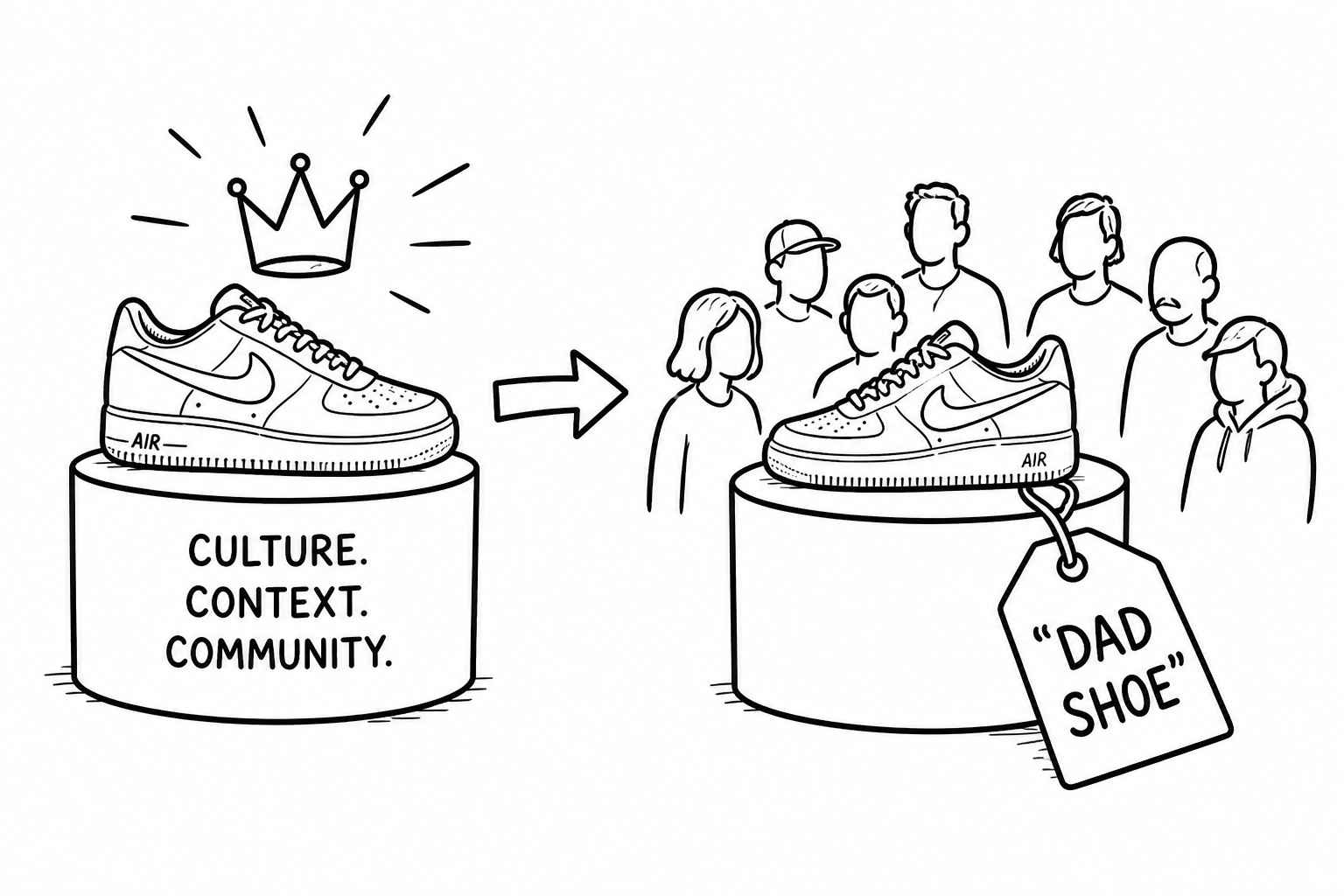
The labeling of the Nike Air Force 1 as a “dad shoe” is less a critique and more a signal. For decades, the silhouette moved through very specific cultural channels — rooted in hip-hop, streetwear, and Black urban style ecosystems that shaped not just how the shoe looked, but what it meant. It wasn’t neutral. It carried identity, geography, and context. Calling it a “dad shoe” doesn’t erase that history, but it does reposition it — making something that was once culturally specific feel universal, and therefore, interchangeable.
The Air Monarch comparison that keeps circulating misunderstands the distinction on purpose. The Monarch was engineered for a different body, a different retail channel, and a different consumer relationship with function over form. Collapsing those two silhouettes into the same category isn’t an aesthetic judgment — it’s a flattening. It’s what happens when a product reaches full market saturation and the culture stops asking where something came from. Origin gets replaced by optics. History gets replaced by who’s wearing it now.
What Gen Z is reacting to isn’t the shoe itself — it’s the visibility of that saturation. When ubiquity replaces scarcity, differentiation has to come from somewhere else. “Dad shoe” becomes the mechanism. It’s not a style critique so much as a rejection notice: too widely adopted to signal anything specific, too absorbed into the general population to carry the weight it once did. The shoe didn’t change. Its exclusivity did.
Millennials pushing back aren’t defending the object either. They’re defending the context it lived in. The Air Force 1, at its peak relevance, wasn’t just footwear — it was tied to a specific moment in cultural production where style still felt like it belonged to communities before it belonged to content. Before the algorithm decided what was trending, certain shoes communicated something precise about where you were from, what you listened to, and who you moved with. That precision is what’s being mourned. Not the silhouette.
That tension — between origin and adoption — is where cultural reclassification always lands. The moment something moves from subculture to mass market, it loses the protection of context. It becomes available for reinterpretation, available for irony, available for the kind of retroactive categorization that makes “dad shoe” possible in the first place. The label doesn’t arrive because the object changed. It arrives because ownership did — because the communities that gave it meaning no longer control the terms of its meaning.
The argument about whether the Air Force 1 is a dad shoe is the wrong argument. What’s actually being contested is who gets to declare something irrelevant once it escapes the community that made it matter — and whether that declaration lands differently when the community being erased from the history is Black.