
The National Labor Relations Board ruled this week that cannabis processing workers have the right to unionize, rejecting a classification argument that employers have repeatedly used to block organizing across the industry. The decision directly challenges how parts of the cannabis workforce have been defined and, in doing so, begins to clarify where federal labor protections apply within a rapidly expanding sector.
The case centered on BeLeaf Medical LLC, which argued that its workers should be treated as agricultural employees, a classification that carries significant legal consequences under the National Labor Relations Act. Agricultural workers are excluded from key federal labor protections, including the right to organize under the Board’s jurisdiction, making the distinction a strategic lever that employers have used to challenge unionization efforts before they can take hold.
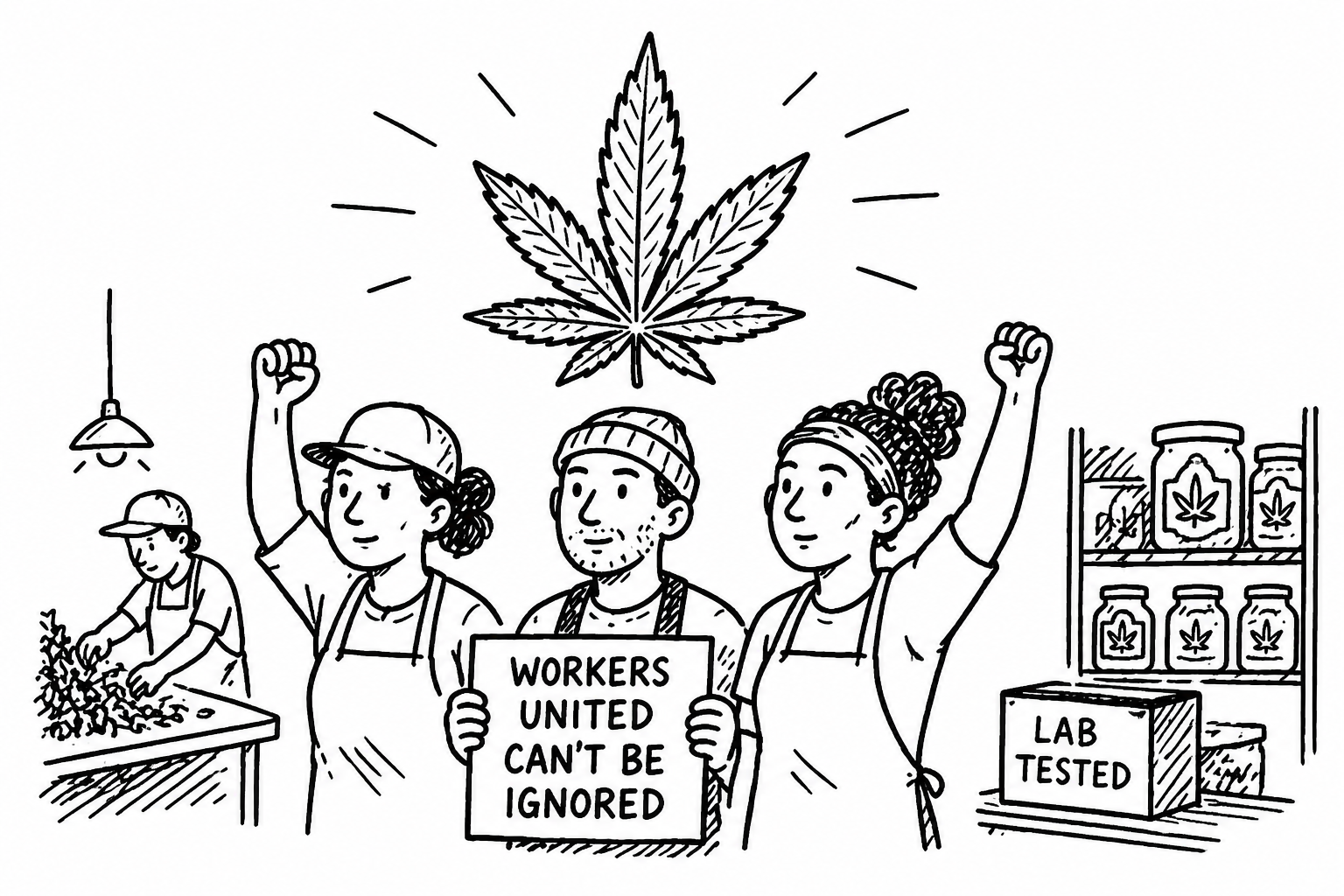
In reviewing the nature of the work itself, the Board concluded that cannabis processing does not align with traditional agricultural labor in either function or context. The tasks at issue—destemming dried plants, operating trimming machinery, and maintaining compliance with detailed state regulatory systems—take place after cultivation and require a different set of operational standards. Although the work remains connected to agriculture at a distance, the Board found that connection to be limited, with the day-to-day responsibilities more closely resembling industrial processing than farm work.
That interpretation carries broader consequences because it effectively removes one of the most commonly cited defenses employers have relied on to resist organizing efforts in the cannabis sector. By establishing that processing workers fall outside the agricultural exemption, the ruling creates a precedent that extends beyond a single company and provides a clearer legal pathway for workers across the industry to organize under federal law.
The timing of the decision reflects the scale of change already underway within the cannabis market, which has expanded across more than 20 states and evolved from a fragmented regional system into a multi-billion-dollar national industry. As that growth has accelerated, the structure of the workforce has become increasingly complex, blending elements of agriculture, manufacturing, and compliance work in ways that existing labor classifications were not designed to accommodate.
What the Board’s ruling ultimately does is impose a more precise distinction within that complexity by separating cultivation from processing and assigning each a different regulatory meaning. In doing so, it signals that portions of the cannabis workforce will be treated less like farm labor and more like industrial labor, a shift that not only reshapes the conditions under which workers can organize but also reframes how the industry itself is understood and governed at scale.