Iran offered the United States a proposal this week to reopen the Strait of Hormuz — the narrow waterway through which approximately 20% of the world’s oil supply passes — in exchange for the U.S. lifting its blockade of Iranian ports and suspending its threat to resume bombing, while postponing nuclear talks to a later date. Trump rejected the proposal, according to multiple people briefed on discussions in the White House Situation Room, viewing the postponement of nuclear talks as incompatible with the administration’s stated objectives for the conflict. At the United Nations, diplomats from dozens of countries demanded the Strait’s reopening. A resolution calling for exactly that was blocked by China and Russia. The waterway remains under Iranian control, and global energy markets remain in the condition that control produces.
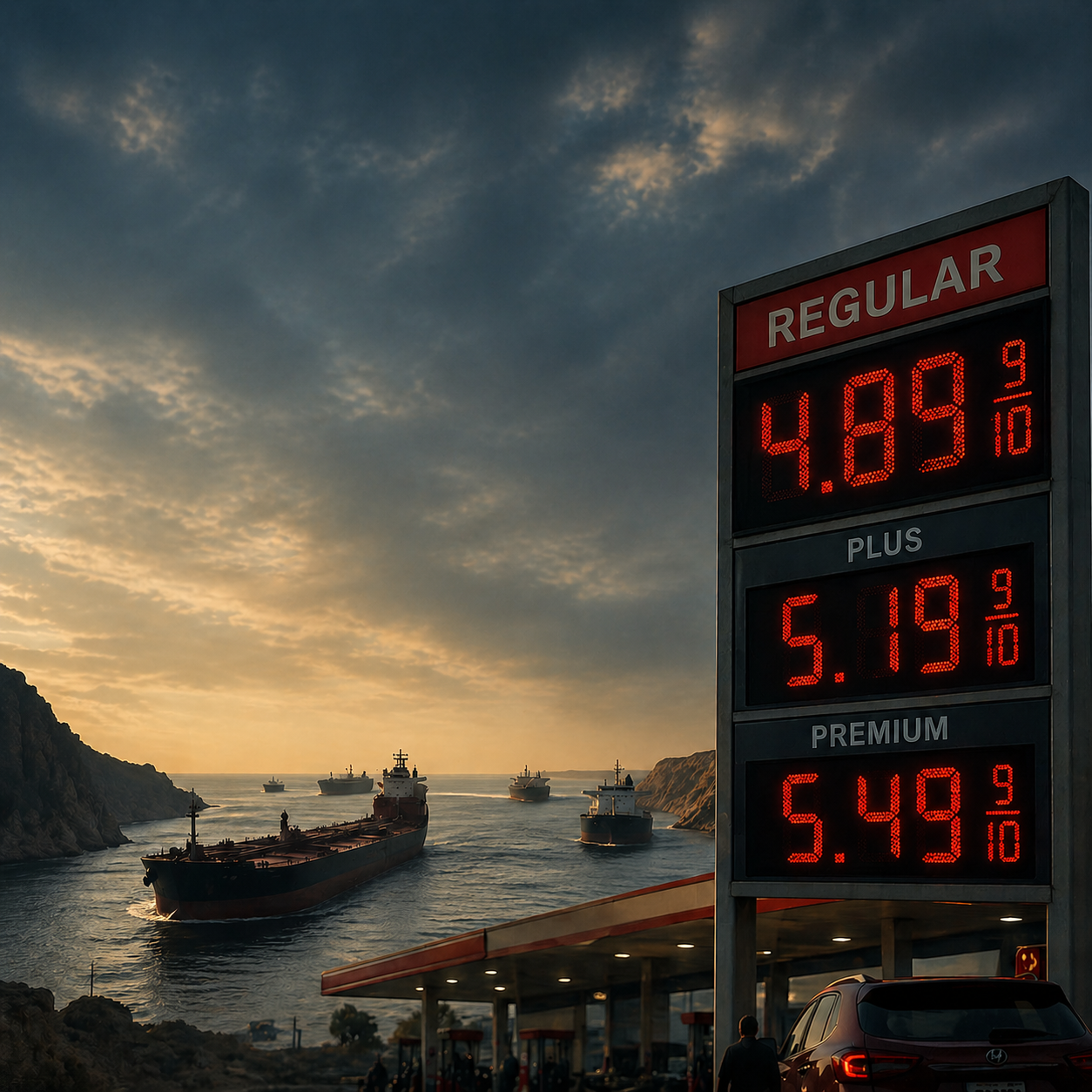
The Strait of Hormuz carries roughly one-fifth of the world’s oil supply on any given day. Its effective closure or restriction does not affect all consumers equally — it concentrates cost pressure on households and businesses that cannot absorb price volatility, while producers and traders with the capital to hedge exposure manage the same conditions with far less consequence. The connection between a geopolitical negotiating position in the Situation Room and what a driver in Houston pays at a pump the following week is real, direct, and almost never stated plainly in coverage of the standoff. What is framed as a national security story is also, simultaneously, a household economics story — and for the people on the losing end of that economics story, the diplomatic details are less important than the price on the sign.
The negotiating dynamics add another layer of complexity. Iranian Foreign Minister Abbas Araghchi met with Russian President Vladimir Putin this week, who pledged to “do everything that serves Iran’s interests.” Russia’s posture at the UN — blocking the resolution calling for the Strait’s reopening — aligns with an interest in sustained high energy prices, which benefit Russian energy exports and give Moscow continued leverage in its own negotiations with Western partners. The Strait of Hormuz, in this context, is not simply a bilateral U.S.-Iran issue. It is a node in a network of competing energy and geopolitical interests where multiple actors benefit from instability and few have material incentives to resolve it quickly.
The domestic political dimension is worth naming as well. The administration’s stated goal for the Iran conflict was a deal on nuclear enrichment — and Iran’s offer to postpone that question while reopening the Strait would have produced economic relief without the political win the administration has defined as the objective. Accepting that trade would have required acknowledging that the economic cost of continued Strait restriction is significant enough to warrant compromise. Rejecting it signals that the political objective takes precedence over the energy market conditions affecting millions of American households. That is a policy choice, made explicitly, with consequences that are being felt at gas stations across the country.
The Strait of Hormuz story will continue to be covered primarily through the lens of nuclear nonproliferation, military posture, and diplomatic strategy — all of which are legitimate frames. What the coverage consistently underweights is the material cost of the standoff distributed across populations that have no seat at the negotiating table and no hedge against the price volatility the standoff produces. Every week the Strait remains restricted, that cost accumulates in household budgets, in freight and logistics, and in the inflation numbers that will eventually appear in economic data months from now. The geopolitical frame is accurate. It is not the only frame that matters.