
A federal safety mandate set to take effect by 2027 will require automakers to equip new vehicles with technology capable of detecting impaired driving. The systems are designed to monitor factors such as eye movement, alertness, and driving behavior using cameras and sensors to determine whether a driver may be under the influence or fatigued.
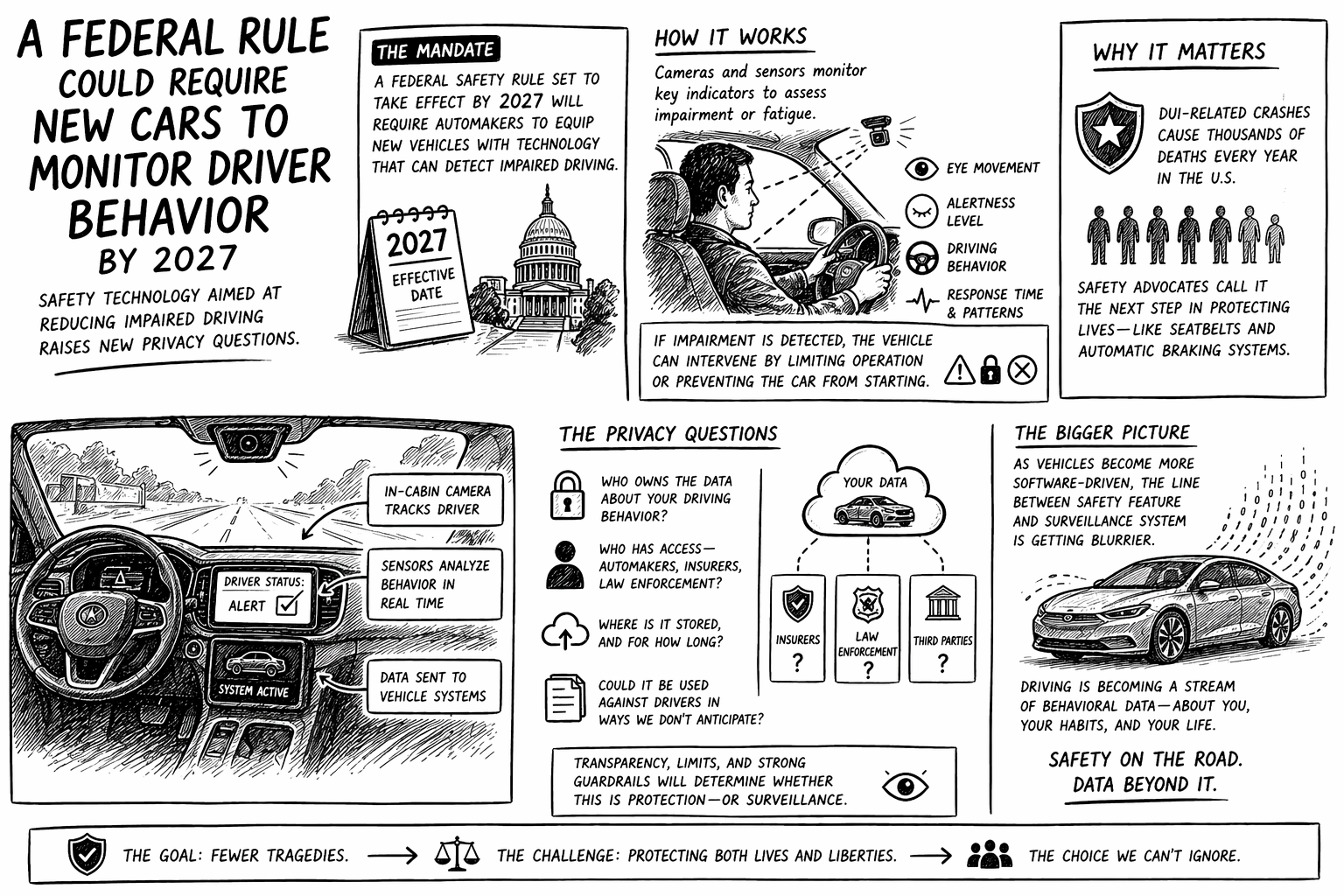
If impairment is detected, the vehicle could intervene by limiting operation or preventing the car from starting altogether. The policy is part of a broader effort to reduce DUI-related fatalities, which account for thousands of deaths annually in the United States. Regulators and safety advocates frame the technology as a necessary evolution in vehicle safety, similar to seatbelts and automatic braking systems.
At the same time, the mandate is prompting questions about data ownership and control. Drivers and privacy advocates are raising concerns about who has access to the information collected, whether it could be shared with insurers or law enforcement, and how long it would be stored. As vehicles become increasingly software-driven, the line between safety feature and surveillance system is becoming less clear, turning the act of driving into a stream of behavioral data that extends beyond the driver alone.