
The Trump administration announced Tuesday that it is indefinitely shelving the BALANCE Model — a five-year Medicare pilot designed to expand coverage of GLP-1 weight-loss medications like Wegovy and Zepbound through private insurers. The program required Medicare drug plans covering 80% of certain beneficiaries to opt in by April 20. Insurers declined. Medicare will now cover the drugs through a transitional bridge program beginning July 1 and running through the end of 2027, funded by the federal government alone.
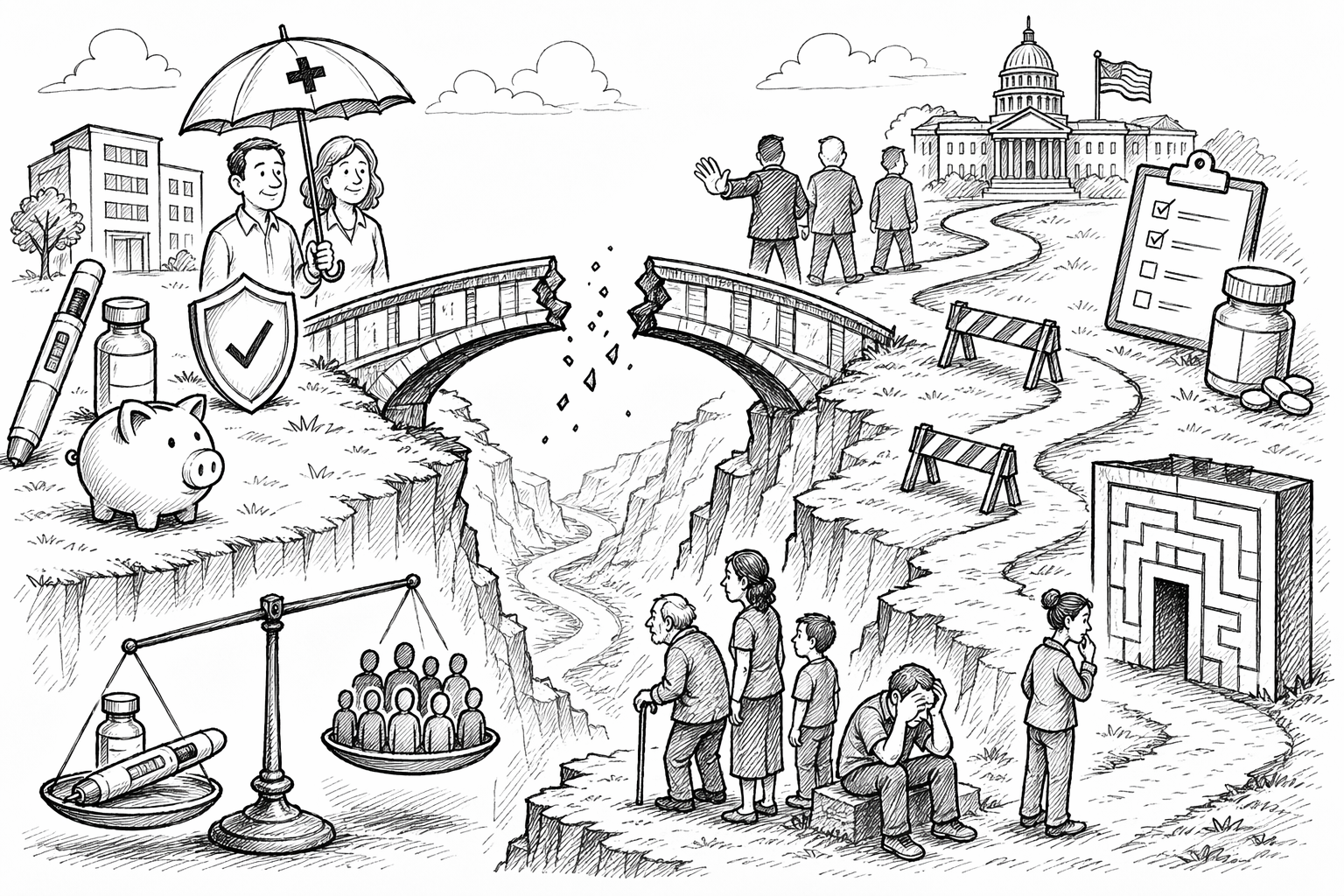
The bridge program offers eligible Part D beneficiaries access to select GLP-1 medications at a $50 monthly copayment. That figure sounds accessible until the eligibility architecture becomes clear. Participants must be enrolled in a qualifying plan, meet specific prior authorization criteria, and navigate a multi-step approval process. Low-Income Subsidy cost-sharing protections will not apply under the Medicare GLP-1 Bridge, meaning the $50 copayment is not reduced for lower-income beneficiaries who would otherwise receive help with drug costs.
The Medicaid picture is more severe. Only 13 states cover GLP-1s for obesity treatment as of January 2026, down from 16 states in 2025. California, New Hampshire, Pennsylvania, and South Carolina eliminated coverage in recent months, citing rising costs and state budget pressures. States are legally permitted to exclude weight-loss drugs from Medicaid — a statutory carve-out that does not exist for most other drug categories — and they are increasingly exercising that option.
GLP-1 medications represent a genuine clinical breakthrough for obesity, cardiovascular disease, and metabolic health. The clinical evidence is not in dispute. What is being resolved through insurance policy rather than health policy is who gets access to that breakthrough. The pattern replicates what SSC identified in its coverage of HIV treatment access: when external funding pressure forces a system to triage, the populations at the bottom of the coverage architecture lose access first and recover it last. GLP-1 access is following the same trajectory — developing first for people with private insurance, moving slowly through Medicare, reaching Medicaid populations incompletely and subject to reversal when state budgets tighten.
The BALANCE Model’s collapse removes the institutional mechanism that was supposed to accelerate that timeline. Coverage will now be determined plan by plan and state by state — which means it will be determined by the same political economies that have historically produced inequitable health outcomes. The bridge program is real access for some. For the people it does not reach, the gap is a policy choice, not an administrative gap.
Access Shift | Society & Economy | News Desk