
Twenty-nine people have died in ICE custody since October — the start of the federal government’s fiscal year — already surpassing 2004’s toll of 28, the previous record. The most recent death was a 27-year-old Cuban man held in ICE custody in Miami, found unresponsive in his cell on the morning of April 12 and pronounced dead after resuscitation efforts failed. His cause of death is listed as a presumed suicide, with the official determination still under investigation. He is one of twenty-nine. During all of 2024, eleven people died in ICE custody. The current fiscal year is on pace to more than double that. During all of 2023, seven people died. The trajectory is not a spike. It is a structural acceleration, produced by a detention system that has been expanded far beyond its historical operating scale without a proportional investment in the oversight, medical infrastructure, or accountability mechanisms that scale requires.
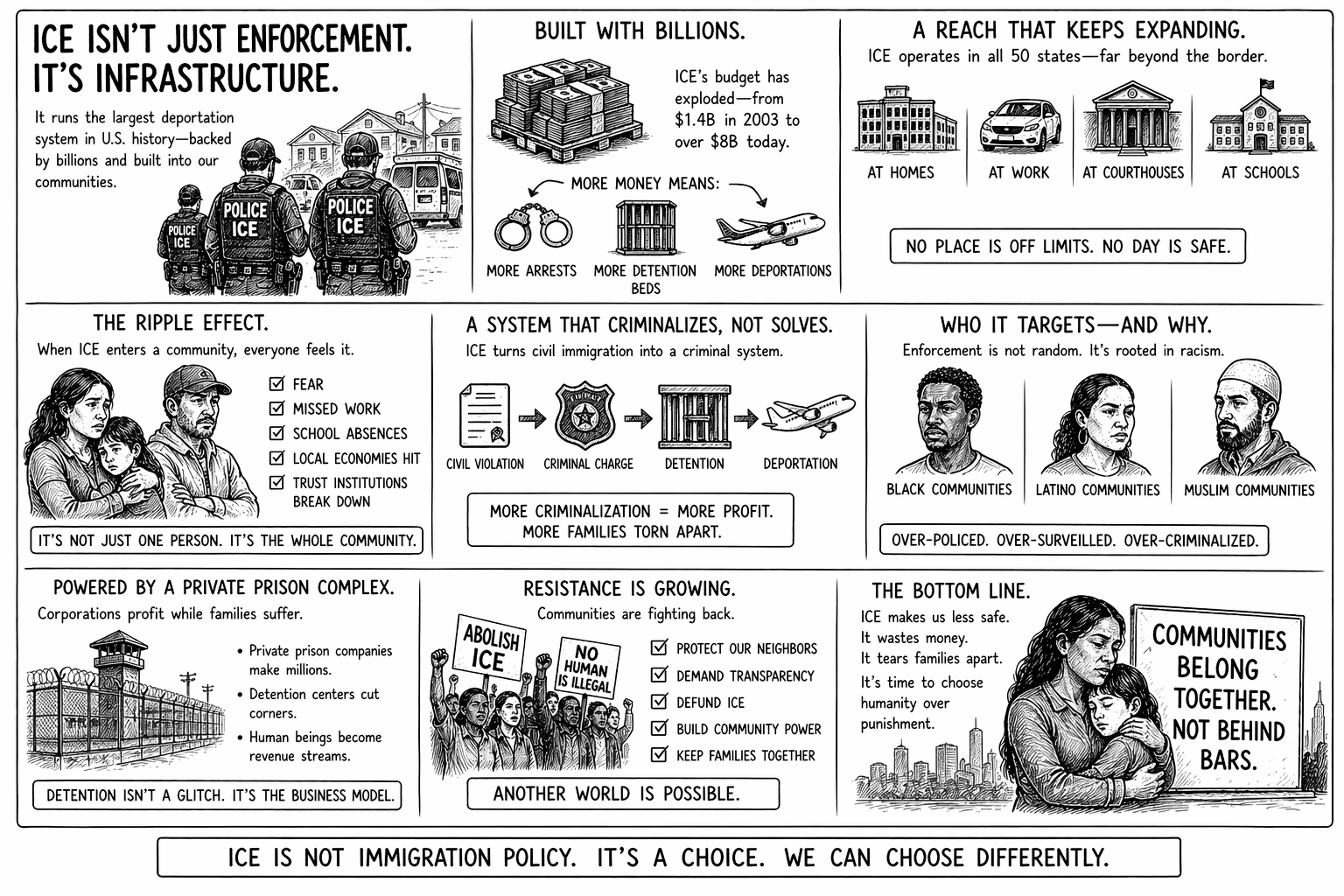
The expansion itself is a policy choice that requires naming directly. Detentions are up more than 70 percent under the current administration compared to the first year of the Biden administration, with more than 60,000 people currently in custody — nearly double pre-Trump levels. The administration’s response to the record death toll has been to frame it as a rate rather than a number: DHS stated that death rates in custody are 0.009 percent of the detained population, a framing that uses the inflated detention population as the denominator to make the death count appear proportionally stable. That arithmetic works only if the decision to inflate the detention population is treated as a neutral baseline rather than as the policy choice that is producing the deaths. When a government doubles the number of people it detains and deaths double alongside it, the rate staying flat is not evidence that conditions are adequate. It is evidence that the expansion was executed without addressing the conditions that make detention lethal.
The transparency dimension compounds the accountability failure. Until recently, when someone died in ICE detention, the agency was required to release a detailed three-page report within two business days and post the full report publicly within ninety days. As deaths have climbed, those reports have been cut to four-paragraph summaries — shorter, less detailed, and arriving later. At least four deaths occurred more than ninety days ago without final reports posted, despite a congressional requirement that they be. Acting ICE Director Todd Lyons, testifying before Congress last week, acknowledged the deaths but was unable to provide the number of staff still working in the Office of Detention Oversight — the body responsible for monitoring conditions in facilities where people are dying. He submitted his resignation hours after testifying. The simultaneous increase in deaths and decrease in reporting detail is not administrative lag. It is the shape of a system reducing its own accountability infrastructure at the moment that infrastructure is most consequential.
One death at Camp East Montana in El Paso — a tented facility on a Fort Bliss military base that detains more immigrants than any other single facility — was ruled a homicide by the El Paso County Medical Examiner after ICE initially described it as a case where the detainee experienced medical distress. That gap between ICE’s initial characterization and the medical examiner’s determination is not a paperwork discrepancy. It is evidence that the agency’s own reporting cannot be taken at face value in assessing what is happening inside facilities it operates with reduced oversight and abbreviated disclosure. The detention system is not simply failing to prevent deaths. It is structurally positioned to make those deaths difficult to investigate, document, and contest — a configuration that serves the interests of the agency and the administration operating it while distributing the consequences entirely onto the people detained within it and the communities they came from.
For Houston specifically, the Miami Cuban detainee death carries local weight. Houston’s ongoing standoff over its ICE ordinance — the city was facing a deadline today to repeal an ordinance limiting HPD’s cooperation with ICE administrative warrants — is happening in real time alongside a national detention system producing record mortality. The funding leverage the state is using to force Houston’s compliance is designed to increase local cooperation with the same federal enforcement infrastructure that is producing these outcomes. The question of whether Houston police should detain people based solely on civil immigration warrants is not abstract policy. It is a question about which pipeline people enter — and what happens to them inside it.