
For decades, the dominant model of diaspora economic participation was remittance — money sent home to cover medical bills, school fees, household expenses, and family emergencies. It was care expressed in currency, and it was enormous in scale. Nigeria received over $20 billion in diaspora remittances in 2023, a figure that exceeded foreign direct investment and overseas development assistance combined. But remittances, however vital, are consumption. They sustain households. They do not build institutions. They do not compound. And a growing cohort of diaspora Nigerians — and increasingly, Black Americans looking toward the continent — are making a deliberate shift from maintenance to multiplication, from sending money home to building wealth there. That shift is unfolding alongside a significant regulatory development. As SSC reported in its coverage of the Central Bank of Nigeria’s remittance directive, the CBN has moved to route all diaspora inflows through formal naira settlement accounts — a policy that signals Nigeria’s intention to treat diaspora capital as a coordinated economic lever rather than a loosely tracked stream of personal transfers. Whether that formalization supports or complicates the move from maintenance to multiplication is the open question underneath both developments.
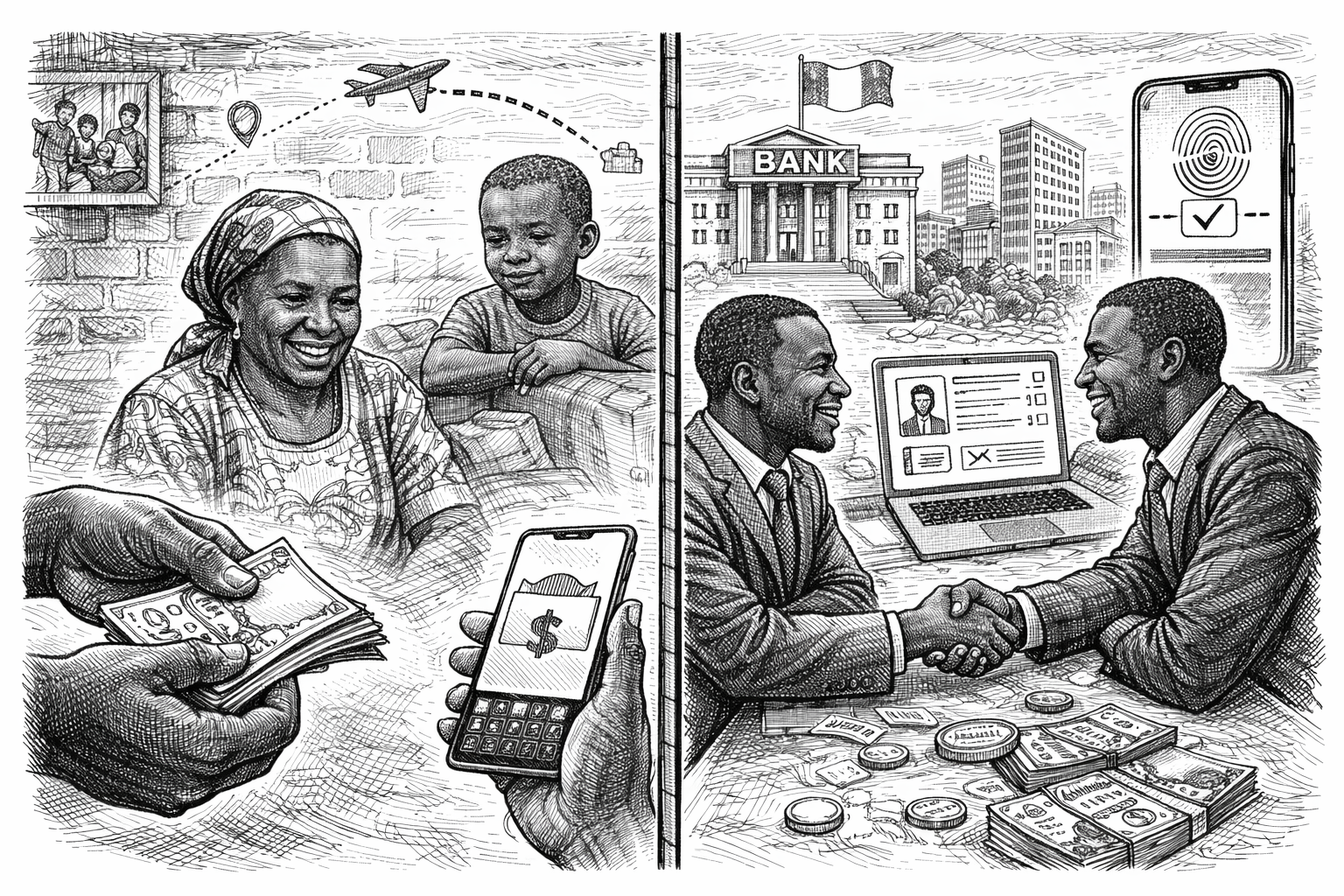
The infrastructure enabling that shift is newer than the ambition. For years, the central barrier to diaspora investment in Nigeria was trust — not cultural distrust, but operational distrust rooted in legitimate experience. Property titles were unverifiable without physical presence. Financial institutions were difficult to access from abroad. Stories of diverted funds, mismanaged projects, and failed ventures circulated widely enough to make caution rational. What has changed in 2026 is the technology closing that gap. The Lagos State Land Portal now allows investors in London or Houston to verify property titles in under ten minutes. Proptech platforms provide automated property management with real-time tracking of rental collections and maintenance requests. The Non-Resident Biometric Verification Number system allows diaspora Nigerians to open investment accounts, access mutual funds, and participate in capital markets without returning to Nigeria in person. Nigeria’s bond market is currently offering coupon rates between 14 and 17 percent annually — returns that are difficult to replicate in Western savings instruments offering one to three percent.
The parallel movement among Black Americans is distinct in motivation but convergent in direction. Ghana’s Year of Return initiative, first launched in 2019, has continued generating migration interest and investment inquiry. A broader pan-African investment conversation — centered on real estate, creative IP, agricultural land, fintech, and cultural infrastructure — is organizing itself through digital communities, investment funds, and diaspora summits that are explicitly repositioning participation from charity to strategy. The age of diasporic donation is ending. What is replacing it is an asset-class approach to diaspora capital — one that treats the Black Atlantic not as a network of aid relationships but as a geography of economic opportunity. For Black Americans carrying generational wealth gaps produced by centuries of domestic exclusion, the continent and the Caribbean represent something the U.S. market has structurally withheld: an entry point, and a compounding return.
The barriers that remain are real and should not be minimized. Currency risk is genuine — the Naira’s volatility has eroded returns for investors without adequate hedging strategies. Infrastructure deficits in healthcare, security, and energy create quality-of-life challenges for potential returnees. The trust gap, while narrowing technologically, has not disappeared entirely. And the wealth required for meaningful investment still places formal diaspora participation beyond the reach of most working-class and lower-middle-class diaspora households, even as the rhetoric of access expands. What is emerging is a two-tiered diaspora investment landscape — those with enough capital to participate in the new infrastructure, and those for whom remittance remains the primary economic relationship with the homeland. That stratification mirrors the broader patterns of wealth concentration SSC tracks domestically, now operating at global scale.
What the shift signals, at its core, is a recalibration of what diaspora belonging means economically. It is no longer primarily defined by what you send back. It is increasingly defined by what you build, where you build it, and whether the infrastructure you invest in serves communities that look like you or simply returns profit to you from a distance. That distinction — between diasporic extraction and diasporic investment with community accountability — is the question the movement has not yet fully answered. The money is beginning to move. The question of where it lands, and for whom, remains open.